

Ruby
Ruby is a precious red gemstone that belongs to Corundum species. It is famous for its beauty and durability.
Basic Information- Mineral: Corundum (Al₂O₃ – Aluminum Oxide)
- Color: Red
- Moh's Hardness: 9
- Crystal System: Trigonal
- Refractive Index: 1.762 – 1.770
- Specific Gravity: 4.00
Ruby has been desired for its color and the most valuable color is "Pigeon Blood Red". The major sources of Ruby are Myanmar, Sri Lanka, Thailand, Cambodia, Tanzania, Veitnam, Mozambique, Madagascar, etc.
Ruby is the birthstone for July. Various lores have been associated with ruby and one such that is written in sixteenth-century that ruby "gave control of passions, drove out evil thoughts, secured possessions to their rightful owner, reconciled quarrels, brought peace and concord and also preserved bodily strength and health."
In the past most red stones including ruby, spinel and garnet showing a good hardness and lustre were often called "ruby". As our knowledge of gems improved, these other minerals became better recognized in their own right, but misidentification is still common place.
Rubies are often heat treated to enhance its color and make it more salebale. And the other most common treatment is fracture filing which improves the clarity of the Ruby.
Explore the complete Ruby guide →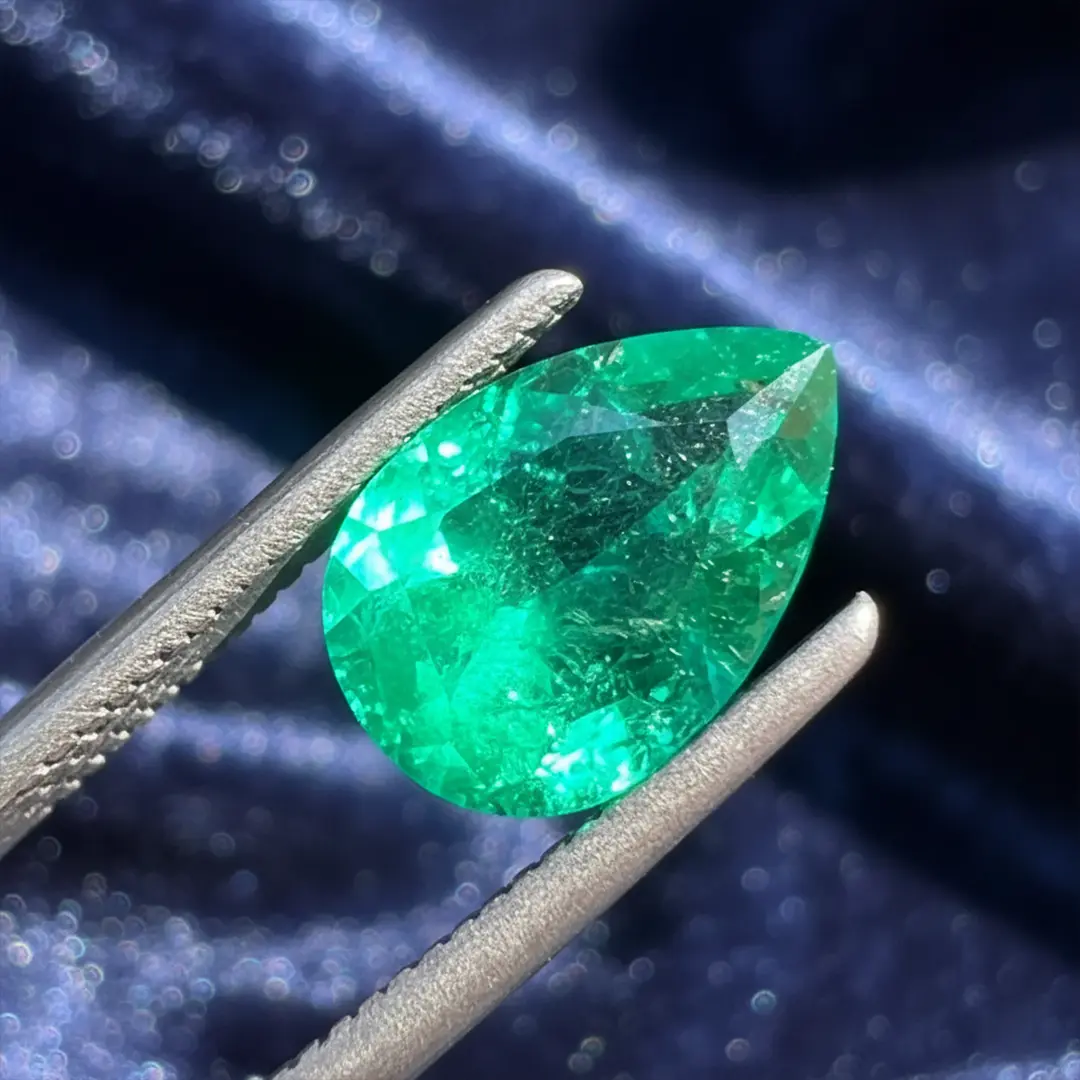
Emerald
Emerald is the most famous variety of Beryl specie before Aquamarine. Chromium as a coloring agent is responsible for its rich green color.
Basic Information- Mineral: Beryllium Aluminium Silicate (Be₃Al₂Si₆O₁₈)
- Color: Green
- Moh's Hardness: 7.5
- Crystal System: Hexagonal
- Refractive Index: 1.57 to 1.60
- Specific Gravity: 2.65-2.80
Emerald has been famous and desired for its rich grass green color. The major sources of emeralds are Colombia, Zambia, Pakistan, Afghanistan, India, etc.
Emerald is the birthstone for May. In the 1914 book The Book of Talismans, the author writes of emerald: “If worn in a ring, emerald strengthens the memory and protects from giddiness.” It was also said to guard sailors and fisherman from perils and mishaps at sea if suspended “round the neck so as to lie upon the chest.”
Emeralds are very fragile and usually contains fissures and gets easily chipped. Emeralds needs to be carefully kept and worn into jewellery that refrains it from damage. To hide the fissures and fractures and enhance the clarity, it is oiled.
Explore the complete Emerald guide →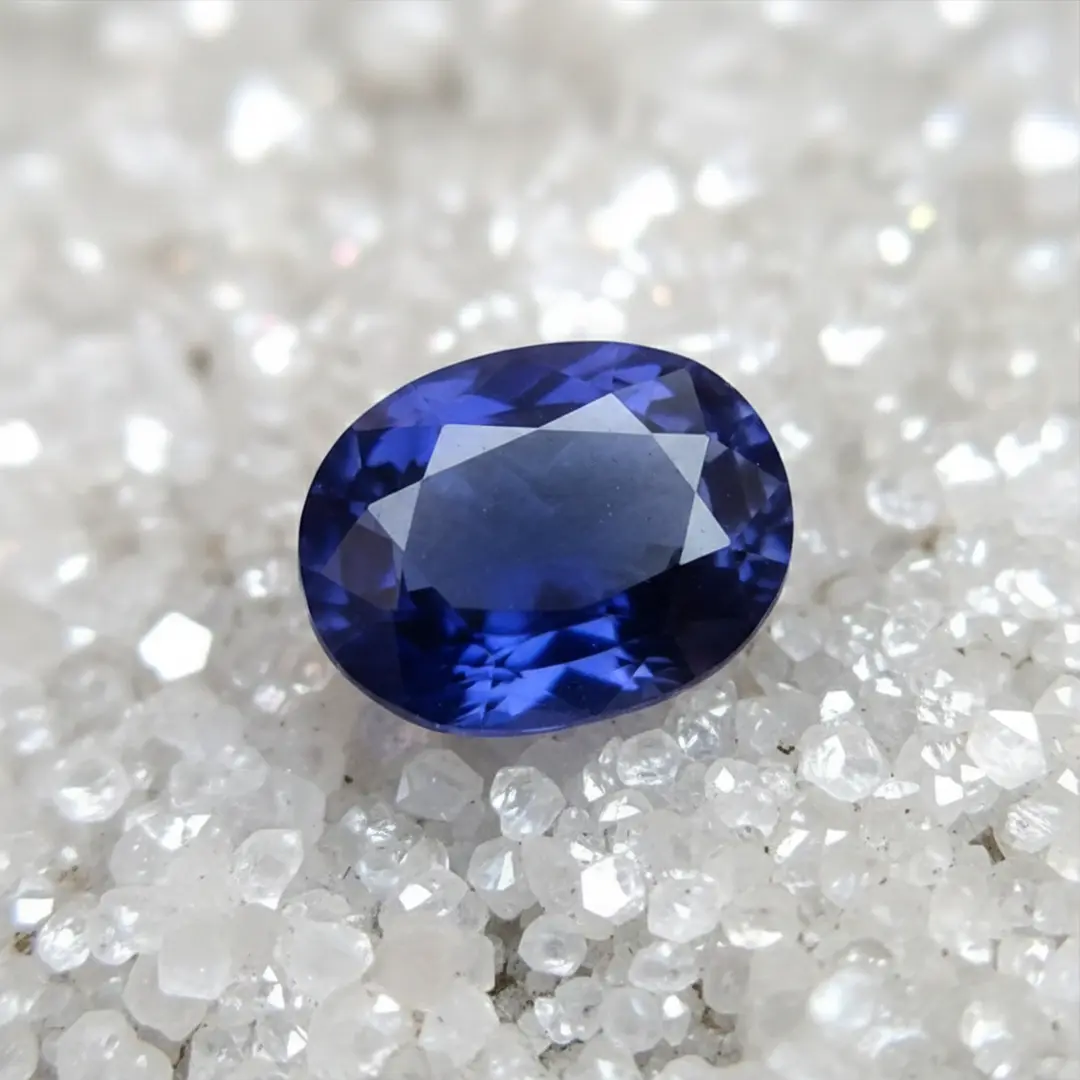
Blue Sapphire
Blue Sapphire is a precious blue gemstone that belongs to Corundum species. Corundum occurs in all the colors and Sapphire is a name given to all the colors except red. If the coloring agent is combination of iron and titanium in Corundum, the resultant color is blue and it is referred to as Blue Sapphire.
Basic Information- Mineral: Corundum (Al₂O₃ – Aluminum Oxide)
- Color: Blue
- Moh's Hardness: 9
- Crystal System: Trigonal
- Refractive Index: 1.762 – 1.770
- Specific Gravity: 4.00
Sapphire has been desired for its rich color and the most valuable color is "Cornflower Blue". The major sources of sapphires are Kashmir, Myanmar, Thailand, Sri Lanka, Cambodia, Madagascar, Montana, Australia, etc.
Sapphire is the birthstone for September. In the middle ages, it was said of sapphire that it preserved chastity, discovered fraud and treachery, protected from poison, plague, fever and skin diseases. Event today, Sapphire is cherished and sought after as a remedy for the planet Saturn in astrology.
Sapphires are often heat treated to enhance its color and make it more salebale. And the other most common treatment is fracture filing and diffusion which improves the clarity and intensifies the color respectively.
Explore the complete Blue Sapphire guide →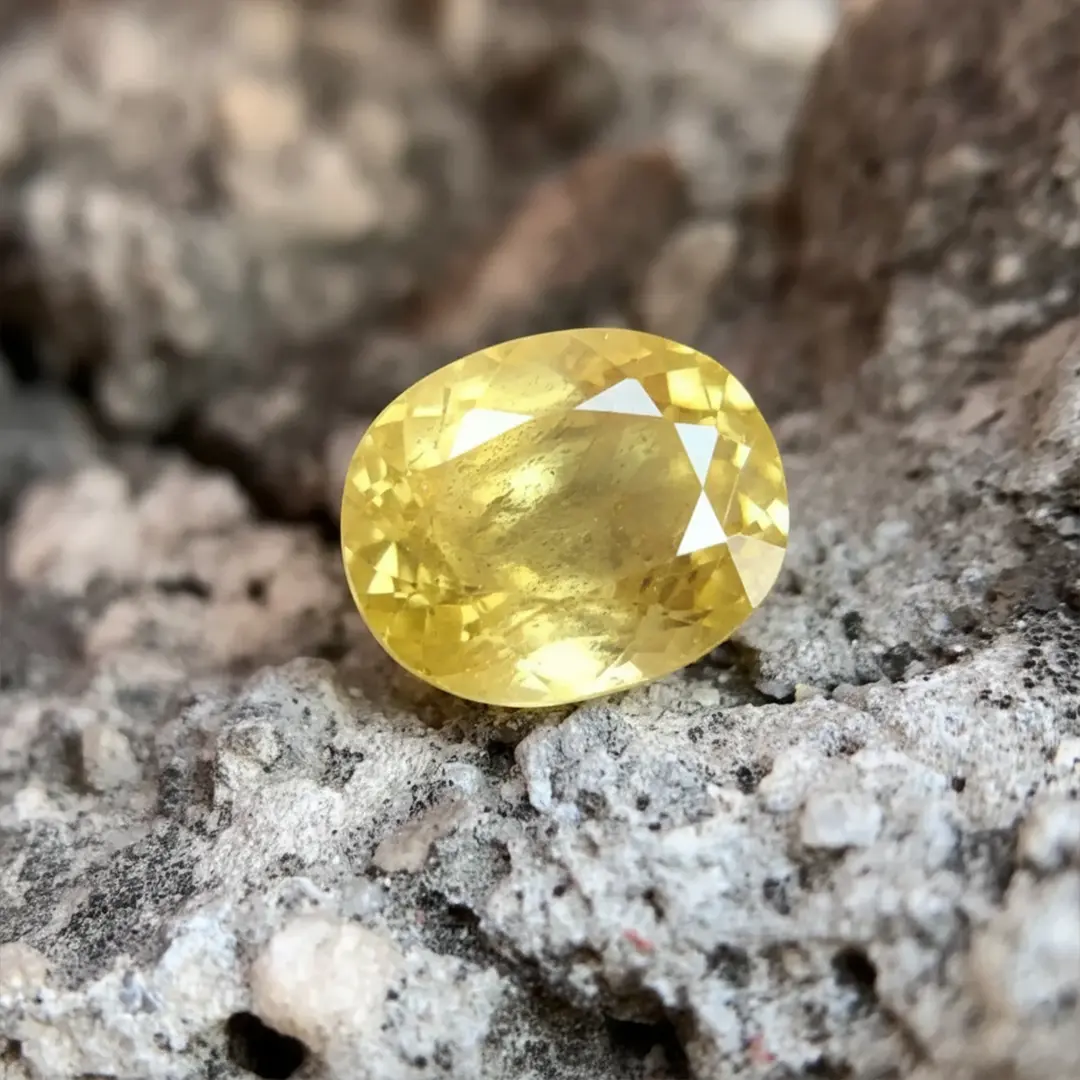
Yellow Sapphire
Yellow Sapphire is a precious yellow gemstone that belongs to Corundum species. Corundum occurs in all the colors and Sapphire is a name given to all the colors except red. If the coloring agent is iron in Corundum, the resultant color is yellow.
Basic Information- Mineral: Corundum (Al₂O₃ – Aluminum Oxide)
- Color: Yellow
- Moh's Hardness: 9
- Crystal System: Trigonal
- Refractive Index: 1.762 – 1.770
- Specific Gravity: 4.00
Yellow sapphires are mined Sri Lanka, Madagascar, Thailand, India, Tanzania, etc. Gem trade traditionally considers Sri Lankan (Ceylon) yellow sapphires the most desirable due to their bright canary-yellow color and clarity.
Yellow Sapphire is often known as Pukhraj in India and sub-continent and widely worn as a remedial measure for the planet Jupiter.
Yellow Sapphires are most commonly heated for color enhancement and often treated with Beryllium Diffusion to intensify its color.
Explore the complete Yellow Sapphire guide →
Pearl
Pearls are produced in water-dwelling animals in certain types of shellfish known as molluscs. Commercial fishing for natural pearls is now virtually non-existent due to fundamental changes in ocean ecosystems and to economic circumstances, hence, pearls are cultured.
Basic Information- Mineral: Calcium carbonate, conchiolin and water
- Color: White, golden, grey and many
- Moh's Hardness: 3.5-4
- Crystal System: Amorphous/ Organic
- Specific Gravity: 2.60-2.78
Pearls are found and farmed in saltwater and freshwater depending on the species of the mollusc. Akoya, South Sea, Tahitian and Freshwater pearls are some of the various categories of pearl.
Pearl is the birthstone for June. As an emblem of modesty, chastity and purity, the pearl symbolizes beauty, love, success, and happiness. They often symbolize a happy marriage and in many countries are used as a wedding gift.
Bleaching and staining are widely used to modify the color of the cultured pearls. Polishing may be done to improve the lustre and appearance. Both cultured and natural pearls can be treated.
Explore the complete Pearl guide →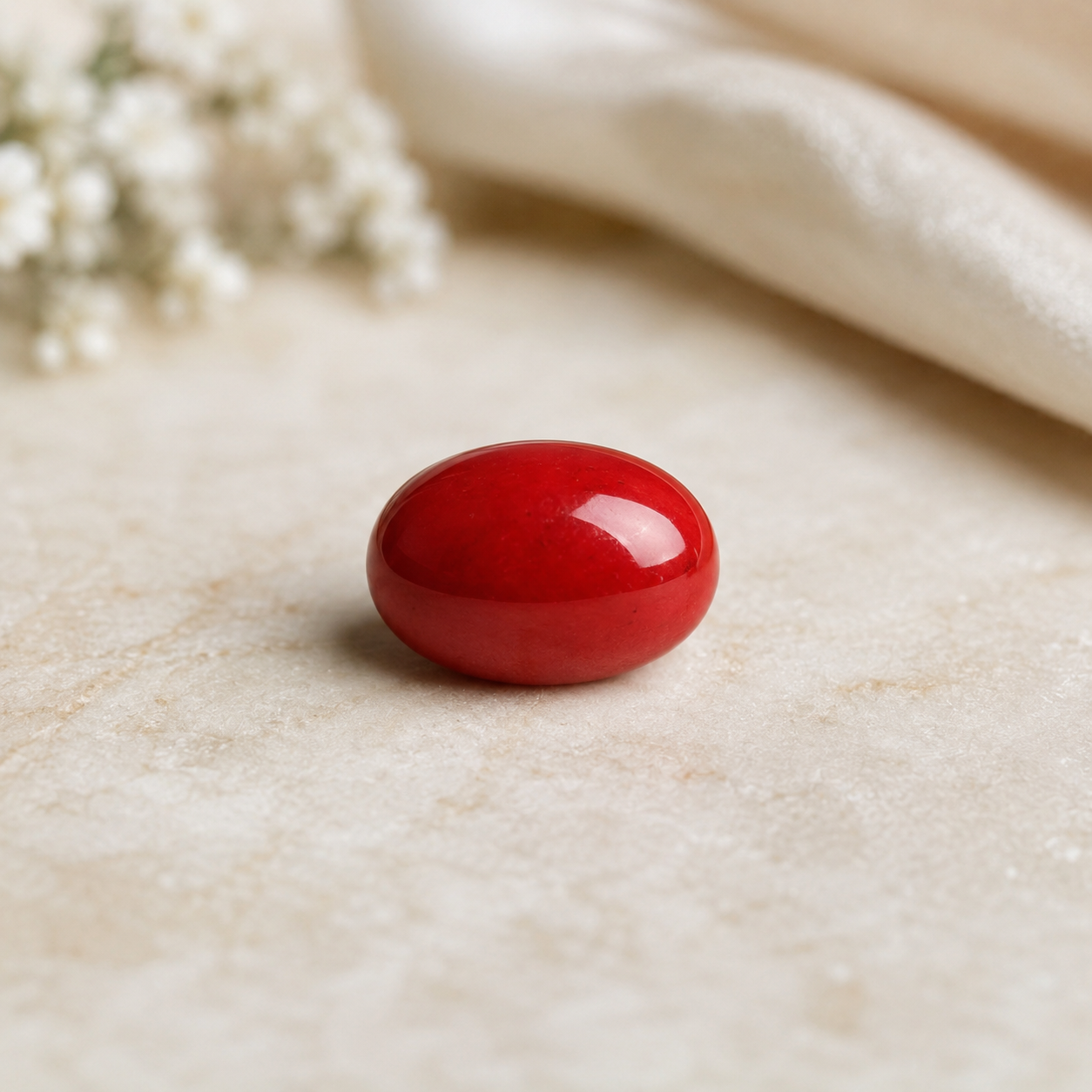
Red Coral
Red Coral is an organic gem material formed from the hard skeletons of marine coral polyps, mainly belonging to the Corallium genus. It is valued for its warm red colour, smooth texture and ability to take a beautiful polish..
Basic Information- Composition: Calcium Carbonate (CaCO₃) with organic matter
- Color: Red, orange-red and pinkish red
- Moh's Hardness: 3-4
- Crystal System: Trigonal / Organic Aggregate
- Refractive Index: 1.486-1.658
- Specific Gravity: 2.60-2.70
Red Coral has been admired for its rich red to orange-red colour. Important sources of precious coral include the Mediterranean Sea, particularly near Italy and Sardinia, as well as the waters surrounding Japan and Taiwan.
Red Coral is commonly known as Moonga in India. In traditional Vedic astrology, it is associated with the planet Mars and is worn as a symbol of courage, confidence, energy and vitality. These associations are based on traditional beliefs rather than scientific evidence.
Unlike mineral gemstones that form inside the earth, Red Coral is created by marine organisms. The skeletal branches are collected, shaped and polished into beads, cabochons and decorative jewellery pieces.
Explore the complete Red Coral guide →
Garnet
Garnets are a gemological group and gem garnets occur in various colors including red, orange, yellow, colorless, black and green.
Basic Information- Mineral: Isomorphous Series (X3Y2(SiO4)3)
- Color: Red, Green, Yellow, Orange and Brown
- Moh's Hardness: 6.5-7.5
- Crystal System: Cubic
- Refractive Index: 1.70-1.89
- Specific Gravity: 3.3-4.2
Garnets are mined in various countries and some of them are Sri Lanka, Madagascar, India, Namibia, Kenya, Tanzania, USA, etc.
Garnet is the birthstone for January. The name ‘garnet” is derived from the Latin name granatum- meaning pomegranate because of the strong resemblance of the red crystals to the seeds of pomegranate.
During the great biblical flood, Noah was said to have used the red glow from a garnet to guide his way through the darkness. Garnet is often associated with illumination and brining light into the dark. For example, garnet jewellery was buried with Vikings to help light their way on the journey to Valhalla.
Garnet is also said to have great healing properties; it could strengthen the heart and cure melancholy if ground up and swallowed. In the Middle Ages, knights would place them on their shields to prevent injury.
Garnets are usually very durable, except for demantoid which is the softest of all garnets; more care is needed when handling this material.
Explore the complete Garnet guide →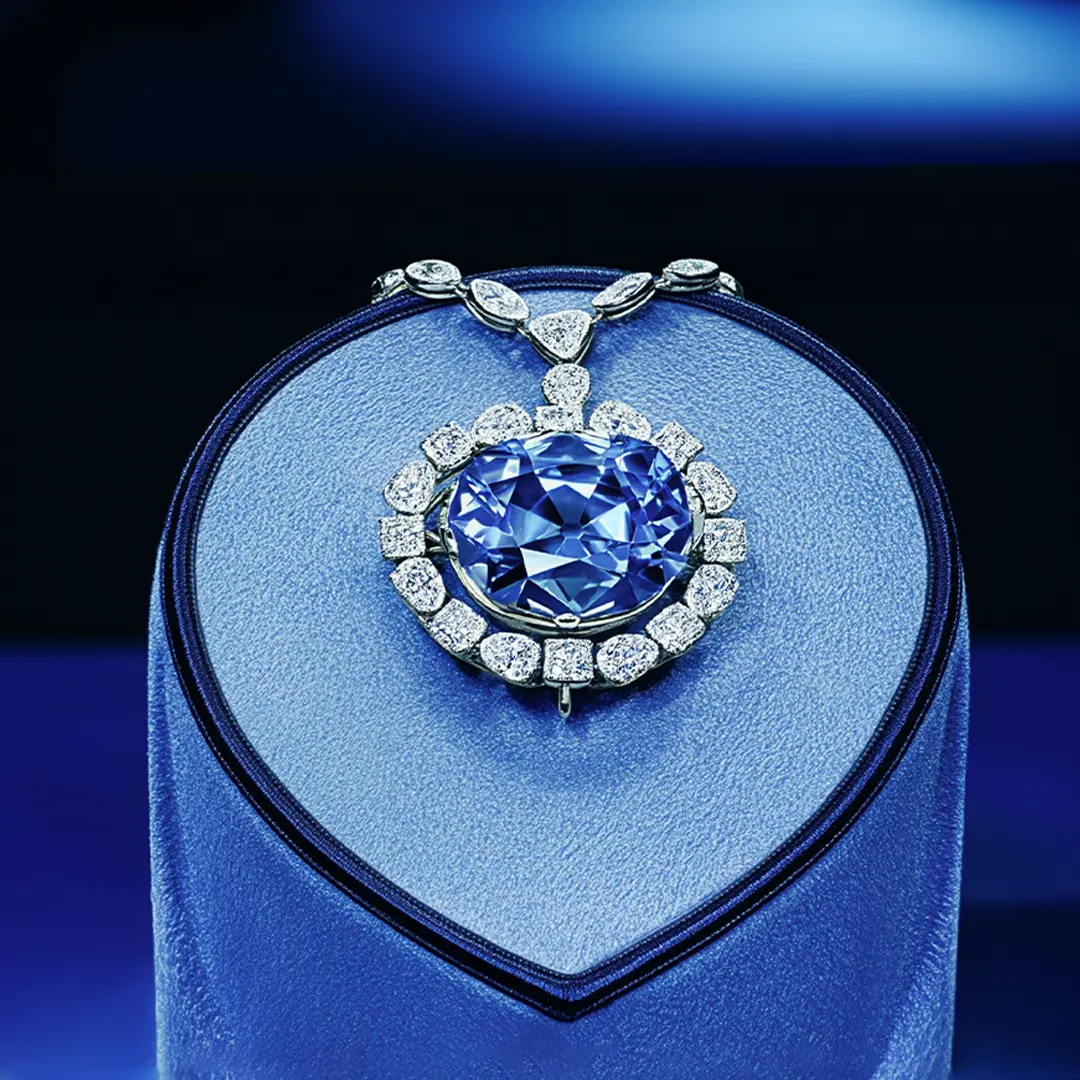
Diamond
A pure Diamond is composed of Carbon and is colorless. However, diamond crystals usually contain trace elements, the most common is Nitrogen- this causes yellow color in diamonds.
Basic Information- Mineral: Carbon ( C )
- Color: Colorless
- Moh's Hardness: 10
- Crystal System: Cubic
- Refractive Index: 2.417
- Specific Gravity: 3.52
Diamond is the hardest mineral and its chemical and physical properties makes it useful for abrasive and cutting industries. Diamonds are mined in Botswana, Canada, South Africa, Australia, Russia, etc.
Diamond is the birthstone for April. Many of the myths surrounding diamonds originated in India and have been passed on and adapted as diamonds reached Europe.
Ancient Hindu lapidaries warn against the wearing of flawed diamonds as this could bring misfortune, whereas: “He who has a pure body, and carries on his person a diamond that is sharp-pointed, without blemish and entirely flawless, shall daily increase his worth in happiness, prosperity, children, wealth, crops, cows and livestock, to the ends of his life.”
Diamonds have also been associated with love, but this image and their use in engagement rings have only become common place relatively recently. This is primarily due to the rarity of diamonds prior to the African finds in the late nineteenth century and a widespread advertising campaign started by De Beers in the late 1930s.
Diamonds are valued only when they are untreated, yet the common treatment done on diamonds are fracture filing and lasering.
Explore the complete Diamond guide →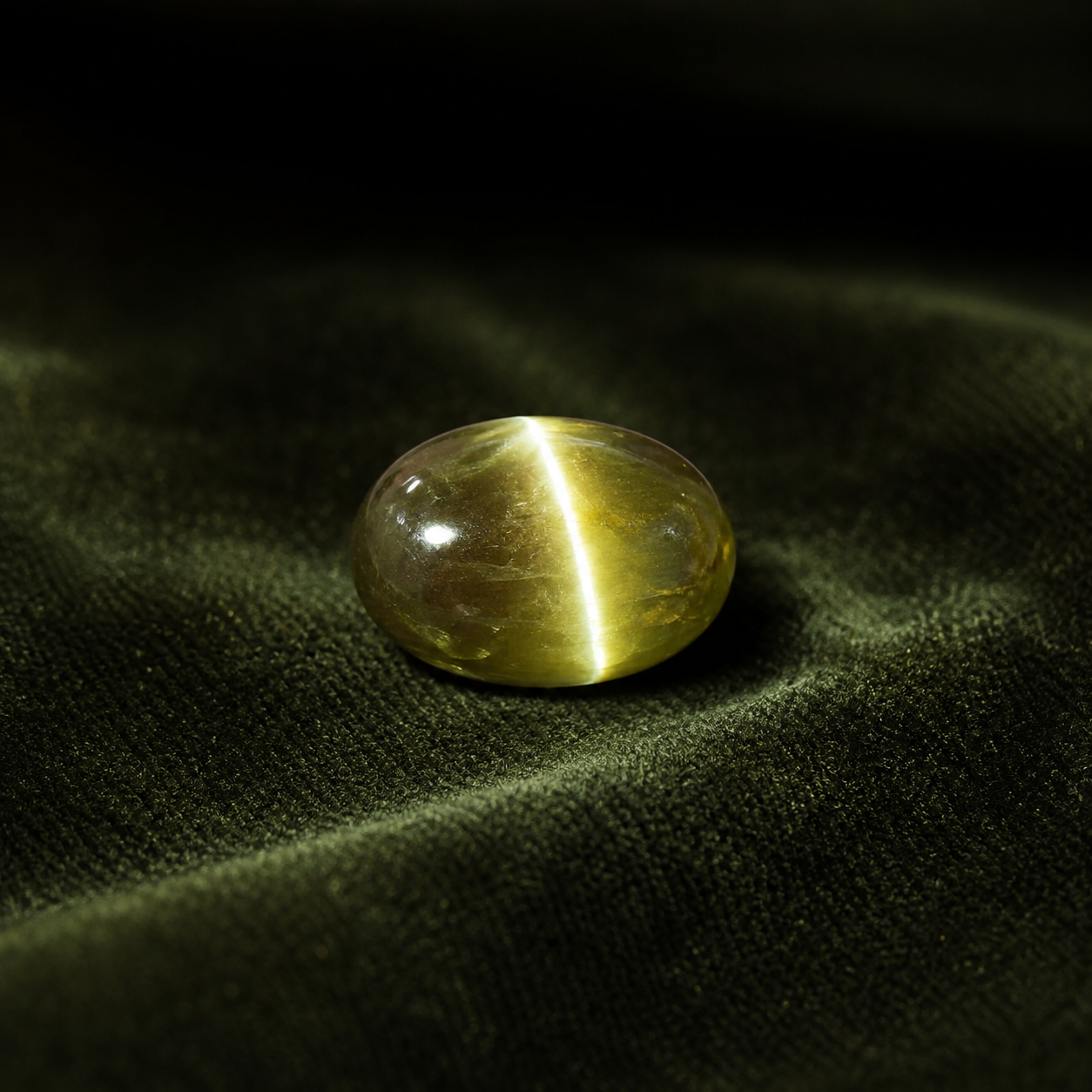
Cat’s Eye
Cat’s Eye is a chatoyant variety of Chrysoberyl, also known as Cymophane. It displays a bright band of light across its surface that appears to move when the gemstone or light source is moved, resembling the eye of a cat.
Basic Information- Mineral: Chrysoberyl (BeAl₂O₄ – Beryllium Aluminium Oxide)
- Color: Honey yellow, yellowish green and greenish brown
- Moh's Hardness: 8.5
- Crystal System: Orthorhombic
- Refractive Index: 1.746-1.755
- Specific Gravity: 3.73
The cat’s-eye effect is scientifically known as chatoyancy. It is caused when light reflects from fine, parallel needle-like inclusions or microscopic tubes within the gemstone. Cat’s Eye is usually cut into a smooth, rounded cabochon to display this moving band of light clearly.
The finest Cat’s Eye gemstones display a sharp, bright and well-centred eye against a honey-yellow or greenish background. Important sources of Chrysoberyl Cat’s Eye include Sri Lanka, Brazil and parts of East Africa.
Cat’s Eye is commonly known as Lehsunia or Vaidurya in India. In traditional Vedic astrology, it is associated with Ketu and is believed to represent protection, awareness, discipline and clear thinking. These associations are based on traditional beliefs rather than scientific evidence.
Explore the complete Cat’s Eye guide →Ruby
The red corundum defined by chromium. Symbol of passion, vitality, and enduring rarity.
Emerald
Green beryl prized for saturation and depth. Historically linked to wisdom and protection.
Blue Sapphire
A corundum of clarity and strength. Highly durable and eternally elegant.
Yellow Sapphire
A golden corundum associated with prosperity, clarity, and positive energy.
Pearl
An organic gem formed within mollusks — serene, timeless, and naturally luminous.

Opal
A play-of-colour masterpiece. Each opal is a one-of-a-kind expression of nature's artistry.
Garnet
A family of gems representing vitality and harmony — found in a spectrum beyond red.
Diamond
Pure carbon transformed by nature into the world's most brilliant gemstone. A symbol of clarity, promise, and forever.