
Colored gemstones like rubies, sapphires, emeralds, spinels, and tourmalines have fascinated people for centuries. Today, they are more accessible than ever through jewellery stores, exhibitions, online platforms, and private sellers.
But as interest in colored gemstones grows, so does the importance of knowing exactly what you are buying.
A vivid red gemstone may look like a ruby, but it could actually be spinel, garnet, glass-filled material, or even a lab-grown stone. Similarly, a blue gemstone could be a natural sapphire, treated topaz, aquamarine, or synthetic sapphire.
Without proper scientific testing, it is extremely difficult to identify gemstones accurately with the naked eye. That is why colored gemstone certification has become more important than ever.
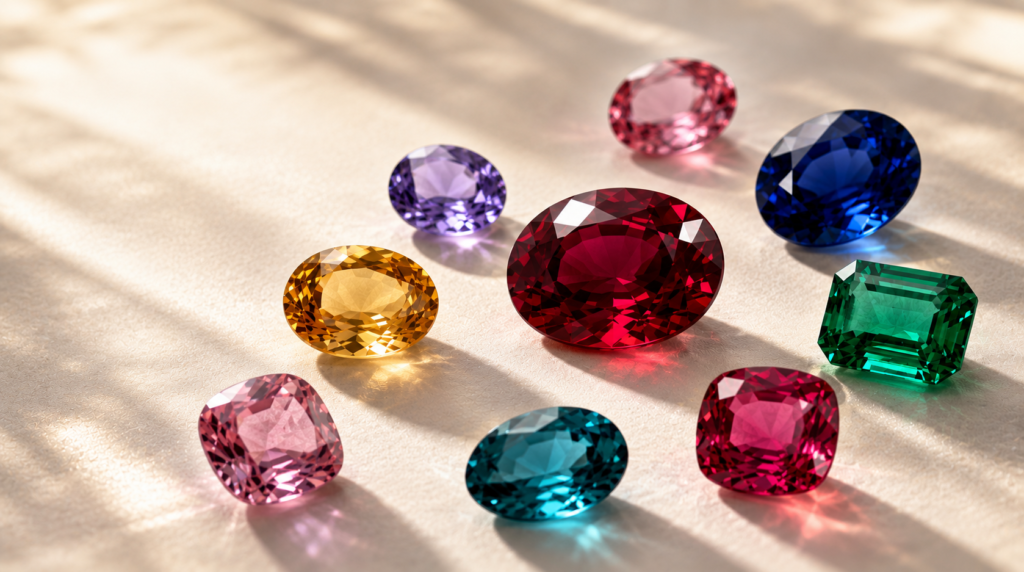
Why Colored Gemstones Are Difficult to Identify
Unlike diamonds, colored gemstones come in a wide variety of mineral species, treatments, and origins. Many stones can appear visually similar even though they have completely different values and scientific characteristics.
For example:
- A ruby and a red spinel may look nearly identical
- A natural sapphire can resemble a lab-grown sapphire
- Some emeralds undergo clarity enhancement treatments that are invisible to the naked eye
This is why professional gemstone testing is essential.
Modern gemological laboratories use scientific equipment and advanced testing methods to identify gemstones accurately without damaging them.
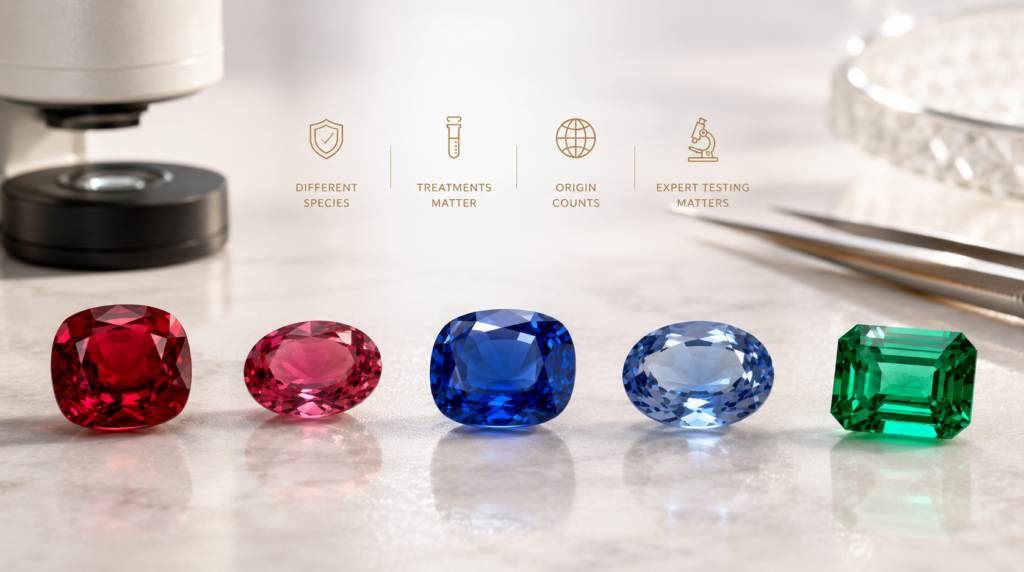
What Is Colored Gemstone Certification?
Colored gemstone certification is a scientific analysis performed by a professional gemological laboratory to determine:
- The gemstone species and variety
- Whether the gemstone is natural or lab-grown
- Whether treatments are present
- Additional gemological characteristics
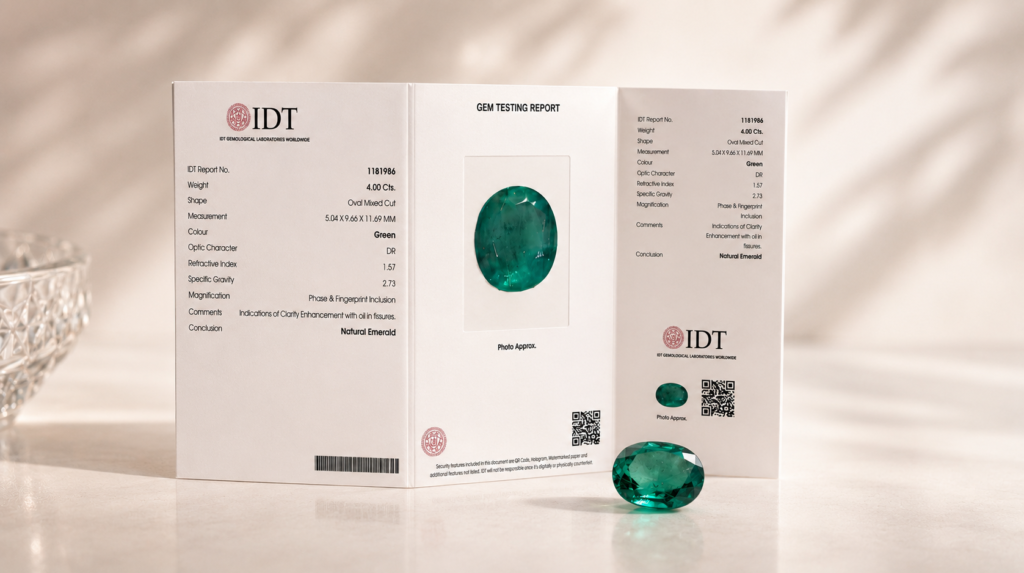
A gemstone certificate is not a price valuation. It is an evidence-based identity document that scientifically explains what the gemstone actually is.
At IDT Gemological Laboratories, gemstones are tested using advanced gemological methods designed to provide accurate and transparent reporting.
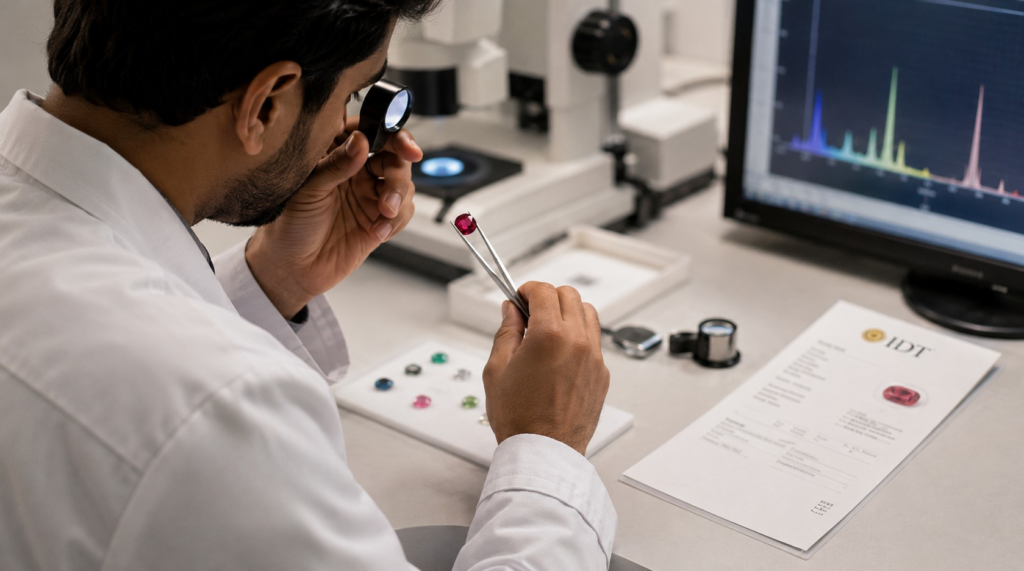
How Gemological Laboratories Test Gemstones
Professional gemstone laboratories use multiple scientific methods to analyze gemstones.
These may include:
Refractive Index Testing
Measures how light travels through the gemstone. Different gem species have unique optical properties.
Spectroscopy
Helps identify trace elements, treatments, and growth patterns invisible to the naked eye.
Inclusion Analysis
Microscopic inclusions inside gemstones can help determine whether a stone is natural or synthetic.
Fluorescence Testing
Some gemstones react differently under ultraviolet light, helping gemologists identify treatments and origins.
Growth Structure Analysis
Used to differentiate natural gemstones from lab-grown gemstones.
These methods allow laboratories to identify gemstones accurately without causing damage to the stone.
Why Gemstone Certification Matters for Buyers
The gemstone market today is global and highly accessible. While this offers buyers more choices, it also increases the risk of misinformation and undisclosed treatments.
Certification becomes important in situations such as:
- Buying an expensive ruby, sapphire, or emerald
- Purchasing gemstone jewellery online
- Verifying inherited gemstone jewellery
- Confirming whether a gemstone is natural or lab-grown
- Checking whether treatments have been disclosed properly
- Buying a gemstone as an investment or gift
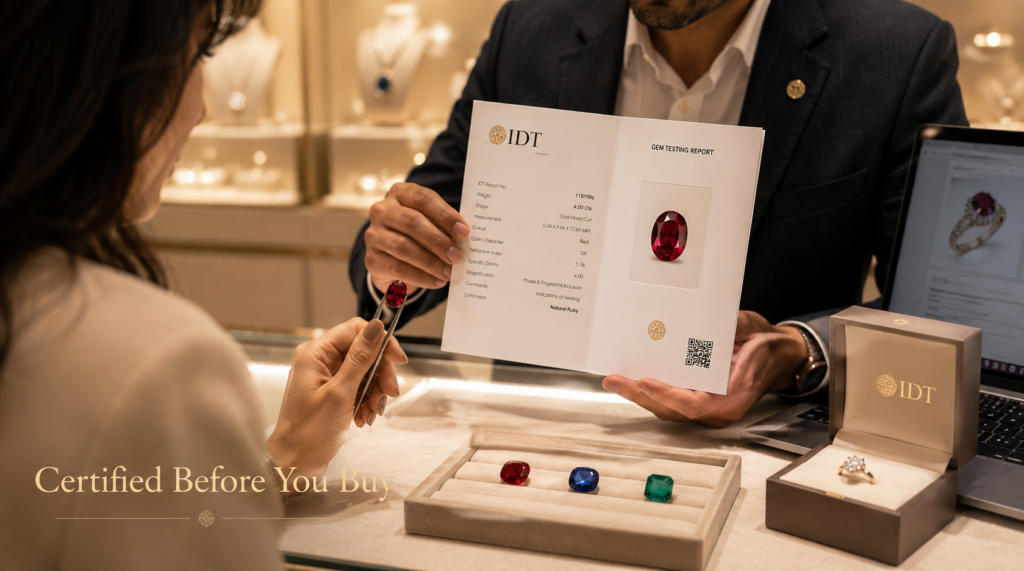
A gemstone testing report provides clarity, transparency, and confidence.
Natural vs Lab-Grown Gemstones
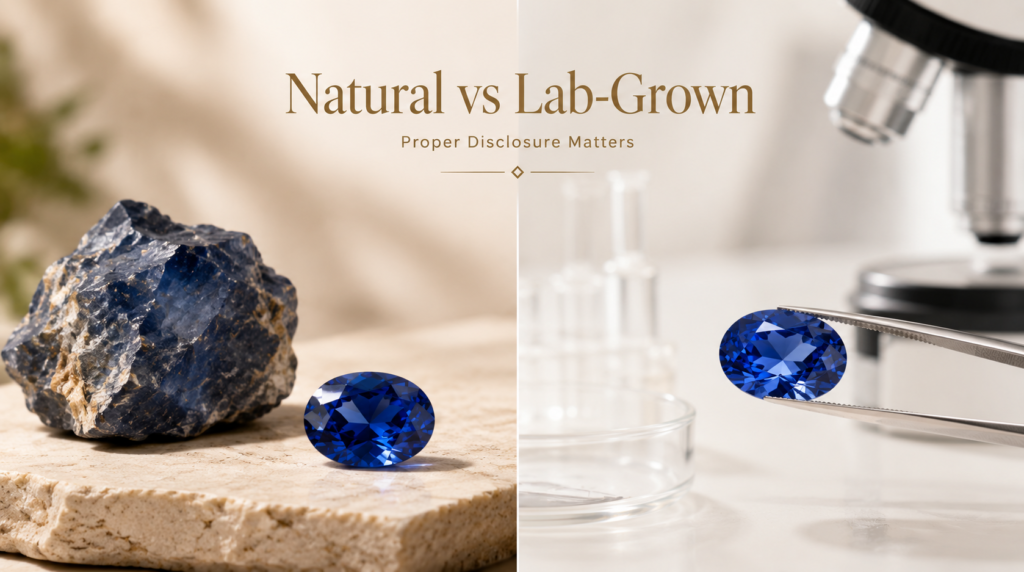
One of the biggest areas of confusion today is the difference between natural and lab-grown gemstones.
Lab-grown gemstones are real gemstones with the same chemical composition as natural stones. However, they are created in controlled laboratory environments instead of forming naturally inside the Earth over millions of years.
Both natural and lab-grown gemstones are legitimate products. What matters is proper disclosure.
Scientific testing is the only reliable way to confirm whether a gemstone is natural or lab-grown.
Why Treatment Detection Is Important
Many colored gemstones in the market undergo treatments to improve their appearance.
Common gemstone treatments include:
- Heat treatment
- Fracture filling
- Surface coating
- Diffusion treatment
- Clarity enhancement
These treatments are widely accepted in the gemstone industry when properly disclosed. However, untreated gemstones can have significantly different market values compared to treated stones.
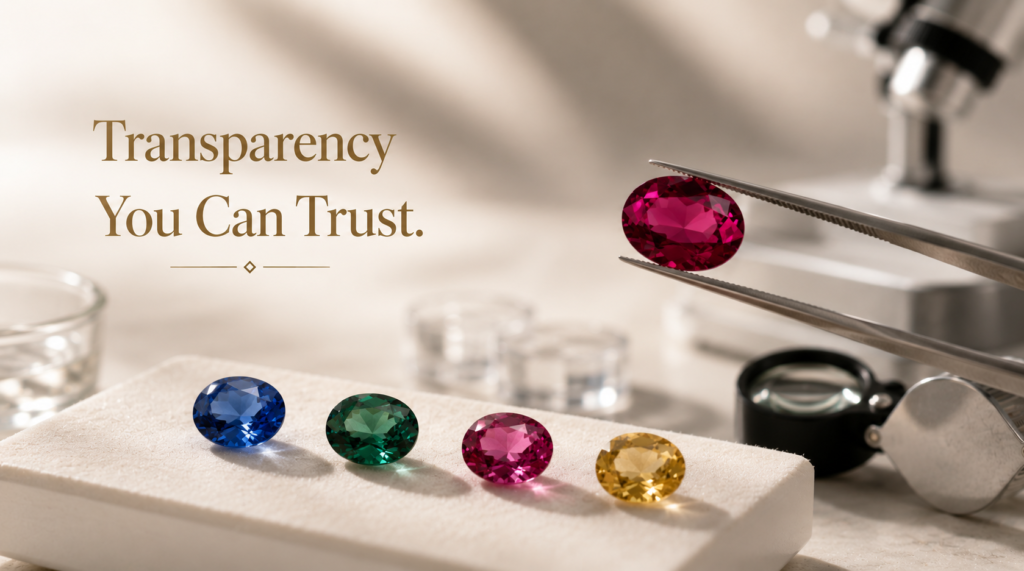
A professional gemstone certification report helps identify detectable treatments and provides transparency to buyers.
Certification for Mounted Jewellery
Many people own gemstone jewellery where the stones are already mounted in rings, pendants, or earrings.
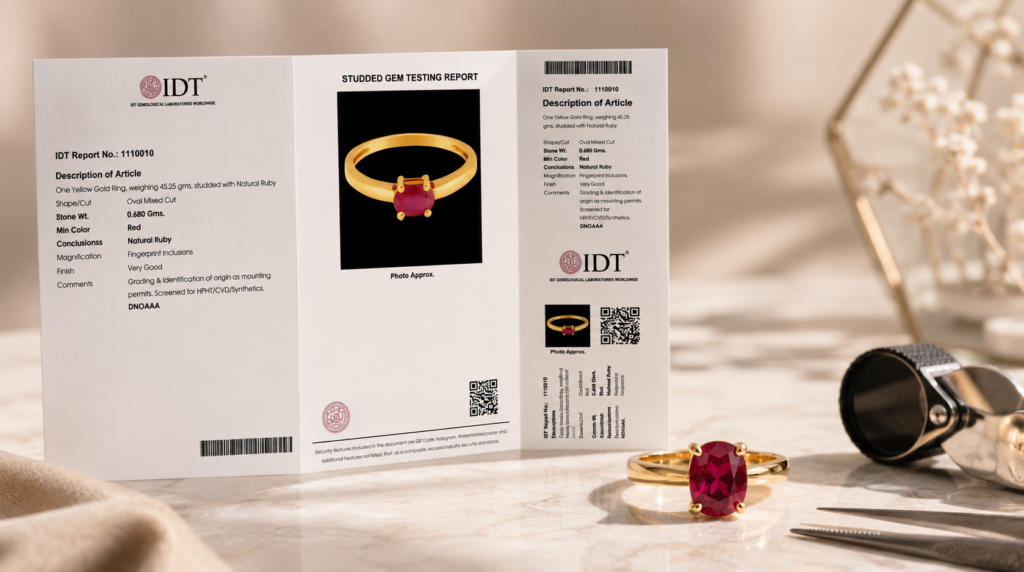
Removing gemstones from jewellery for testing is not always practical. That is why specialized studded gemstone testing reports are important.
Using non-invasive testing techniques, gemological laboratories can often identify mounted gemstones and detect treatments without damaging the jewellery.
This is especially useful for:
- Family heirloom jewellery
- Antique jewellery
- Daily wear gemstone jewellery
- High-value gemstone pieces
The IDT Standard: Scientific Clarity You Can Trust
At IDT Gemological Laboratories, every gemstone report is built on scientific testing, transparent analysis, and evidence-based reporting.
Our laboratory uses advanced gemological methods to identify gemstone species, determine whether a stone is natural or lab-grown, and detect detectable treatments using non-destructive testing techniques.
Depending on the gemstone and how it is submitted, testing may include:
- Spectroscopy
- Refractive index testing
- Inclusion analysis under magnification
- Fluorescence testing
- Growth structure examination
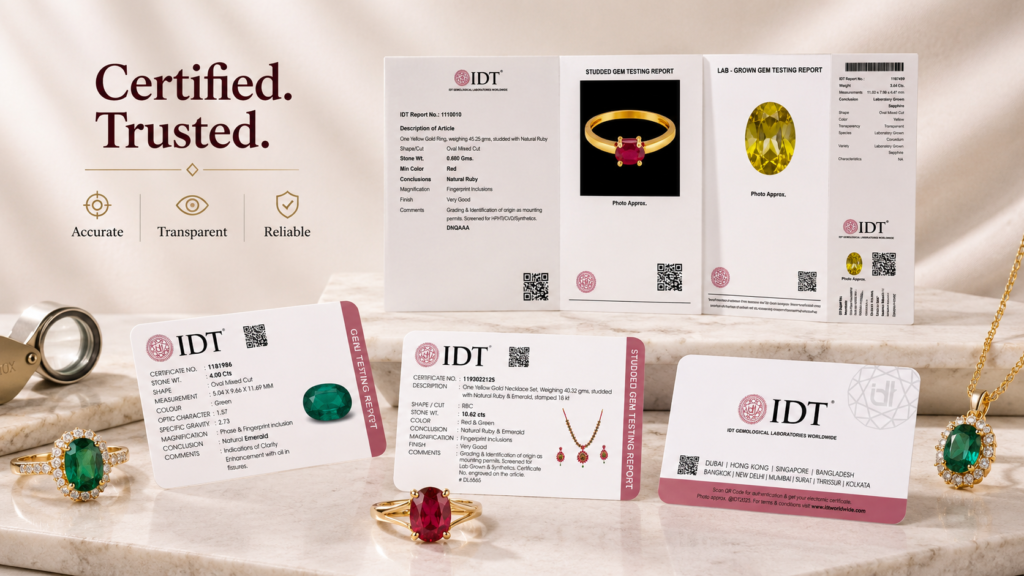
IDT offers specialized testing solutions for different gemstone requirements, including:
Natural Gem Testing Report
Designed for loose natural gemstones. Identifies gemstone species, variety, and detectable treatments through detailed scientific analysis.
Lab Grown Gem Testing Report
Used to determine whether a gemstone is laboratory-grown through advanced spectroscopic and microscopic examination.
Studded Gem Testing Report
Designed for mounted gemstone jewellery where stones cannot be removed easily. Uses non-invasive testing methods to examine gemstones without damaging the jewellery.
Every report issued by IDT Gemological Laboratories is created with a focus on scientific accuracy, transparency, and responsible gemological reporting.
Whether the gemstone is loose or mounted, natural or lab-grown, professional certification helps provide the clarity needed to better understand what the gemstone truly is.
FAQs
1. What is colored gemstone certification?
Colored gemstone certification is a scientific testing process used to identify a gemstone’s species, origin type, and detectable treatments through professional gemological analysis.
2. Can gemstone certification identify lab-grown gemstones?
Yes. Advanced gemological testing can identify whether a gemstone is natural or lab-grown by analyzing growth structures and spectroscopic signatures.
3. Why is gemstone treatment detection important?
Treatments can significantly affect a gemstone’s appearance and market value. Certification helps disclose detectable treatments transparently.
4. Can mounted gemstone jewellery be certified?
Yes. Many gemological laboratories offer testing for mounted jewellery using non-invasive techniques without removing the gemstone.
5. Is a gemstone certificate the same as a valuation?
No. A gemstone certificate identifies and analyzes the gemstone scientifically. It does not determine resale or market price.