
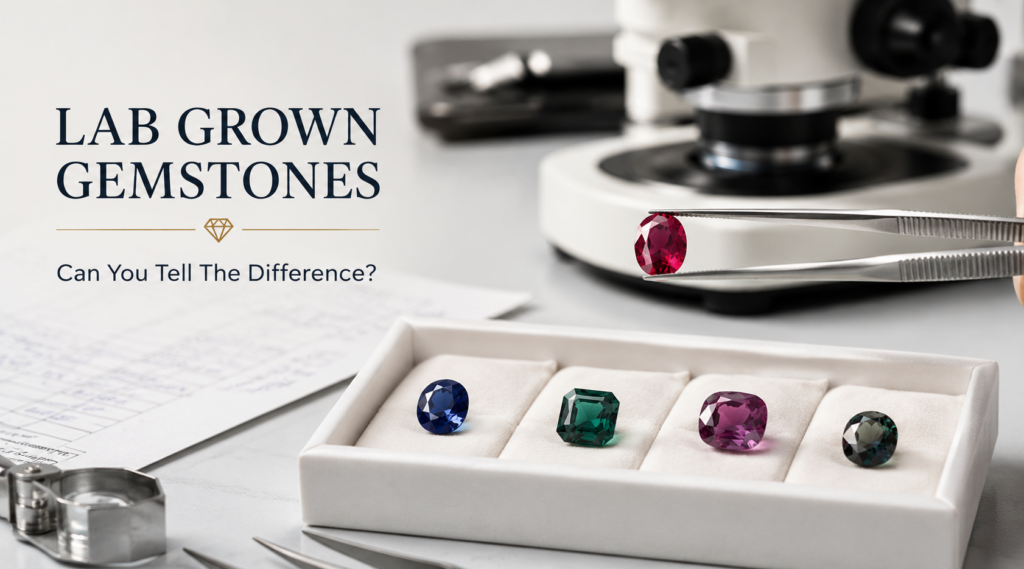
Lab Grown Gemstones Are Everywhere. Can You Tell the Difference?
Lab grown ruby. Lab grown sapphire. Lab grown emerald. Lab grown alexandrite.
You’ve seen them online, in jewellery stores, and even sold as “astrology-grade” gemstones.
They look identical to natural gemstones. The gemstone colors appear the same. The sparkle looks the same.
But there is one critical difference: how they were formed.
If you are buying gemstones for astrology, jewellery, gifting, or investment purposes, that difference matters.
According to IDT laboratory observations from 2026, a significant number of colored stones submitted as natural were later identified as lab grown after testing. Many buyers had no idea what they were actually purchasing.
This guide explains the difference between natural and lab grown colored gemstones, how laboratories test them, and why gemstone certification matters.
What Are Natural Colored Gemstones?
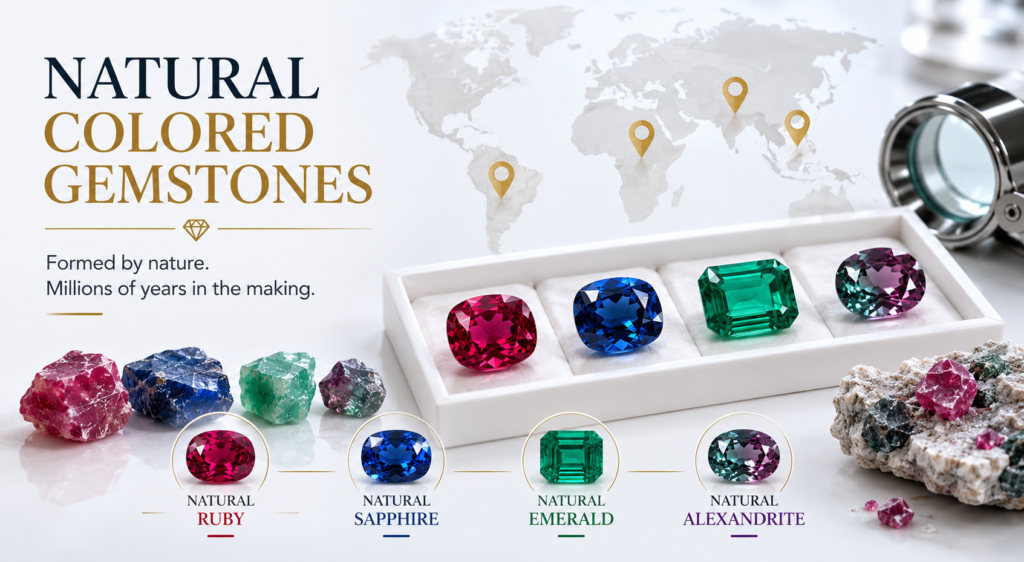
Natural colored gemstones are minerals that formed through geological processes deep within the Earth over millions of years. Their colors are created by trace elements and unique environmental conditions during formation.
Examples of Natural Colored Gemstones
Natural Ruby
A red variety of corundum colored by chromium. Major sources include Myanmar, Mozambique, Madagascar, Sri Lanka, Tanzania, and Vietnam.
Natural Sapphire
A variety of corundum available in blue, yellow, pink, and many other colors. Major sources include Sri Lanka, Madagascar, Myanmar, Australia, and Kashmir.
Natural Emerald
A green variety of beryl colored by chromium and vanadium. Major sources include Colombia, Zambia, Brazil, and Zimbabwe.
Natural Alexandrite
A rare variety of chrysoberyl famous for its dramatic color-changing effect from greenish daylight tones to reddish tones under incandescent light. Major sources include Russia, Brazil, India, and Sri Lanka.
Why Natural Gemstones Are Valuable
Natural gemstone deposits are finite. Many historically important mining regions now produce only limited quantities, making fine-quality natural gemstones increasingly rare and valuable.
What Are Lab Grown Colored Gemstones?
Lab grown gemstones are created in controlled laboratory environments using processes that replicate natural gemstone formation.
They possess the same chemical, physical, and optical properties as their natural counterparts.
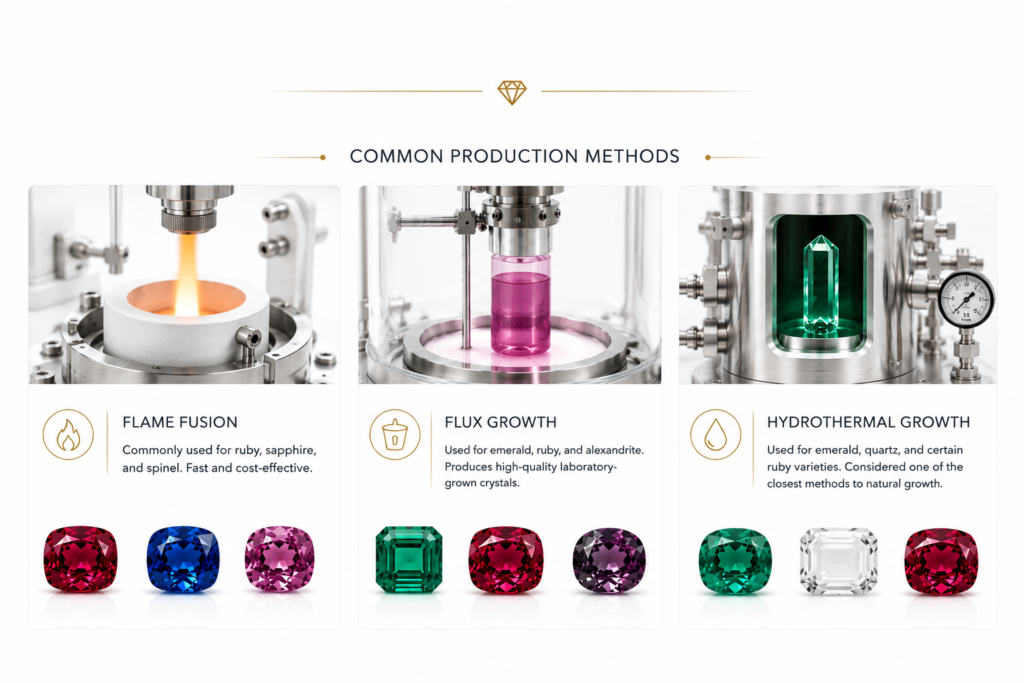
Common Production Methods
Flame Fusion
Commonly used for ruby, sapphire, and spinel. Fast and cost-effective.
Flux Growth
Used for emerald, ruby, and alexandrite. Produces high-quality laboratory-grown crystals.
Hydrothermal Growth
Used for emerald, quartz, and certain ruby varieties. Considered one of the closest methods to natural growth.
Important Fact
Lab grown gemstones are real gemstones.
A lab grown ruby is chemically ruby.
A lab grown sapphire is chemically sapphire.
The key difference is origin. Natural stones form over millions of years, while lab grown stones form within weeks or months.
Natural vs Lab Grown Gemstones: Key Differences
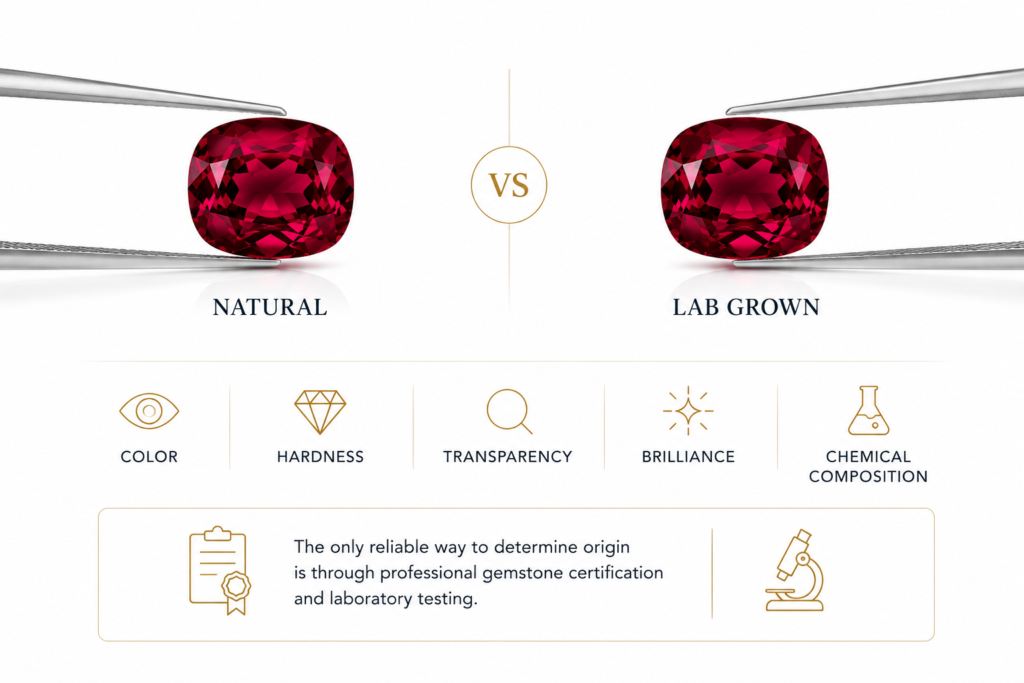
One of the biggest misconceptions is that people can identify natural and lab grown gemstones visually.
In reality, you cannot reliably determine origin simply by looking at a gemstone.
The following characteristics are often identical:
- Color
- Hardness
- Transparency
- Brilliance
- Chemical composition
The only reliable way to determine origin is through professional gemstone certification and laboratory testing.
Do Lab Grown Gemstones Have the Same Colors?
Yes.
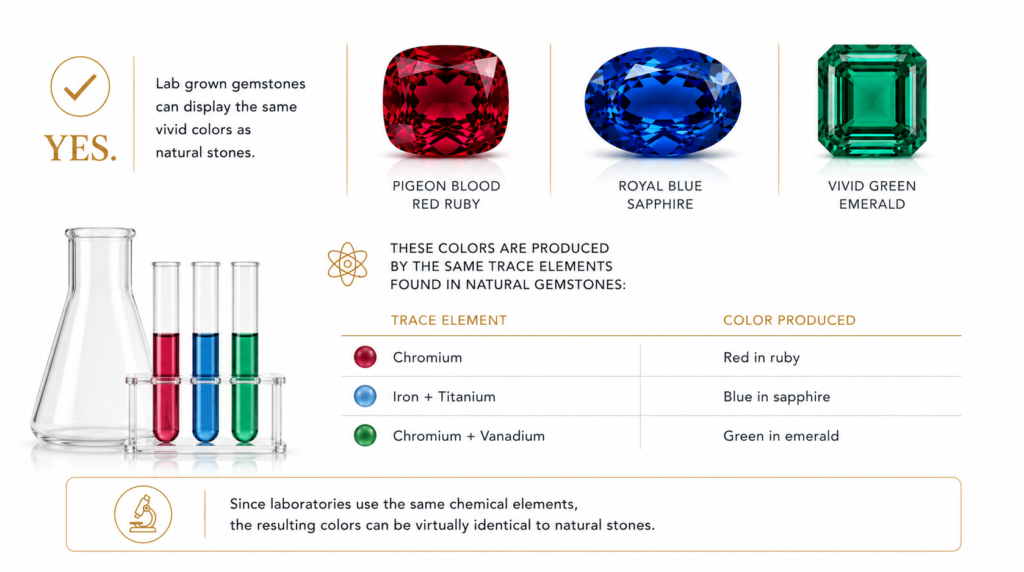
Lab grown gemstones can display the same vivid colors as natural stones.
Examples include:
- Pigeon blood red ruby
- Royal blue sapphire
- Vivid green emerald
These colors are produced by the same trace elements found in natural gemstones:
| Trace Element | Color Produced |
| Chromium | Red in ruby |
| Iron + Titanium | Blue in sapphire |
| Chromium + Vanadium | Green in emerald |
Since laboratories use the same chemical elements, the resulting colors can be virtually identical to natural stones.
Can Lab Grown Gemstones Be Used for Astrology?
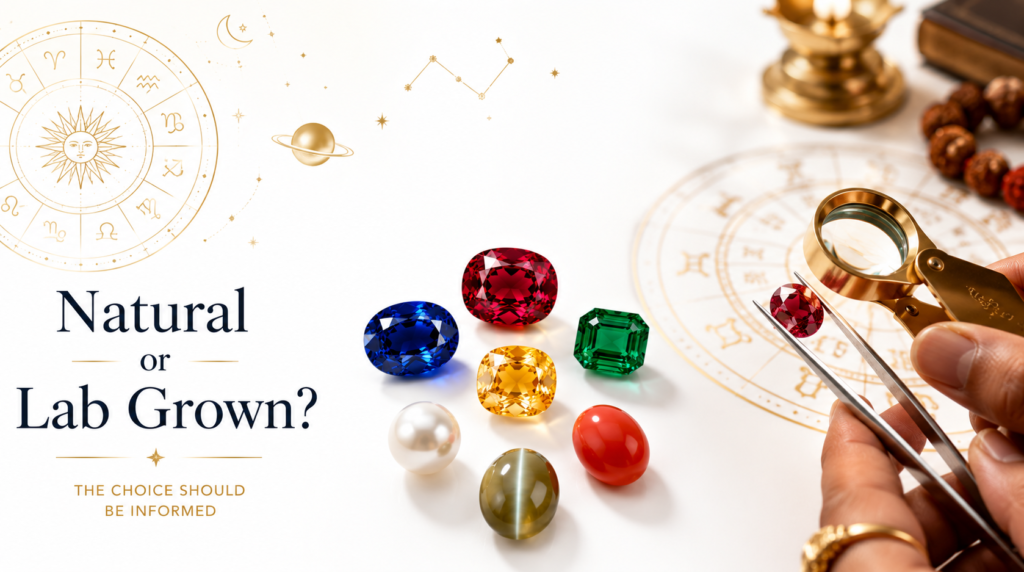
Opinions vary among astrologers.
Many astrologers specifically recommend natural, untreated gemstones and request certification confirming the gemstone’s natural origin.
Others may accept lab grown gemstones depending on personal beliefs and client preferences.
A gemological laboratory’s role is not to advise on astrology. The laboratory simply identifies and reports the gemstone’s origin and any treatments.
A certificate should clearly state whether the gemstone is:
- Natural
- Synthetic or Lab Grown
This allows buyers and astrologers to make informed decisions.
Can You Tell the Difference With the Naked Eye?
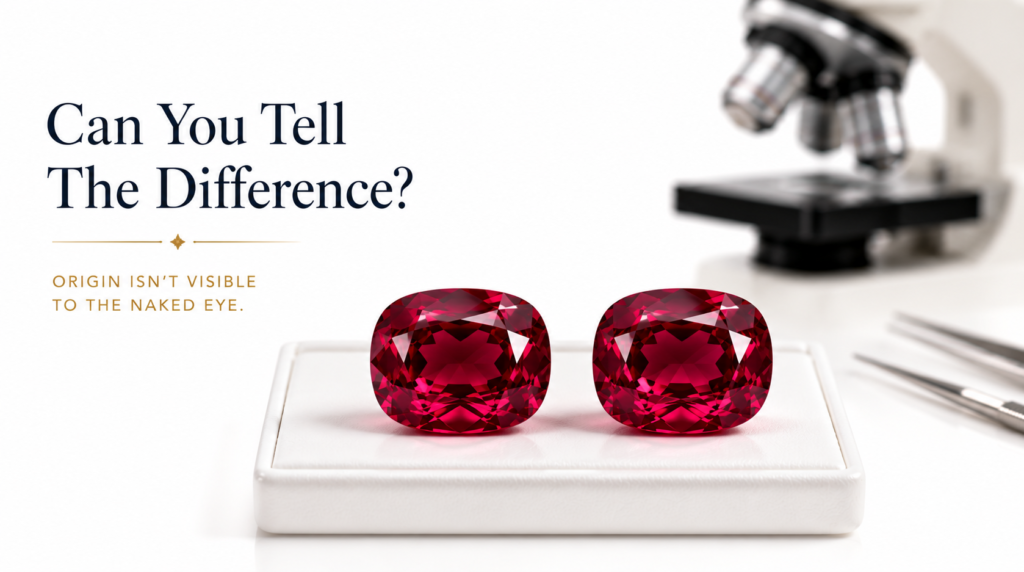
No.
Natural and lab grown gemstones share identical optical and chemical properties.
Even experienced jewellers cannot always determine origin without testing.
What Gemologists Look For
Natural gemstones often contain:
- Crystal inclusions
- Silk inclusions
- Natural growth structures
- Color zoning
Lab grown gemstones may display:
- Curved growth lines
- Flux residues
- Laboratory growth patterns
- Unusually clean interiors
However, visual observations alone are not enough for a definitive conclusion. Advanced laboratory testing is required.
How Gemological Laboratories Test Natural vs Lab Grown Gemstones
Professional laboratories use a combination of techniques to determine gemstone origin.
1. Microscopic Examination
Gemologists study internal features, inclusions, and growth structures under high magnification.
2. Spectroscopy
The gemstone’s interaction with light is analyzed to identify characteristic absorption patterns and trace element signatures.
3. Advanced Gemological Testing
Additional tests may include:
- UV fluorescence analysis
- Thermal response testing
- Optical property measurements
- Specialized origin determination techniques
The final report clearly states whether the gemstone is:
Natural
or
Synthetic / Lab Grown
Common Myths About Lab Grown Gemstones
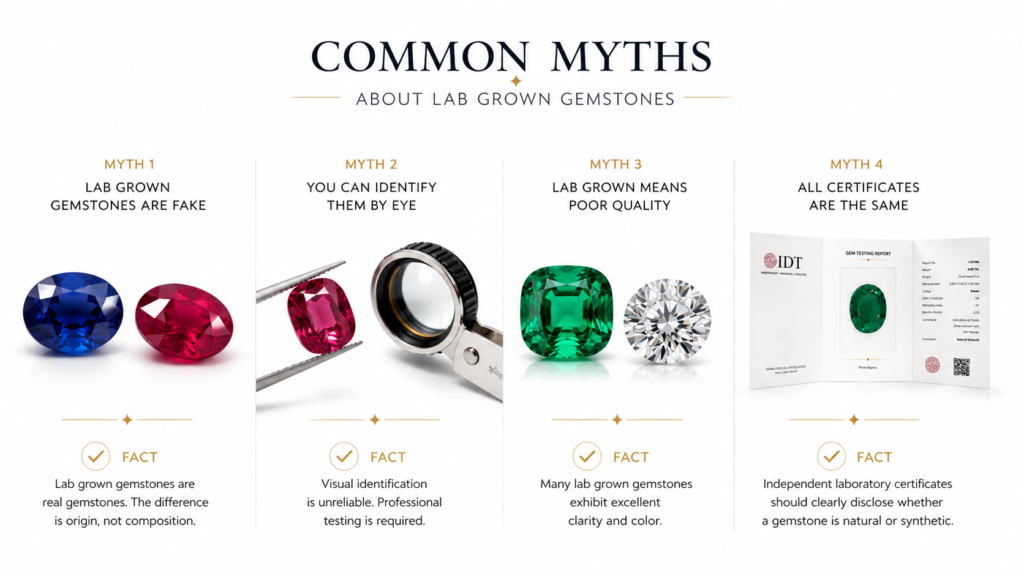
Myth 1: Lab Grown Gemstones Are Fake
Fact: Lab grown gemstones are real gemstones. The difference is origin, not composition.
Myth 2: You Can Identify Them By Eye
Fact: Visual identification is unreliable. Professional testing is required.
Myth 3: Lab Grown Means Poor Quality
Fact: Many lab grown gemstones exhibit excellent clarity and color.
Myth 4: All Certificates Are the Same
Fact: Independent laboratory certificates should clearly disclose whether a gemstone is natural or synthetic.
Gemstone Certification Checklist
Before purchasing any colored gemstone:
1. Request Independent Certification
Choose a recognized gemological laboratory.
2. Check Origin Disclosure
The certificate should clearly state:
- Natural
- Synthetic
- Lab Grown
3. Review Treatment Information
Check whether heating or other treatments are disclosed.
4. Verify the Certificate
Use available online verification systems where applicable.
5. Match the Stone to Your Purpose
Whether for jewellery, collection, gifting, or astrology, ensure the certificate matches your requirements.
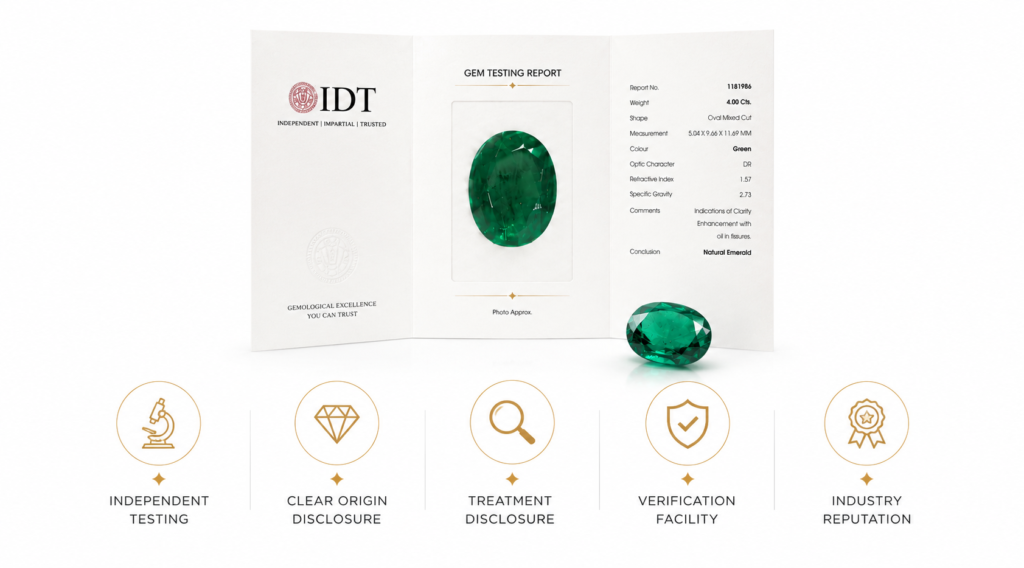
What Makes a Good Gemstone Certificate?
A reliable gemstone certificate should include:
Independent Testing
The laboratory should provide unbiased analysis.
Clear Origin Disclosure
Natural and synthetic gemstones should be distinctly identified.
Treatment Disclosure
Any enhancements should be clearly reported.
Verification Facility
Online verification helps confirm report authenticity.
Industry Reputation
Choose laboratories with established expertise and testing experience.
Frequently Asked Questions
What is the difference between natural and lab grown gemstones?
Natural gemstones form naturally within the Earth over millions of years. Lab grown gemstones are created in controlled laboratory environments within weeks or months.
Are lab grown gemstones real?
Yes. They have the same chemical and physical properties as natural gemstones.
Can lab grown gemstones be used for astrology?
Different astrologers have different opinions. Always consult your astrologer and verify the gemstone’s origin through certification.
Can I identify a lab grown ruby myself?
No. Reliable identification requires professional gemological testing.
Do lab grown gemstones need certification?
Yes. IDT Certification confirms origin and protects buyers from misrepresentation.
What should a gemstone certificate include?
Origin disclosure, treatment information, gemstone details, and verification options.
Before You Buy, Verify
Natural gemstones and lab grown gemstones can both be beautiful choices.
What matters most is knowing exactly what you are buying.
IDT Gemstone certification provides transparency, protects consumers, and ensures informed purchasing decisions.
Before purchasing any ruby, sapphire, emerald, alexandrite, or other colored gemstone, always verify its identity and origin through a trusted gemological laboratory.
Gold has BIS Hallmark. Diamonds have IDT certification. Gemstones deserve IDT certification too.