
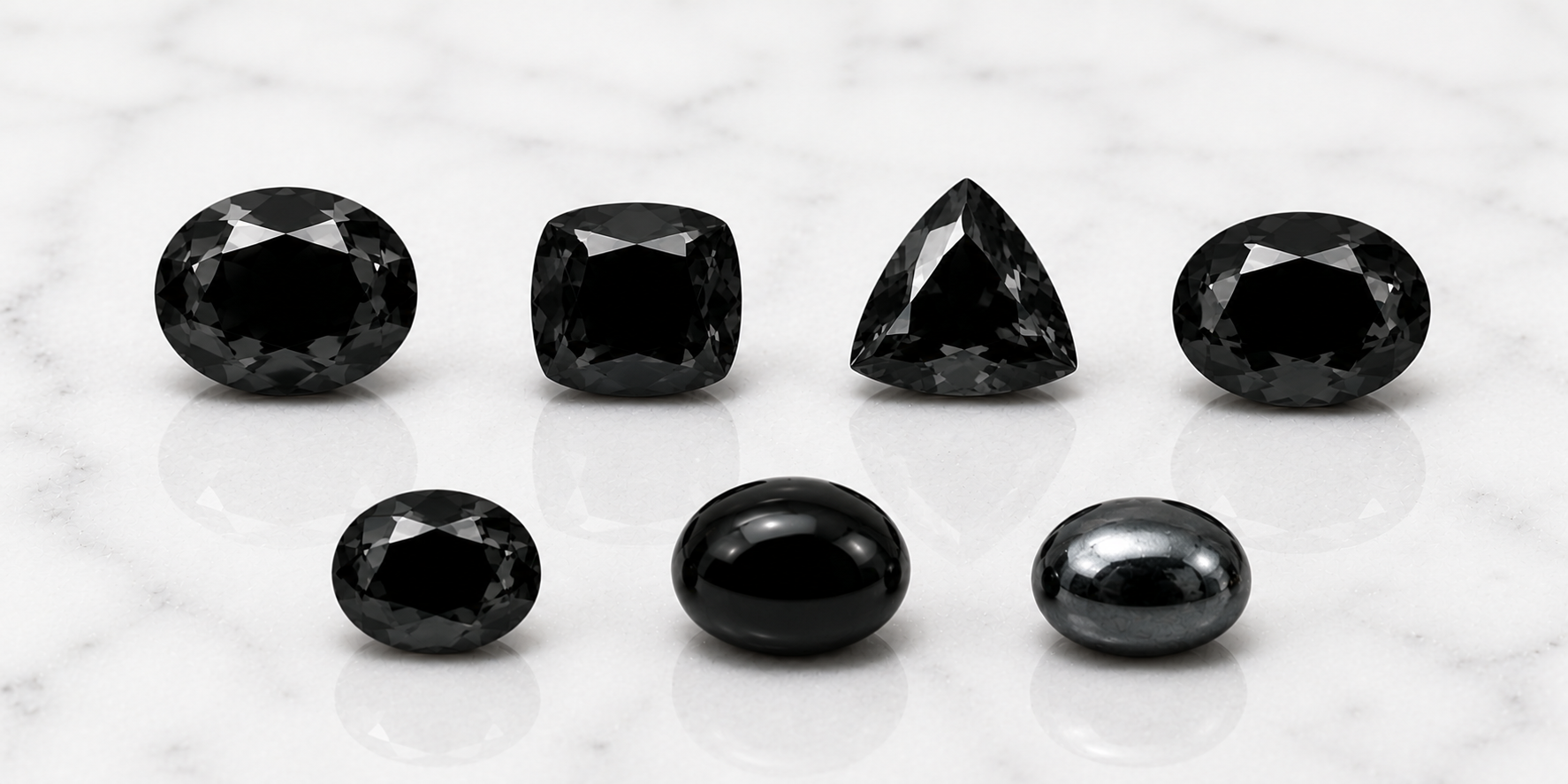
Black gemstones have long been admired for their bold elegance, sophistication, and timeless appeal. Often associated with strength, protection, mystery, and refinement, black gemstones have become increasingly popular in both contemporary and classic jewellery designs. From the exceptional durability of black diamond to the glossy simplicity of black onyx, these gemstones offer distinctive beauty and versatility.
While many black gemstones may appear similar in colour, they differ significantly in terms of composition, durability, rarity, and value. This guide explores some of the most popular black gemstones used in jewellery today.
Black Diamond
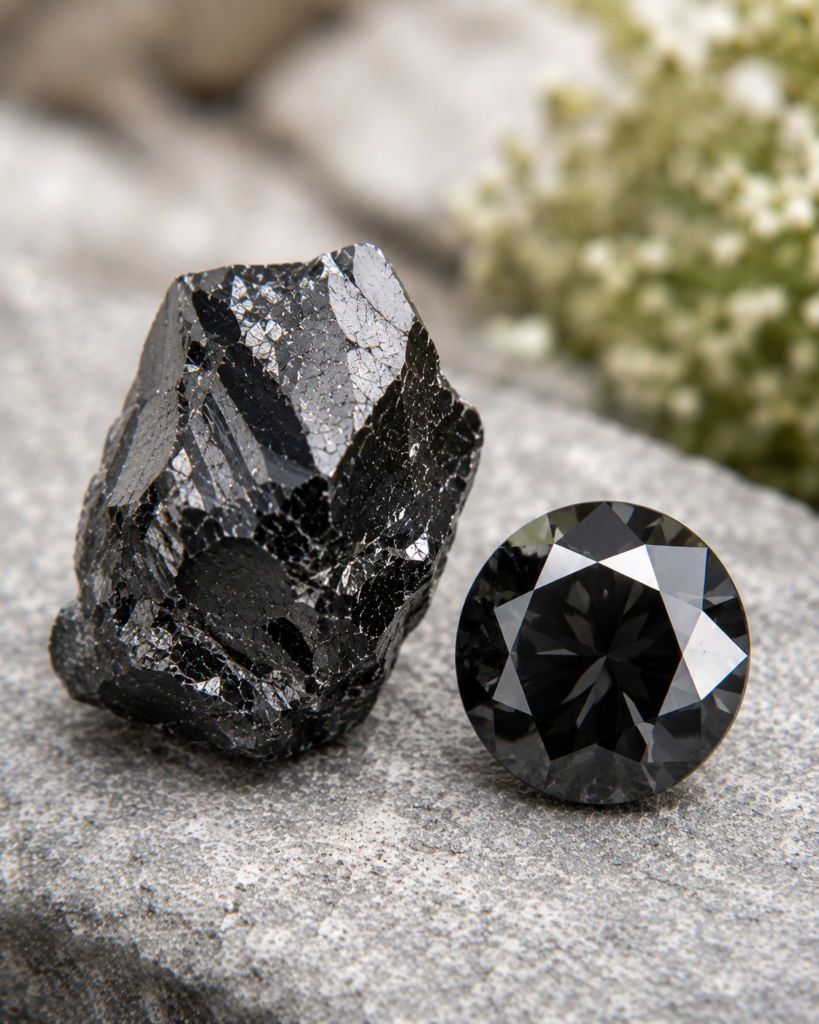
Black diamond is a variety of diamond characterised by its opaque appearance and dramatic colour. Natural black diamonds owe their colour to numerous inclusions, while treated black diamonds are also commonly available in the jewellery market.
Colour: Opaque black to charcoal black
Hardness: 10 on the Mohs scale
Best for: Engagement rings, fine jewellery, and heirloom pieces
Key Characteristics
- The hardest natural gemstone
- Suitable for everyday wear
- Distinctive, modern appearance
- Natural and treated varieties are available
Black Onyx
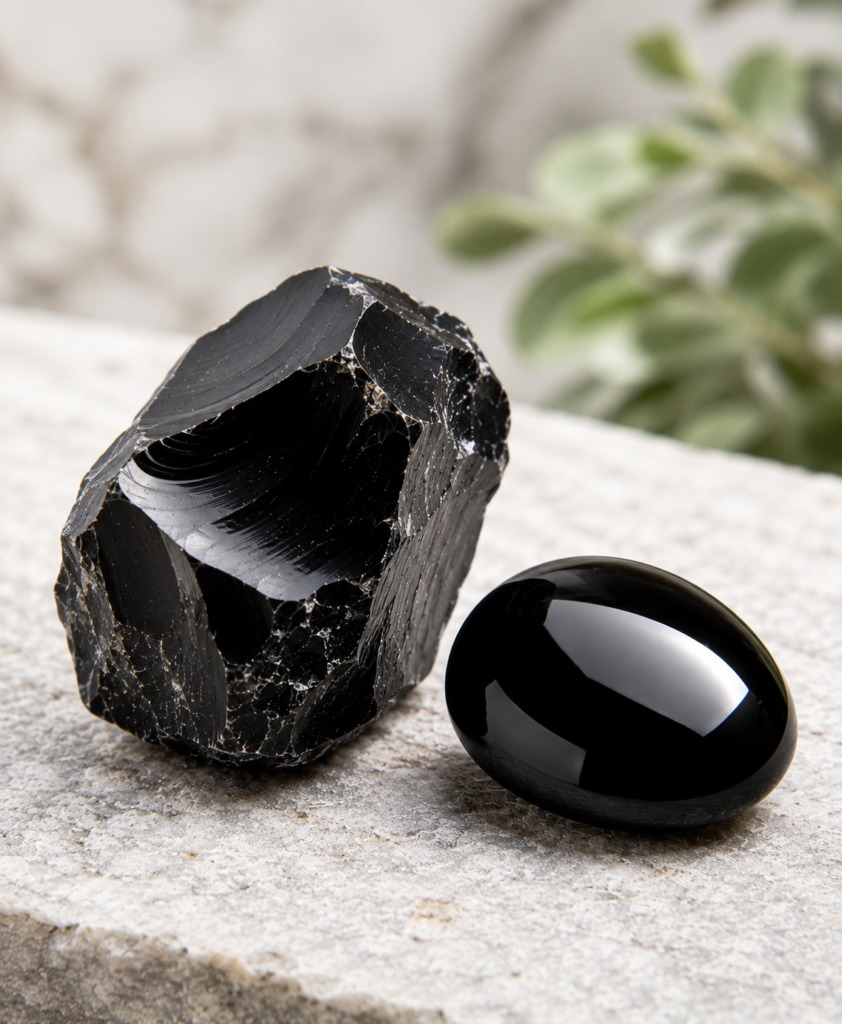
Black onyx is one of the most widely recognised black gemstones. A variety of chalcedony, it has been used in jewellery and decorative objects for thousands of years.
Colour: Uniform jet black
Hardness: 6.5 to 7 on the Mohs scale
Best for: Rings, pendants, earrings, bracelets, cufflinks, and fashion jewellery
Key Characteristics
- Smooth, lustrous appearance
- Popular in both men’s and women’s jewellery
- Widely available and affordable
- Frequently cut into cabochons and beads
Black Spinel
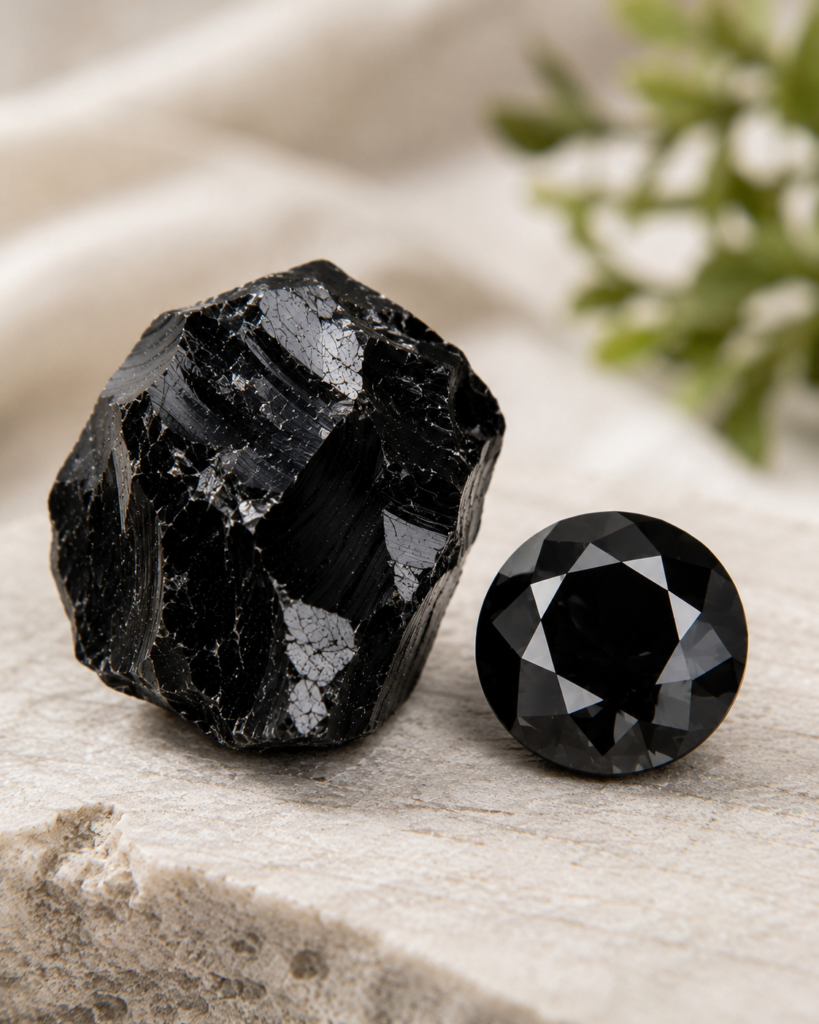
Black spinel is a durable and naturally occurring gemstone valued for its rich black colour and excellent polish. It has gained popularity as an alternative to black diamond due to its attractive appearance and affordability.
Colour: Deep black
Hardness: 8 on the Mohs scale
Best for: Rings, earrings, pendants, bracelets, and everyday jewellery
Key Characteristics
- Good durability for regular wear
- Attractive vitreous lustre
- Typically untreated
- Increasingly popular in contemporary jewellery designs
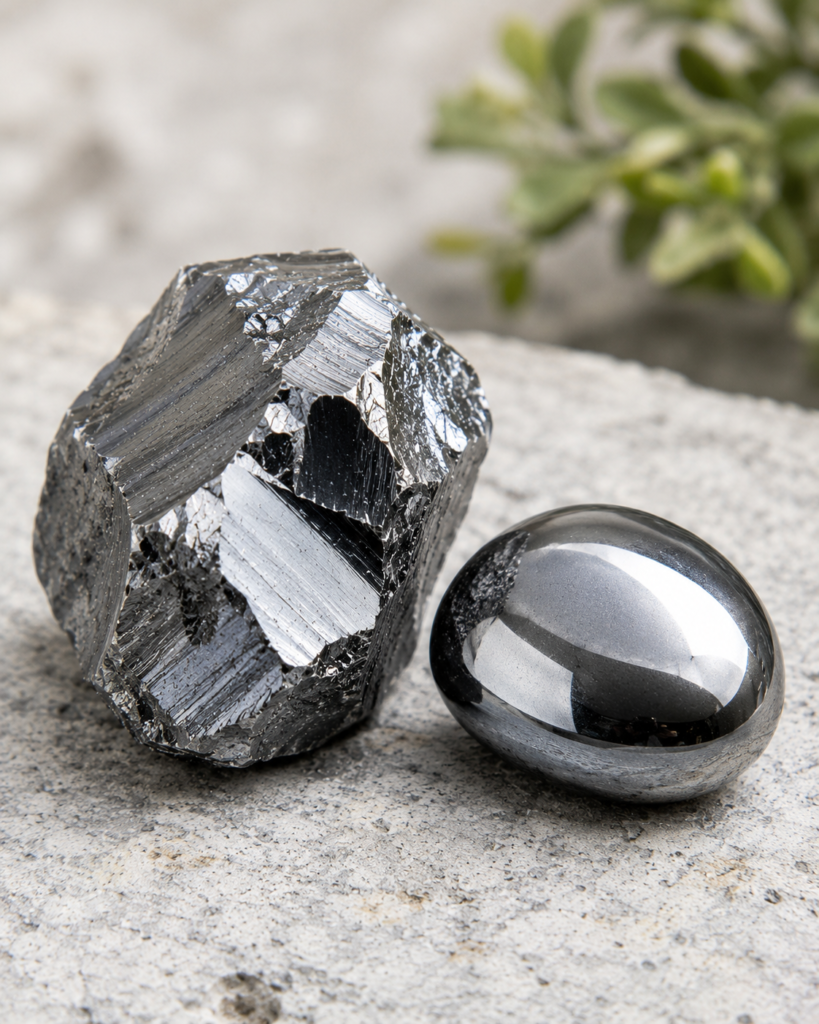
Hematite
Hematite is an iron oxide mineral recognised for its metallic appearance and distinctive steel grey to black colour. It has long been used in ornamental jewellery and decorative carvings.
Colour: Metallic grey to black
Hardness: 5 to 6.5 on the Mohs scale
Best for: Beads, pendants, bracelets, and fashion jewellery
Key Characteristics
- Distinctive metallic lustre
- Relatively dense and heavier than many gemstones
- Popular in men’s jewellery
- Commonly fashioned into beads and cabochons
Obsidian
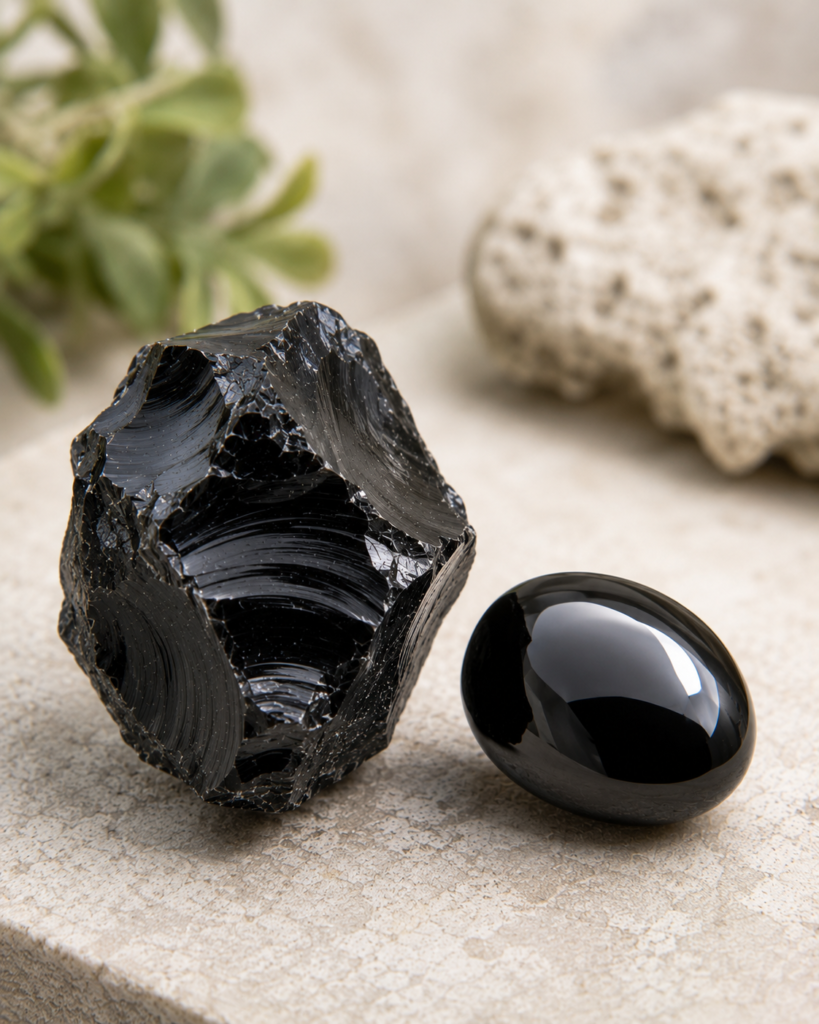
Obsidian is a naturally occurring volcanic glass formed through the rapid cooling of lava. Its glossy black appearance has made it a popular material for jewellery and decorative objects throughout history.
Colour: Jet black
Hardness: 5 to 5.5 on the Mohs scale
Best for: Pendants, beads, carvings, and statement jewellery
Key Characteristics
- Natural volcanic origin
- Smooth, glassy lustre
- Relatively soft and brittle compared to crystalline gemstones
- Commonly used in artistic and ornamental designs
| Comparison of Popular Black Gemstones | |||
| Gemstone | Colour | Hardness | Suitable for Daily Wear |
| Black Diamond | Opaque black to charcoal black | 10 | Yes |
| Black Onyx | Uniform jet black | 6.5 to 7 | With care |
| Black Spinel | Deep black | 8 | Yes |
| Hematite | Metallic grey to black | 5 to 6.5 | Occasional wear |
| Obsidian | Jet black | 5 to 5.5 | Occasional wear |
How to Choose a Black Gemstone
When selecting a black gemstone, consider the following factors:
Appearance
Some black gemstones display a glossy, uniform appearance, while others exhibit metallic lustre or subtle variations in tone. Choosing a gemstone that aligns with your personal style is often an important consideration.
Durability
Harder gemstones such as black diamond and black spinel are better suited for jewellery intended for everyday wear. Softer materials may require additional care and protective settings.
Rarity
Natural black diamonds are generally rarer and command higher prices than more commonly available black gemstones such as onyx and obsidian.
Budget
Black gemstones are available across a wide range of price points. Obsidian and black onyx are generally more affordable, whereas black diamonds occupy the premium segment of the market.
Certification
Independent gemstone testing can provide valuable information about a gemstone’s identity and characteristics.
Why IDT Gemstone Certification Matters
Many black gemstones can appear remarkably similar to the naked eye. In some cases, gemstones may also undergo treatments to alter or enhance their appearance. Professional gemstone testing helps provide greater transparency about the stone being purchased.
IDT Gemstone Certification helps identify important characteristics, including:
- The identity of the gemstone
- Whether the gemstone is natural or laboratory grown, where applicable
- The presence of detectable treatments
- Weight and measurements
- Colour and transparency observations
- Additional comments relevant to the gemstone
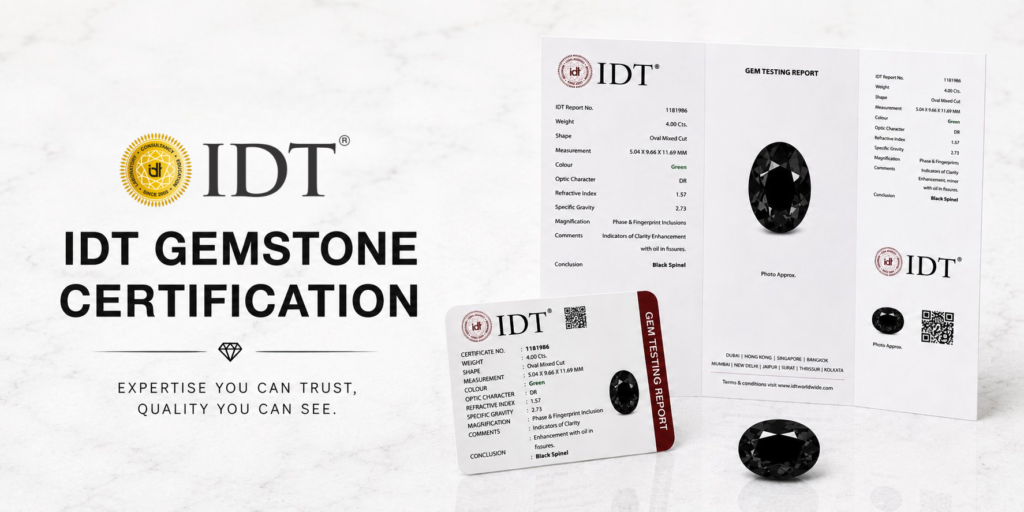
Whether purchasing a black diamond, black onyx, black spinel, hematite, or obsidian, IDT Gemstone Certification provides an independent assessment to help buyers better understand the gemstone they own or intend to purchase.
Black gemstones remain some of the most versatile and sophisticated coloured stones in the world. From the unmatched durability of black diamond to the sleek elegance of black onyx, each gemstone offers its own distinctive beauty and appeal.
Before purchasing a valuable black gemstone, understanding its identity, durability, and characteristics can help you make a more informed decision. Always insist on IDT Gemstone Certification for greater transparency and confidence.