
The Gem of Growth and Prosperity
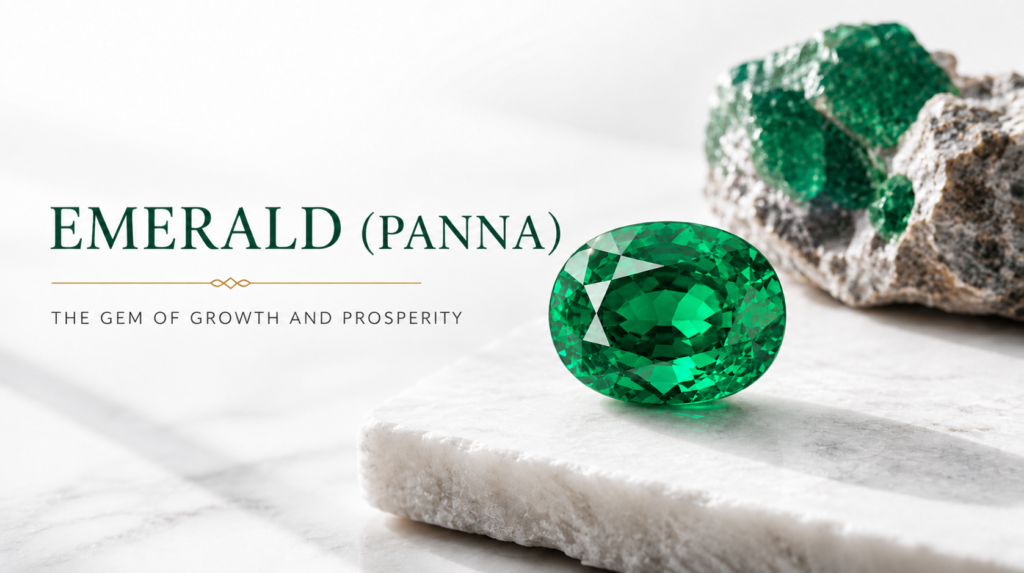
Emerald, also known as Panna, is one of the world’s most treasured green gemstones, admired for its rich colour and timeless elegance. As one of the nine sacred Navratna gemstones, Emerald has been valued for centuries in fine jewellery and is traditionally associated with Mercury (Budh) in Vedic astrology. Discover its unique characteristics, quality factors, origins, traditional significance, and the importance of professional gemstone certification.
| Property | Details |
| Gemstone | Emerald (Panna) |
| Mineral Family | Beryl |
| Chemical Composition | Beryllium Aluminium Silicate (Be₃Al₂Si₆O₁₈) |
| Crystal System | Hexagonal |
| Colour | Green to Bluish Green |
| Hardness | 7.5 to 8 (Mohs Scale) |
| Refractive Index | 1.577 to 1.583 |
| Specific Gravity | 2.67 to 2.78 |
| Lustre | Vitreous |
| Transparency | Transparent to Opaque |
| Birthstone | May |
| Zodiac Association | Gemini, Virgo |
| Planet Association | Mercury (Budh) |
| Major Sources | Colombia, Zambia, Brazil, Zimbabwe, Ethiopia, Afghanistan, Pakistan |
About Emerald (Panna)
Emerald is the green variety of the mineral beryl, with its beautiful colour resulting from trace amounts of chromium, vanadium, or both. It has been admired for thousands of years and is considered one of the most valuable coloured gemstones in the world.
Throughout history, Emerald has symbolized wisdom, renewal, prosperity, and harmony. It was highly prized by ancient civilizations, including the Egyptians, with Queen Cleopatra famously known for her love of emeralds.
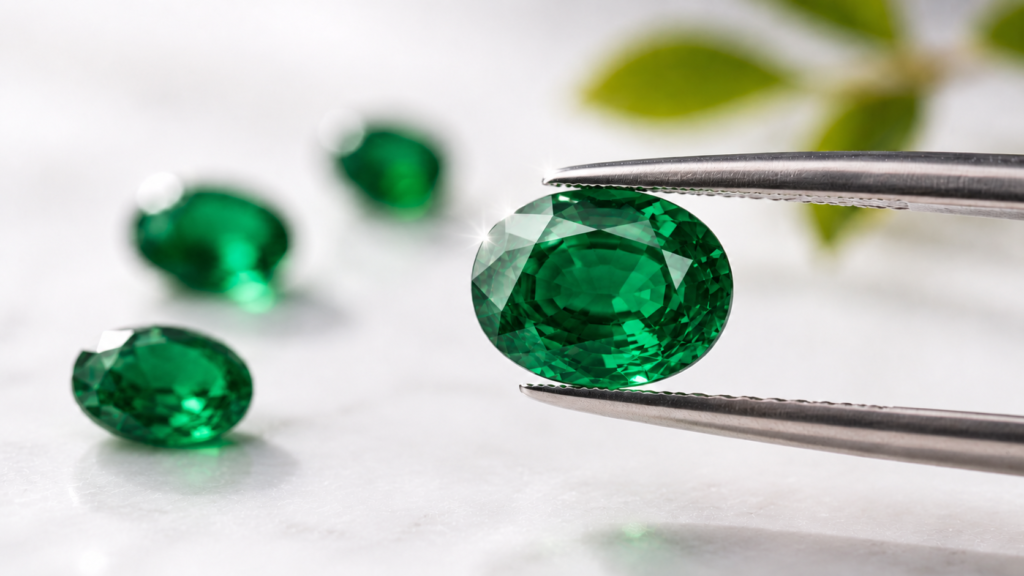
Today, Emerald remains a popular choice for rings, pendants, earrings, bracelets, and luxury jewellery. Every natural Emerald is unique, often containing characteristic inclusions known as the gemstone’s “jardin” or garden, which are widely accepted as part of its natural beauty.
Because natural, treated, and laboratory-grown emeralds can appear similar, professional gemstone testing is essential to accurately identify the gemstone and detect any treatments.
Color & Quality
The quality and value of an Emerald are determined by the Four Cs: Colour, Clarity, Cut, and Carat Weight.
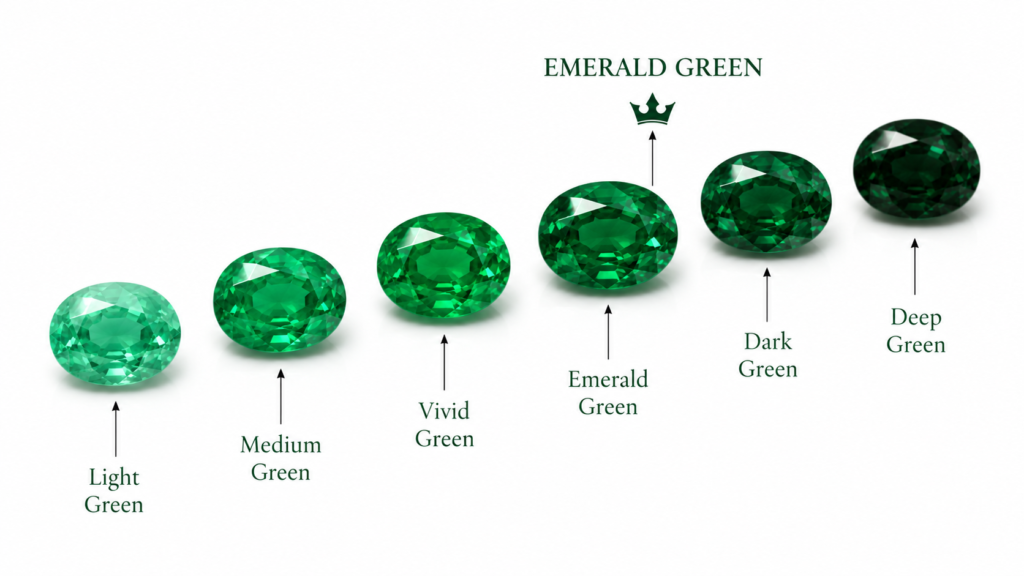
Colour is the most important factor. The finest Emeralds display a vivid, evenly distributed green colour with medium to strong saturation. Stones that are too pale or overly dark are generally considered less desirable.
Unlike many other gemstones, natural inclusions are expected in Emeralds and often help confirm their natural origin. Skilled cutting enhances colour while minimizing the visibility of inclusions. Large Emeralds with exceptional colour, transparency, and relatively few inclusions are extremely rare and highly valuable
Origin & Sources
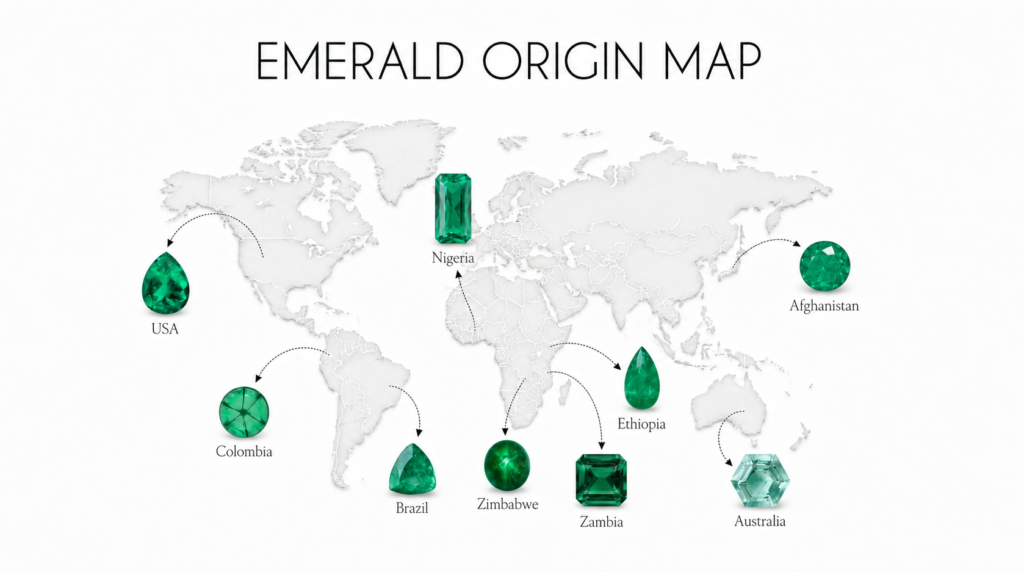
Emeralds are mined in several countries, with each source producing gemstones that possess distinct characteristics.
- Colombia: Famous for producing some of the world’s finest Emeralds with rich green colour and exceptional transparency.
- Zambia: Known for deep green Emeralds with slightly bluish tones and excellent clarity.
- Brazil: Produces Emeralds in a wide range of sizes and shades of green.
- Zimbabwe: Recognized for high-quality Emeralds with intense colour.
- Ethiopia, Afghanistan, and Pakistan: Emerging and important sources supplying beautiful natural Emeralds..
Although origin may influence market preference, a gemstone’s quality should always be determined through professional gemological examination.
3 Fun Facts About Ruby
Cleopatra Loved Emeralds
Queen Cleopatra of Egypt was famous for her love of Emeralds and often wore them as symbols of wealth, beauty, and power.
Every Emerald is Unique
Most natural Emeralds contain distinctive internal inclusions called jardin, the French word for “garden,” making every gemstone one of a kind.
More Fragile Than Ruby or Sapphire
Although Emerald is a durable gemstone, its natural inclusions make it more prone to chipping than Ruby or Sapphire, which is why proper care is important.
Astrological Significance
Emerald (Panna) is traditionally associated with Mercury (Budh) in Vedic astrology and is believed to symbolize wisdom, communication, creativity, and intellectual growth. It is often chosen by individuals seeking to represent qualities such as clarity of thought, confidence in communication, and learning.
Emerald is commonly linked with the zodiac signs Gemini and Virgo, although gemstone recommendations vary according to an individual’s birth chart. Those considering Emerald for astrological purposes should consult a qualified astrologer before making a decision.
Disclaimer: Astrological associations are based on traditional beliefs and cultural practices. Individuals should consult a qualified astrologer before making decisions based on astrology.
Treatments & Identification
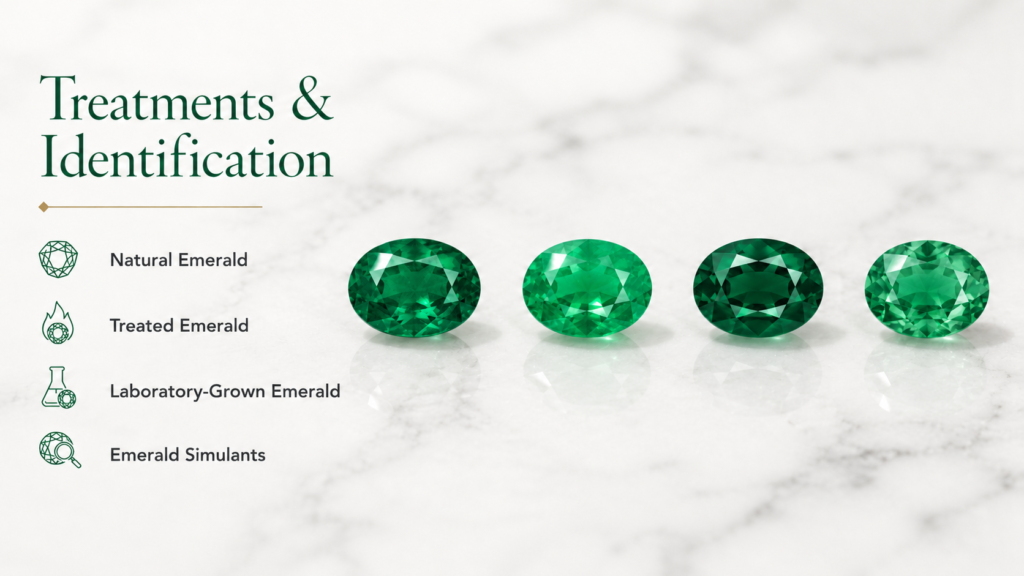
Many Emeralds available in the market undergo treatments to improve their appearance. The most common is clarity enhancement using oils or resins, which helps reduce the visibility of surface-reaching fractures. These treatments are widely accepted when properly disclosed.
Professional gemological testing helps distinguish between:
- Natural Emerald
- Treated Emerald
- Laboratory-Grown Emerald
- Emerald Simulants
Using advanced gemological instruments and internationally accepted testing methods, laboratories can accurately identify the gemstone and detect common treatments where applicable.
Why IDT Gemstone Certification Matters
Natural Emeralds can closely resemble treated, laboratory-grown, or imitation stones, making professional gemstone testing an important step before purchase. An independent laboratory report provides greater transparency about the gemstone’s identity and characteristics.
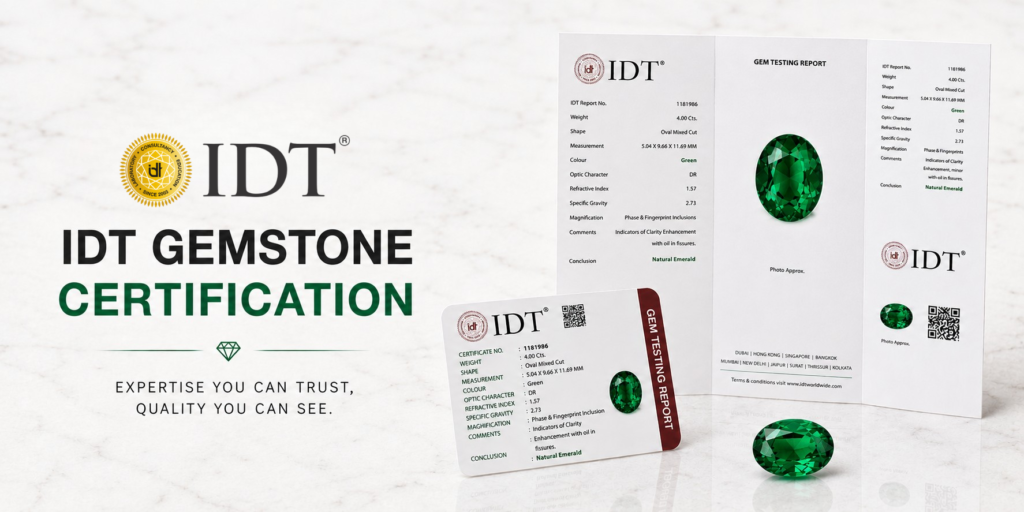
An IDT Gemstone Report helps identify important information, including:
- The identity of the gemstone
- Whether the Emerald is natural or laboratory grown, where applicable
- The presence of detectable treatments
- Weight and measurements
- Colour and transparency observations
- Additional comments relevant to the gemstone
Natural Emeralds are among the world’s most valuable coloured gemstones, and their quality and value can vary significantly based on colour, clarity, origin, and treatments. Understanding these characteristics helps buyers, jewellers, collectors, and gemstone owners make informed decisions.
Before purchasing a valuable Emerald, always insist on IDT Gemstone Certification for greater transparency and confidence.