
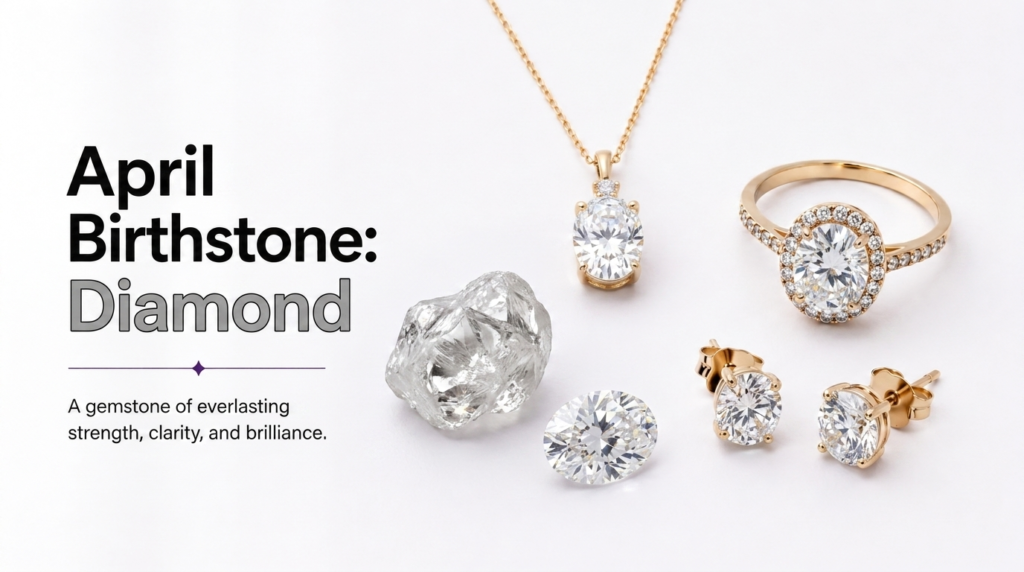
Born in April? Your birthstone is Diamond, a gemstone best known for its exceptional brilliance, durability and traditional connection with strength, love and commitment.
Diamond is a meaningful choice for birthday jewellery, engagement rings, personalised gifts and pieces that celebrate an important relationship or milestone.
What Is the April Birthstone?
Diamond is the traditional birthstone for April.
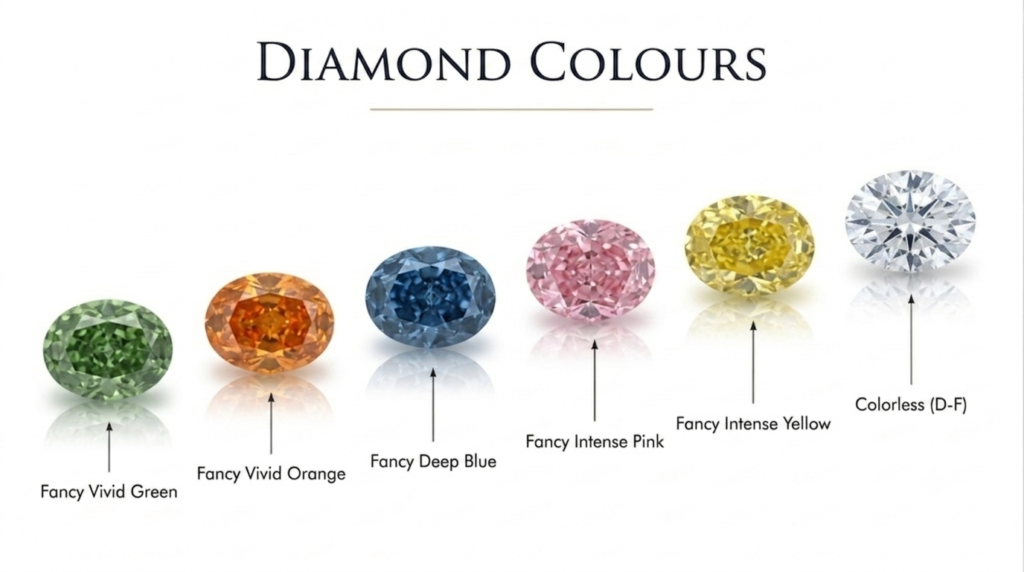
Most people recognise Diamond by its colourless or near-colourless appearance, but diamonds are not available only in white. Natural diamonds can also occur in yellow, pink, blue, green, orange, brown, red, grey and black colours.
This gives April-born jewellery buyers plenty of options, from classic colourless Diamond engagement rings to colourful pink or yellow Diamond pendants.
April Birthstone at a Glance
| Detail | Information |
| Birthstone | Diamond |
| Birth month | April |
| Best-known colour | Colourless or near colourless |
| Other colours | Yellow, pink, blue, green, orange, brown, red, grey and black |
| Traditionally represents | Strength, love and commitment |
| Jewellery options | Rings, earrings, pendants and bracelets |
What Does the April Birthstone Mean?
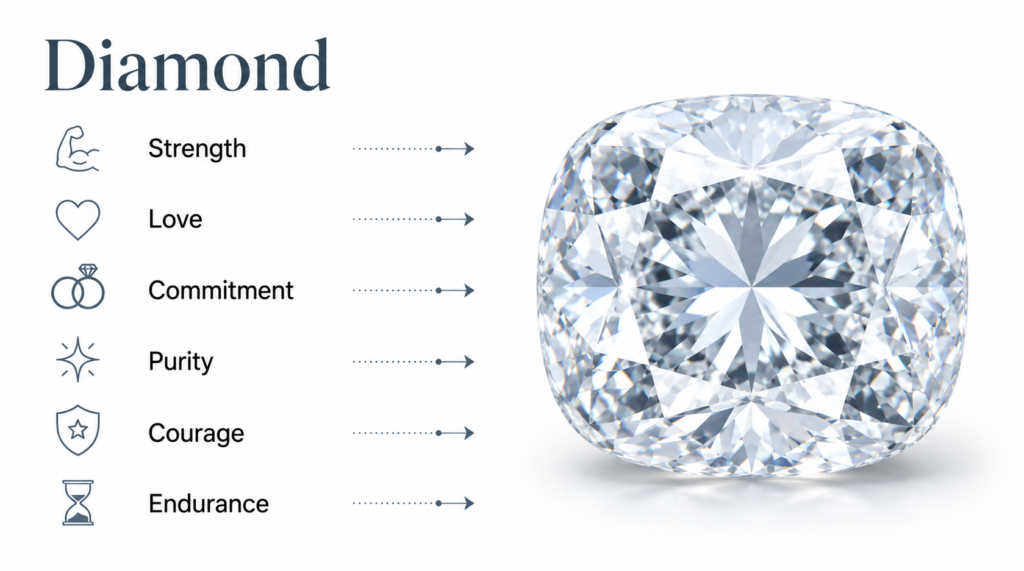
Diamond traditionally represents:
- Strength
- Love
- Commitment
- Purity
- Courage
- Endurance
Throughout history, diamonds have been associated with power, protection and lasting relationships. Their durability has also made them a popular symbol of eternal love and lifelong commitment.
Today, Diamond jewellery can represent an engagement, an important anniversary, a personal achievement or a meaningful new beginning.
What Are the Benefits of Wearing Diamond?
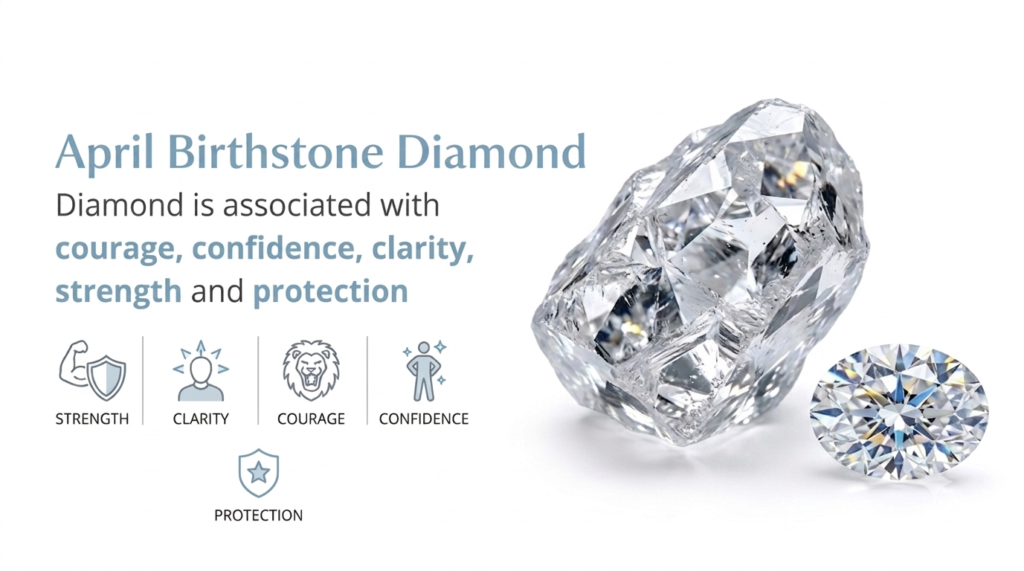
According to traditional beliefs, Diamond is associated with courage, confidence, clarity, strength and protection.
However, these benefits come from gemstone folklore and cultural traditions. They are not scientifically or medically proven.
The real benefit of wearing an April birthstone is often personal. It may remind you of your birth month, celebrate someone special or add meaning to an important piece of jewellery.
What Colour Is the April Birthstone?
Colourless or near-colourless is the most recognised April birthstone colour.
However, diamonds can occur in many other colours, including:
- Yellow
- Pink
- Blue
- Green
- Orange
- Brown
- Red
- Grey
- Black
Diamonds with distinct natural colours are commonly known as fancy-colour diamonds. Their value may depend on the strength, distribution and rarity of the colour.
So, even if a classic colourless Diamond is not your preferred style, you can still choose a Diamond that matches your personality and jewellery preferences.
Is Diamond Good for Everyday Jewellery?
Diamond is the hardest naturally occurring material and is highly resistant to scratching. It can be used in engagement rings, earrings, pendants and bracelets.
However, hardness does not make a Diamond indestructible. A Diamond can still chip or fracture if it receives a hard impact, particularly around pointed corners, thin edges or areas containing inclusions.
Diamond earrings and pendants are usually easier to maintain. Diamond rings can also be worn regularly when placed in a secure and protective setting.
Remove Diamond jewellery before exercising, cleaning or doing activities that may damage the gemstone or loosen its setting.
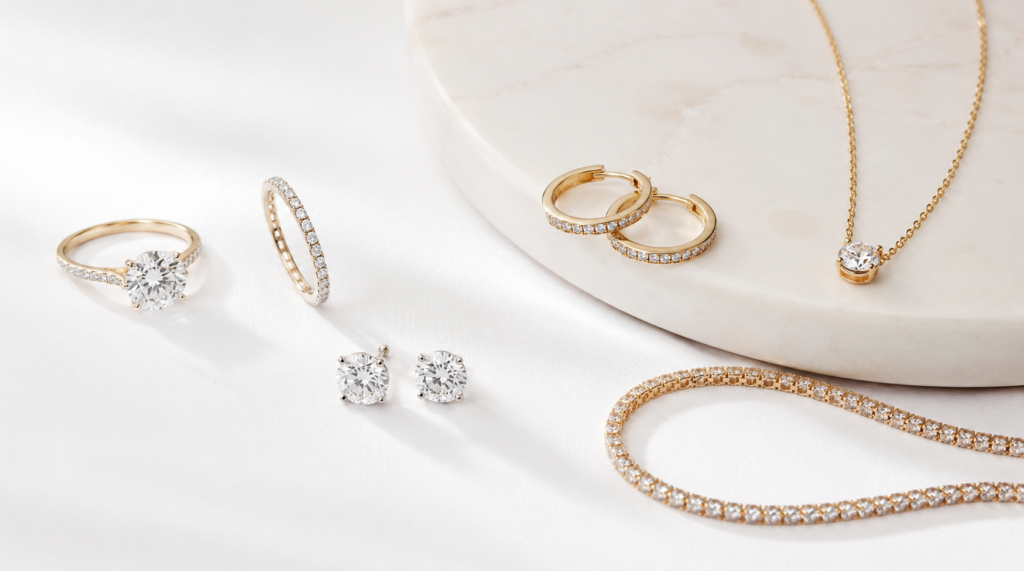
How to Choose Diamond Jewellery
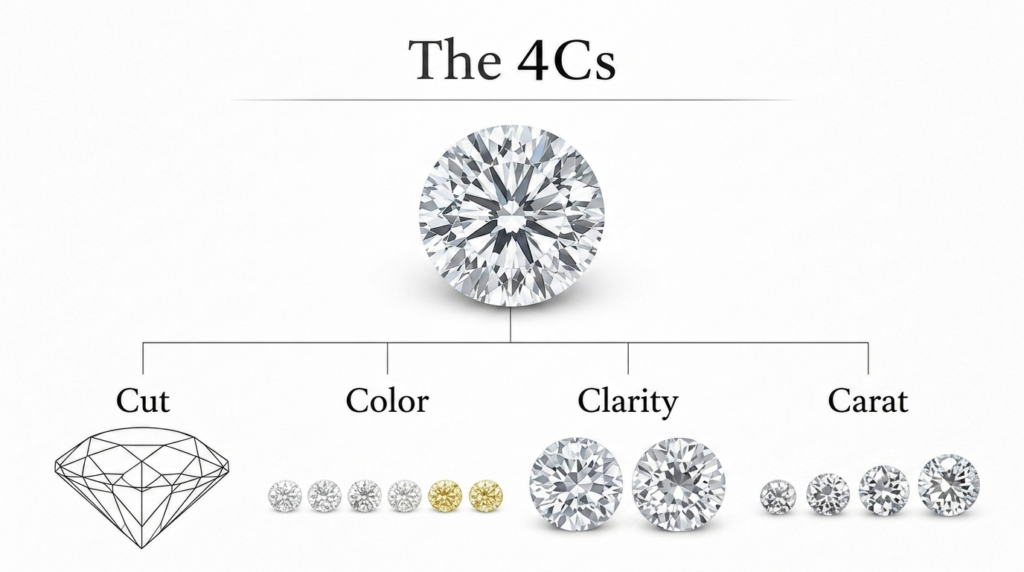
When choosing your April birthstone, consider:
Cut: A well-cut Diamond should reflect light effectively and appear bright and lively.
Colour: Choose between a classic colourless appearance and a fancy-colour Diamond.
Clarity: Clarity describes the presence of internal and external characteristics.
Carat weight: Select a size that suits the jewellery design, budget and comfort level.
Shape: Popular shapes include round, oval, cushion, emerald, pear, princess and marquise.
Setting: A secure setting helps protect the Diamond and keeps it firmly in place.
Certification: For valuable Diamond jewellery or a loose Diamond, ask for an independent Diamond report.
Is Every Colourless Stone a Genuine Diamond?
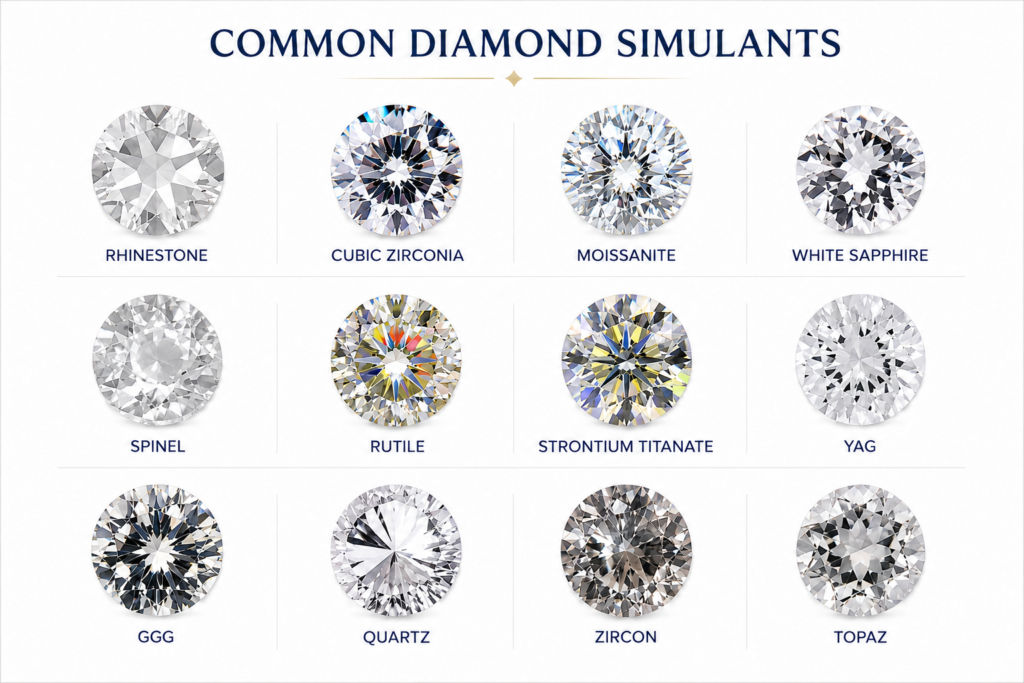
No. Appearance alone cannot prove that a gemstone is a natural Diamond.
A colourless stone may be:
- Natural Diamond
- Laboratory-grown Diamond
- Cubic Zirconia
- Moissanite
- Colourless Sapphire
- Glass
- Another Diamond imitation
Natural and laboratory-grown diamonds have essentially the same chemical composition and crystal structure, but they have different origins. Laboratory-grown diamonds are produced using specialised technological processes rather than forming naturally within the Earth.
Some diamonds may also receive treatments to modify their colour or clarity.
This is why visual appearance alone should not be used to confirm a Diamond’s identity, origin or treatment status.
Why IDT Certification Matters
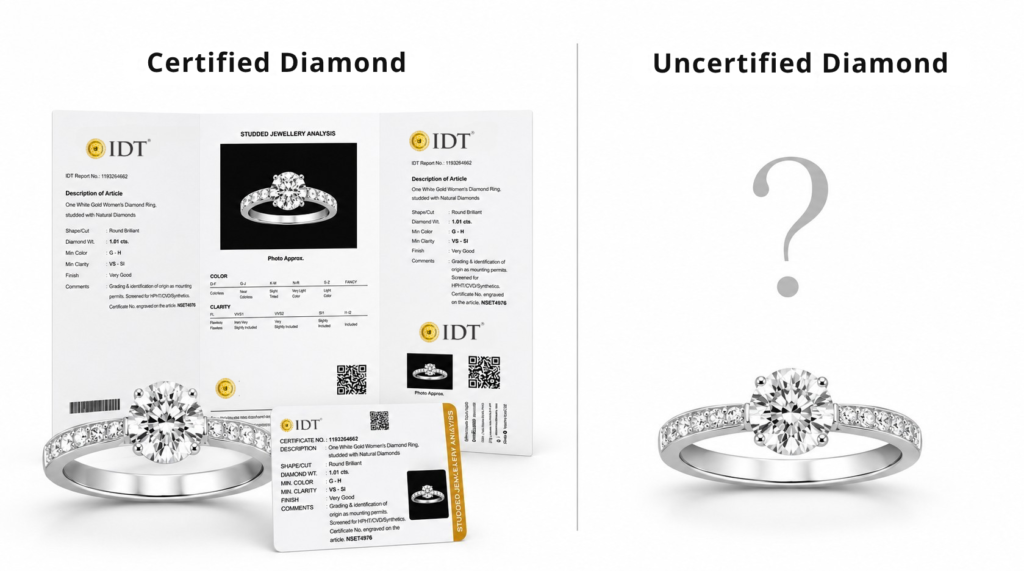
IDT Gemological Laboratories examines diamonds using professional gemological instruments and testing methods.
An IDT Diamond Report can help provide information about:
- Whether the Diamond is natural or laboratory-grown
- Diamond shape and cutting style
- Carat weight and measurements
- Colour grade
- Clarity grade
- Cut-related information, where applicable
- Detectable treatments
- Other relevant grading observations
Before purchasing valuable Diamond jewellery or a loose Diamond, always insist on IDT Certification and verify the report through IDT’s official verification platform.
How to Care for Diamond Jewellery
Clean Diamond jewellery using warm water, mild soap and a soft brush.
Avoid:
- Strong chemicals
- Sudden impacts
- Wearing jewellery during exercise or cleaning
- Pulling or pressing against the setting
- Storing it with softer gemstones
Diamonds can scratch other gemstones and jewellery metals. Keep each jewellery piece separately in a soft pouch or lined box.
Have frequently worn Diamond rings and bracelets professionally inspected to ensure the prongs and settings remain secure.
Conclusion
Diamond is the traditional April birthstone and is loved for its brilliance, durability and meaningful symbolism. It traditionally represents strength, love, courage and commitment.
Whether you choose a classic colourless Diamond or a colourful yellow, pink or blue variety, make sure you understand what you are buying.
Look beyond the sparkle, ask about origin and treatments and always insist on IDT Certification.
Frequently Asked Questions
What is the birthstone for April?
Diamond is the traditional birthstone for April.
What colour is the April birthstone?
Colourless or near-colourless is the best-known appearance, but diamonds can also occur in yellow, pink, blue, green, orange, brown, red, grey and black.
What does Diamond represent?
Diamond traditionally represents strength, love, commitment, purity, courage and endurance.
Are Diamond’s benefits scientifically proven?
No. The benefits connected with Diamond come from traditional beliefs and folklore.
Can Diamond be worn every day?
Yes. Diamond is suitable for everyday jewellery, but it should still be protected from hard impacts that may chip the gemstone or damage its setting.
Are natural and laboratory-grown diamonds the same?
They have essentially the same chemical composition and crystal structure, but their origins are different. Natural diamonds form within the Earth, while laboratory-grown diamonds are produced using specialised technological processes.
How can I check whether a Diamond is genuine?
Ask for an independent Diamond report, such as IDT Certification, instead of relying only on the gemstone’s sparkle or appearance.