
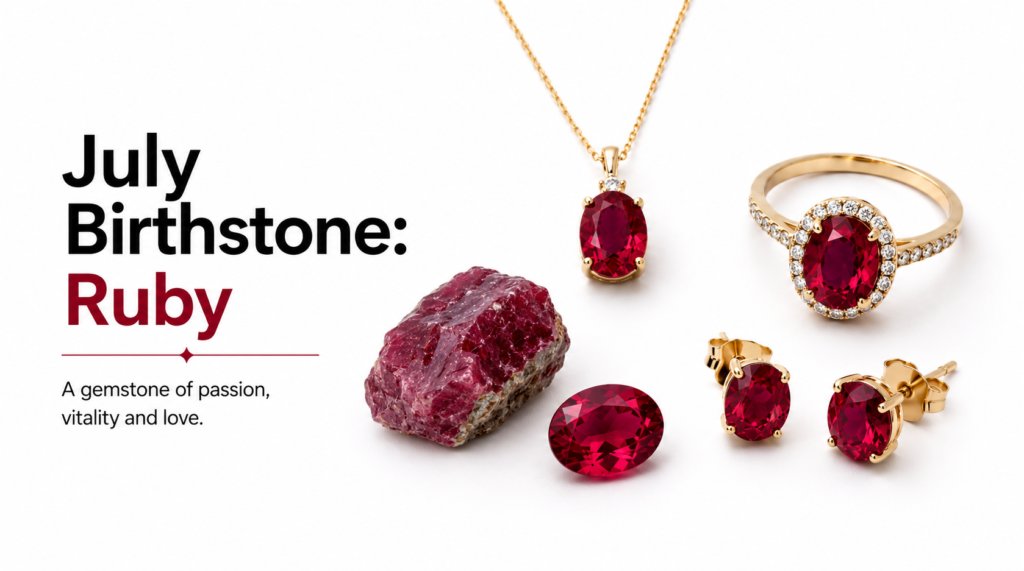
Born in July? Your birthstone is Ruby, a gemstone admired for its powerful red colour and its traditional connection with love, passion, courage and protection.
Ruby is a meaningful choice for birthday jewellery, engagement rings, anniversary gifts and pieces that celebrate confidence, strength or an important relationship.
What Is the July Birthstone?
Ruby is the traditional birthstone for July.
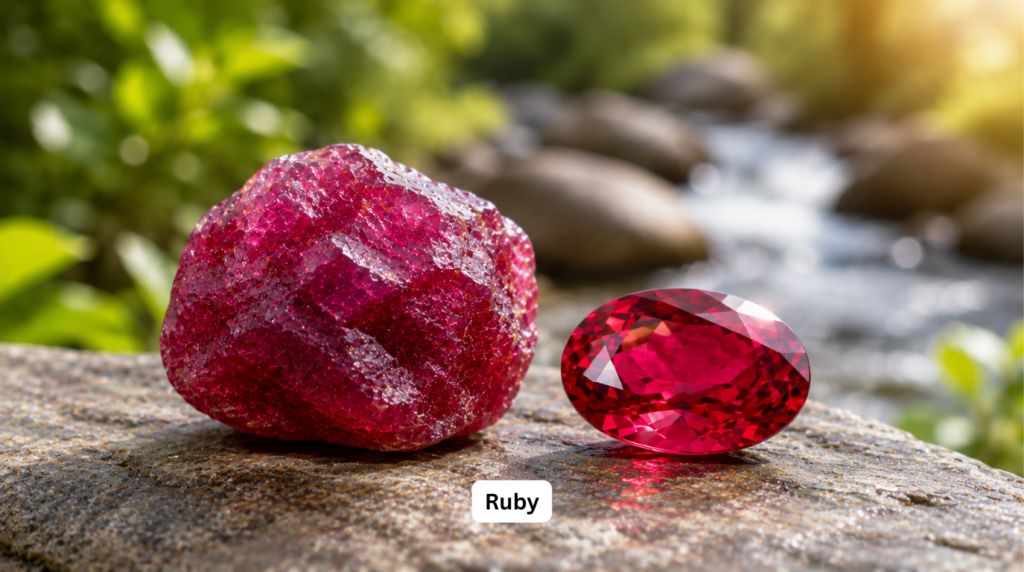
Ruby belongs to the Corundum mineral family, the same mineral family as Sapphire. Red Corundum is called Ruby, while Corundum in other colours is generally known as Sapphire.
Ruby’s red colour is mainly caused by the presence of chromium.
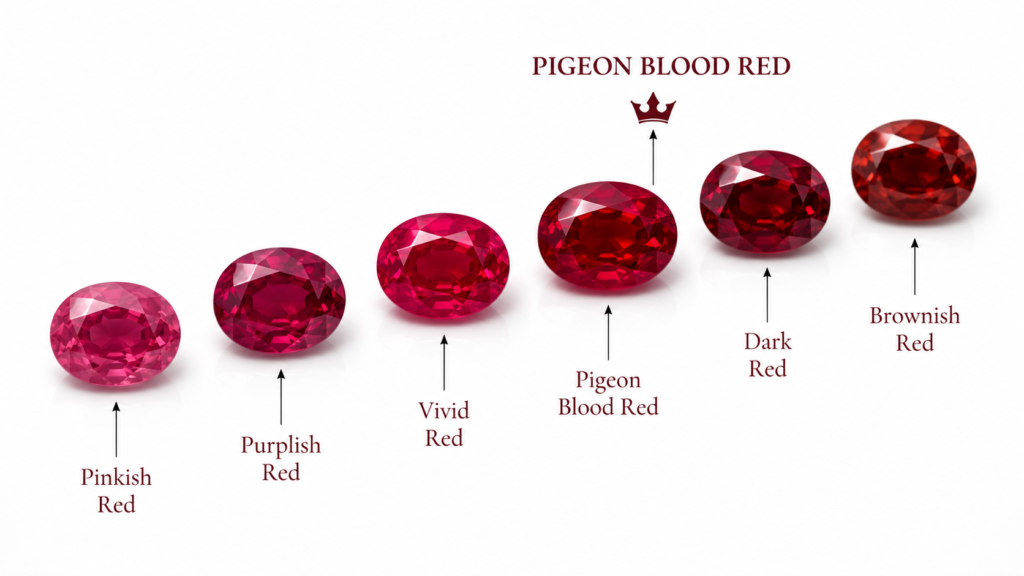
Ruby colours can range from light pinkish red to vivid red, purplish red and deep red. Bright, evenly distributed red shades are usually the most admired.
July Birthstone at a Glance
| Detail | Information |
| Birthstone | Ruby |
| Birth month | July |
| Best-known colour | Rich red |
| Other colours | Pinkish red, purplish red, vivid red and deep red |
| Traditionally represents | Love, passion, courage and protection |
| Jewellery options | Rings, earrings, pendants, necklaces and bracelets |
What Does the July Birthstone Mean?
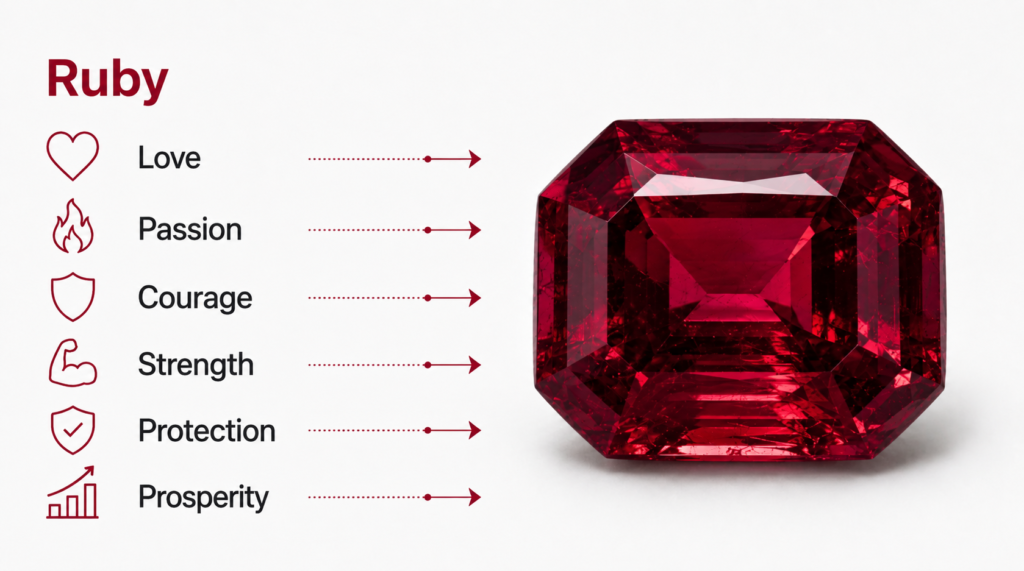
Ruby traditionally represents:
- Love
- Passion
- Courage
- Strength
- Protection
- Prosperity
For centuries, Ruby has been associated with energy, power and vitality because of its intense red colour.
It has also been connected with romance, loyalty and emotional strength. Today, Ruby jewellery can represent deep love, personal confidence, an important achievement or a strong and lasting relationship.day, Emerald jewellery can represent personal growth, a new chapter in life or an important romantic commitment.
What Are the Benefits of Wearing Ruby?
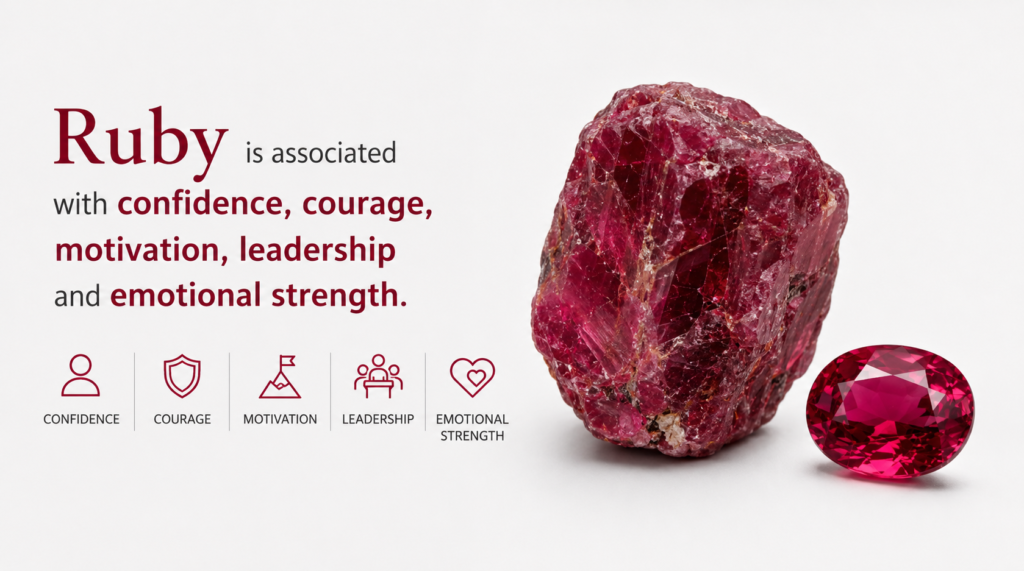
According to traditional beliefs, Ruby is associated with confidence, courage, motivation, leadership and emotional strength.
In astrology and gemstone folklore, Ruby is also believed to encourage success, positive energy, self-expression and determination.
However, these benefits come from traditional beliefs, astrology and cultural practices. They are not scientifically or medically proven.
The real benefit of wearing a July birthstone is often personal. It may remind you of your birth month, represent someone you love or add emotional meaning to a special piece of jewellery.
What Colour Is the July Birthstone?
Red is the recognised July birthstone colour.
Ruby can occur in different shades of red, including:
- Light pinkish red
- Pure red
- Vivid red
- Purplish red
- Deep red
- Dark reddish brown
The most desirable colour depends on personal preference, but many buyers look for a Ruby with a lively, evenly distributed red colour.
A Ruby should not appear excessively dark, dull or brown. A good cut can help the gemstone reflect light and display its colour more attractively.
The difference between a very pink Ruby and a Pink Sapphire may depend on colour assessment and accepted gemological standards. Professional testing can help identify and classify the gemstone correctly. dull. A good cut can help the gemstone display its colour more attractively., a gemstone’s overall quality should always be assessed through professional gemological examination.
Is Ruby Good for Everyday Jewellery?
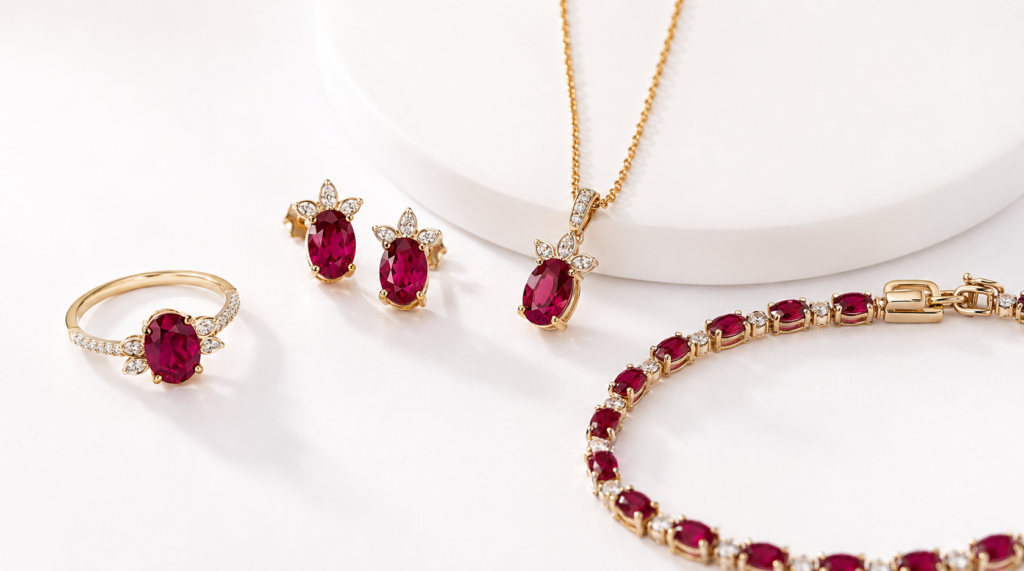
Ruby is suitable for rings, earrings, pendants, necklaces and bracelets.
It has excellent hardness and is one of the hardest natural gemstones used in jewellery. This makes Ruby suitable for regular wear.
However, durability may also depend on the gemstone’s inclusions, fractures and treatments. Rubies with significant fractures or glass filling may require more careful handling.
Ruby earrings and pendants generally receive less direct impact during normal wear.
Ruby rings can also be worn regularly when placed in a secure setting. Remove Ruby jewellery before exercising, cleaning, cooking or performing activities that may expose it to strong chemicals or hard impacts.
Is Every Red Gemstone a Genuine Ruby?
No. Red colour alone cannot prove that a gemstone is a natural Ruby.
A red stone may be Ruby, Red Spinel, Red Garnet, Red Tourmaline, coloured glass or another imitation material.
It may also be a synthetic Ruby produced in a laboratory.
Many natural Rubies are heat-treated to improve their appearance. Some lower-quality Rubies may be filled with glass or other substances to make fractures less visible.
These treatments can affect the gemstone’s value, durability and care requirements.
This is why colour, appearance and seller claims alone should not be used to confirm a gemstone’s identity.
Why IDT Certification Matters
IDT Gemological Laboratories examines gemstones using professional gemological instruments and testing methods.
An IDT Gemstone Identification Report can help provide information about:
- The gemstone’s identity
- Whether it is natural or synthetic, where applicable
- Detectable treatments
- Weight and measurements
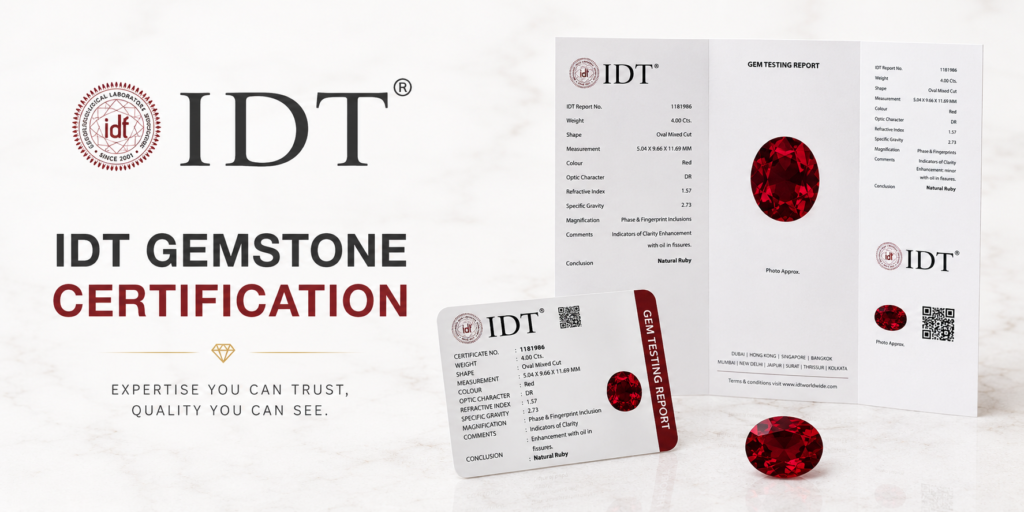
Before purchasing valuable Ruby jewellery or a loose Ruby, always insist on IDT Certification and verify the report through IDT’s official verification platform.
Independent testing can help you understand whether the gemstone is a natural Ruby, a synthetic Ruby or another red material.
It can also help identify detectable treatments such as heating or fracture filling.
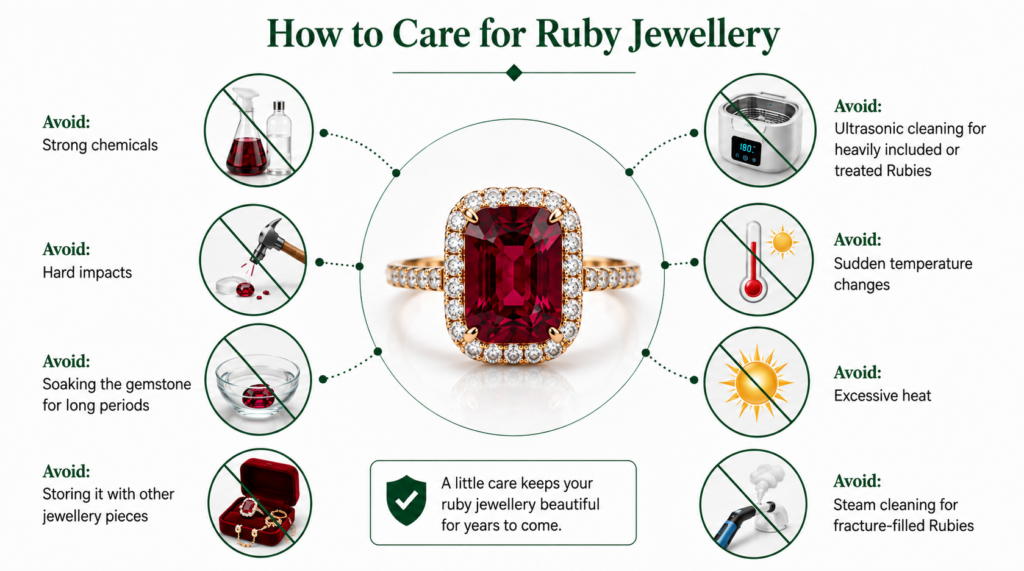
How to Care for Ruby Jewellery
Clean Ruby jewellery gently using lukewarm water, mild soap and a soft cloth or very soft brush.
Avoid:
- Strong chemicals
- Hard impacts
- Sudden temperature changes
- Excessive heat
- Soaking the gemstone for long periods
- Storing it with other jewellery pieces
- Ultrasonic cleaning for heavily included or treated Rubies
- Steam cleaning for fracture-filled Rubies
Untreated or conventionally heat-treated Rubies may be durable, but fracture-filled Rubies require much more careful handling.
Strong heat, chemicals and cleaning methods may damage filling substances or change the gemstone’s appearance.
Keep each jewellery piece separately in a soft pouch or lined box to prevent scratches and accidental damage.
For valuable or treated Ruby jewellery, professional cleaning by someone familiar with gemstone treatments is recommended.
Conclusion
Ruby is the traditional July birthstone and is loved for its striking red colour and powerful symbolism. It traditionally represents love, passion, courage, strength and protection.
Whether you choose a soft pinkish red Ruby or a rich vivid red gemstone, make sure you understand what you are buying.
Look beyond the colour, ask about possible treatments and always insist on IDT Certification.
Frequently Asked Questions
What is the birthstone for July?
Ruby is the traditional birthstone for July.
What colour is the July birthstone?
Red is the recognised July birthstone colour. Rubies may appear pinkish red, pure red, vivid red, purplish red or deep red.
What does Ruby represent?
Ruby traditionally represents love, passion, courage, strength, protection and prosperity.
Are Ruby’s benefits scientifically proven?
No. The benefits connected with Ruby come from traditional beliefs, astrology and gemstone folklore.
Can Ruby be worn every day?
Yes. Ruby has excellent hardness and is suitable for regular wear. However, treated or heavily fractured Rubies may require more careful handling.
Are all Rubies treated?
Not every Ruby is treated, but heat treatment is common. Some Rubies may also be fracture-filled with glass or other substances. Ask for an independent report to check for detectable treatments.
How can I check whether a Ruby is genuine?
Ask for an independent gemstone identification report, such as IDT Certification, instead of relying only on the gemstone’s red colour or appearance.
What is the difference between natural and synthetic Ruby?
Natural Ruby forms inside the earth, while synthetic Ruby is produced in a laboratory. Both may have similar chemical and physical properties, so professional gemological testing is required to distinguish between them.
What is the difference between Ruby and Red Spinel?
Ruby belongs to the Corundum mineral family, while Spinel is a different mineral. Both can appear red, and they may look similar without professional testing.
Is a dark red Ruby always more valuable?
No. A Ruby that is too dark may appear dull or nearly black in certain lighting. Colour quality depends on tone, saturation, brightness and overall appearance, not only darkness.