Natural vs Lab Grown Diamond: What’s the Difference?
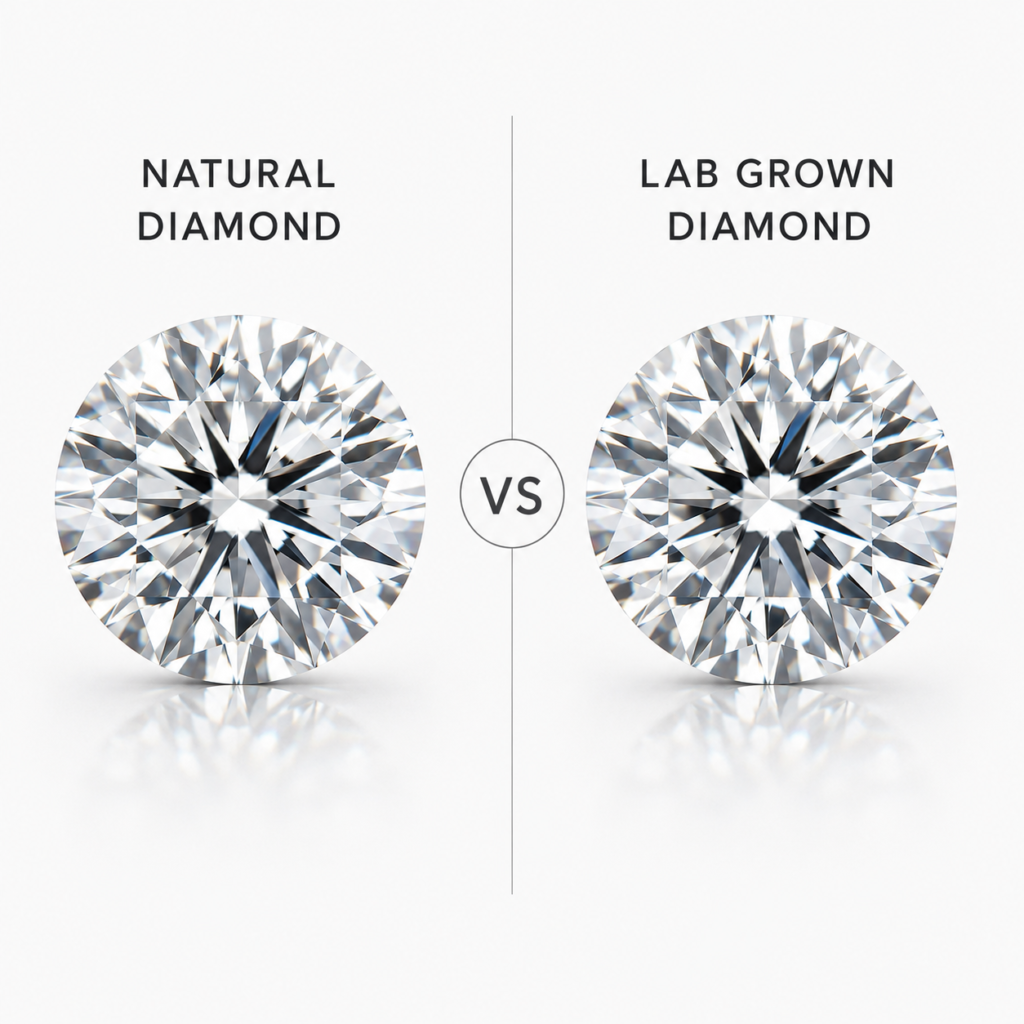
The diamond industry has evolved rapidly over the past decade. Today, buyers can choose between natural diamonds formed beneath the Earth over billions of years and lab grown diamonds created using advanced technology within weeks. As both categories are now widely available across jewellery stores and online platforms, many consumers want to understand how they compare. While both are genuine diamonds with similar physical properties, their origin and formation process are different. This guide explains the key comparisons between natural and lab grown diamonds, including formation, grading, identification, and certification. Natural vs Lab Grown Diamond: Quick Comparison How Natural Diamonds Are Formed Natural diamonds are formed deep within the Earth under extreme heat and pressure over billions of years.They are later brought closer to the surface through volcanic activity and eventually extracted from diamond-bearing deposits. Because of their natural geological origin, each diamond develops unique internal growth characteristics over time How Lab Grown Diamonds Are Made Lab grown diamonds are created using advanced technological processes that replicate the conditions under which diamonds naturally form. Unlike natural diamonds, which take billions of years to develop, lab grown diamonds can be produced within weeks. Two major methods are commonly used: HPHT (High Pressure High Temperature) HPHT technology recreates the pressure and temperature conditions found deep within the Earth’s mantle, allowing carbon atoms to crystallise into a diamond. CVD (Chemical Vapour Deposition) CVD diamonds are grown inside a vacuum chamber using carbon-rich gases, where carbon atoms gradually deposit layer by layer onto a diamond seed crystal. Natural and Lab Grown Diamonds: Key Comparisons Origin Natural diamonds are formed naturally within the Earth, while lab grown diamonds are produced in controlled laboratory environments. Physical Properties Both natural and lab grown diamonds: To the naked eye, they are usually visually indistinguishable. Growth Characteristics Natural diamonds often contain naturally occurring inclusions and irregular growth patterns. Lab grown diamonds may display layered growth structures or characteristics related to their manufacturing process. Identification Reliable identification requires advanced gemological testing and laboratory analysis. Professional testing helps determine the diamond’s origin accurately. Certification, Grading & Origin Disclosure Both natural and lab grown diamonds are graded using the traditional 4Cs standards: Because natural and lab grown diamonds can appear visually similar, clear origin disclosure on the grading report is extremely important. A diamond grading report should clearly mention whether the diamond is: Certification helps provide transparency and confidence during diamond purchases by documenting important grading information such as: IDT Certification: Diamond Origin Clearly Stated An IDT grading report clearly states the diamond’s origin along with its grading information, helping buyers better understand the diamond they are purchasing. Clear origin disclosure supports transparency and informed diamond buying decisions. Which Diamond Is Right for You? The choice between natural and lab grown diamonds depends on individual preference and purchasing priorities. Regardless of preference, buyers should ensure their diamond is accompanied by a grading report from a reputable gemological laboratory that clearly states the diamond’s origin. Frequently Asked Questions Can you tell a lab grown diamond from a natural diamond by looking at it? No. Accurate identification usually requires professional gemological testing. Why is IDT certification important? An IDT Gemological Laboratories grading report clearly discloses whether a diamond is natural or laboratory grown, along with its grading information. Do lab grown diamonds have the same hardness as natural diamonds? Yes. Both rank 10 on the Mohs hardness scale. Why is origin disclosure important? Origin disclosure helps ensure transparency in diamond transactions. Is certification important for both natural and lab grown diamonds? Yes. Certification provides documented grading information and clear origin disclosure for both categories of diamonds.
How to Identify a Fake Diamond Certificate: UAE Case Study & Verification Guide
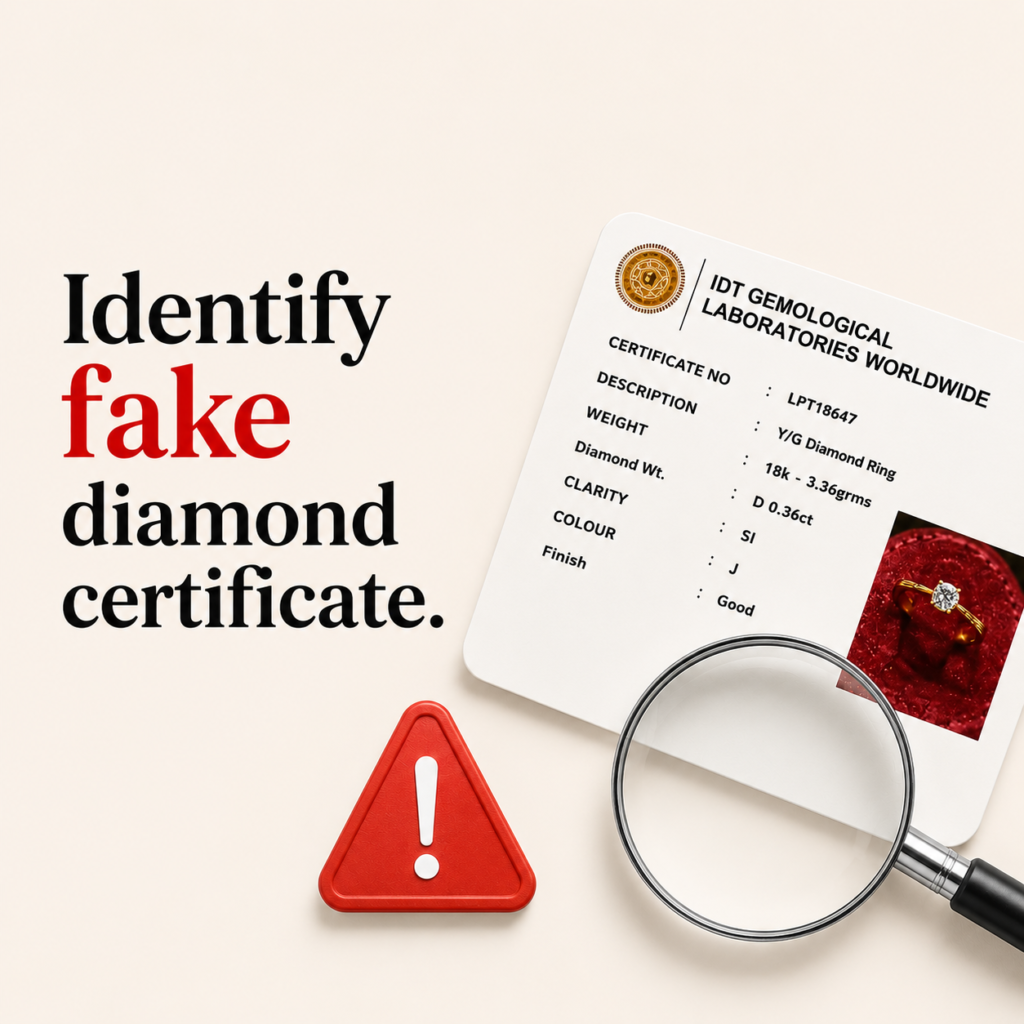
Fake diamond certificates are becoming increasingly common across UAE, India, and global jewellery markets. Many buyers assume that if a diamond comes with a certificate and QR code, it must be genuine. Unfortunately, that is no longer true. In a recent UAE case investigated by IDT Gemological Laboratories, a diamond ring was being sold with what appeared to be a professional grading report. The certificate included: At first glance, everything looked legitimate. However, during diamond certificate verification, one major issue exposed the report as fake:The report number did not exist in the official verification database. Cases like this highlight why buyers should always verify a diamond certificate before making payment. Why Fake Diamond Certificates Are Increasing As diamond buyers become more aware about certification, jewellery scams have also become more sophisticated. Instead of selling completely uncertified jewellery, scammers now use: Most fake certificates are designed to look convincing to normal buyers. However, professional diamond verification involves much more than checking whether a certificate looks official. A genuine diamond certificate should accurately match the actual diamond being sold. UAE Diamond Certificate Scam Case Study In this UAE case, the submitted diamond certificate carried the report number: LPT18647 The card initially appeared professional. However, verification through the official database showed that the report number did not exist. Further inspection revealed several warning signs commonly found in fake diamond certificates. Red Flag #1: Incorrect Diamond Terminology One section of the report stated: “Diamond Wt.: D 0.36ct” This grading format is incorrect. In professional diamond grading, carat weight and colour grade are listed separately. Example: Carat Weight: 0.36 ctColour Grade: D Fake diamond reports often contain terminology mistakes because they are created by individuals who do not fully understand professional grading standards. Even small wording errors can indicate a suspicious certificate. Red Flag #2: Unusual Grading Terms Another section displayed: “Finish: Good” While this may sound professional to buyers, standard diamond grading reports usually separate finishing characteristics into: Some fake reports also use vague terms such as: These are not commonly used grading standards in professional gemological reporting. If unusual terminology appears on a certificate, buyers should verify it directly through the issuing laboratory. Red Flag #3: QR Codes Alone Do Not Guarantee Authenticity Many buyers assume: “If the QR code works, the certificate must be genuine.” This is a common misconception. In this UAE case, the QR verification failed because the report number did not exist in the database. However, some fake diamond certificates are even more advanced and may use: This means a working QR code alone does not confirm authenticity. Proper diamond certificate verification should also include: Can Fake Diamond Certificates Use Real Report Numbers? Yes. This is one of the most common modern jewellery scams. In many cases, scammers copy a genuine report belonging to another diamond and attach it to a lower-quality stone. The certificate itself may be genuine. The diamond being sold is not. This is why professional diamond verification also includes: A diamond certificate is only useful if it matches the actual diamond. How to Verify a Diamond Certificate Before Buying Step 1: Scan the QR Code Use only the official verification website of the issuing laboratory. Step 2: Verify the Report Number Ensure the report number exists in the laboratory database. Step 3: Match Diamond Details Check whether the carat weight, colour, clarity, and measurements match the diamond being shown. Step 4: Check Laser Inscription Many certified diamonds contain a microscopic laser inscription on the girdle that matches the report number. Step 5: Compare the Actual Diamond Even genuine certificates can sometimes be attached to different stones. Always inspect the diamond carefully before payment. Why Buyers Still Get Scammed Despite Having Certificates Many buyers believe that a certificate automatically guarantees authenticity. Unfortunately, fake diamond certificates are becoming increasingly sophisticated every year. A professional-looking card is no longer enough. Diamond verification should always happen before payment, not after. Taking a few minutes to verify the certificate can help prevent financial loss and protect buyers from jewellery fraud. Verify Your IDT Diamond Certificate Before purchasing any certified diamond, always verify the report directly through the issuing laboratory’s official platform. Verify your report here: https://www.idtworldwide.com/verify FAQ How can I identify a fake diamond certificate? Check whether the report number exists in the official laboratory database, verify the QR code, inspect grading terminology, and match the certificate details with the actual diamond. Can fake diamond certificates have working QR codes? Yes. Some fake certificates use copied report numbers or cloned websites to appear genuine. What should a genuine diamond certificate include? A genuine report should include accurate grading details, measurements, report number verification, and matching laser inscription information. Why is diamond certificate verification important? Verification helps confirm that the certificate is authentic and actually belongs to the diamond being sold. Can scammers use real diamond reports? Yes. Some scams involve attaching a genuine report belonging to another diamond to a lower-quality stone.
7 Things to Check Before Buying a Diamond

Buying a diamond is exciting. Whether it is for an engagement ring, a wedding gift, or a piece of jewellery for yourself, it is often a meaningful purchase. But if you have ever tried shopping for diamonds, you already know how confusing it can feel. Different prices, technical terms, and many options can make the process overwhelming. The good news is that you do not need to be a gem expert to make a smart choice. Knowing a few important things before you buy can make the entire experience much easier. Here are 7 things every buyer should check before purchasing a diamond. 1. Check if the Diamond Is Certified One of the first questions you should ask a jeweller is simple: Does this diamond come with a certificate? A diamond certificate is issued by an independent gemological laboratory after the stone has been examined carefully. It confirms the authenticity of the diamond and provides important details about its quality. Laboratories such as IDT Gemological Laboratories Worldwide test diamonds using advanced gemological equipment and provide grading reports that help buyers understand exactly what they are purchasing. Without certification, it becomes much harder to verify the true characteristics of a diamond. 2. Learn the Basics of the 4Cs You will often hear jewellers talk about the 4Cs. These are the main factors used to evaluate diamonds. Cut affects how well the diamond reflects light and sparkles. Color refers to how colorless the diamond appears. Clarity describes natural inclusions or tiny marks within the stone. Carat weight tells you how large the diamond is. These four elements together determine the overall quality and value of a diamond. A grading report from IDT Gemological Laboratories Worldwide explains these characteristics clearly so buyers can compare diamonds more easily. 3. Confirm Whether the Diamond Is Natural or Lab Grown Many buyers today are surprised to learn that diamonds can have different origins. Natural diamonds form deep within the Earth over millions of years. Lab grown diamonds are created in controlled laboratory environments using advanced technology. Both are real diamonds, but they are not the same in terms of origin and pricing. This is why transparency is important. A certification report from IDT Gemological Laboratories Worldwide clearly identifies whether the diamond is natural or laboratory grown. Knowing this helps buyers make an informed choice. 4. Pay Attention to the Cut When people think about diamonds, they often focus only on size. But experienced gemologists will tell you that cut quality has a huge impact on how a diamond looks. A well cut diamond reflects light beautifully and appears more brilliant. On the other hand, a poorly cut diamond may look dull even if it is larger. Professional grading laboratories such as IDT Gemological Laboratories Worldwide evaluate cut quality carefully during the certification process. 5. Take Time to Compare Options It is rarely a good idea to buy the first diamond you see. Even if two diamonds look very similar, they can have different grades in clarity, color, or cut. Comparing a few options can help you understand the differences in quality and price. Certification reports from a trusted laboratory like IDT Gemological Laboratories Worldwide make these comparisons much easier because the diamonds have been graded using professional standards. 6. Look at the Jewellery Craftsmanship The diamond is important, but the jewellery itself also matters. Take a close look at the setting, the finishing, and the overall craftsmanship of the piece. A well designed setting can enhance the appearance of the diamond while also keeping it secure. Good craftsmanship ensures that the jewellery will remain durable and comfortable to wear over time. 7. Ask for Proper Documentation Before completing the purchase, make sure the jeweller provides proper documentation. Your invoice should include important information such as the diamond’s weight, the type of diamond, and certification details. Keeping these records is helpful for future verification, resale, or insurance purposes. When a diamond comes with certification from IDT Gemological Laboratories Worldwide, buyers have additional assurance that the stone has been independently tested and graded. Final Thoughts Buying a diamond does not have to be complicated. A little awareness can make a big difference when choosing something so valuable. Checking certification, understanding the 4Cs, confirming the diamond’s origin, and comparing options are simple steps that help buyers make confident decisions. Most importantly, always look for diamonds that have been independently tested and certified by trusted gemological laboratories such as IDT Gemological Laboratories Worldwide. Certification brings transparency and helps ensure that what you are buying matches what you are being told. A diamond is meant to last a lifetime, so it is worth taking the time to choose wisely.