
Born in February? Your birthstone is Amethyst, a beautiful purple gemstone traditionally associated with calmness, clarity and emotional balance.
From soft lilac to deep royal purple, Amethyst is loved for its striking colour and versatility. It is a meaningful choice for birthday jewellery, personalised gifts and elegant everyday pieces.
What Is the February Birthstone?
Amethyst is the traditional birthstone for February.
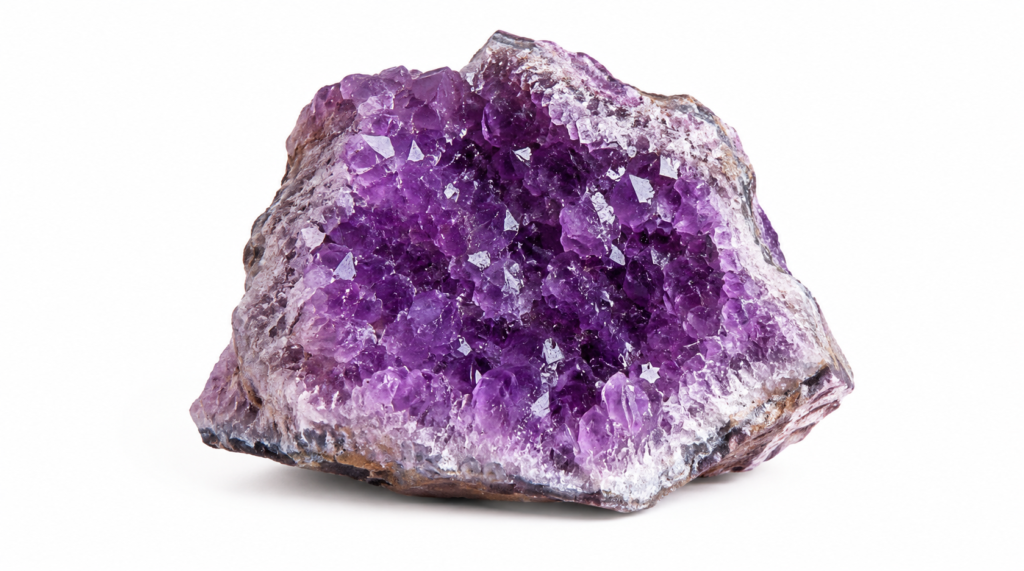
It is a purple variety of Quartz and is available in shades ranging from pale lavender to rich violet. Its attractive colour makes it popular in rings, earrings, pendants, bracelets and statement jewellery.
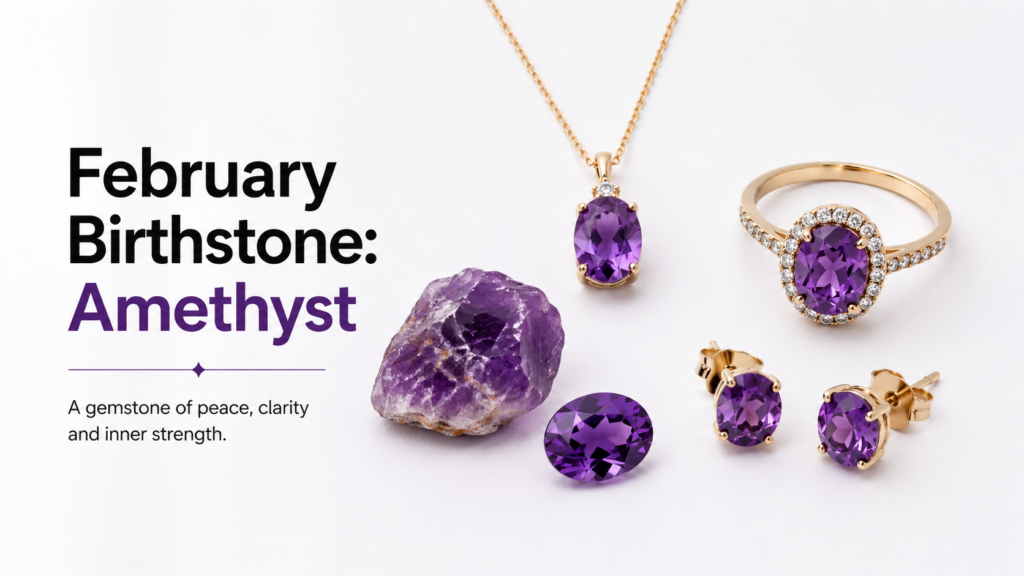
February Birthstone at a Glance
| Detail | Information |
| Birthstone | Amethyst |
| Birth month | February |
| Colour | Lilac to deep purple |
| Traditionally represents | Calmness, clarity and balance |
| Gemstone family | Quartz |
| Jewellery options | Rings, earrings, pendants and bracelets |
What Does the February Birthstone Mean?
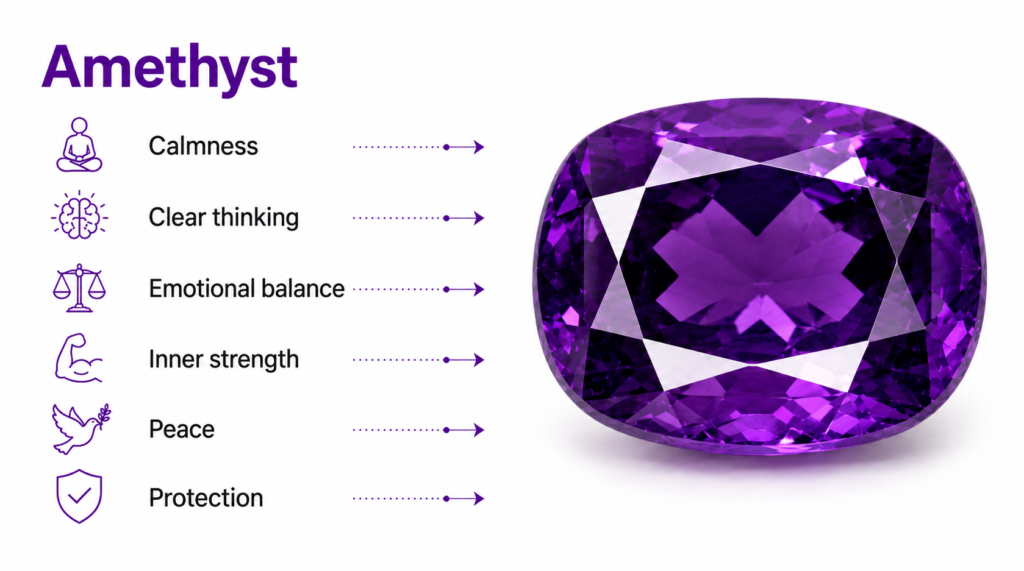
Amethyst traditionally represents:
- Calmness
- Clear thinking
- Emotional balance
- Inner strength
- Peace
- Protection
Its name comes from the Greek word amethystos, which is connected with the ancient belief that the gemstone helped people remain clear-headed and in control.
Today, Amethyst jewellery is often worn as a reminder to stay calm, focused and confident.
What Are the Benefits of Wearing Amethyst?
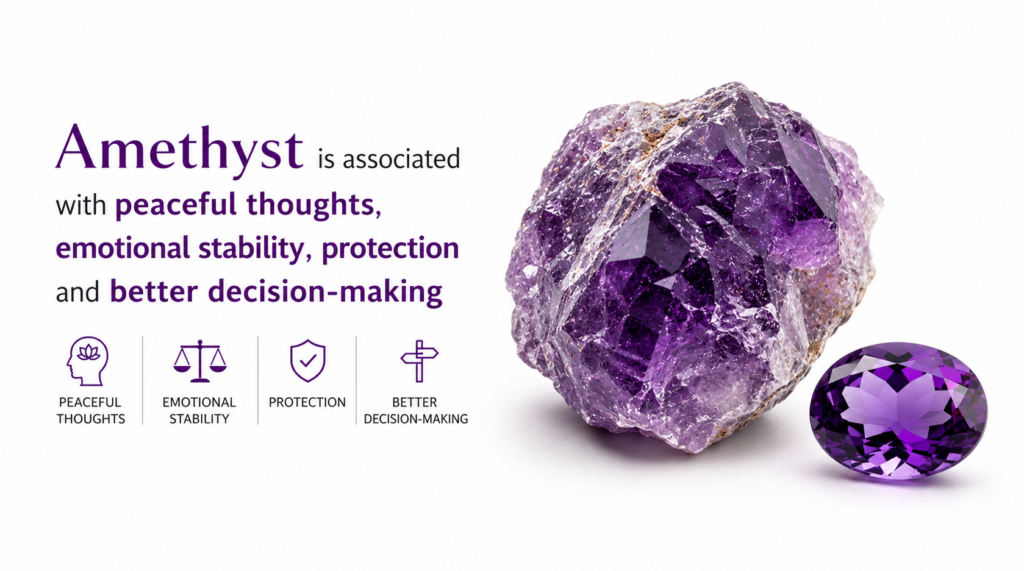
According to traditional beliefs, Amethyst is associated with peaceful thoughts, emotional stability, protection and better decision-making.
However, these benefits come from history, culture and gemstone folklore. They are not scientifically or medically proven.
For many people, the real benefit of wearing Amethyst is personal. It may represent their birth month, remind them of qualities they value or create an emotional connection with someone special.
What Colour Is the February Birthstone?
Purple is the recognised February birthstone colour.
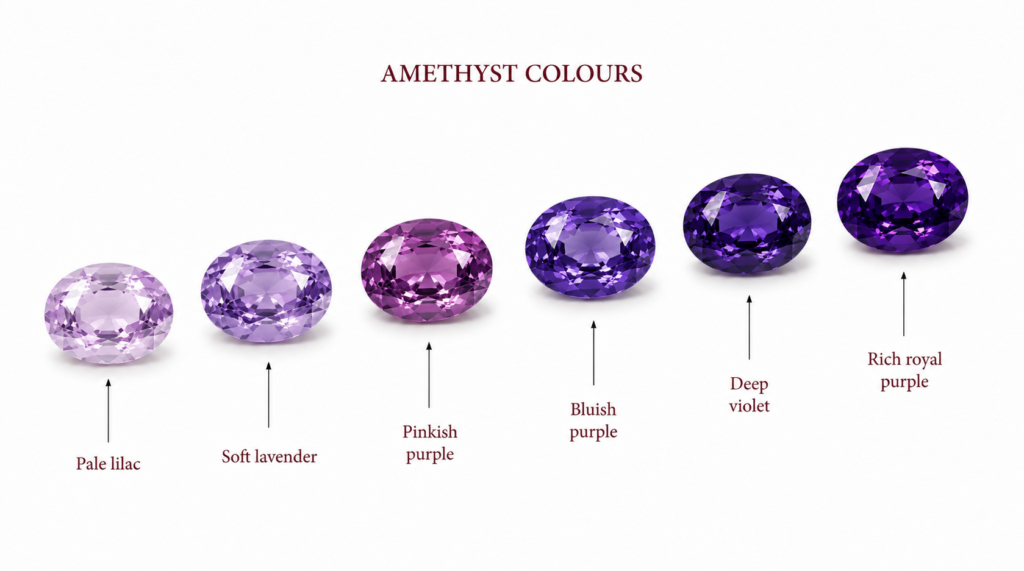
Amethyst can occur in several shades, including:
- Pale lilac
- Soft lavender
- Pinkish purple
- Bluish purple
- Deep violet
- Rich royal purple
Some Amethysts may also display visible zones of lighter and darker purple. The best colour is ultimately the one that suits your personal taste and jewellery style.
Why Is Amethyst Purple?
Amethyst gets its purple colour from trace amounts of iron within the Quartz crystal and natural processes that take place while the gemstone forms.
Its colour may vary depending on where it was formed and the conditions present during its natural development.
Excessive heat and prolonged exposure to strong sunlight may cause some Amethysts to lose or change colour, so they should be stored carefully.
Is Amethyst Suitable for Everyday Jewellery?
Amethyst measures 7 on the Mohs hardness scale, making it suitable for many types of jewellery.
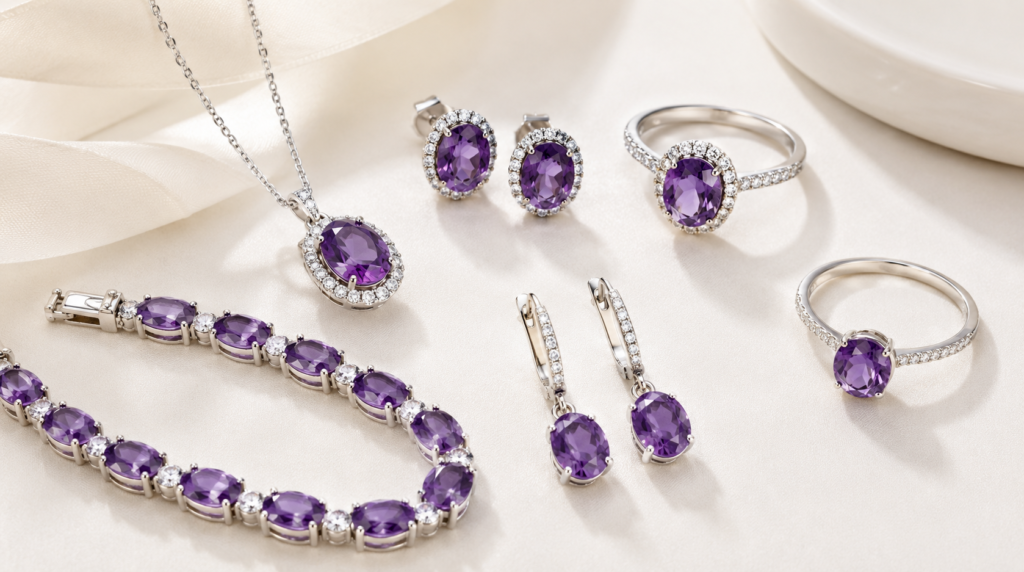
It works especially well in:
- Earrings
- Pendants
- Necklaces
- Bracelets
- Occasion-wear rings
Amethyst rings can be worn regularly, but they should be protected from hard knocks, scratches and harsh chemicals.
Remove Amethyst jewellery before exercising, cleaning, gardening or doing activities that may damage the gemstone.
Is Every Purple Gemstone an Amethyst?
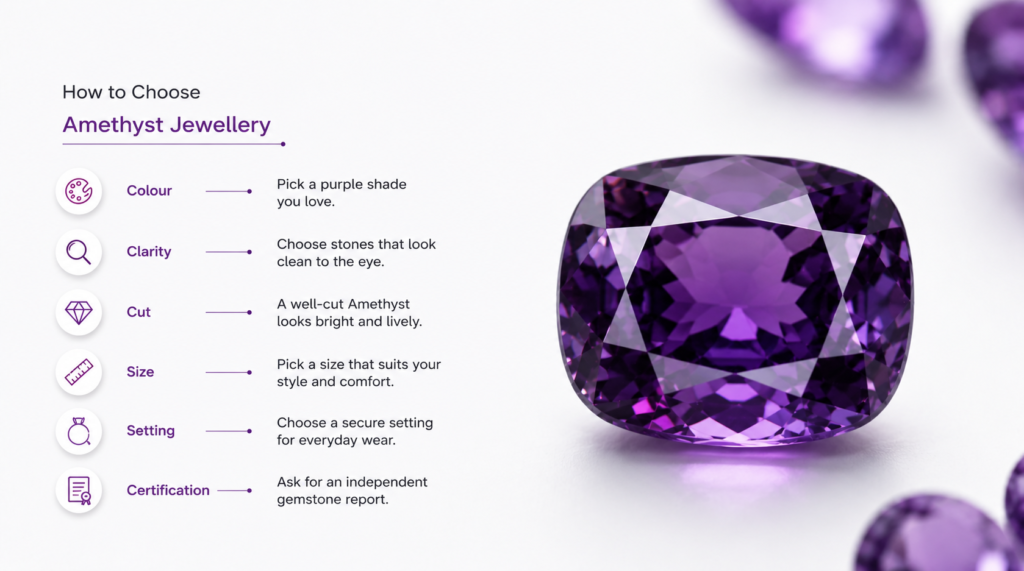
No. A purple gemstone may resemble Amethyst without actually being Amethyst.
It could be:
- Purple glass
- Synthetic Quartz
- Purple Sapphire
- Iolite
- Fluorite
- Another imitation material
Natural and synthetic Amethyst may look very similar to the naked eye. Colour alone cannot confirm the gemstone’s identity or origin.
Some Amethyst may also be treated to alter or improve its colour. Any detectable treatment should be clearly disclosed before purchase.
Why IDT Certification Matters
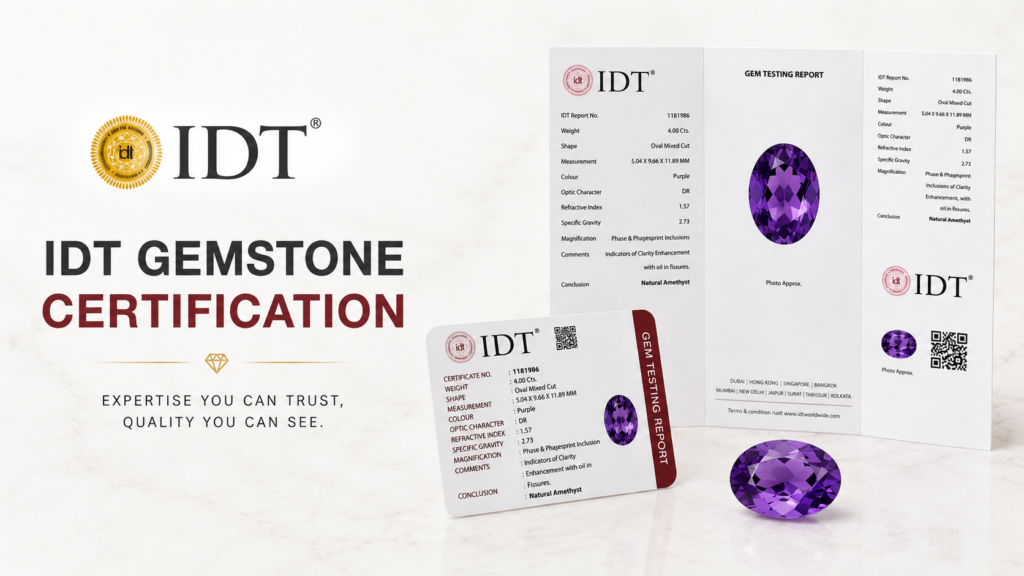
IDT Gemological Laboratories examines gemstones using professional gemological instruments and testing methods.
An IDT Gemstone Identification Report can provide important information about:
- The gemstone’s identity
- Whether it is natural or synthetic, where applicable
- Detectable treatments
- Weight and measurements
This helps buyers understand what they are purchasing instead of relying only on colour or the seller’s description.
Before buying valuable Amethyst jewellery or a loose Amethyst, always insist on IDT Certification and verify the report through IDT’s official verification platform.
Before purchasing valuable Garnet jewellery or a loose Garnet, always insist on IDT Certification and verify the report through IDT’s official verification platform.
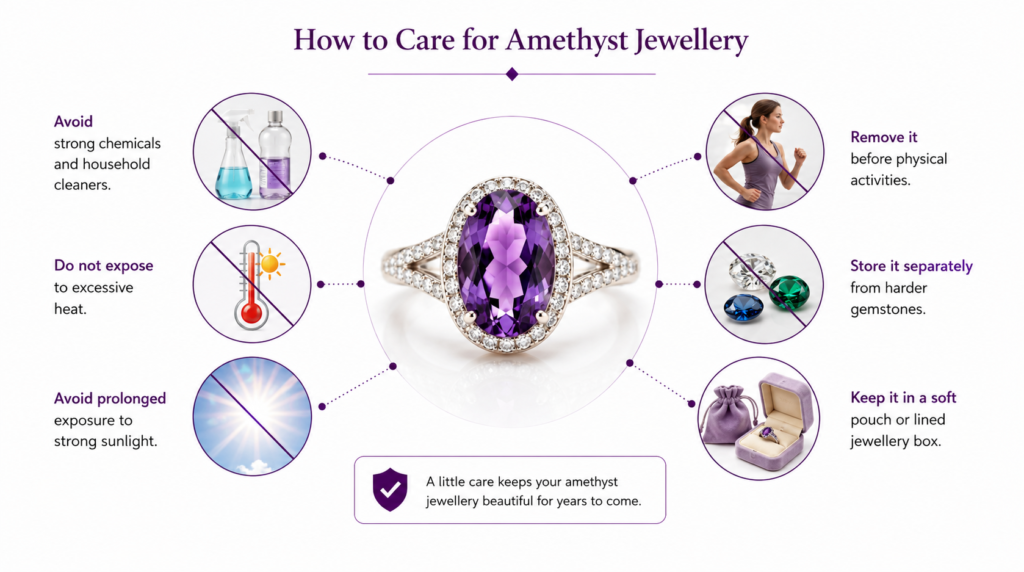
How to Care for Amethyst Jewellery
Clean Amethyst jewellery using warm water, mild soap and a soft brush.
To protect it:
- Avoid strong chemicals and household cleaners.
- Do not expose it to excessive heat.
- Avoid prolonged exposure to strong sunlight.
- Remove it before physical activities.
- Store it separately from harder gemstones.
- Keep it in a soft pouch or lined jewellery box.
Avoid steam cleaning, as excessive heat may affect the colour of the gemstone.es.
February Birthstone Jewellery Ideas
Amethyst can suit both minimal and bold jewellery styles.
Popular February birthstone gifts include:
- Amethyst stud earrings
- A delicate Amethyst pendant
- An Amethyst birthstone ring
- A personalised February birthstone necklace
- An Amethyst bracelet
- Amethyst and Diamond jewellery
- A family birthstone pendant
Its wide range of purple shades makes it easy to choose a design that matches the wearer’s style.
Conclusion
Amethyst is the traditional February birthstone and is admired for its beautiful purple colour. It traditionally represents calmness, clarity, emotional balance and inner strength.
Although its traditional benefits are not scientifically proven, Amethyst can still hold strong personal and emotional meaning.
Before purchasing an important Amethyst, ask about its identity, origin and possible treatments. Look beyond colour alone and always insist on IDT Certification.
Frequently Asked Questions
What is the birthstone for February?
Amethyst is the traditional birthstone for February.
What colour is the February birthstone?
Purple is the recognised February birthstone colour. Amethyst ranges from pale lilac to deep royal purple.
What does Amethyst represent?
Amethyst traditionally represents calmness, clarity, emotional balance, peace and protection.
What are the benefits of wearing Amethyst?
Traditional beliefs associate Amethyst with clear thinking, calmness and emotional strength. These benefits are not scientifically proven.
Can Amethyst be worn every day?
Yes. Amethyst is suitable for regular wear, but it should be protected from hard knocks, strong chemicals and excessive heat.
Can Amethyst lose its colour?
Some Amethysts may fade or change colour when exposed to excessive heat or prolonged strong sunlight.
How can I check whether an Amethyst is genuine?
Appearance alone cannot reliably confirm an Amethyst. Ask for an independent gemological report, such as IDT Certification, and verify the report details through the laboratory’s official platform.