
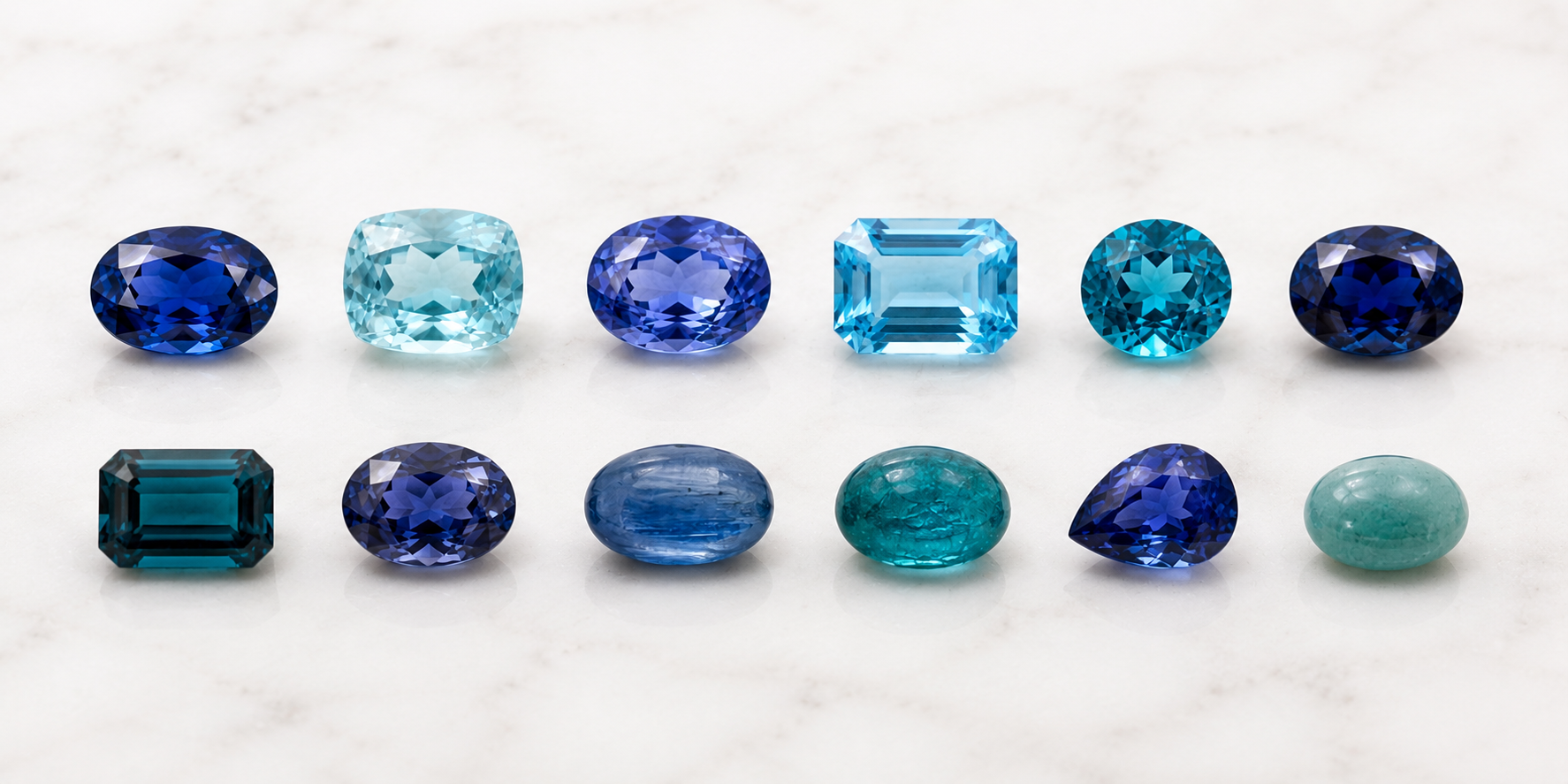
Blue gemstones have fascinated people for centuries with their calming hues and remarkable beauty. Often associated with wisdom, trust, tranquillity, and sophistication, blue gemstones range from the enduring prestige of sapphire to the exceptional rarity of benitoite and grandidierite.
While many blue gemstones may appear similar at first glance, they differ significantly in terms of rarity, durability, value, and composition. This guide explores some of the most popular blue gemstones used in jewellery today.
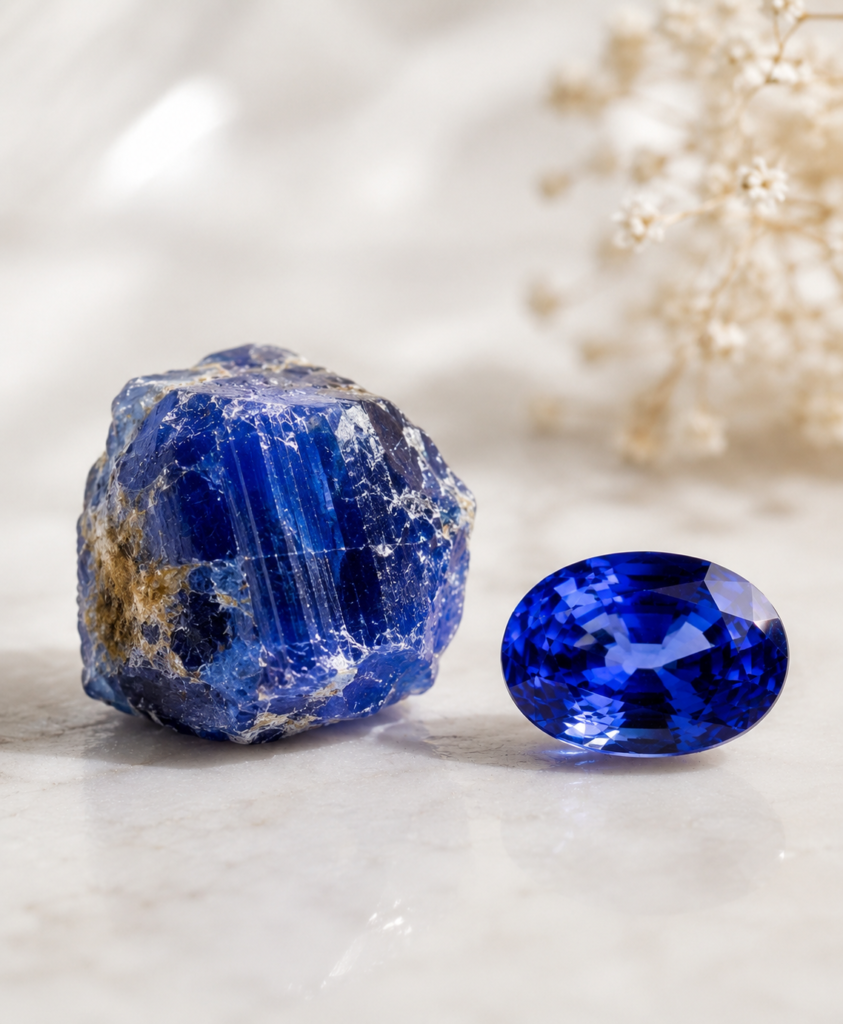
Sapphire
Blue sapphire is one of the most celebrated coloured gemstones in the world. A variety of corundum, sapphire derives its colour primarily from traces of iron and titanium within its crystal structure. Fine quality sapphires with rich, velvety blue colour are highly sought after.
Colour: Light blue to deep royal blue
Hardness: 9 on the Mohs scale
Best for: Rings, pendants, bracelets, heirloom jewellery
Key Characteristics
- Excellent durability for everyday wear
- One of the traditional precious gemstones
- Frequently associated with royalty and wisdom
- May undergo heat treatment to improve appearance
Les habitudes de paiement évoluent avec l’utilisation croissante du smartphone pour les achats du quotidien. Dans le secteur des jeux en ligne, certains joueurs privilégient ainsi des solutions permettant de régler rapidement une opération depuis leur téléphone, sans passer systématiquement par une carte bancaire classique.
Le casino paiement facture mobile s’inscrit dans cette tendance, avec des méthodes de paiement qui peuvent être liées à la facture téléphonique ou au crédit disponible sur une ligne mobile. Leur disponibilité dépend toutefois de l’opérateur, du casino et des conditions appliquées à chaque transaction.
Avant d’utiliser ce type de solution, il est donc utile de vérifier les limites de dépôt, les éventuels frais et la manière dont les montants sont débités. Les délais de traitement et les conditions de retrait doivent également être distingués de ceux applicables aux dépôts effectués par mobile.
Pour les joueurs belges, la simplicité du processus reste un critère important. Une méthode adaptée au smartphone peut faciliter un petit dépôt ponctuel, tandis que les paiements bancaires traditionnels restent généralement plus appropriés pour gérer des montants plus importants.
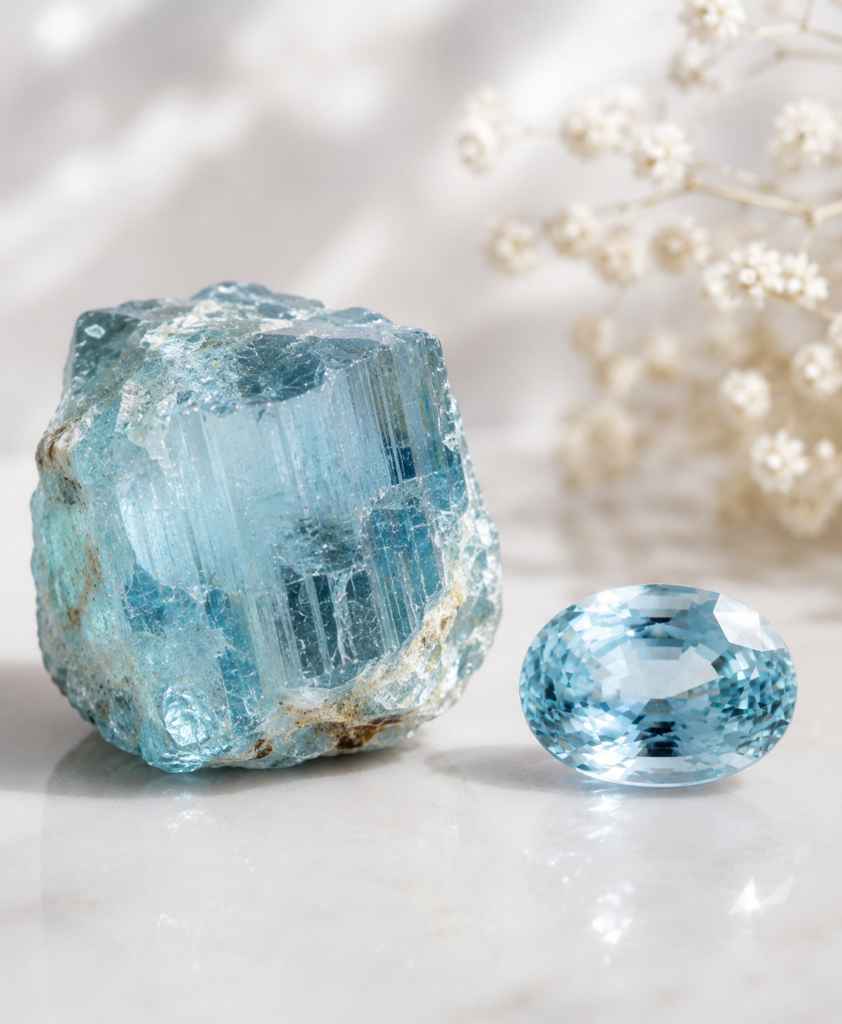
Aquamarine
Aquamarine is the blue variety of the mineral beryl. Its name is derived from the Latin words for “sea water,” reflecting its serene blue appearance.
Colour: Pale blue to greenish blue
Hardness: 7.5 to 8 on the Mohs scale
Best for: Rings, earrings, pendants, and necklaces
Key Characteristics
- Attractive clarity and transparency
- Good durability for regular wear
- Popular in contemporary jewellery
- Often receives heat treatment to enhance colour
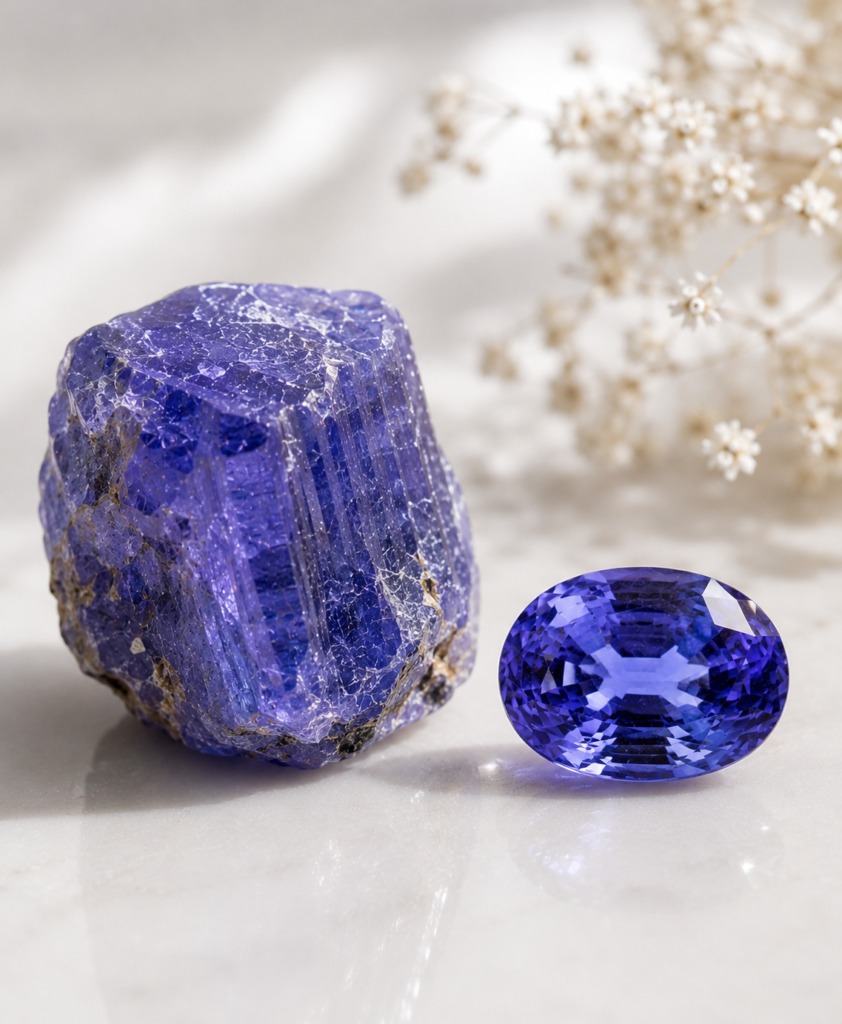
Tanzanite
Tanzanite is a rare gemstone found almost exclusively in Tanzania. It is admired for its unique combination of blue and violet hues.
Colour: Violet blue to deep blue
Hardness: 6 to 7 on the Mohs scale
Best for: Earrings, pendants, and occasional wear rings
Key Characteristics
- Limited geographic source
- Displays pleochroism, showing different colours from different angles
- Increasingly valued by collectors
- Commonly heat treated to improve colour
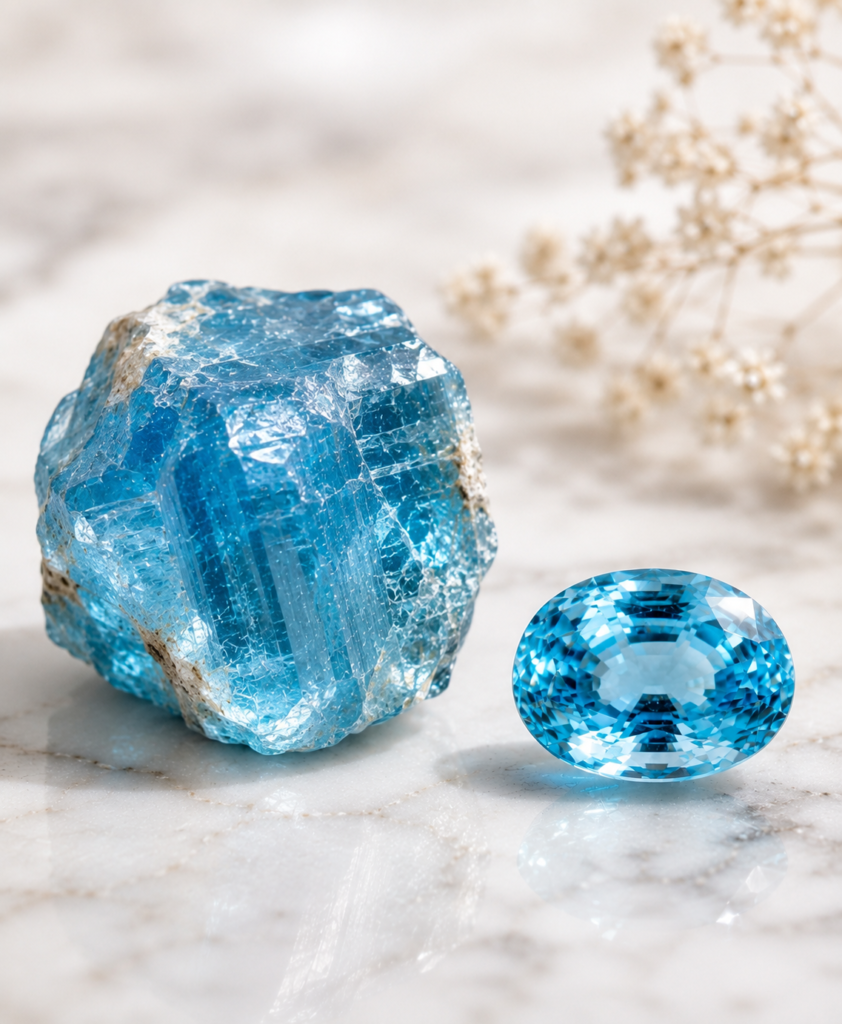
Blue Topaz
Blue topaz is one of the most widely available blue gemstones and is appreciated for its affordability and brilliance.
Colour: Sky blue to deep London blue
Hardness: 8 on the Mohs scale
Best for: Rings, earrings, pendants, and fashion jewellery
Key Characteristics
- Good durability for jewellery use
- Available in a variety of blue shades
- Often treated to produce blue colour
- Popular alternative to sapphire
Blue Spinel
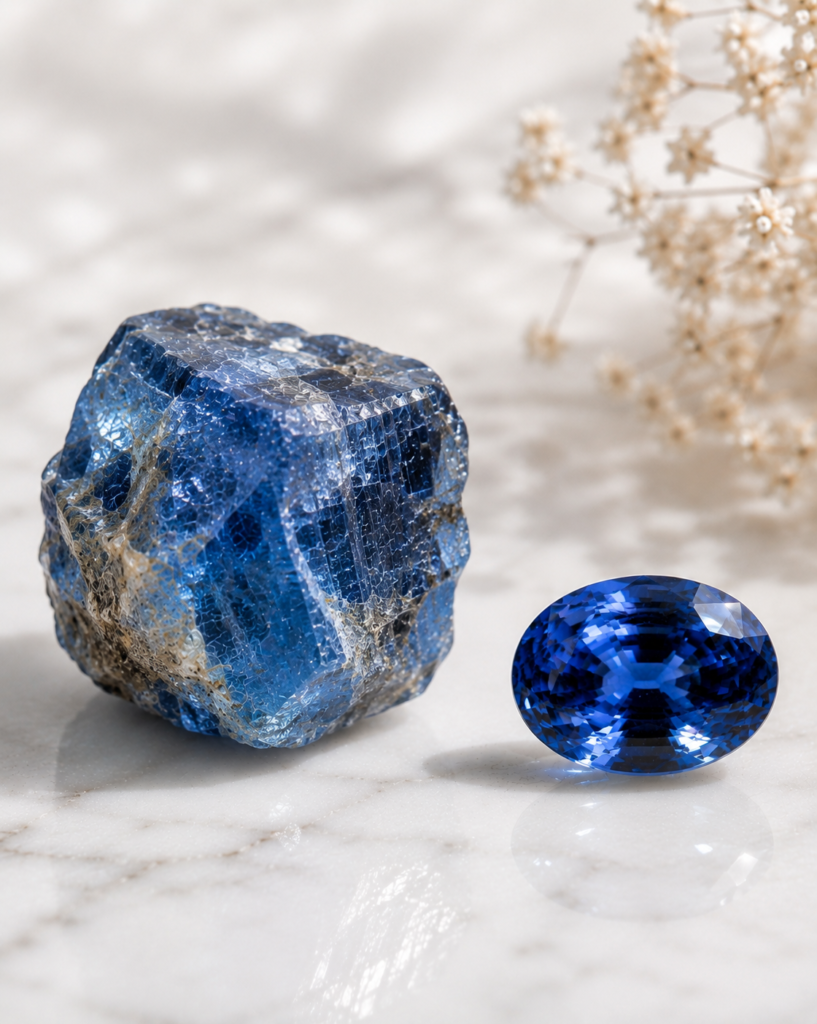
Blue spinel is a lesser known but highly attractive gemstone valued for its brilliance and durability.
Colour: Greyish blue to vivid cobalt blue
Hardness: 8 on the Mohs scale
Best for: Fine jewellery and collector pieces
Key Characteristics
- Often untreated
- Good durability for regular wear
- Increasing popularity among collectors
- Exceptional brilliance
Blue Zircon
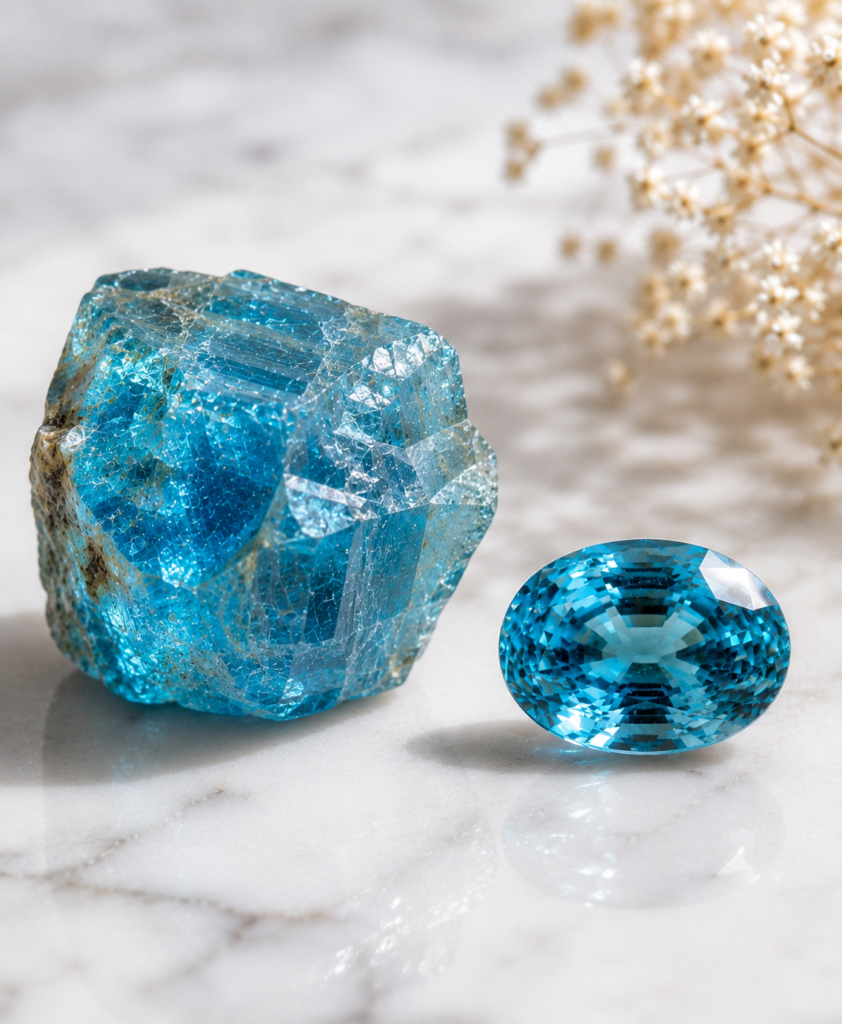
Blue zircon is a natural gemstone known for its exceptional brilliance and fire. It should not be confused with cubic zirconia, which is a synthetic diamond simulant.
Colour: Light blue to vivid blue
Hardness: 6 to 7.5 on the Mohs scale
Best for: Pendants, earrings, and carefully worn rings
Key Characteristics
- High refractive properties create impressive sparkle
- Natural gemstone with a long history in jewellery
- May undergo heat treatment to achieve blue colour
- Requires some care due to relative brittleness
Indicolite (Blue Tourmaline)
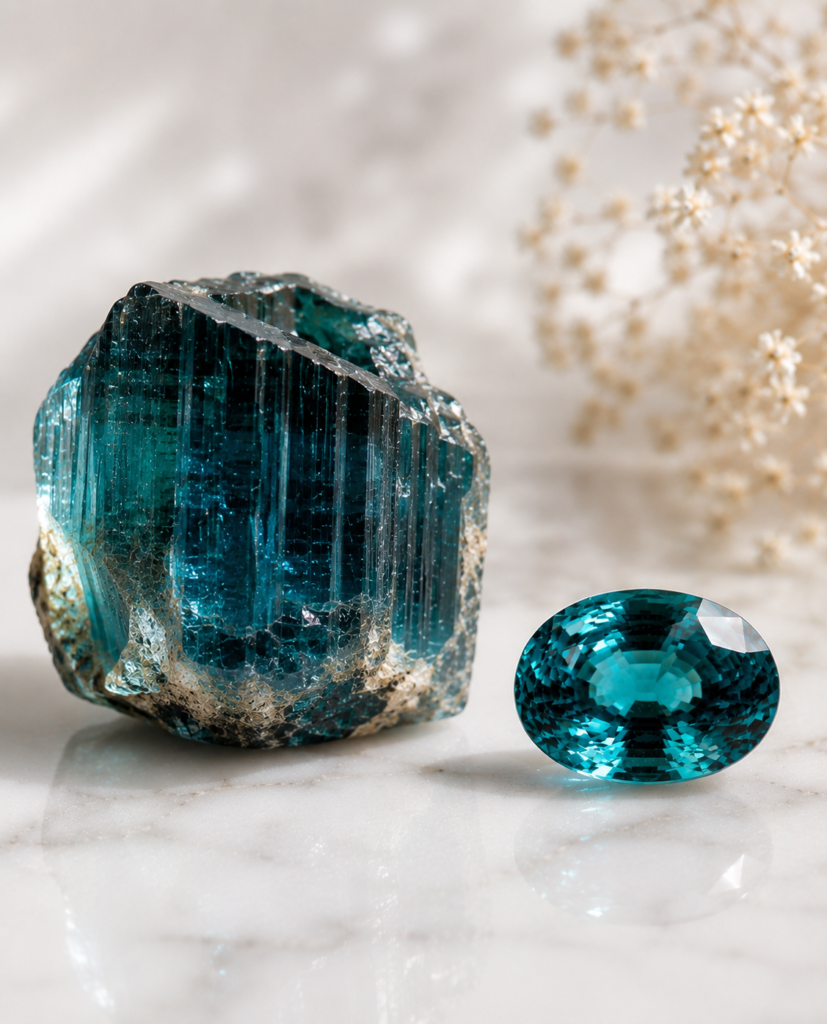
Indicolite is the blue variety of tourmaline and is treasured for its rich, saturated colours.
Colour: Greenish blue to deep blue
Hardness: 7 to 7.5 on the Mohs scale
Best for: Fine jewellery and statement pieces
Key Characteristics
- Rare among tourmaline varieties
- Attractive colour range
- Good durability with proper care
- May receive treatments to improve appearance
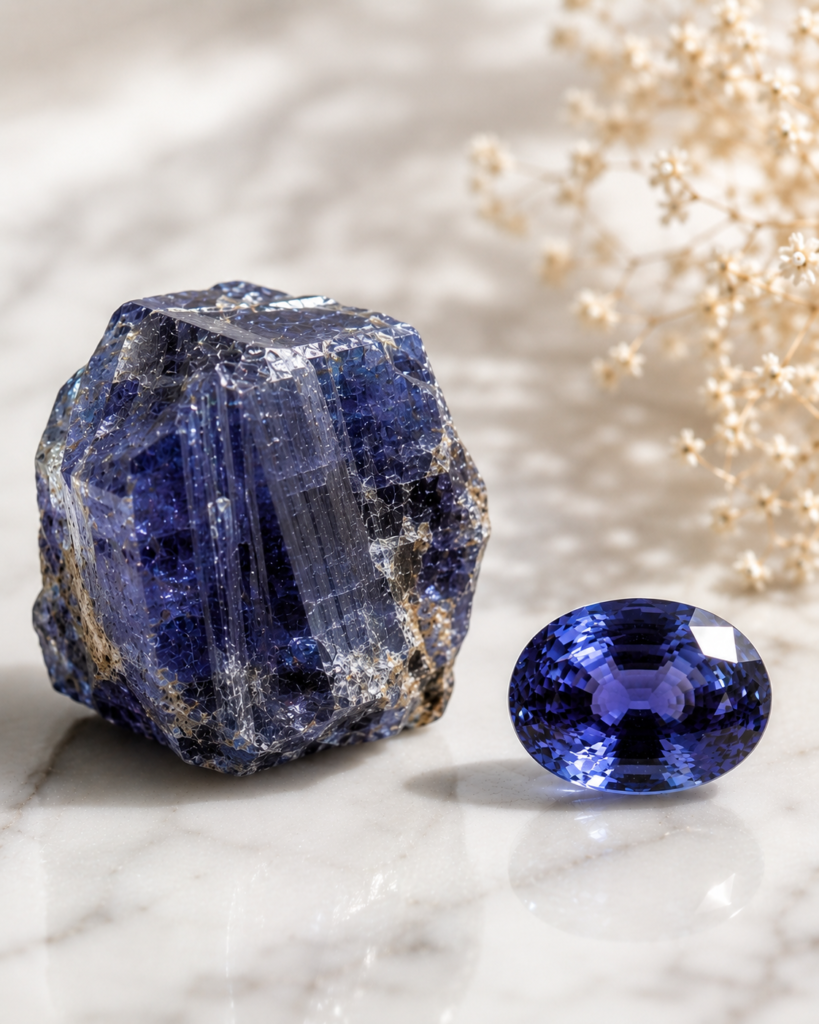
Iolite
Iolite is known for its striking pleochroism, displaying different shades of blue and violet depending on the viewing angle.
Colour: Violet blue to greyish blue
Hardness: 7 to 7.5 on the Mohs scale
Best for: Earrings, pendants, and occasional wear rings
Key Characteristics
- Distinctive colour changing appearance
- Relatively affordable
- Popular alternative to sapphire
- Requires careful setting in jewellery
Kyanite
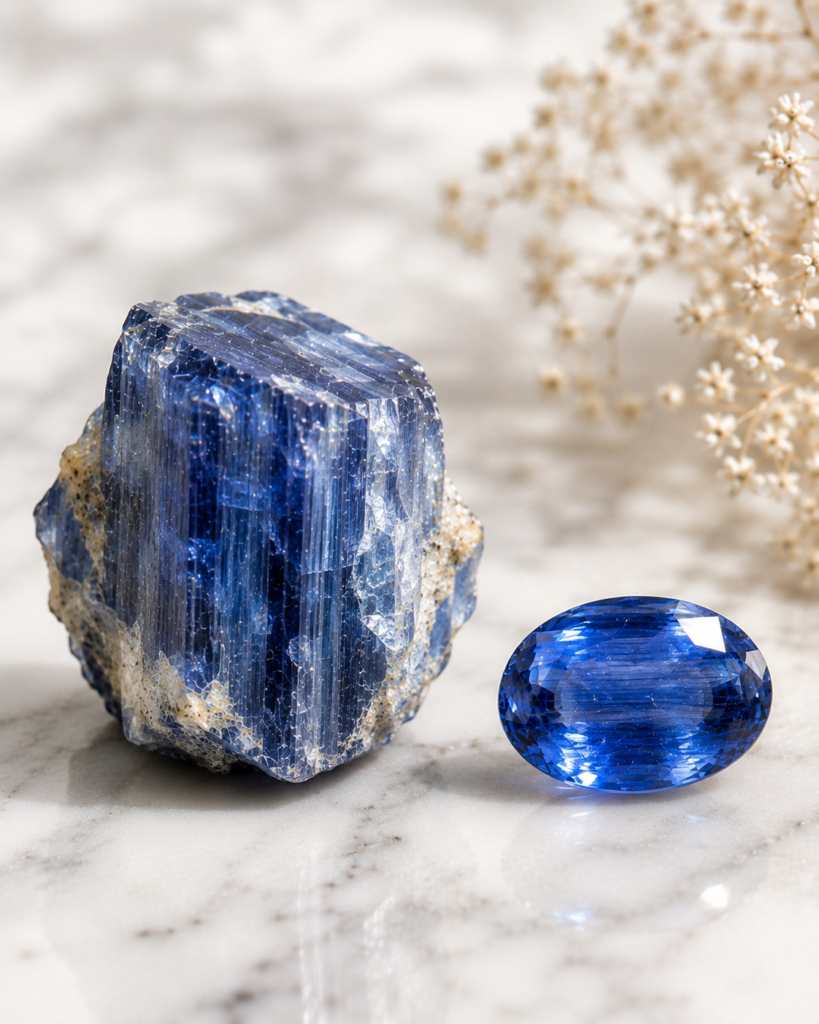
Kyanite is a distinctive gemstone recognised for its varying hardness depending on crystal direction.
Colour: Light blue to deep blue
Hardness: Approximately 4.5 to 7 on the Mohs scale
Best for: Earrings and pendants
Key Characteristics
- Unique physical properties
- Attractive transparency in fine specimens
- Requires protective jewellery settings
- Favoured by collectors
Apatite
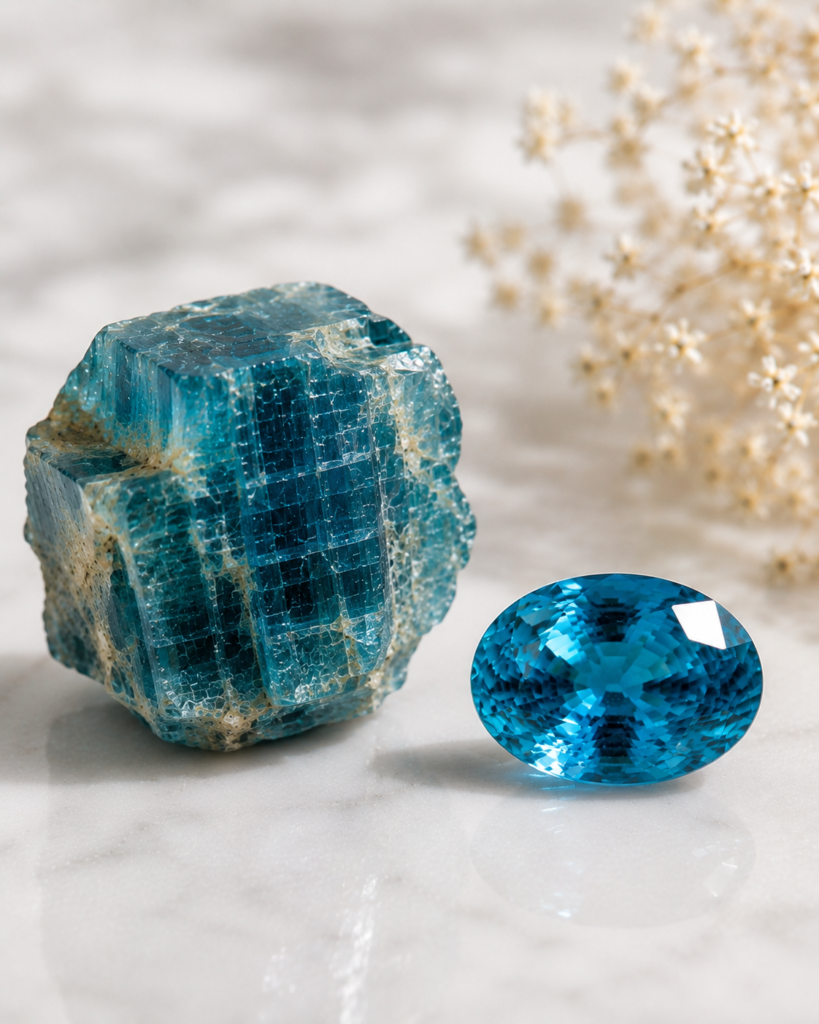
Blue apatite is admired for its vivid neon like colour and brilliance.
Colour: Bright blue to blue green
Hardness: 5 on the Mohs scale
Best for: Collector pieces and occasional wear jewellery
Key Characteristics
- Exceptional colour intensity
- Relatively soft gemstone
- Requires careful handling
- Popular among gemstone enthusiasts
Benitoite
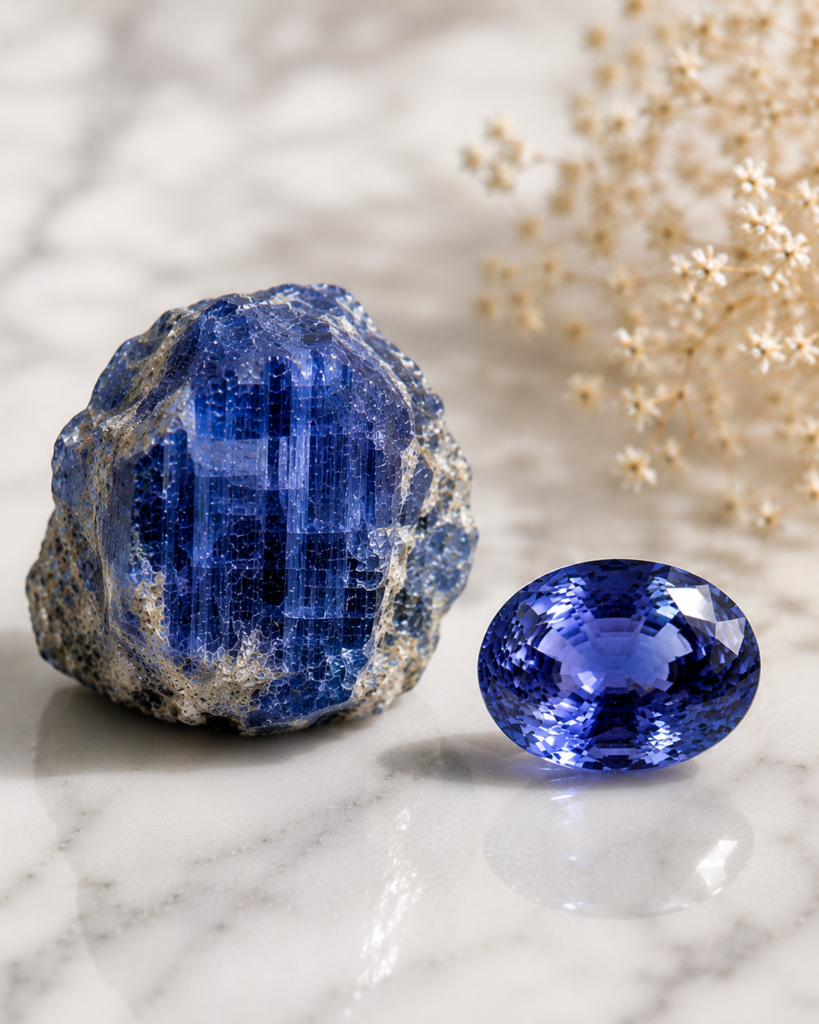
Benitoite is one of the rarest gemstones in the world and is the official state gemstone of California.
Colour: Sapphire blue to violet blue
Hardness: 6 to 6.5 on the Mohs scale
Best for: Collector gemstones and special jewellery pieces
Key Characteristics
- Extremely limited geographic occurrence
- High dispersion produces exceptional sparkle
- Highly valued by collectors
- Rarely encountered in mainstream jewellery
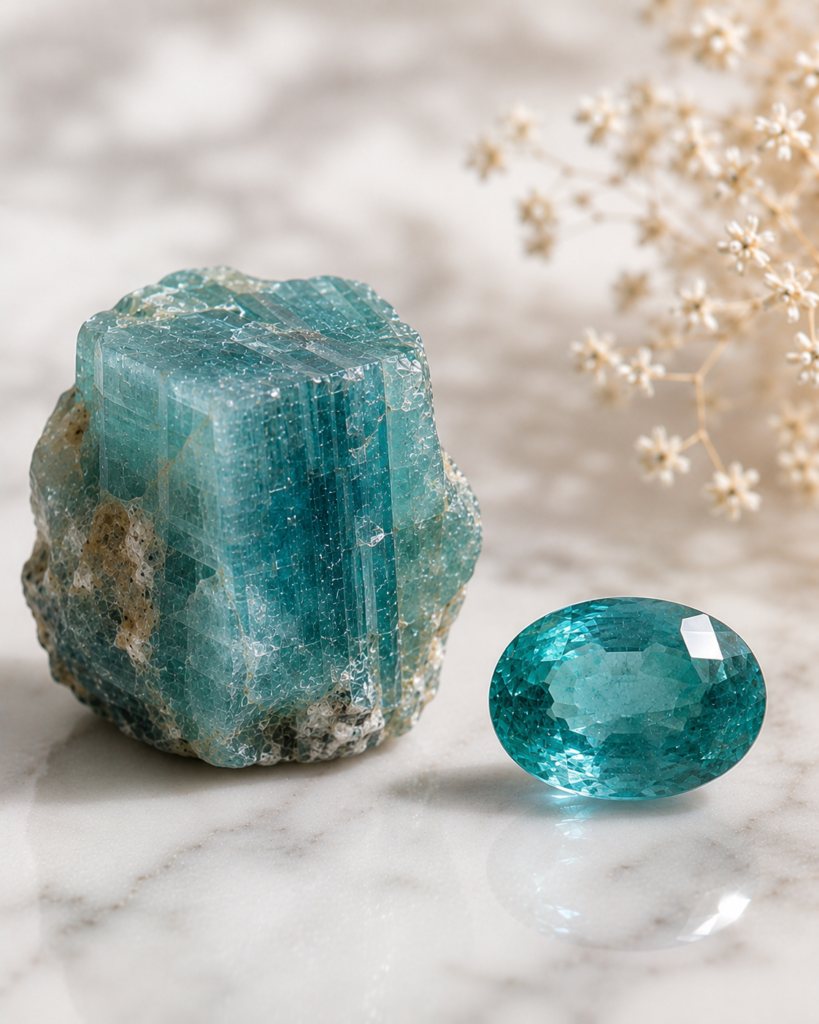
Grandidierite
Grandidierite is an exceptionally rare gemstone prized for its distinctive bluish green appearance.
Colour: Bluish green to greenish blue
Hardness: 7.5 on the Mohs scale
Best for: Collector gemstones and bespoke jewellery
Key Characteristics
- Among the world’s rarest gemstones
- Limited availability
- Increasing collector interest
- Rarely seen in commercial jewellery
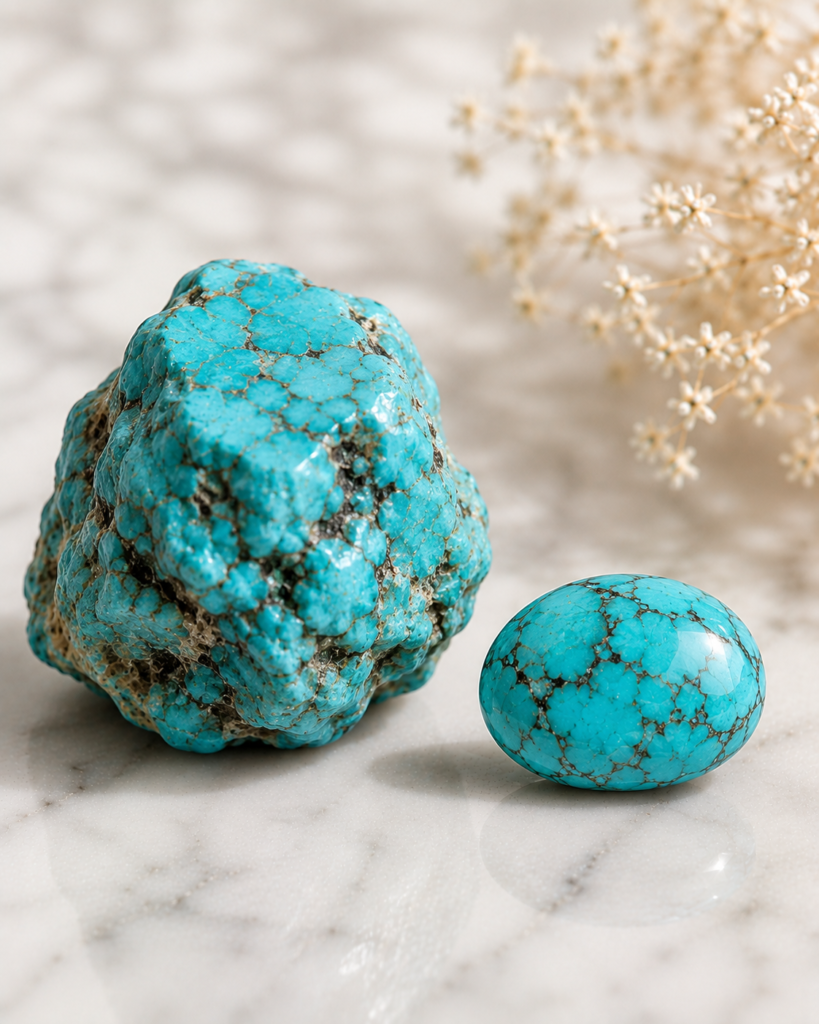
Turquoise
Turquoise has been used in jewellery and decorative arts for thousands of years. Its distinctive colour makes it instantly recognisable.
Colour: Sky blue to greenish blue
Hardness: 5 to 6 on the Mohs scale
Best for: Pendants, earrings, beads, and statement jewellery
Key Characteristics
- Historic and cultural significance
- Often cut as cabochons
- Requires protection from chemicals and impact
- May undergo stabilisation treatments
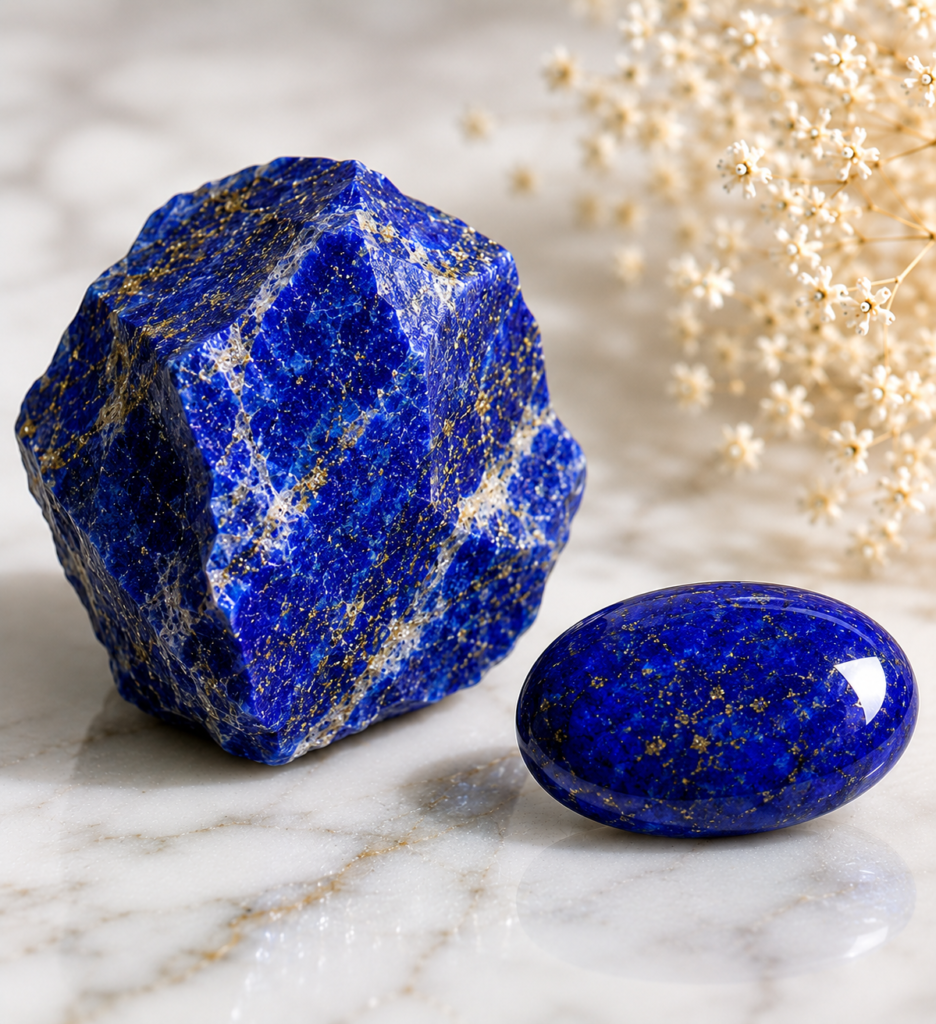
Lapis Lazuli
Lapis lazuli is an ornamental gemstone prized for its deep blue colour and golden pyrite inclusions.
Colour: Deep royal blue with golden flecks
Hardness: 5 to 5.5 on the Mohs scale
Best for: Beads, carvings, pendants, and decorative objects
Key Characteristics
- Used since ancient civilisations
- Recognisable pyrite inclusions
- Primarily an ornamental stone
- Requires gentle care
| Comparison of Popular Blue Gemstones | |||
| Gemstone | Colour | Hardness | Suitable for Daily Wear |
| Sapphire | Light blue to deep royal blue | 9 | Yes |
| Aquamarine | Pale blue to greenish blue | 7.5 to 8 | Yes |
| Tanzanite | Violet blue to deep blue | 6 to 7 | With care |
| Blue Topaz | Sky blue to London blue | 8 | Yes |
| Blue Zircon | Light blue to vivid blue | 6 to 7.5 | With care |
| Blue Spinel | Greyish blue to cobalt blue | 8 | Yes |
| Indicolite | Greenish blue to deep blue | 7 to 7.5 | With care |
| Iolite | Violet blue to greyish blue | 7 to 7.5 | With care |
| Kyanite | Light blue to deep blue | 4.5 to 7 | Occasional wear |
| Apatite | Bright blue to blue green | 5 | Occasional wear |
| Benitoite | Sapphire blue to violet blue | 6 to 6.5 | Primarily collector use |
| Grandidierite | Bluish green to greenish blue | 7.5 | Primarily collector use |
| Turquoise | Sky blue to greenish blue | 5 to 6 | Occasional wear |
| Lapis Lazuli | Deep blue with pyrite flecks | 5 to 5.5 | Occasional wear |
How to Choose a Blue Gemstone
When selecting a blue gemstone, consider the following factors:
Colour
Colour is often the most important value factor. Rich, evenly distributed colour is generally preferred, although some gemstones are valued for their lighter tones.
Durability
Harder gemstones such as sapphire, blue spinel, aquamarine, and blue topaz are better suited for jewellery intended for everyday wear.
Rarity
Some blue gemstones, such as benitoite and grandidierite, are exceptionally rare and may appeal more to collectors.
Budget
Blue gemstones are available across a wide range of price points, from relatively affordable blue topaz and iolite to highly valuable sapphires and rare collector stones.
Certification
Independent gemstone testing can provide valuable information about a gemstone’s identity and characteristics.
Why IDT Gemstone Certification Matters
Many blue gemstones can appear remarkably similar to the naked eye. In some cases, gemstones may also undergo treatments to enhance their appearance. Professional gemstone testing helps provide greater transparency about the stone being purchased.
IDT Gemstone Certification helps identify important characteristics, including:
- The identity of the gemstone
- Whether the gemstone is natural or laboratory grown, where applicable
- The presence of detectable treatments
- Weight and measurements
- Colour and transparency observations
- Additional comments relevant to the gemstone
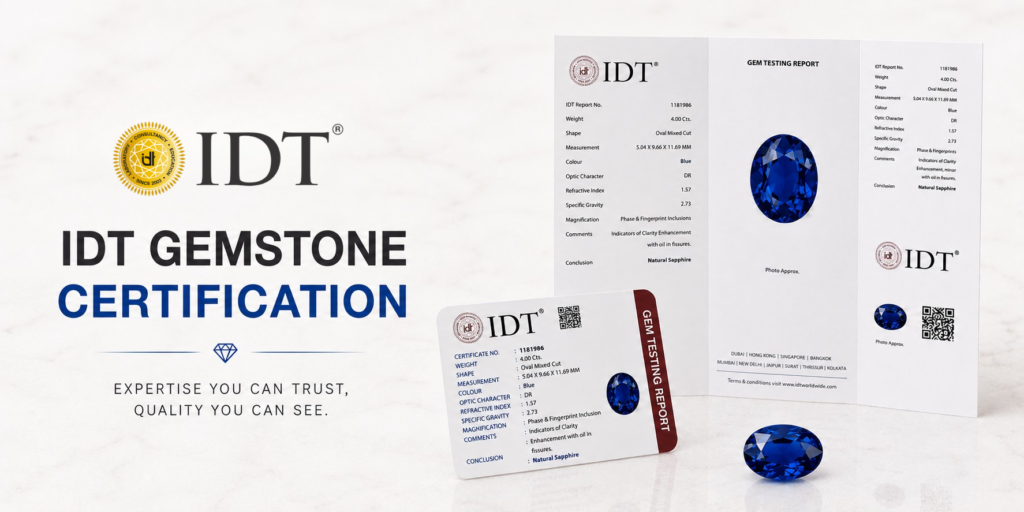
Whether purchasing a sapphire, aquamarine, tanzanite, blue spinel, turquoise, or other blue gemstone, IDT Gemstone Certification provides an independent assessment to help buyers better understand the gemstone they own or intend to purchase.
Blue gemstones remain some of the most admired coloured stones in the world. From the enduring appeal of sapphire to the extraordinary rarity of benitoite and grandidierite, each gemstone offers its own unique beauty and characteristics.
Before purchasing a valuable blue gemstone, understanding its identity, durability, and characteristics can help you make a more informed decision. Always insist on IDT Gemstone Certification for greater transparency and confidence.