
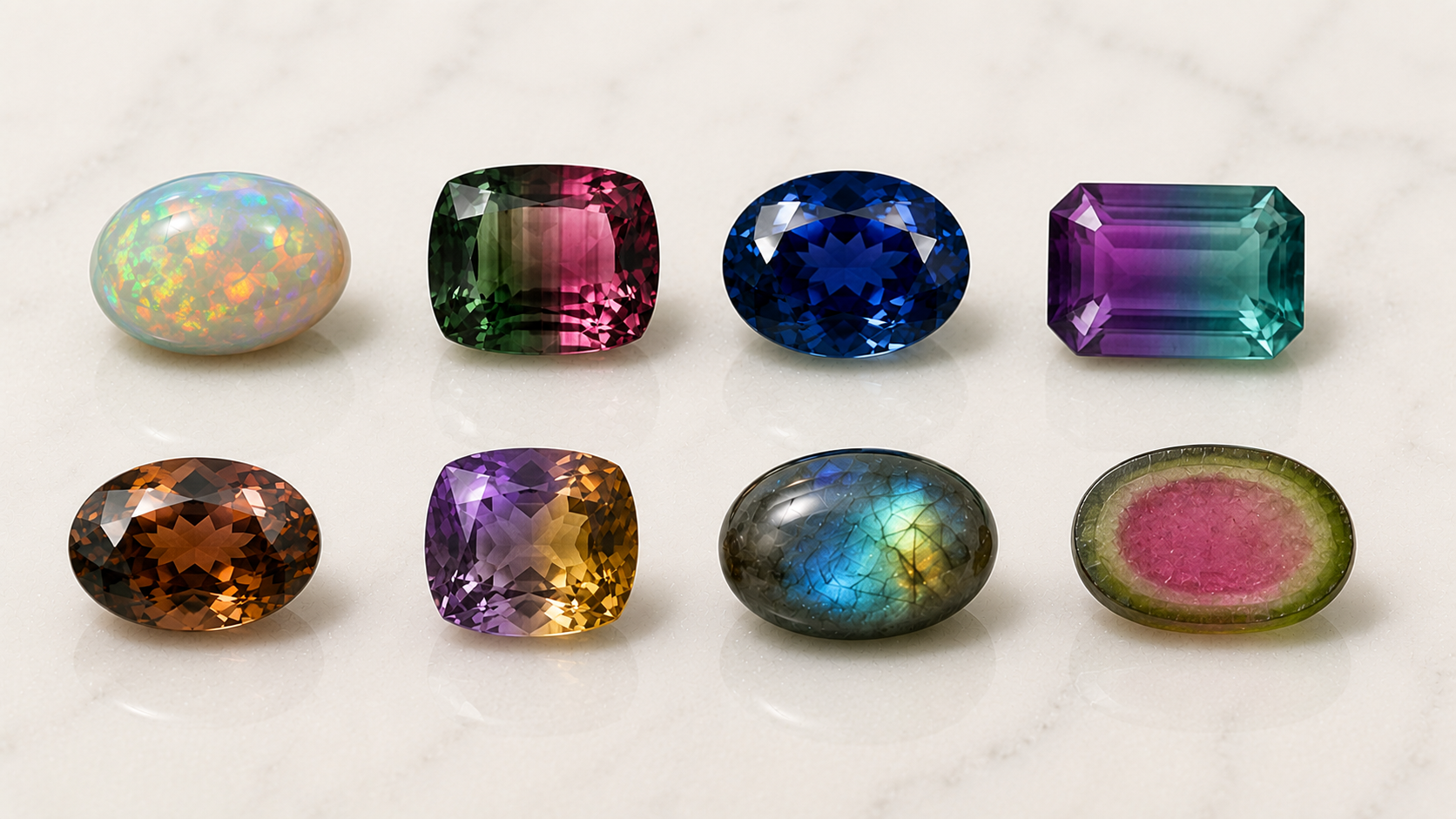
Multicolour gemstones are among the most fascinating treasures found in nature. Unlike gemstones that display a single dominant colour, multicolour gemstones exhibit two or more colours within the same stone, creating unique visual effects and patterns. These natural colour combinations often result from variations in trace elements, crystal growth conditions, or natural colour zoning during formation.
Highly prized by collectors, jewellery designers, and gemstone enthusiasts, multicolour gemstones offer individuality and beauty that cannot be replicated. No two stones are ever exactly alike, making each gemstone truly unique.
This guide explores some of the most popular multicolour gemstones used in jewellery today.
Tourmaline
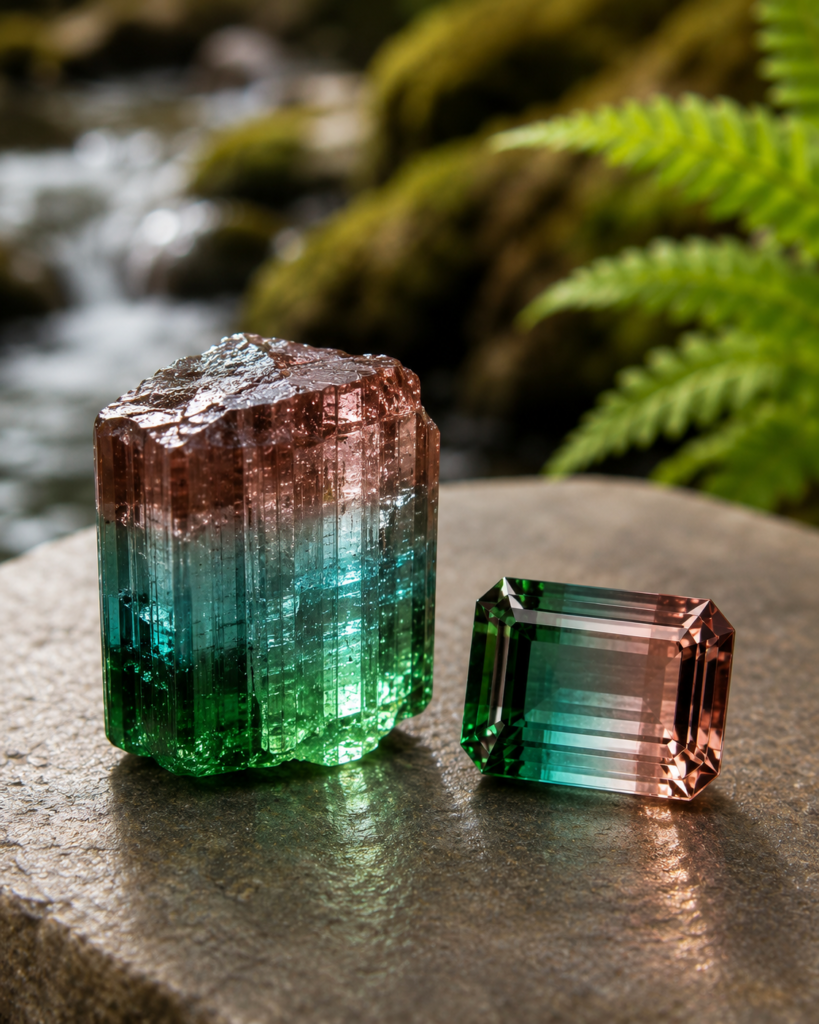
Tourmaline is one of the most colourful gemstone families in the world. Many tourmalines display multiple colours within a single crystal, making them highly desirable among collectors and jewellery lovers.
Colour: Multiple colour combinations including pink-green, green-yellow, blue-green, and more
Hardness: 7 to 7.5 on the Mohs scale
Best for: Rings, pendants, earrings, and collector jewellery
Key Characteristics
- One of the most colour-diverse gemstone families
- Frequently displays natural colour zoning
- Watermelon tourmaline is among the most famous multicolour varieties
- Good durability for jewellery use
Watermelon Tourmaline
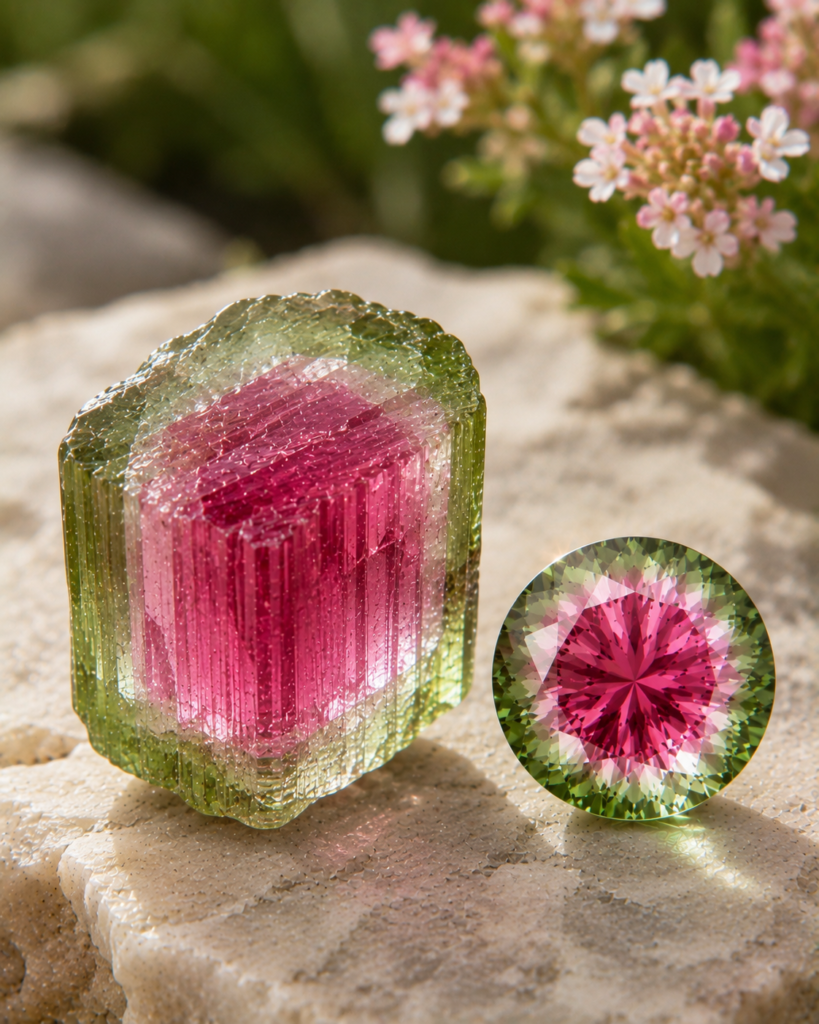
Watermelon tourmaline is a unique variety of tourmaline that displays pink centres surrounded by green outer layers, resembling a slice of watermelon.
Colour: Pink and green
Hardness: 7 to 7.5 on the Mohs scale
Best for: Statement jewellery, collector pieces, and pendants
Key Characteristics
- Naturally occurring pink and green colour combination
- Highly sought after by collectors
- Each stone displays a unique colour pattern
- Often cut to showcase natural zoning
Ametrine
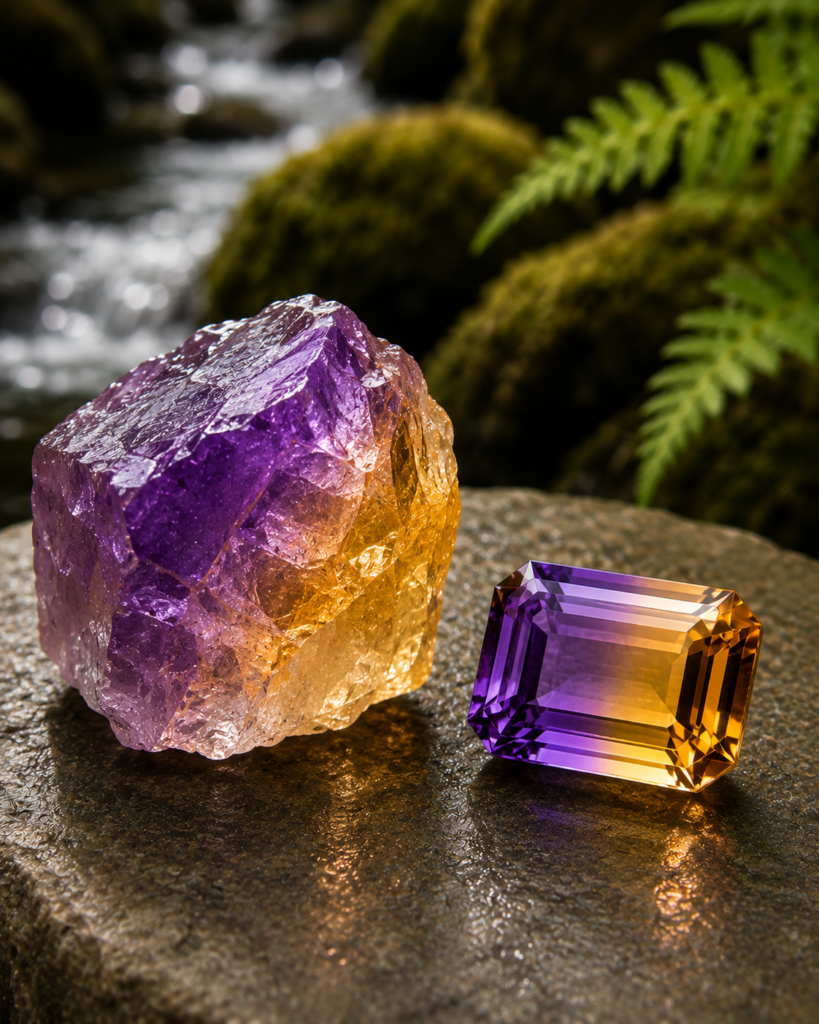
Ametrine is a naturally occurring variety of quartz that combines purple amethyst and yellow citrine within the same crystal.
Colour: Purple and yellow
Hardness: 7 on the Mohs scale
Best for: Rings, pendants, earrings, and fashion jewellery
Key Characteristics
- Rare natural combination of amethyst and citrine
- Distinct colour separation within the gemstone
- Attractive and affordable
- Primarily sourced from Bolivia
Andalusite
Andalusite is known for its remarkable pleochroism, displaying different colours when viewed from different angles.
Colour: Brown, green, yellow, orange, and reddish tones
Hardness: 6.5 to 7.5 on the Mohs scale
Best for: Collector jewellery, rings, and pendants
Key Characteristics
- Strong pleochroic colour display
- Natural earthy colour palette
- Popular among gemstone collectors
- Unique appearance unlike most coloured gemstones
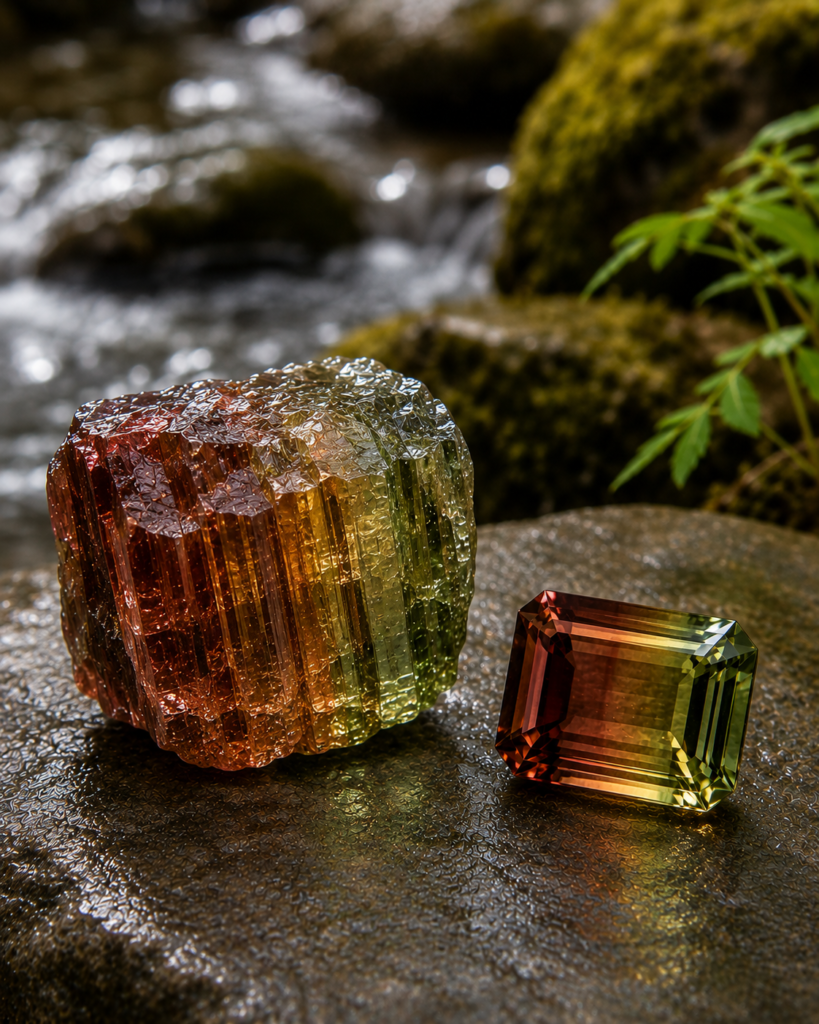
Fluorite
Fluorite is admired for its vivid colour zoning and can display multiple colours within a single gemstone.
Colour: Purple, green, blue, yellow, and colourless combinations
Hardness: 4 on the Mohs scale
Best for: Collector specimens and occasional wear jewellery
Key Characteristics
- Frequently exhibits striking colour bands
- Available in a wide variety of colour combinations
- Popular with collectors
- Requires careful handling due to softness
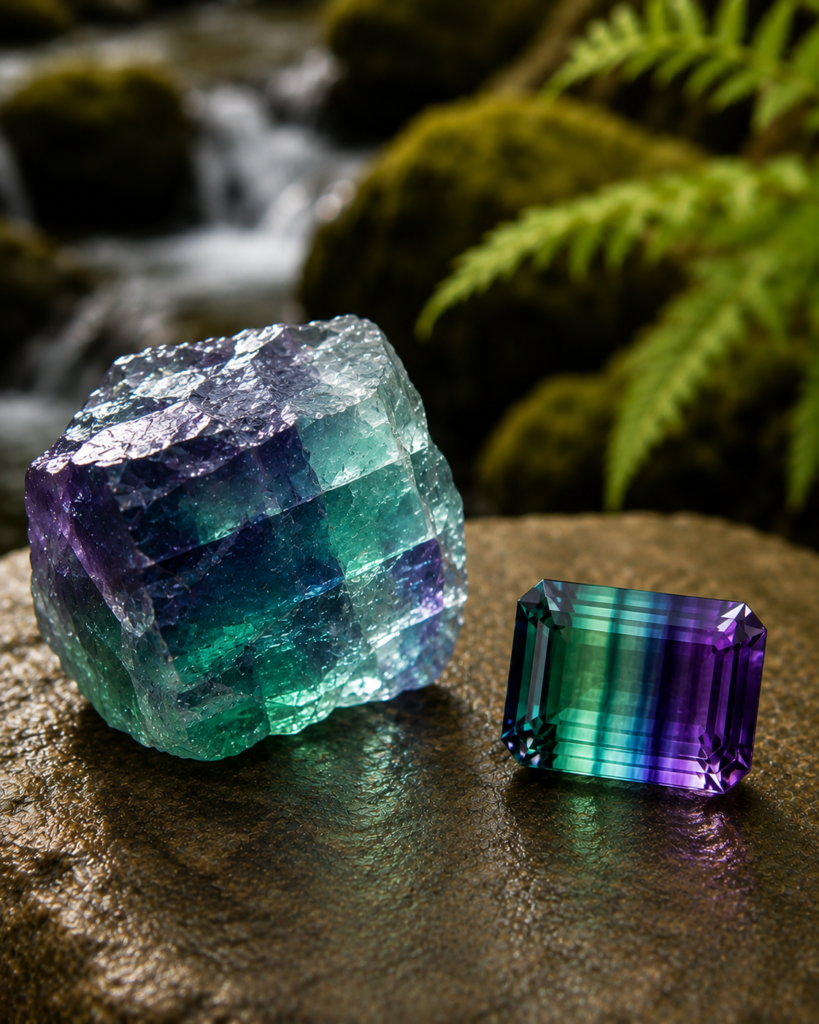
Sapphire (Particolour Sapphire)
Particolour sapphires naturally display two or more colours within a single gemstone, often featuring combinations of blue, green, yellow, or teal.
Colour: Blue, green, yellow, teal combinations
Hardness: 9 on the Mohs scale
Best for: Engagement rings, fine jewellery, and collector pieces
Key Characteristics
- Highly durable for daily wear
- Each stone displays unique colour zoning
- Increasingly popular in contemporary jewellery
- Often sourced from Australia and Madagascar
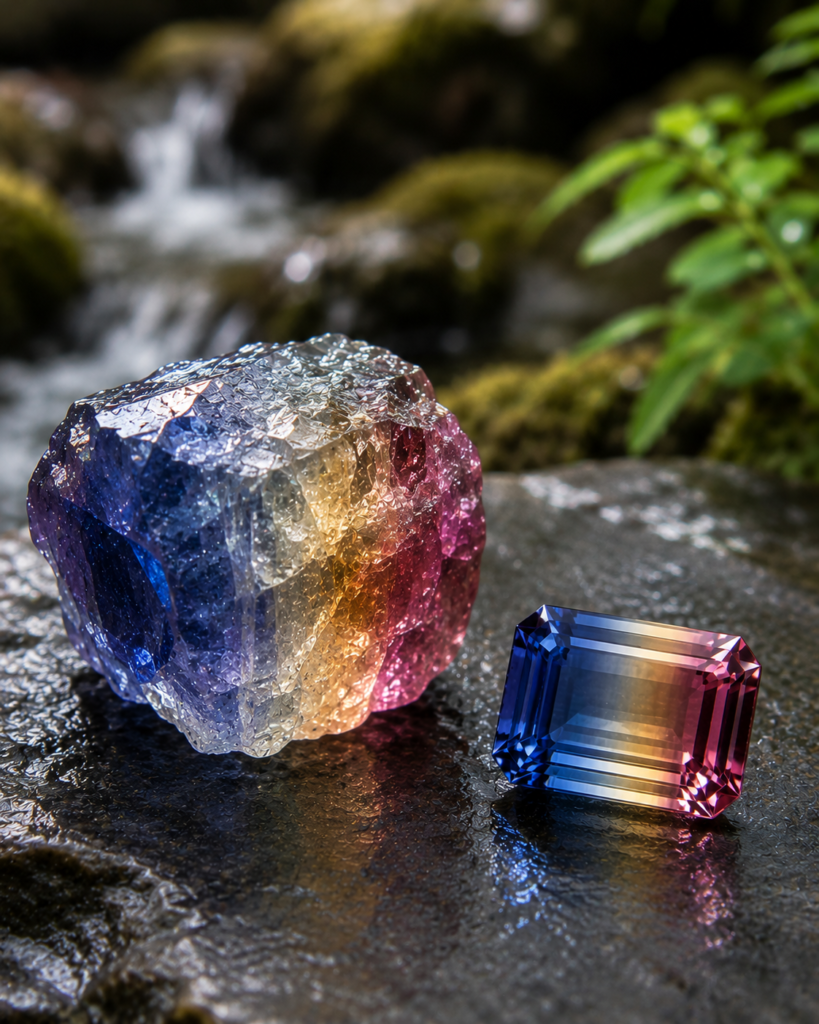
Opal
Opal is renowned for its play-of-colour, displaying flashes of multiple colours that shift as the stone moves.
Colour: Multiple colours visible through play-of-colour
Hardness: 5.5 to 6.5 on the Mohs scale
Best for: Pendants, earrings, and collector jewellery
Key Characteristics
- Unique optical phenomenon known as play-of-colour
- Every stone displays a different colour pattern
- One of the most visually distinctive gemstones
- Requires careful wear and storage
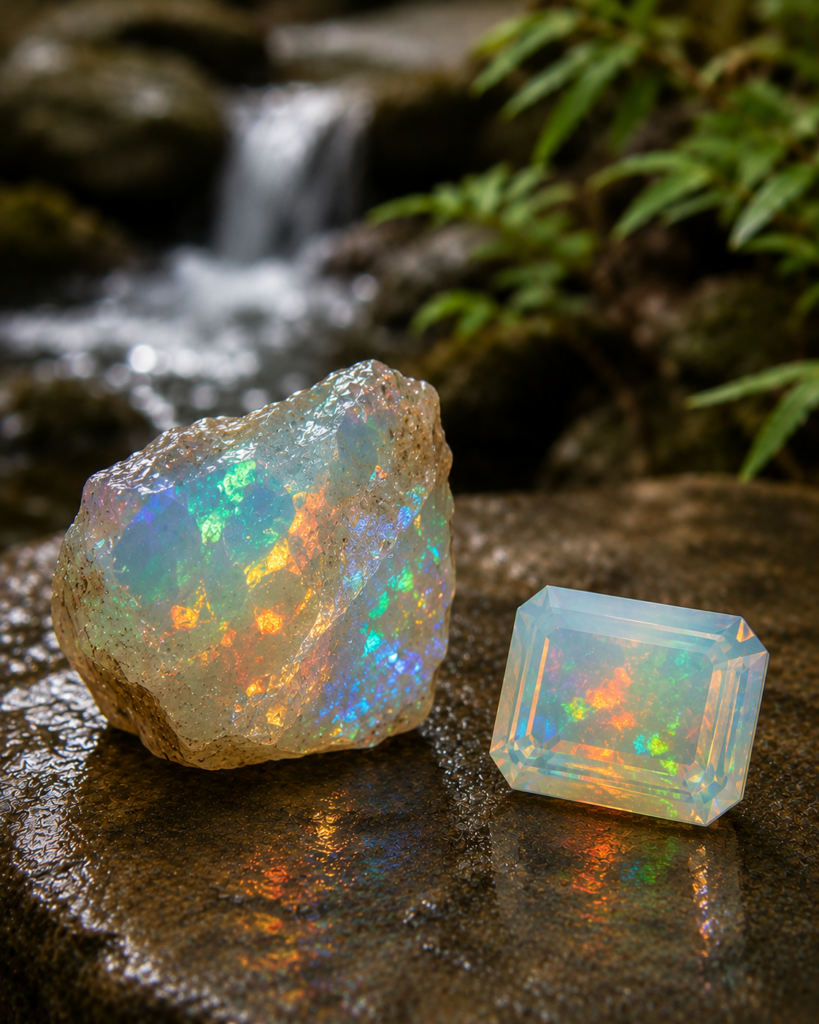
Labradorite
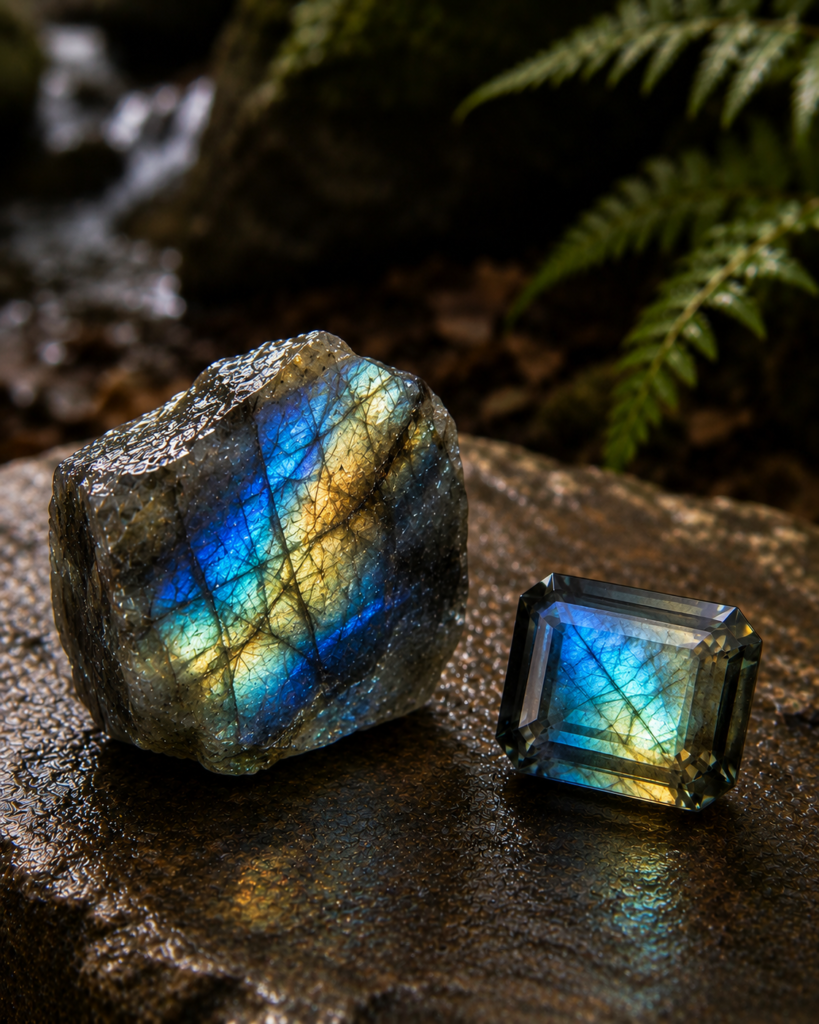
Labradorite displays a phenomenon called labradorescence, producing flashes of multiple colours across its surface.
Colour: Grey base with blue, green, gold, orange, and purple flashes
Hardness: 6 to 6.5 on the Mohs scale
Best for: Pendants, statement jewellery, and collector pieces
Key Characteristics
- Displays colourful iridescent flashes
- Unique optical effect known as labradorescence
- Popular in designer jewellery
- Every gemstone shows a different colour display
| Comparison of Popular Multicolour Gemstones | |||
| Gemstone | Colour | Hardness | Suitable for Daily Wear |
| Tourmaline | Multiple colour combinations | 7 – 7.5 | Yes |
| Watermelon Tourmaline | Pink and Green | 7 – 7.5 | Yes |
| Ametrine | Purple and Yellow | 7 | With Care |
| Andalusite | Brown, Green, Yellow, Orange | 6.5 – 7.5 | With Care |
| Fluorite | Purple, Green, Blue, Yellow | 4 | No |
| Particolour Sapphire | Blue, Green, Yellow, Teal | 9 | Yes |
| Opal | Multiple colours | 5.5 – 6.5 | With Care |
| Labradorite | Blue, Green, Gold Flashes | 6 – 6.5 | With Care |
How to Choose a Multicolour Gemstone
Colour Pattern
The appeal of a multicolour gemstone often lies in the uniqueness of its colour distribution. Look for attractive colour transitions and balanced patterns.
Durability
For everyday jewellery, consider harder gemstones such as particolour sapphire and tourmaline. Softer gemstones such as fluorite and opal require more careful handling.
Rarity
Gemstones such as watermelon tourmaline, particolour sapphire, and fine andalusite are less commonly encountered and may appeal to collectors.
Budget
Multicolour gemstones are available across a wide range of price points. Ametrine and labradorite are often affordable, while premium particolour sapphires and watermelon tourmalines can command significantly higher prices.
Certification
Independent gemstone testing can help verify the identity and characteristics of multicolour gemstones, especially when colour zoning and treatments may affect value.
Why IDT Gemstone Certification Matters
Many multicolour gemstones can be difficult to identify based solely on appearance. Some gemstones may also be confused with synthetic, treated, or imitation materials. Professional gemstone testing provides greater transparency regarding the stone being purchased.
IDT Gemstone Certification helps identify important characteristics, including:
- The identity of the gemstone
- Whether the gemstone is natural or laboratory grown, where applicable
- The presence of detectable treatments
- Weight and measurements
- Colour distribution and transparency observations
- Additional comments relevant to the gemstone
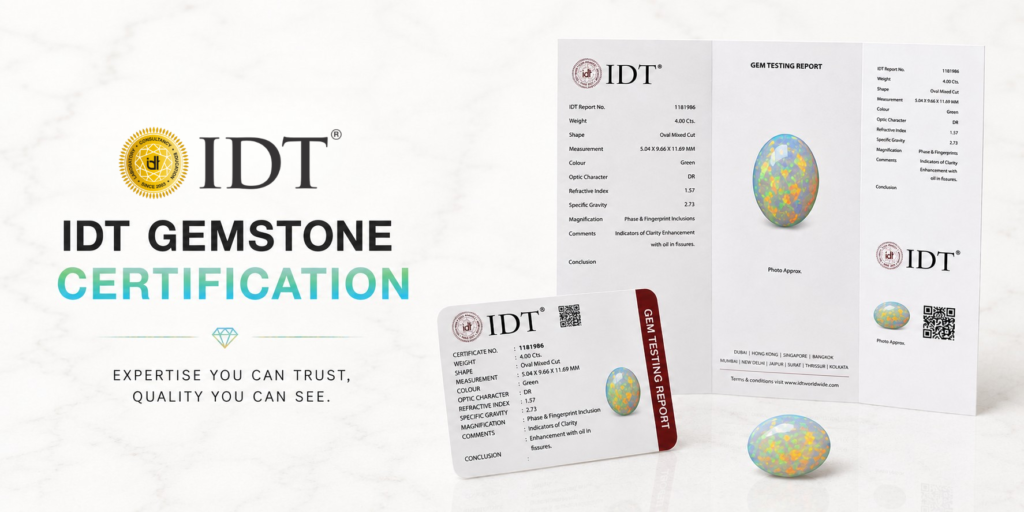
Whether purchasing tourmaline, watermelon tourmaline, ametrine, andalusite, fluorite, particolour sapphire, opal, or labradorite, IDT Gemstone Certification provides an independent assessment to help buyers better understand the gemstone they own or intend to purchase.
Multicolour gemstones showcase some of nature’s most extraordinary colour combinations. From the vibrant pink-and-green patterns of watermelon tourmaline to the shifting flashes of opal and labradorite, each gemstone offers a distinctive appearance that makes it truly unique.
Before purchasing a valuable multicolour gemstone, understanding its identity, durability, and characteristics can help you make a more informed decision.
Always insist on IDT Gemstone Certification for greater transparency and confidence.