
The Gem of Strength and Eternal Brilliance
Diamond, also known as Heera, is one of the world’s most treasured gemstones, admired for its unmatched brilliance, durability, and timeless elegance. As one of the nine sacred Navratna gemstones, Diamond has been valued for centuries in fine jewellery and is traditionally associated with Venus (Shukra) in Vedic astrology. Discover its unique characteristics, quality factors, origins, traditional significance, and the importance of professional diamond certification.
| Property | Details |
| Gemstone | Diamond (Heera) |
| Mineral Family | Native Element |
| Chemical Composition | Carbon (C) |
| Crystal System | Cubic / Isometric |
| Colour | Colourless to Fancy Colours |
| Hardness | 10 (Mohs Scale) |
| Refractive Index | 2.417 |
| Specific Gravity | 3.52 |
| Lustre | Adamantine |
| Transparency | Transparent to Opaque |
| Birthstone | April |
| Zodiac Association | Taurus, Libra |
| Planet Association | Venus (Shukra) |
| Major Sources | Russia, Botswana, Canada, South Africa, Angola, Namibia, Australia |
About Diamond (Heera)
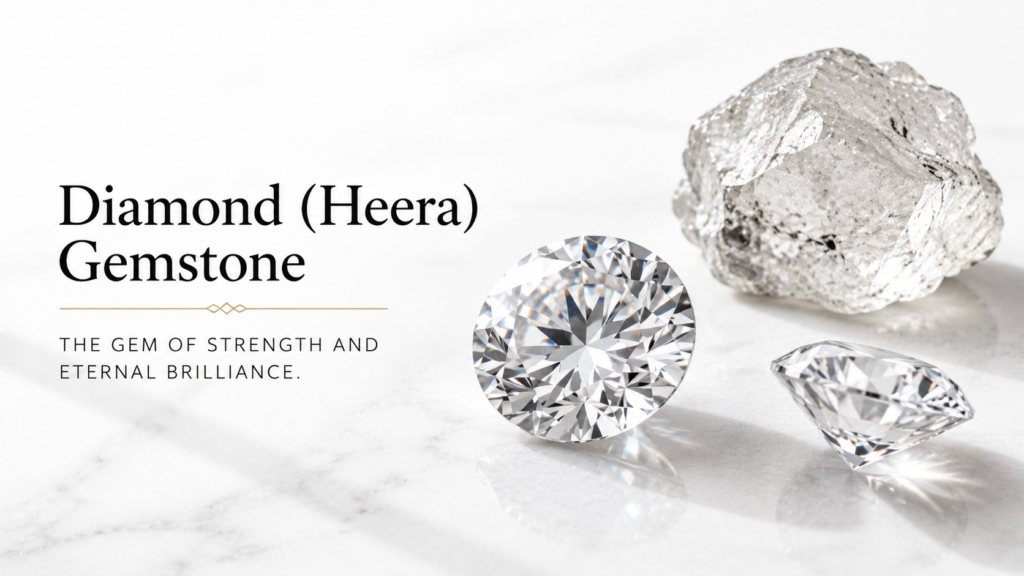
Diamond is a natural crystalline form of carbon and is known as the hardest natural material on Earth. Its exceptional brilliance, fire, and durability make it one of the most desired gemstones in the world.
Throughout history, Diamond has symbolized strength, purity, luxury, commitment, and eternal love. It has been treasured by royal families, collectors, jewellery lovers, and gemstone enthusiasts across cultures.
Today, Diamond remains one of the most popular choices for engagement rings, wedding jewellery, earrings, pendants, bracelets, and luxury jewellery. Its timeless appeal makes it suitable for both everyday wear and special occasions.
Because natural diamonds, treated diamonds, laboratory-grown diamonds, and diamond simulants can appear similar to the naked eye, professional diamond testing is essential to accurately identify the stone and detect treatments or laboratory-grown origin.
Color & Quality
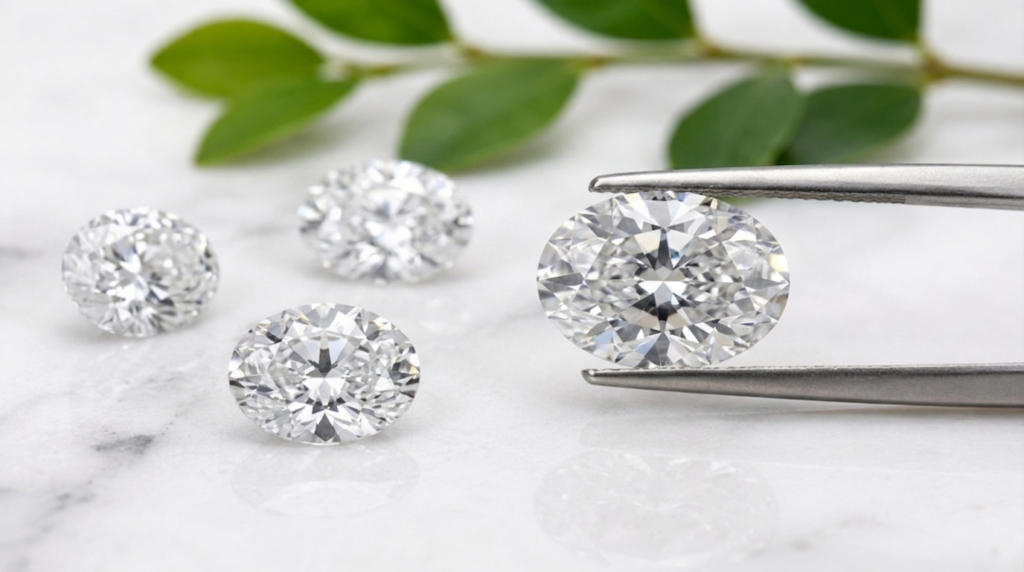
The quality and value of a Diamond are determined by the Four Cs: Cut, Colour, Clarity, and Carat Weight.
Cut is one of the most important factors because it directly affects the diamond’s brilliance, sparkle, and overall appearance. A well-cut diamond reflects light beautifully, giving it exceptional fire and brightness.
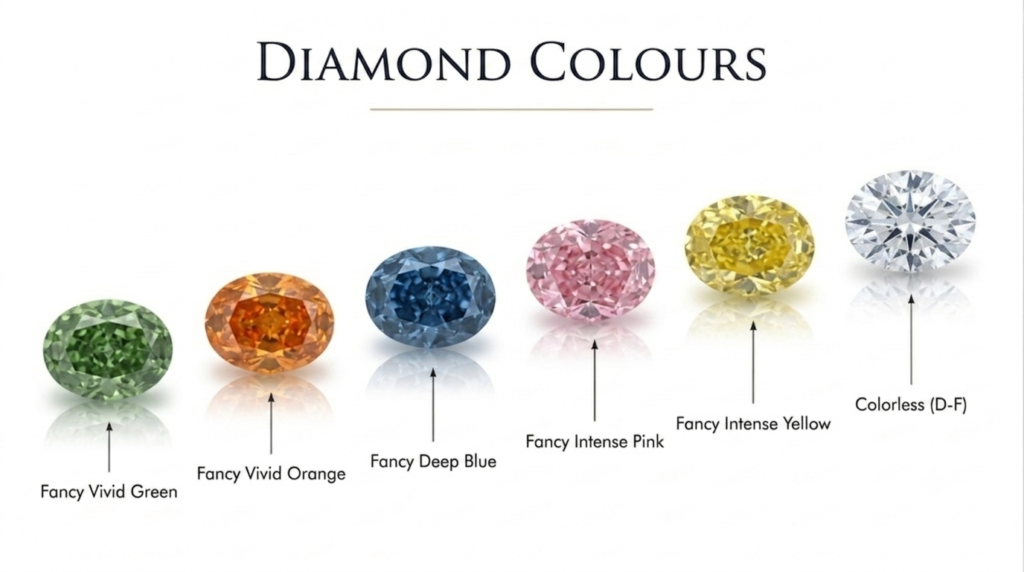
Colour in diamonds is commonly graded from colourless to light yellow or brown. Colourless diamonds are generally considered more valuable, while fancy-colour diamonds such as pink, blue, yellow, and green can be extremely rare and valuable.
Clarity refers to the presence of internal inclusions and external blemishes. Diamonds with fewer visible inclusions are considered higher in clarity. Carat weight refers to the weight of the diamond, but size alone does not determine value. A diamond’s overall quality depends on the balance of all Four Cs.
Origin & Sources
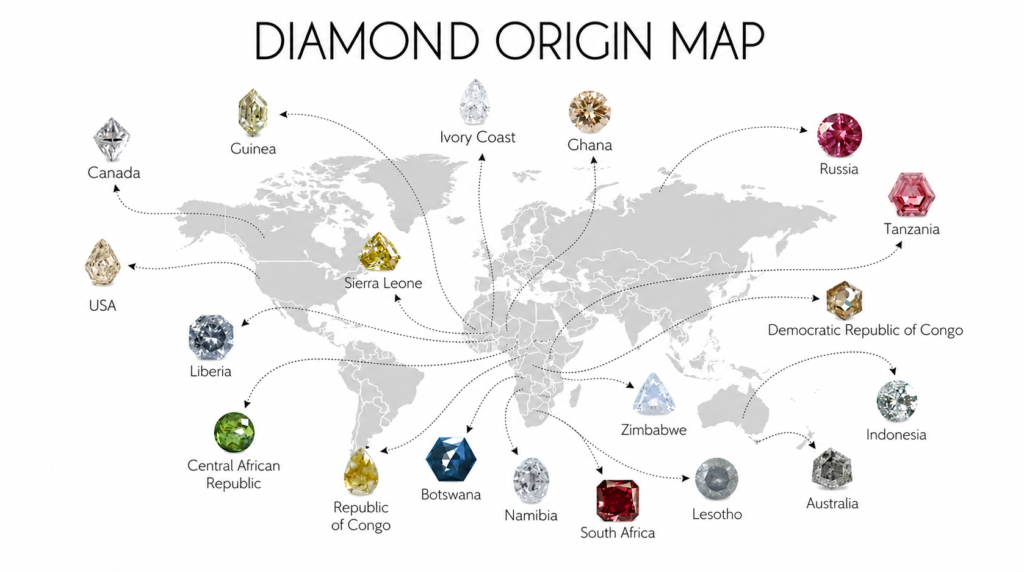
Diamonds are mined in several countries, with each source producing stones that may vary in size, quality, and characteristics.
- Russia: One of the world’s major diamond-producing countries.
- Botswana: Known for producing high-quality gem diamonds.
- Canada: Recognized for ethically sourced diamonds with strong traceability.
- South Africa: Historically famous for some of the world’s most important diamond discoveries.
- Angola and Namibia: Important sources of natural diamonds, including high-value stones.
- Australia: Known for producing diamonds, including fancy-colour diamonds.
Although origin may influence market preference, a diamond’s quality should always be determined through professional gemological examination and grading.
3 Fun Facts About Diamond
Diamonds Are Older Than Dinosaurs
Most natural Diamonds were formed deep inside the Earth billions of years ago, long before dinosaurs existed. This makes every natural Diamond a piece of ancient Earth history.
A Diamond is Made of Only One Element
Even though it looks luxurious and rare, Diamond is made entirely of carbon, the same element found in graphite pencil lead. The difference lies in its crystal structure, which makes Diamond incredibly hard and brilliant.
Some Diamonds Come from Space
Tiny Diamonds have been found in meteorites, showing that diamonds can also form beyond Earth. This makes Diamond one of the few gemstones connected not only to Earth, but also to outer space.
Astrological Significance
Diamond (Heera) is traditionally associated with Venus (Shukra) in Vedic astrology and is believed to symbolize beauty, luxury, love, creativity, charm, and prosperity. It is often chosen by individuals seeking to represent qualities such as confidence, attraction, artistic expression, and success.
Diamond is commonly linked with the zodiac signs Taurus and Libra, although gemstone recommendations vary according to an individual’s birth chart. Those considering Diamond for astrological purposes should consult a qualified astrologer before making a decision.
Disclaimer: Astrological associations are based on traditional beliefs and cultural practices. Individuals should consult a qualified astrologer before making decisions based on astrology.
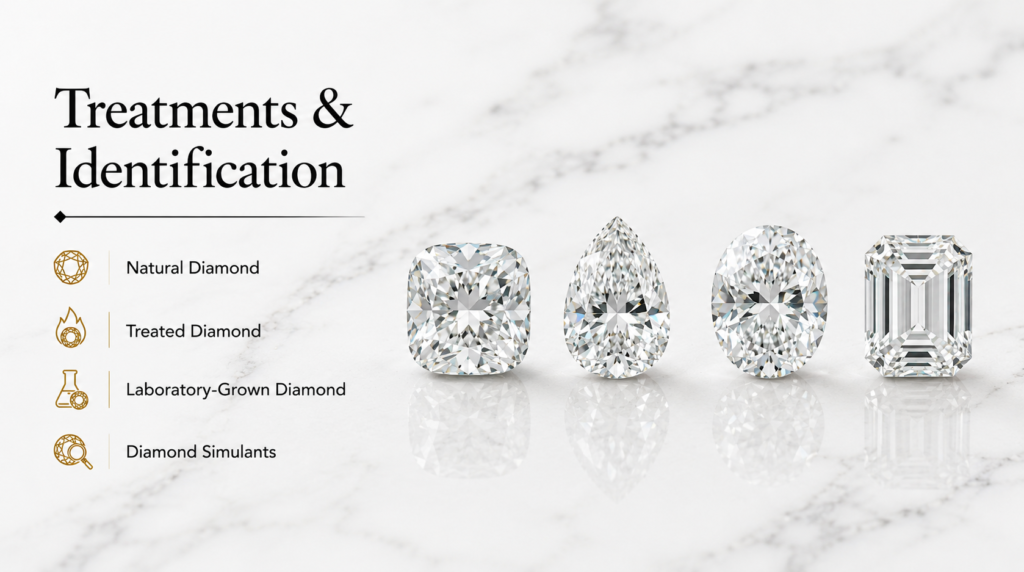
Treatments & Identification
Many Diamonds available in the market may undergo treatments to improve their appearance. Common treatments include HPHT treatment, irradiation, laser drilling, fracture filling, and coating. These treatments should always be properly disclosed.
Professional gemological testing helps distinguish between:
- Natural Diamond
- Treated Diamond
- Laboratory-Grown Diamond
- Diamond Simulants
- Moissanite
- Cubic Zirconia
- Glass
Using advanced gemological instruments and internationally accepted testing methods, laboratories can accurately identify the diamond, detect common treatments, and differentiate natural diamonds from laboratory-grown diamonds and simulants.
Why IDT Gemstone Certification Matters
Natural Diamonds can closely resemble laboratory-grown diamonds, treated diamonds, or imitation stones, making professional diamond testing an important step before purchase. An independent laboratory report provides greater transparency about the diamond’s identity and characteristics.
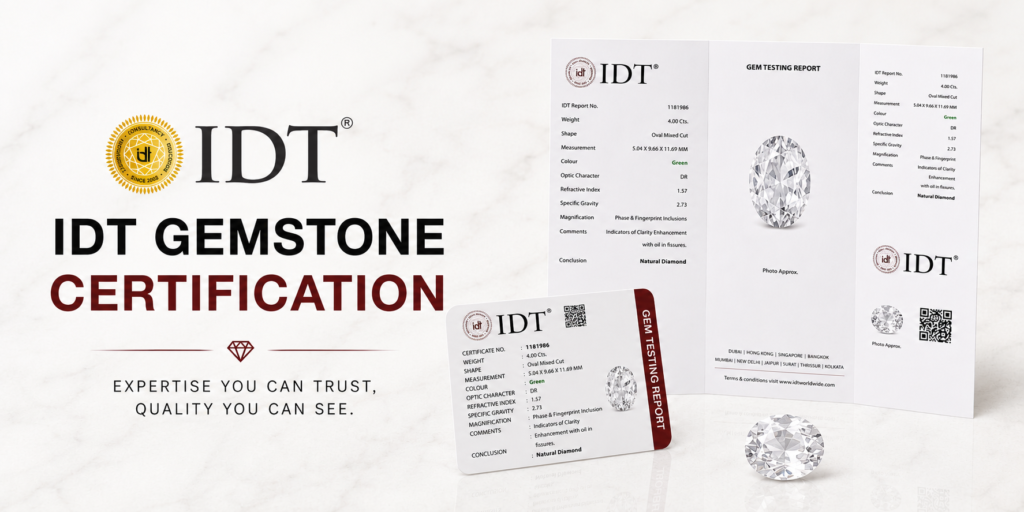
An IDT Diamond Report helps identify important information, including:
- The identity of the stone
- Whether the diamond is natural or laboratory-grown, where applicable
- The presence of detectable treatments
- Cut, Colour, Clarity, and Carat Weight details
- Weight and measurements
- Shape and cutting style
- Additional comments relevant to the diamond
Natural Diamonds are among the world’s most valuable gemstones, and their quality and value can vary significantly based on cut, colour, clarity, carat weight, treatments, and origin. Understanding these characteristics helps buyers, jewellers, collectors, and diamond owners make informed decisions.
Before purchasing a valuable Diamond, always insist on IDT Diamond Certification for greater transparency and confidence.