
The Gem of Purity and Serenity
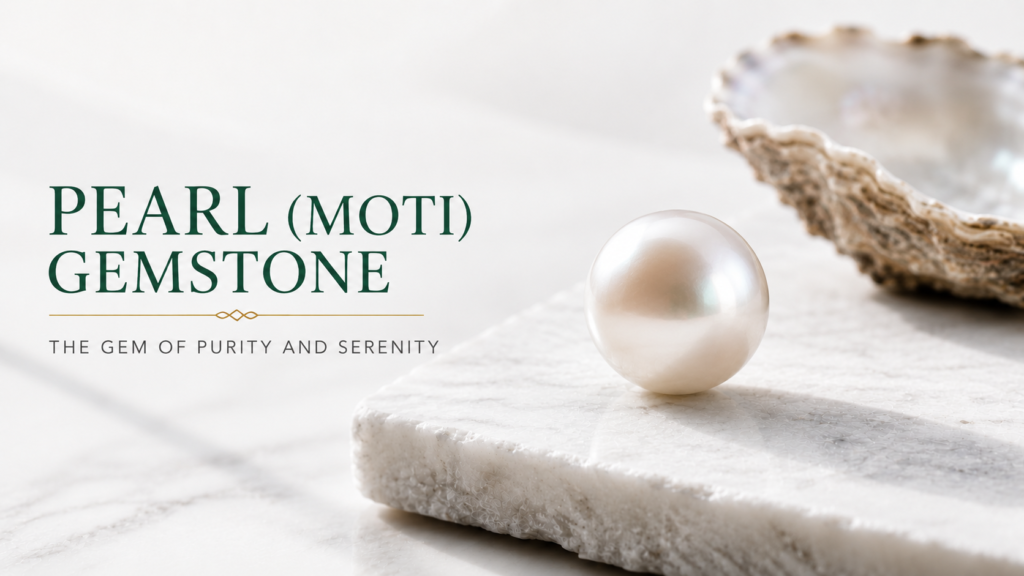
Pearl, also known as Moti, is one of the world’s most treasured organic gemstones, admired for its natural lustre and timeless elegance. As one of the nine sacred Navratna gemstones, Pearl has been cherished for centuries in fine jewellery and is traditionally associated with the Moon (Chandra) in Vedic astrology. Discover its unique characteristics, quality factors, origins, traditional significance, and the importance of professional gemstone certification.
| Property | Details |
| Gemstone | Pearl (Moti) |
| Mineral Family | Organic Gemstone |
| Chemical Composition | Calcium Carbonate (CaCO₃) |
| Crystal Structure | Orthorhombic (Aragonite) |
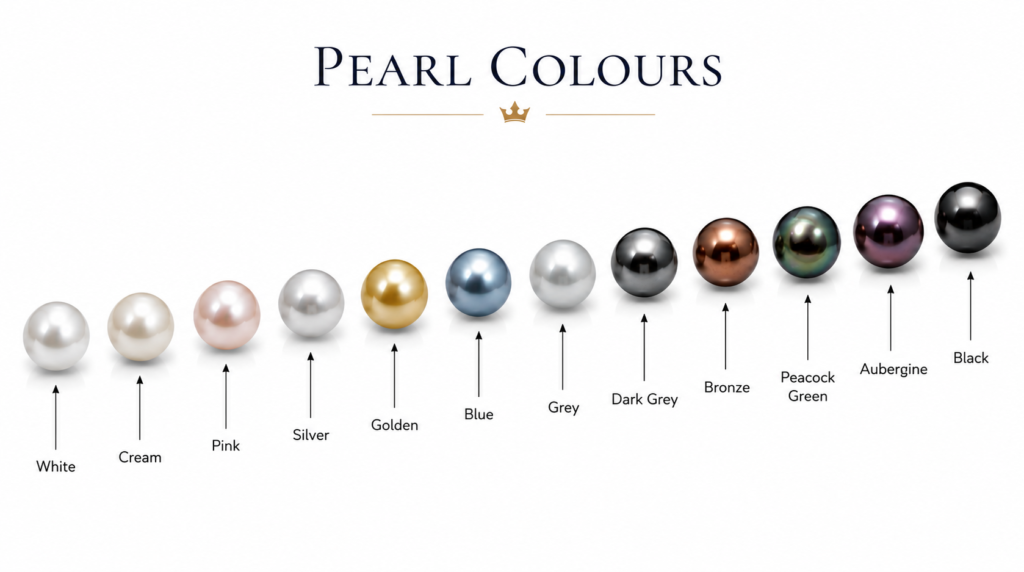
| Colour | White, Cream, Pink, Silver, Golden, Black |
| Hardness | 2.5 to 4.5 (Mohs Scale) |
| Refractive Index | 1.530 to 1.685 |
| Specific Gravity | 2.60 to 2.85 |
| Lustre | Pearly |
| Transparency | Opaque |
| Birthstone | June |
| Zodiac Association | Cancer |
| Planet Association | Moon (Chandra) |
| Major Sources | Japan, China, Australia, French Polynesia, Indonesia, Philippines |
About Pearl (Moti)
Unlike most gemstones that form within the Earth, Pearls are created naturally inside certain molluscs such as oysters and mussels. They are formed when layers of nacre are deposited around a tiny irritant over time, creating the smooth, lustrous gem admired for centuries.
Pearls have long symbolized purity, elegance, wisdom, and grace. They have been worn by royalty and treasured across cultures for their timeless beauty and understated sophistication.
Today, Pearls remain a popular choice for necklaces, earrings, bracelets, rings, and other fine jewellery. Since natural, cultured, imitation, and treated pearls can appear similar, professional gemstone testing plays an important role in accurately identifying the type of pearl and any treatments it may have undergone.
Color & Quality
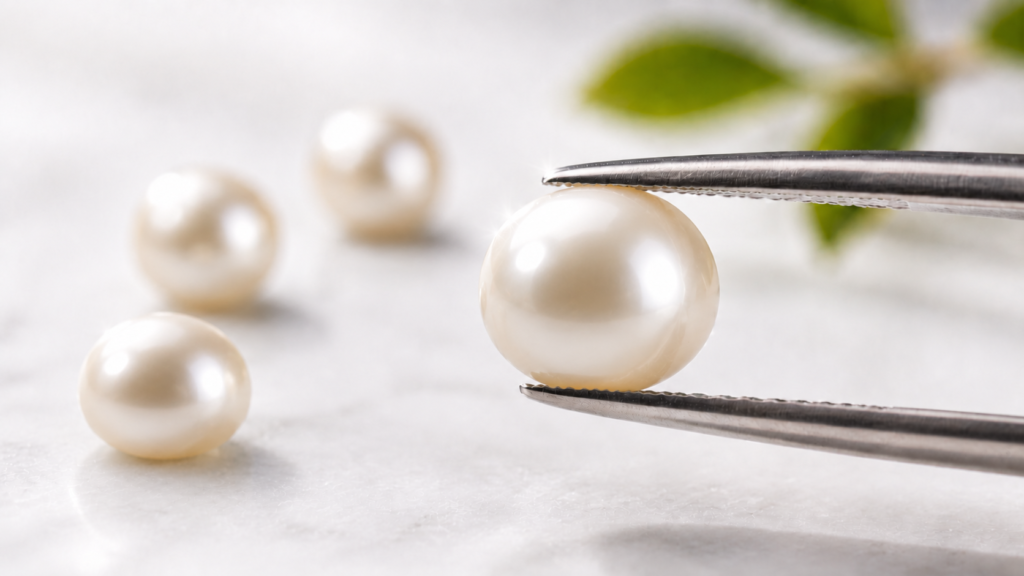
The quality and value of a Pearl are determined by several factors, including Lustre, Surface Quality, Shape, Size, Color, and Nacre Quality.
Among these, lustre is the most important factor. High-quality pearls display bright, sharp reflections and a deep inner glow. Pearls with smooth surfaces, thick nacre, symmetrical shapes, and larger sizes are generally considered more valuable.
Natural imperfections are common, making every Pearl unique. The finest pearls combine excellent lustre with clean surfaces and balanced proportions.
Origin & Sources
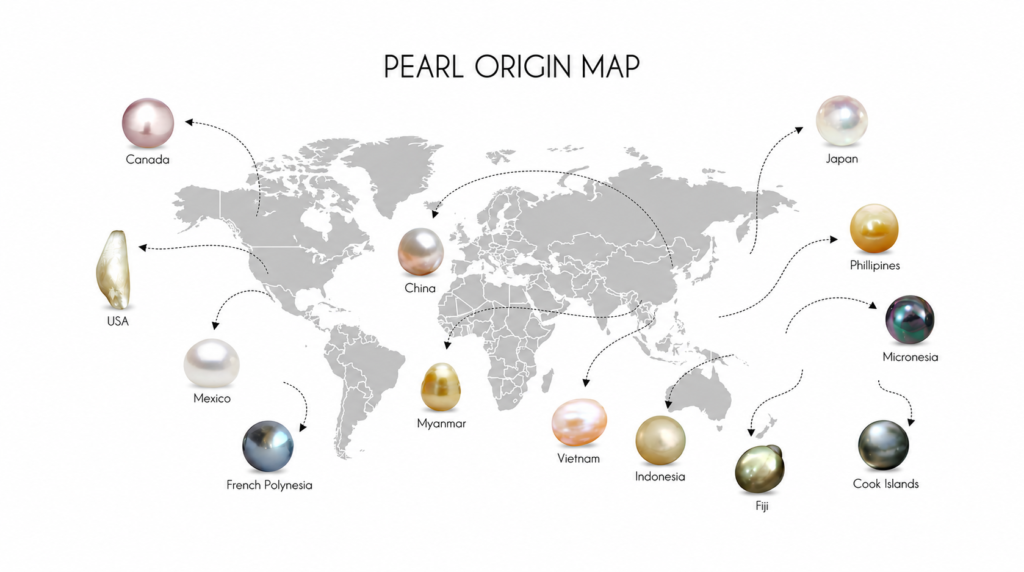
Pearls are harvested in several parts of the world, with different regions producing distinctive varieties.
- Japan: Famous for Akoya Pearls known for their exceptional lustre.
- China: The world’s largest producer of freshwater cultured pearls.
- Australia: Renowned for large South Sea Pearls with white and silver hues.
- French Polynesia: Famous for naturally dark Tahitian Pearls.
- Indonesia and the Philippines: Important producers of South Sea Pearls with golden and white colors.
The quality of a Pearl depends on factors such as its type, lustre, surface quality, and nacre rather than its origin alone
3 Fun Facts About Pearl
Pearls Are Created by Living Organisms
Unlike other gemstones, Pearls are formed naturally inside oysters and mussels, making them one of the few organic gemstones.
Pearls Were Once Found Only in Nature
Before pearl cultivation was developed, natural pearls were extremely rare and among the most valuable gems in the world.
Every Pearl is Unique
No two natural or cultured Pearls are exactly alike. Each Pearl has its own unique lustre, shape, size, and surface characteristics.
Astrological Significance
Pearl (Moti) is traditionally associated with the Moon (Chandra) in Vedic astrology and is believed to symbolize peace, emotional balance, intuition, and mental clarity. It is often chosen by individuals seeking to represent calmness, compassion, and inner harmony.
Pearl is commonly linked with the zodiac sign Cancer, although gemstone recommendations vary according to an individual’s birth chart. Those considering Pearl for astrological purposes should consult a qualified astrologer before making a decision.
Disclaimer: Astrological associations are based on traditional beliefs and cultural practices. Individuals should consult a qualified astrologer before making decisions based on astrology.
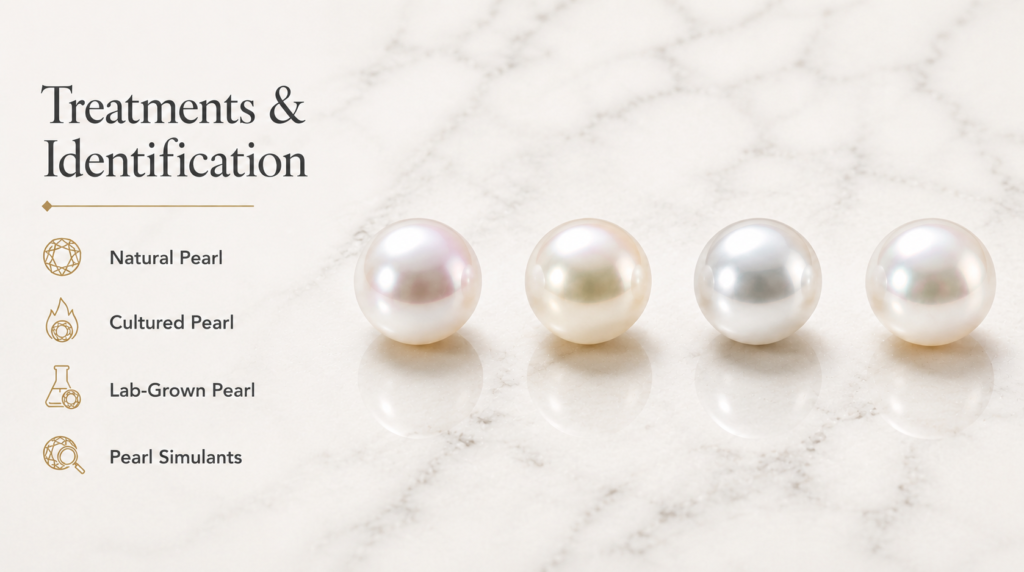
Treatments & Identification
Many Pearls available in the market undergo treatments to improve their appearance. Common treatments include bleaching, dyeing, polishing, and lustre enhancement. These treatments should always be properly disclosed.
Professional gemological testing helps distinguish between:
- Natural Pearl
- Cultured Pearl
- Treated Pearl
- Imitation Pearl
Using advanced gemological equipment and internationally accepted testing methods, laboratories can accurately identify the type of Pearl and detect common treatments where applicable