
The Gem of Courage and Vitality
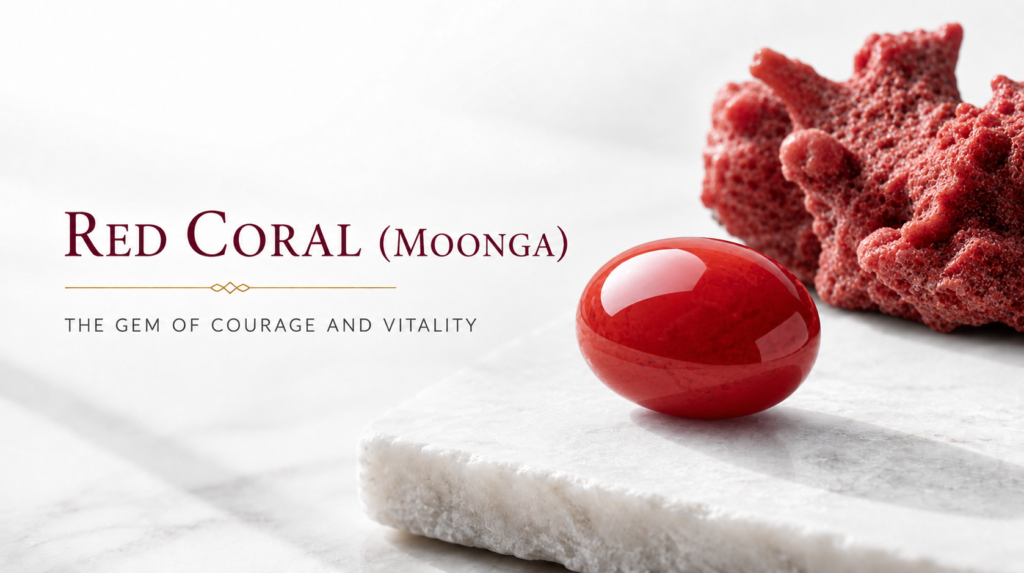
Red Coral, also known as Moonga, is one of the world’s most valued organic gemstones, admired for its rich red colour, smooth texture, and traditional significance. As one of the nine sacred Navratna gemstones, Red Coral has been valued for centuries in fine jewellery and is traditionally associated with Mars (Mangal) in Vedic astrology. Discover its unique characteristics, quality factors, origins, traditional significance, and the importance of professional gemstone certification.
| Property | Details |
| Gemstone | Red Coral (Moonga) |
| Gem Material Type | Organic Gem Material |
| Chemical Composition | Calcium Carbonate (CaCO₃) |
| Crystal System | Non-Crystalline / Organic Structure |
| Colour | Red to Orangish Red, Pinkish Red |
| Hardness | 3 to 4 (Mohs Scale) |
| Refractive Index | 1.486 to 1.658 |
| Specific Gravity | 2.60 to 2.70 |
| Lustre | Waxy to Vitreous |
| Transparency | Opaque |
| Birthstone | Not a Traditional Modern Birthstone |
| Zodiac Association | Aries, Scorpio |
| Planet Association | Mars (Mangal) |
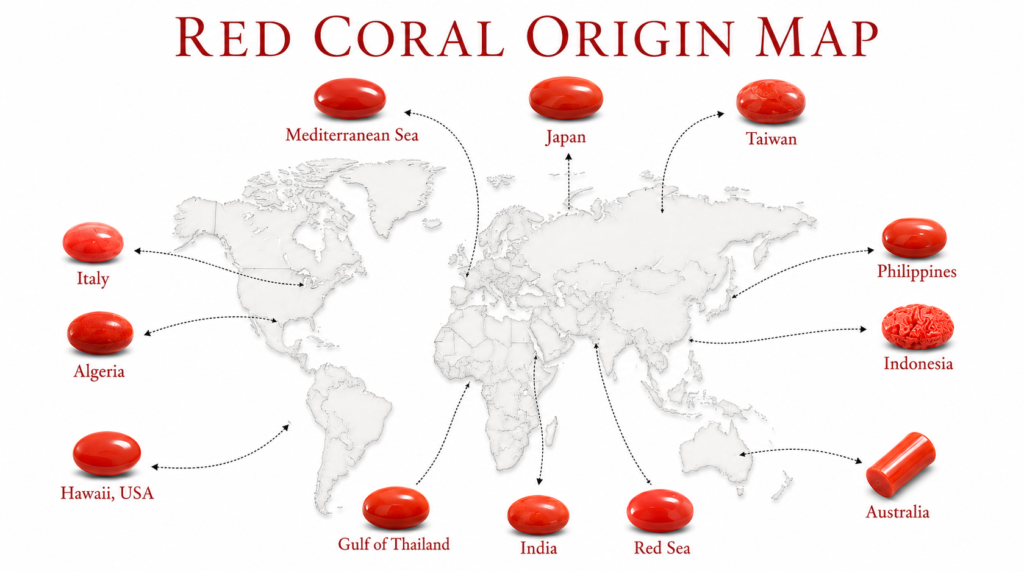
| Major Sources | Mediterranean Sea, Italy, Japan, Taiwan, Algeria, Tunisia, Morocco, Spain |
About Red Coral (Moonga)
Red Coral is an organic gemstone formed from the skeletal remains of marine coral organisms. Unlike minerals that form inside the Earth, Red Coral develops in the ocean, making it one of the most unique gemstones used in jewellery and astrology.
Throughout history, Red Coral has symbolized courage, protection, vitality, strength, and confidence. It has been treasured in many cultures for ornamental jewellery, traditional ornaments, and astrological purposes.
Today, Red Coral is commonly used in rings, pendants, necklaces, bracelets, beads, and traditional jewellery. Its smooth surface, rich colour, and natural organic origin make it highly valued among gemstone buyers and collectors.
Because natural, treated, dyed, reconstructed, and imitation corals can appear similar to the naked eye, professional gemstone testing is essential to accurately identify the material and detect treatments where applicable.
Color & Quality
The quality and value of Red Coral are mainly determined by colour, surface quality, shape, size, and overall finish.
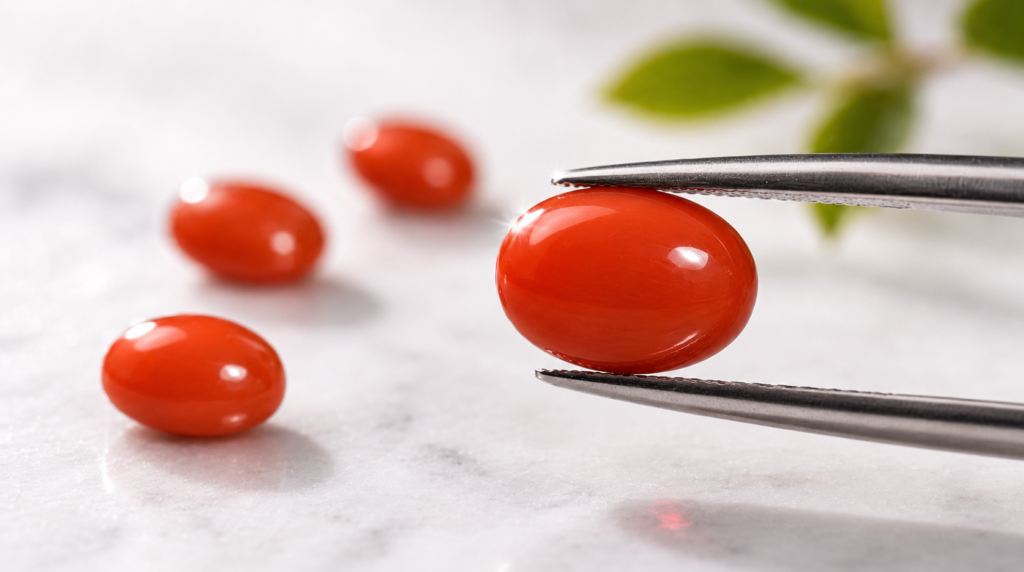
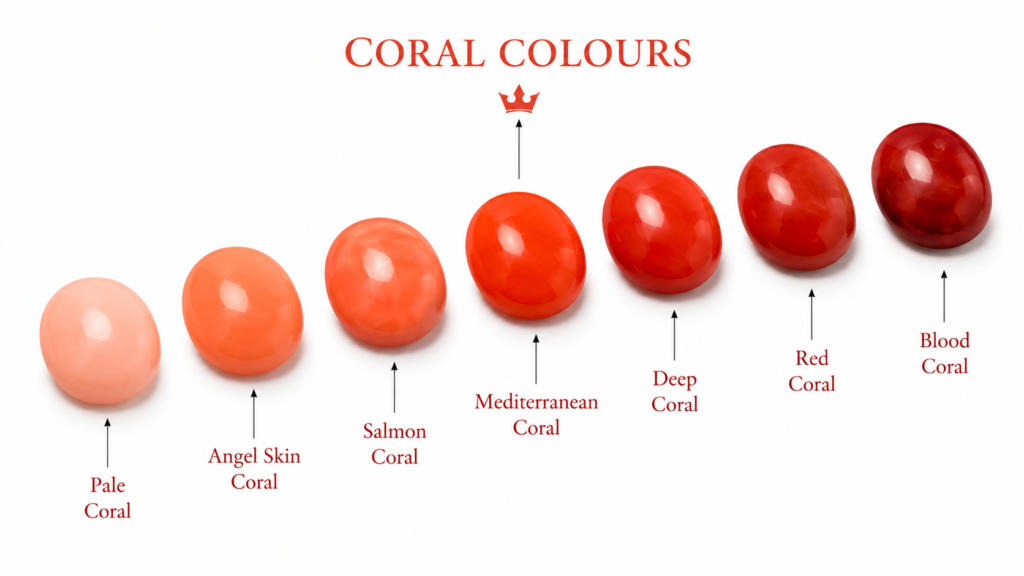
Colour is one of the most important factors. Fine-quality Red Coral usually displays a rich, even red to orangish red colour. Stones with uniform colour, smooth texture, and good polish are generally considered more desirable.
Surface quality is also important. High-quality Red Coral should have a smooth surface with minimal pits, cracks, or visible blemishes. Since Coral is an organic material, natural growth marks and surface features may be present.
Red Coral is often cut into cabochons, beads, drops, and cylindrical shapes. A well-shaped and well-polished Red Coral enhances its appearance and value. Larger pieces with fine colour, smooth texture, and natural origin are considered rare and valuable.
Origin & Sources
Red Coral is found in different marine regions, with each source producing material that may vary in colour, texture, and quality.
Mediterranean Sea: Historically one of the most famous sources of precious Red Coral.
- Italy: Known for fine-quality Mediterranean Coral used in traditional jewellery.
- Japan and Taiwan: Important sources of precious Coral varieties, including deep red and pinkish tones.
- Algeria, Tunisia, Morocco, and Spain: Known for producing Coral from Mediterranean regions.
Because Coral is an organic marine material, sourcing and trade regulations are important. Buyers should always purchase Red Coral from responsible and transparent sources.
Although origin may influence market preference, a gemstone’s quality should always be determined through professional gemological examination.
3 Fun Facts About Red Coral
Red Coral Comes from the Ocean, Not the Earth
Unlike most gemstones that form underground, Red Coral is created by living marine organisms in the sea. This makes it one of the few gemstones with a natural ocean origin.
Red Coral Grows Very Slowly
Precious Coral can take many years to grow, which makes fine natural Red Coral increasingly rare and valuable. Its slow growth is one reason responsible sourcing is so importan
Red Coral Has Been Used for Protection for Centuries
Across different cultures, Red Coral was worn as a protective gemstone and was believed to guard against negative energy, danger, and misfortune.
Astrological Significance
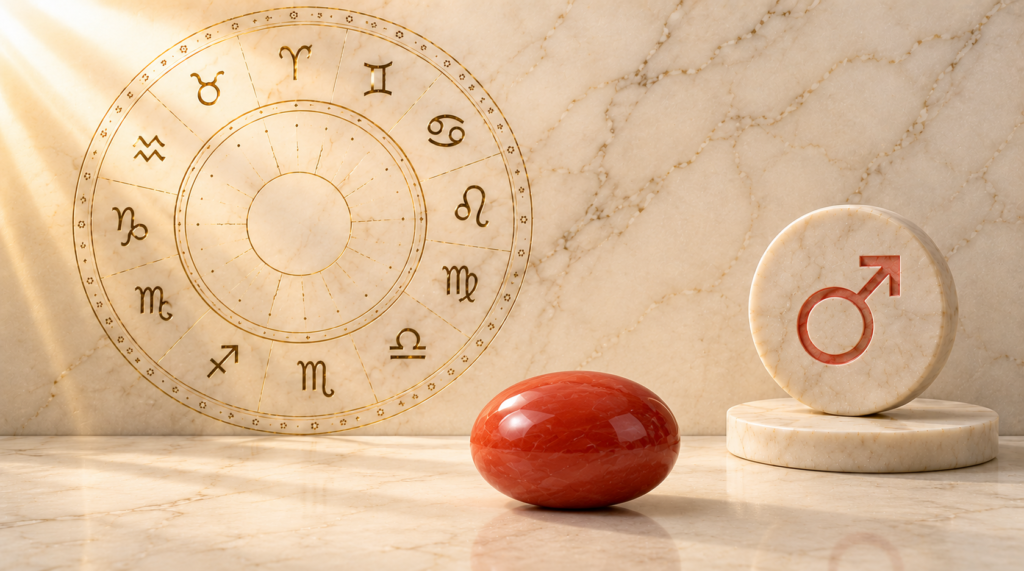
Red Coral (Moonga) is traditionally associated with Mars (Mangal) in Vedic astrology and is believed to symbolize courage, confidence, strength, energy, and determination. It is often chosen by individuals seeking to represent qualities such as bravery, leadership, motivation, and stability.
Red Coral is commonly linked with the zodiac signs Aries and Scorpio, although gemstone recommendations vary according to an individual’s birth chart. Those considering Red Coral for astrological purposes should consult a qualified astrologer before making a decision.
Disclaimer: Astrological associations are based on traditional beliefs and cultural practices. Individuals should consult a qualified astrologer before making decisions based on astrology.
Treatments & Identification
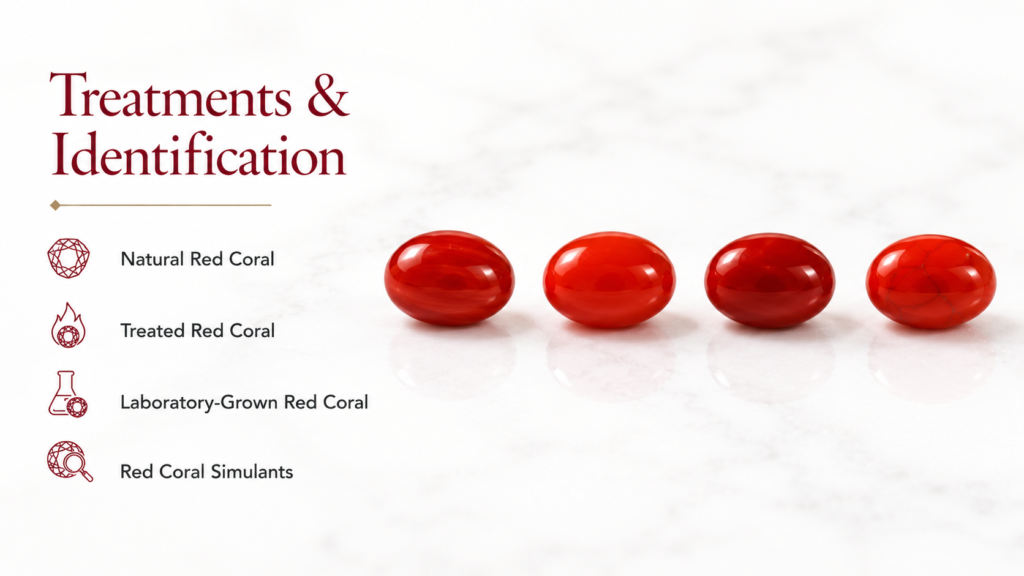
Many rubies available in the market undergo treatments to enhance their appearance. The most common is heat Many Red Corals available in the market may undergo treatments to improve their appearance. Common treatments include dyeing, bleaching, waxing, resin filling, polishing, and surface coating. These treatments should always be properly disclosed.
Professional gemological testing helps distinguish between:
- Natural Red Coral
- Treated Red Coral
- Dyed Coral
- Reconstructed Coral
- Imitation Coral
- Plastic, Glass, or Other Simulants
Using advanced gemological instruments and internationally accepted testing methods, laboratories can accurately identify the material and detect common treatments where applicable.
Why IDT Gemstone Certification Matters
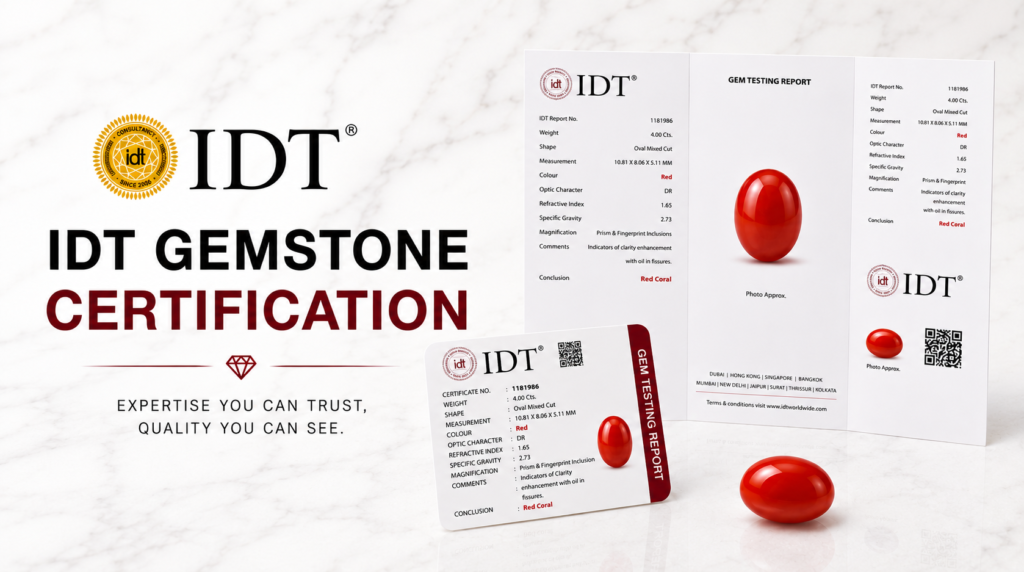
Natural Red Coral can closely resemble dyed, treated, reconstructed, or imitation materials, making professional gemstone testing an important step before purchase. An independent laboratory report provides greater transparency about the gemstone’s identity and characteristics.
An IDT Gemstone Report helps identify important information, including:
- The identity of the gemstone
- Whether the Red Coral is natural or imitation, where applicable
- The presence of detectable treatments
- Weight and measurements
- Colour and transparency observations
- Additional comments relevant to the gemstone
Natural Red Coral is a valuable organic gemstone, and its quality and value can vary significantly based on colour, surface quality, size, finish, treatment, and origin. Understanding these characteristics helps buyers, jewellers, collectors, and gemstone owners make informed decisions.
Before purchasing valuable Red Coral, always insist on IDT Gemstone Certification for greater transparency and confidence.