
The Gem of Wisdom and Prosperity
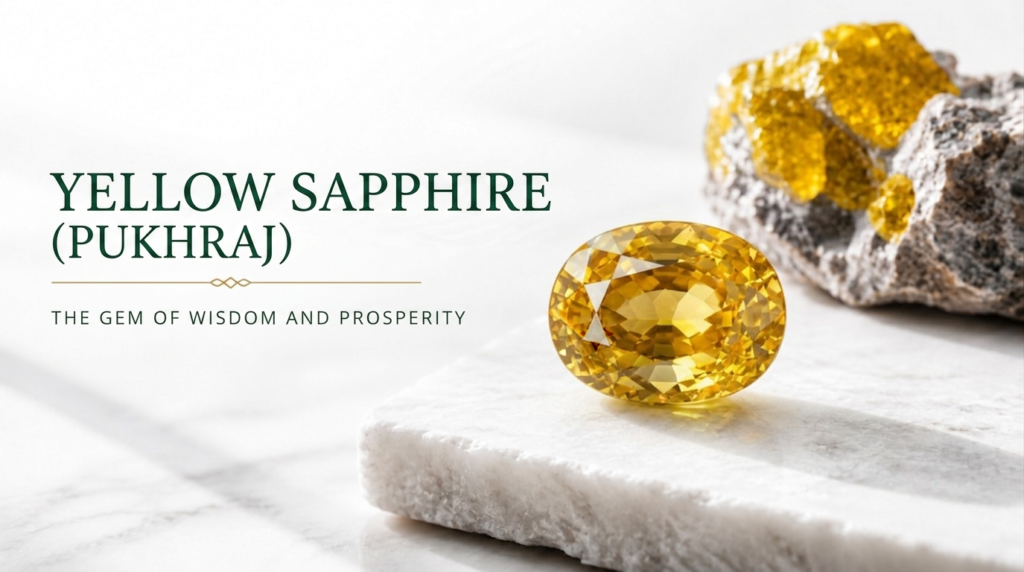
Yellow Sapphire, also known as Pukhraj, is one of the world’s most valuable yellow gemstones, admired for its bright golden-yellow color and exceptional brilliance. As one of the nine sacred Navratna gemstones, Yellow Sapphire has been treasured for centuries in fine jewellery and is traditionally associated with Jupiter (Guru) in Vedic astrology. Discover its unique characteristics, quality factors, origins, traditional significance, and the importance of professional gemstone certification.
| Property | Details |
| Gemstone | Yellow Sapphire (Pukhraj) |
| Mineral Family | Corundum |
| Chemical Composition | Aluminium Oxide (Al₂O₃) |
| Crystal System | Trigonal |
| Color | Pale Yellow to Golden Yellow |
| Hardness | 9 (Mohs Scale) |
| Refractive Index | 1.762 to 1.770 |
| Specific Gravity | 3.97 to 4.05 |
| Lustre | Vitreous |
| Transparency | Transparent to Translucent |
| Birthstone | September |
| Zodiac Association | Sagittarius, Pisces |
| Planet Association | Jupiter (Guru) |
| Major Sources | Sri Lanka, Madagascar, Thailand, Australia, Tanzania, Myanmar |
About Yellow Sapphire (Pukhraj)
Yellow Sapphire is the yellow variety of the mineral corundum, with its beautiful color resulting from trace amounts of iron. It has long been valued for its brilliance, durability, and rarity, making it one of the most desirable colored gemstones for fine jewellery.
Today, Yellow Sapphire is widely used in rings, pendants, earrings, bracelets, and heirloom jewellery. Its excellent hardness makes it suitable for everyday wear while maintaining exceptional polish and brilliance.
Natural Yellow Sapphires with vivid color and high clarity are relatively rare. Since natural, treated, and laboratory-grown Yellow Sapphires can appear very similar, professional gemological testing is essential for accurate identification and treatment detection.
Color & Quality
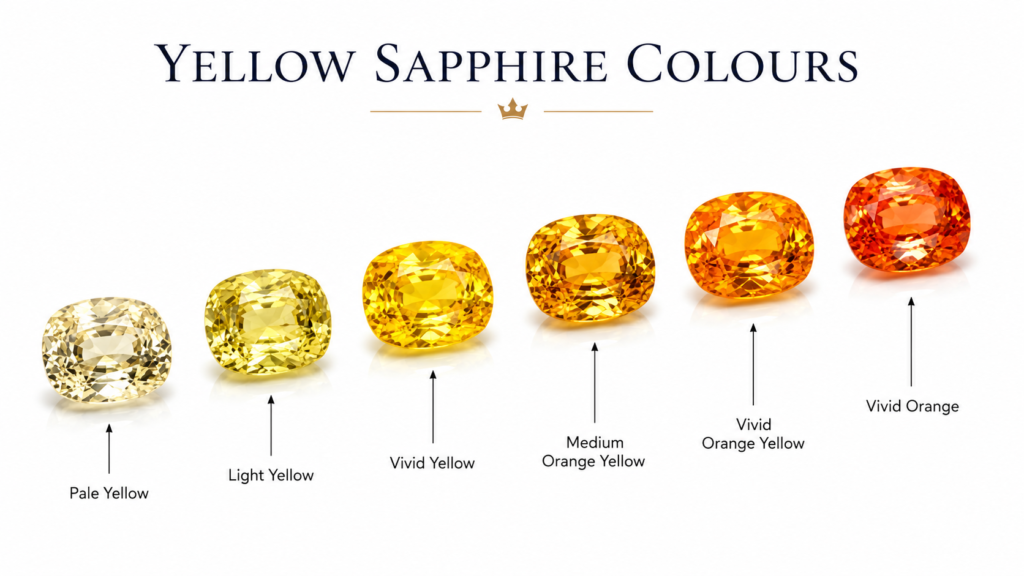
The quality and value of a Yellow Sapphire are determined by the Four Cs: Color, Clarity, Cut, and Carat Weight.
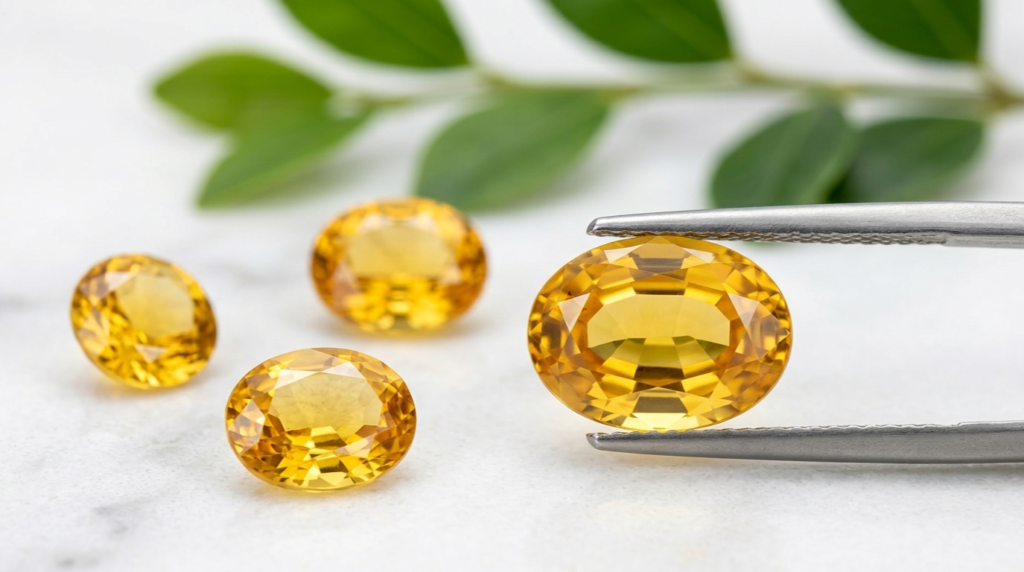
Among these, Color is the most significant factor. The finest Yellow Sapphires display a vivid, evenly distributed golden-yellow color with strong saturation and excellent transparency. Stones that are too pale or overly dark are generally less desirable.
Natural inclusions are common and often assist gemologists in determining their natural origin. A well-cut Yellow Sapphire enhances brilliance and maximizes color while preserving the gemstone’s weight. Larger natural Yellow Sapphires with outstanding color and clarity are exceptionally rare and command premium prices.
Origin & Sources
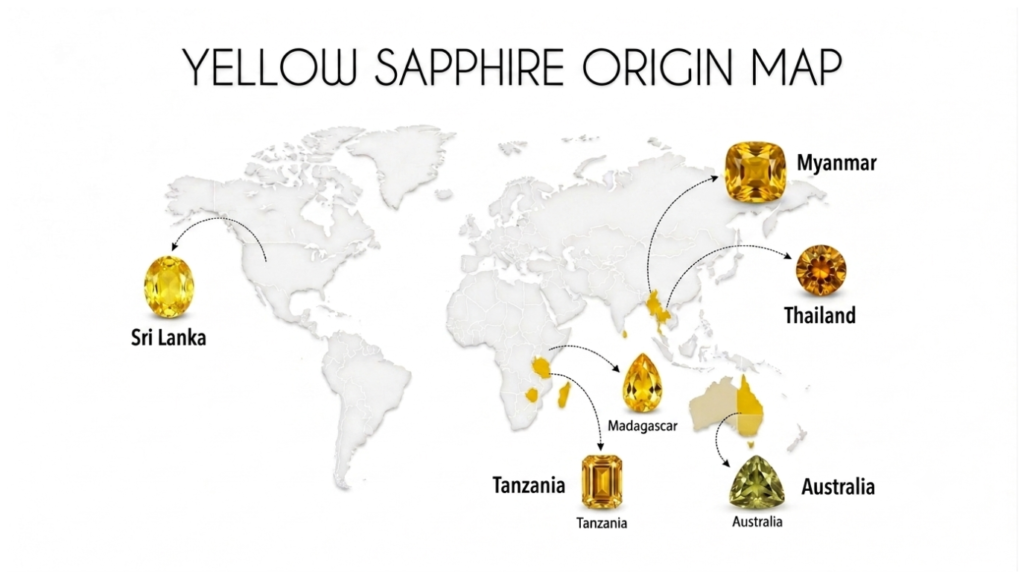
Yellow Sapphires are mined in several countries around the world, each producing gemstones with distinct characteristics.
- Sri Lanka (Ceylon): Famous for producing some of the world’s finest bright golden-yellow sapphires with excellent clarity.
- Madagascar: Produces high-quality Yellow Sapphires in a wide range of yellow tones.
- Thailand: Known for deeper yellow sapphires and commercial production.
- Australia: Produces durable Yellow Sapphires with attractive golden hues.
- Tanzania and Myanmar: Important producers supplying gemstones of varying qualities.
While origin can influence market preference, a gemstone’s overall quality should always be assessed through professional gemological examination.
3 Fun Facts About Yellow Sapphire
The Largest Faceted Yellow Sapphire Weighs Over 2,000 Carats
One of the world’s largest faceted Yellow Sapphires weighs more than 2,000 carats, showcasing the remarkable size these gemstones can achieve while maintaining exceptional brilliance.
Sapphire Comes in Almost Every Color
Although many people associate sapphires with blue, they naturally occur in almost every color of the rainbow. Yellow Sapphire is simply the yellow variety of the same mineral family—corundum.
Ancient Kings Believed It Brought Good Fortune
For centuries, Yellow Sapphire has been treasured by royalty and nobility across Asia. It was often worn as a symbol of wisdom, prosperity, and protection, making it one of history’s most respected gemstones.
Astrological Significance
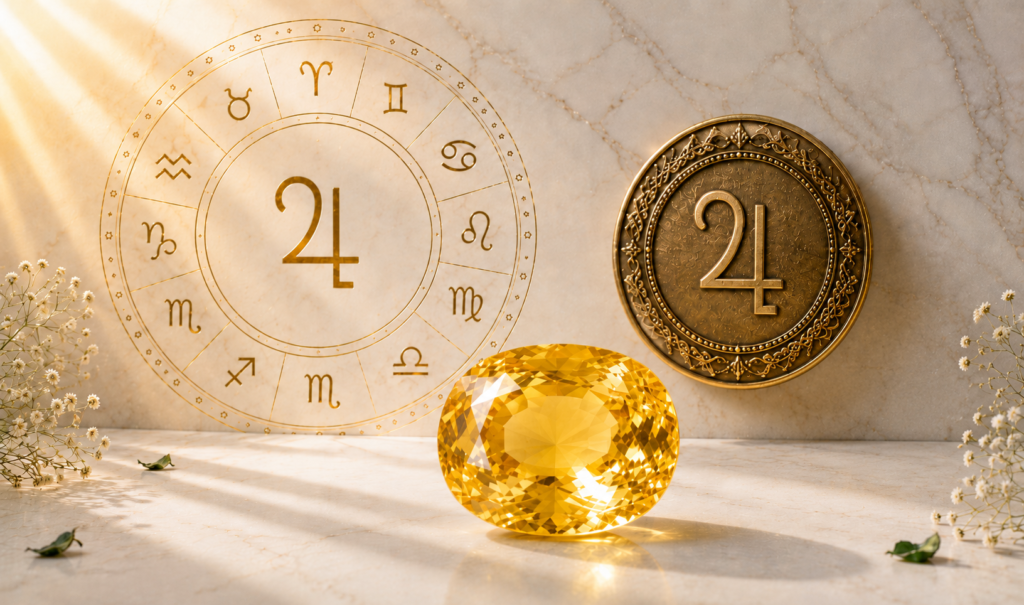
Yellow Sapphire (Pukhraj) is traditionally associated with Jupiter (Guru) in Vedic astrology and is believed to symbolize wisdom, prosperity, knowledge, abundance, and good fortune. It is often chosen by individuals who wish to represent qualities such as growth, success, and spiritual development.
Yellow Sapphire is commonly linked with the zodiac signs Sagittarius and Pisces, although gemstone recommendations vary according to an individual’s birth chart. Those considering Yellow Sapphire for astrological purposes should consult a qualified astrologer before making a decision.
Disclaimer: Astrological associations are based on traditional beliefs and cultural practices. Individuals should consult a qualified astrologer before making decisions based on astrology.
Treatments & Identification
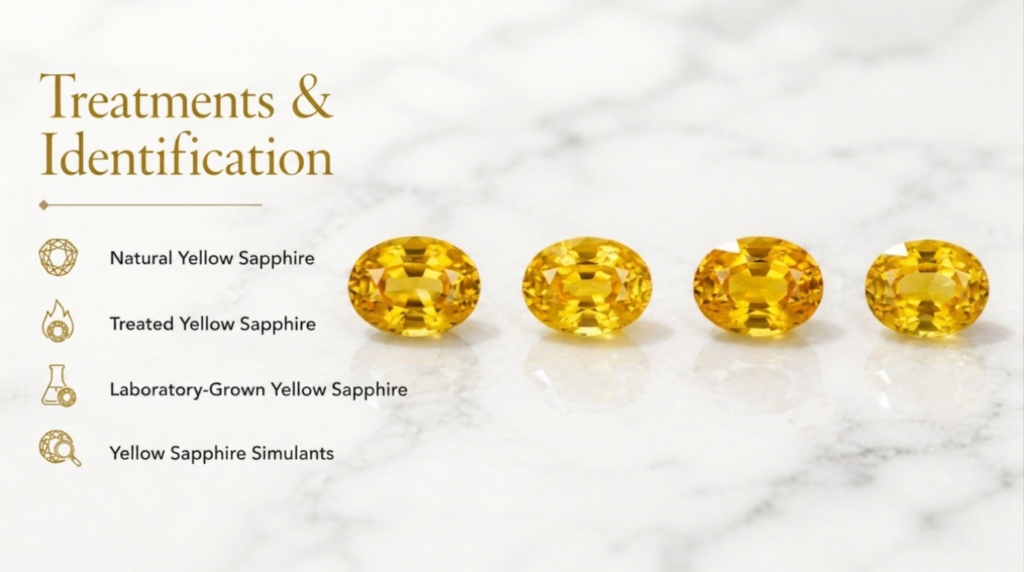
Many Yellow Sapphires available in the market undergo treatments to improve their appearance. The most common is heat treatment, which enhances color and clarity and is widely accepted within the gemstone industry when properly disclosed.
Some Yellow Sapphires may also undergo diffusion treatment or fracture filling to improve their appearance. These treatments can influence a gemstone’s durability and value, making proper identification important.
Professional gemological testing helps distinguish between:
- Natural Yellow Sapphire
- Treated Yellow Sapphire
- Laboratory-Grown Yellow Sapphire
- Yellow Sapphire Simulants
Using advanced gemological equipment and internationally accepted testing methods, laboratories can accurately identify the gemstone and detect common treatments where applicable.
Why IDT Gemstone Certification Matters
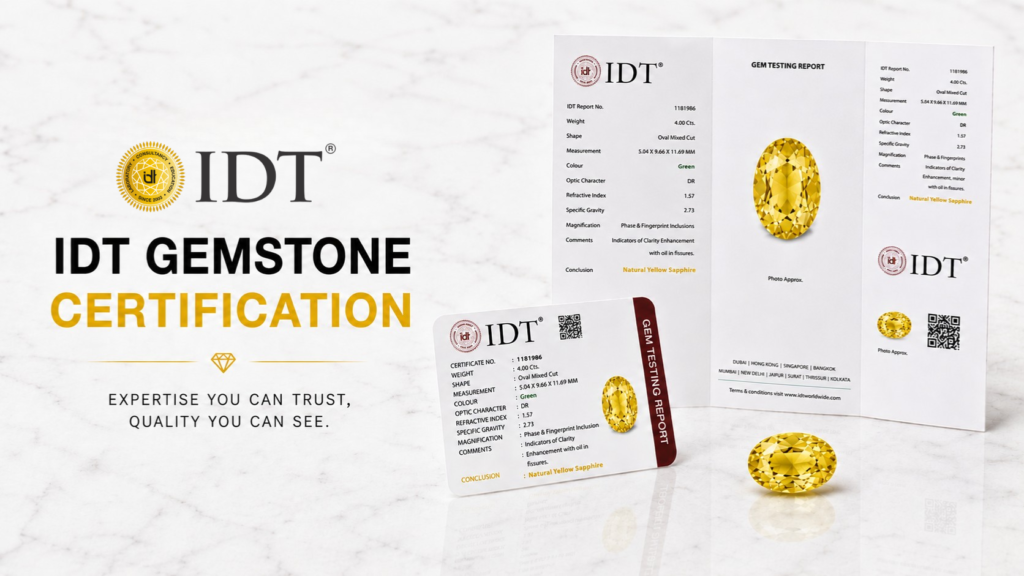
Natural Yellow Sapphires can closely resemble treated, laboratory-grown, or imitation stones, making professional gemstone testing an important step before purchase. An independent laboratory report provides greater transparency about the gemstone’s identity and characteristics.
An IDT Gemstone Report helps identify important information, including:
- The identity of the gemstone
- Whether the Yellow Sapphire is natural or laboratory-grown, where applicable
- The presence of detectable treatments
- Weight and measurements
- Color and transparency observations
- Additional comments relevant to the gemstone
Natural Yellow Sapphires are among the world’s most valuable colored gemstones, and their quality and value can vary significantly based on origin, color, clarity, and treatments. Understanding these characteristics helps buyers, jewellers, collectors, and gemstone owners make informed decisions.
Before purchasing a valuable Yellow Sapphire, always insist on IDT Gemstone Certification for greater transparency and confidence.