
How to Identify a Fake Diamond Certificate: UAE Case Study & Verification Guide
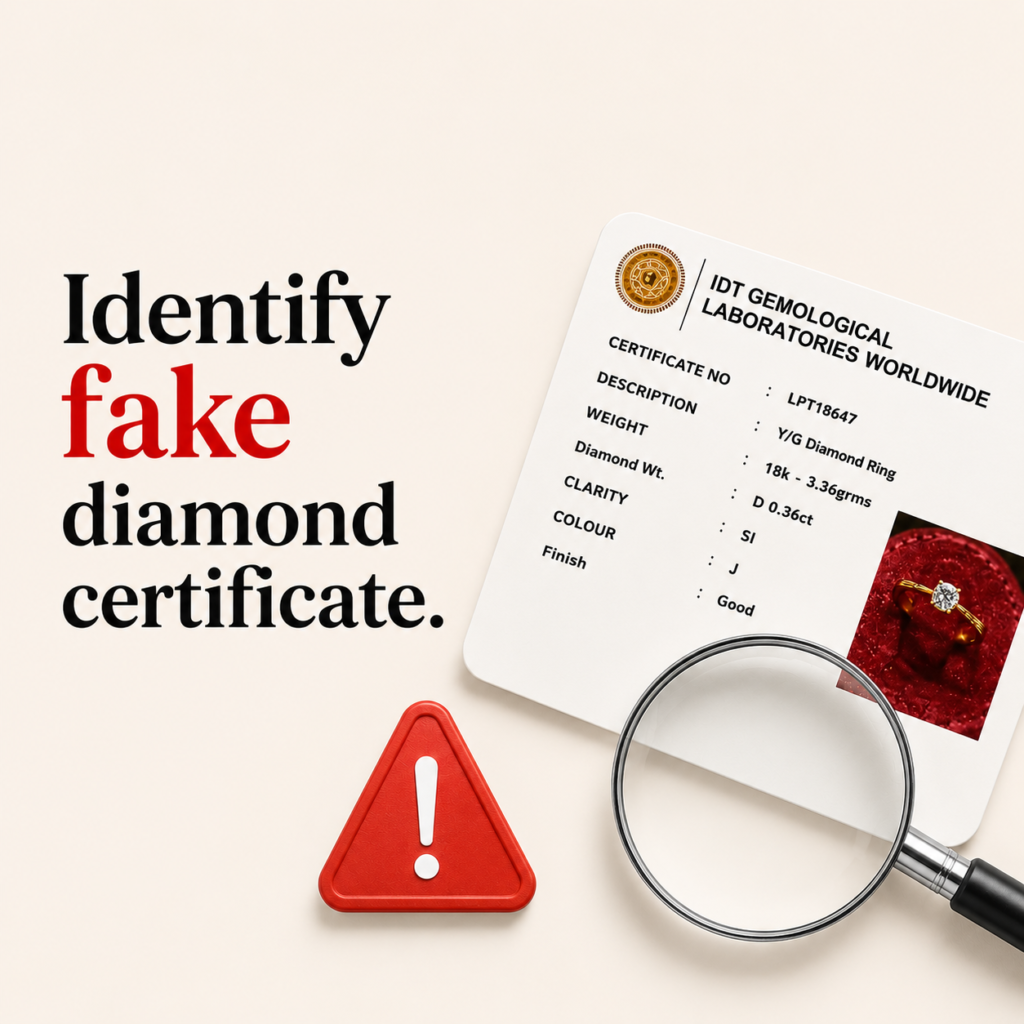
Fake diamond certificates are becoming increasingly common across UAE, India, and global jewellery markets. Many buyers assume that if a diamond comes with a certificate and QR code, it must be genuine. Unfortunately, that is no longer true. In a recent UAE case investigated by IDT Gemological Laboratories, a diamond ring was being sold with what appeared to be a professional grading report. The certificate included: At first glance, everything looked legitimate. However, during diamond certificate verification, one major issue exposed the report as fake:The report number did not exist in the official verification database. Cases like this highlight why buyers should always verify a diamond certificate before making payment. Why Fake Diamond Certificates Are Increasing As diamond buyers become more aware about certification, jewellery scams have also become more sophisticated. Instead of selling completely uncertified jewellery, scammers now use: Most fake certificates are designed to look convincing to normal buyers. However, professional diamond verification involves much more than checking whether a certificate looks official. A genuine diamond certificate should accurately match the actual diamond being sold. UAE Diamond Certificate Scam Case Study In this UAE case, the submitted diamond certificate carried the report number: LPT18647 The card initially appeared professional. However, verification through the official database showed that the report number did not exist. Further inspection revealed several warning signs commonly found in fake diamond certificates. Red Flag #1: Incorrect Diamond Terminology One section of the report stated: “Diamond Wt.: D 0.36ct” This grading format is incorrect. In professional diamond grading, carat weight and colour grade are listed separately. Example: Carat Weight: 0.36 ctColour Grade: D Fake diamond reports often contain terminology mistakes because they are created by individuals who do not fully understand professional grading standards. Even small wording errors can indicate a suspicious certificate. Red Flag #2: Unusual Grading Terms Another section displayed: “Finish: Good” While this may sound professional to buyers, standard diamond grading reports usually separate finishing characteristics into: Some fake reports also use vague terms such as: These are not commonly used grading standards in professional gemological reporting. If unusual terminology appears on a certificate, buyers should verify it directly through the issuing laboratory. Red Flag #3: QR Codes Alone Do Not Guarantee Authenticity Many buyers assume: “If the QR code works, the certificate must be genuine.” This is a common misconception. In this UAE case, the QR verification failed because the report number did not exist in the database. However, some fake diamond certificates are even more advanced and may use: This means a working QR code alone does not confirm authenticity. Proper diamond certificate verification should also include: Can Fake Diamond Certificates Use Real Report Numbers? Yes. This is one of the most common modern jewellery scams. In many cases, scammers copy a genuine report belonging to another diamond and attach it to a lower-quality stone. The certificate itself may be genuine. The diamond being sold is not. This is why professional diamond verification also includes: A diamond certificate is only useful if it matches the actual diamond. How to Verify a Diamond Certificate Before Buying Step 1: Scan the QR Code Use only the official verification website of the issuing laboratory. Step 2: Verify the Report Number Ensure the report number exists in the laboratory database. Step 3: Match Diamond Details Check whether the carat weight, colour, clarity, and measurements match the diamond being shown. Step 4: Check Laser Inscription Many certified diamonds contain a microscopic laser inscription on the girdle that matches the report number. Step 5: Compare the Actual Diamond Even genuine certificates can sometimes be attached to different stones. Always inspect the diamond carefully before payment. Why Buyers Still Get Scammed Despite Having Certificates Many buyers believe that a certificate automatically guarantees authenticity. Unfortunately, fake diamond certificates are becoming increasingly sophisticated every year. A professional-looking card is no longer enough. Diamond verification should always happen before payment, not after. Taking a few minutes to verify the certificate can help prevent financial loss and protect buyers from jewellery fraud. Verify Your IDT Diamond Certificate Before purchasing any certified diamond, always verify the report directly through the issuing laboratory’s official platform. Verify your report here: https://www.idtworldwide.com/verify FAQ How can I identify a fake diamond certificate? Check whether the report number exists in the official laboratory database, verify the QR code, inspect grading terminology, and match the certificate details with the actual diamond. Can fake diamond certificates have working QR codes? Yes. Some fake certificates use copied report numbers or cloned websites to appear genuine. What should a genuine diamond certificate include? A genuine report should include accurate grading details, measurements, report number verification, and matching laser inscription information. Why is diamond certificate verification important? Verification helps confirm that the certificate is authentic and actually belongs to the diamond being sold. Can scammers use real diamond reports? Yes. Some scams involve attaching a genuine report belonging to another diamond to a lower-quality stone.