
Diamond Shapes and Cuts: A Complete Guide to Choosing the Right Diamond
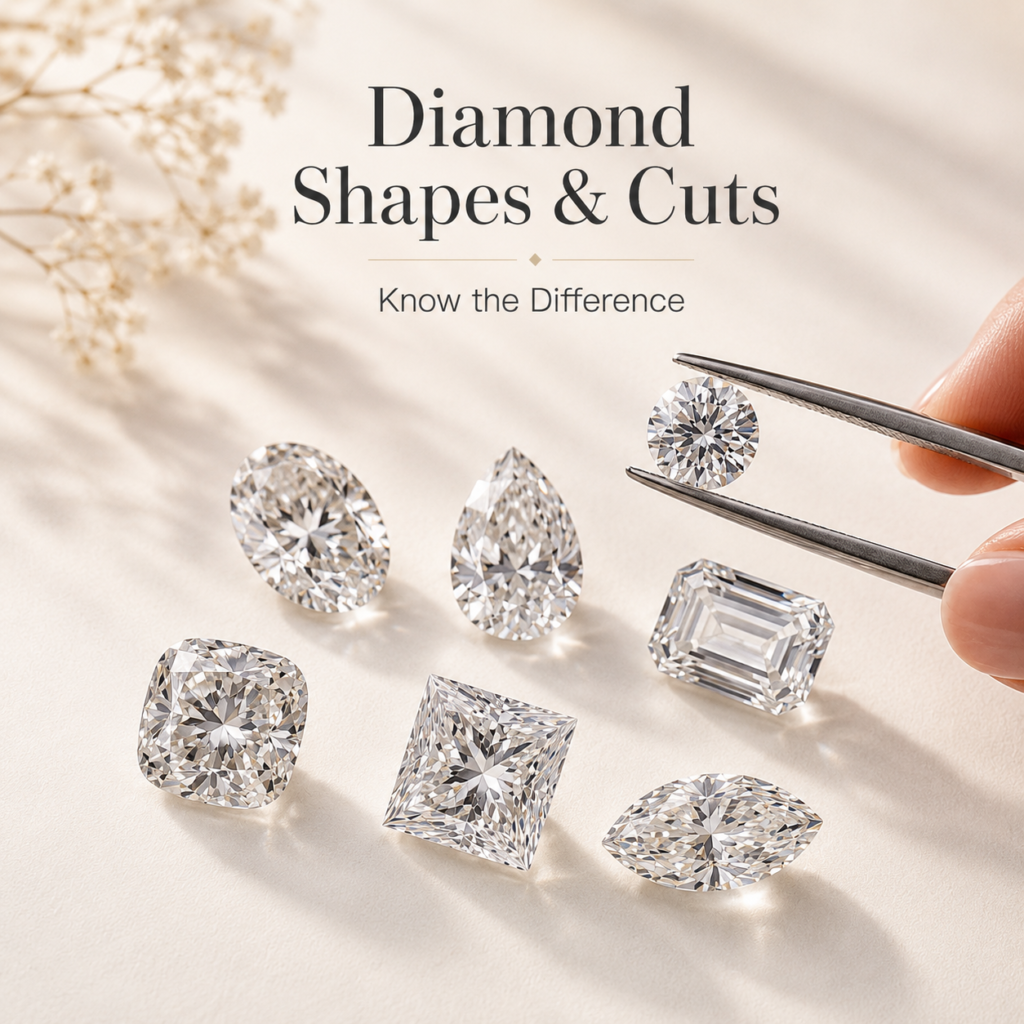
When choosing a diamond, you will often hear words like round, oval, emerald, princess, brilliant and cushion. But there is one common misunderstanding: diamond shape and diamond cut are not the same thing. The shape of a diamond describes its visible outline, such as round, oval, pear or square. The cut relates to the way the diamond has been fashioned, including its facets, proportions and how effectively it interacts with light. Understanding the difference between diamond shapes and cuts can help you look beyond appearance and better understand what makes one diamond sparkle differently from another. In this guide, we explain the most popular diamond shapes, types of diamond cuts, how cut affects brilliance, and what to look for when choosing a diamond. Diamond Shape vs Diamond Cut: What Is the Difference? Although the terms are frequently used interchangeably, they describe different characteristics. Diamond Shape Diamond shape refers to the outline or silhouette of a diamond when viewed from above. Examples include: Round is the most commonly recognised diamond shape. Shapes other than round are generally referred to as fancy shapes. Diamond Cut Diamond cut relates to the diamond’s design, facet arrangement, proportions and craftsmanship. A diamond’s facets determine how light enters the stone, travels through it and returns to the viewer. This affects three important aspects of its appearance: Brightness: The amount of white light reflected by the diamond. Fire: The flashes of spectral colours created as light disperses. Scintillation: The flashes of light and dark seen as the diamond, light source or viewer moves. This is why two diamonds of the same shape and carat weight can look noticeably different. A well-cut diamond can appear bright and lively, while less effective proportions may allow more light to escape instead of returning through the top of the stone. Diamond Shapes and Cuts at a Glance Diamond Shape Common Cutting Style Overall Appearance Round Brilliant Maximum emphasis on brilliance and sparkle Oval Modified brilliant Elongated and brilliant Princess Brilliant / modified brilliant Square, modern and sparkling Cushion Brilliant / modified brilliant Soft square or rectangular outline Emerald Step cut Clean, elegant flashes of light Pear Modified brilliant Teardrop-shaped and elongated Marquise Modified brilliant Long, pointed and dramatic Radiant Brilliant / mixed style Rectangular or square with strong sparkle Asscher Step cut Square, geometric and architectural Heart Modified brilliant Distinctive and symbolic 10 Popular Diamond Shapes Explained 1. Round Brilliant Diamond The round brilliant diamond is perhaps the most recognised diamond shape in the world. A standard round brilliant is designed with 57 or 58 facets, depending on whether a culet facet is present. Its carefully arranged facets are designed to optimise the diamond’s interaction with light. Why choose a round diamond? Round diamonds are ideal for someone looking for: Because its proportions and light performance have been extensively studied, the round brilliant also has well-established systems for assessing cut quality. 2. Oval Diamond An oval diamond combines an elongated silhouette with brilliant-style faceting. It offers plenty of sparkle while creating a longer appearance across the finger. Why choose an oval diamond? Oval diamonds are popular for: One feature to observe in oval diamonds is the bow-tie effect, a darker pattern that may appear across the centre of some elongated brilliant-cut diamonds. The strength and appearance of this effect can vary from one diamond to another, making visual evaluation important. 3. Princess Cut Diamond The princess cut diamond typically has a square or slightly rectangular outline with pointed corners and brilliant-style faceting. It combines a sharp geometric appearance with strong light activity. Why choose a princess cut? It suits buyers looking for: Because the corners are pointed, the setting should provide appropriate protection to reduce the possibility of damage from impact. 4. Cushion Cut Diamond A cushion cut diamond usually has a square or rectangular outline with softened, rounded corners. Its appearance resembles a cushion, which gives the shape its name. There are several cushion faceting variations, meaning two cushion diamonds may have noticeably different sparkle patterns. Why choose a cushion diamond? Choose cushion if you prefer: This variation is also why it is important to evaluate the individual diamond rather than choosing only by the name of the shape. 5. Emerald Cut Diamond An emerald cut diamond is generally rectangular with cropped corners and a step-cut facet arrangement. Unlike brilliant cuts, which use many smaller facets to create intense scintillation, step cuts use longer, parallel facets. This produces broad flashes and the distinctive hall-of-mirrors appearance associated with emerald cuts. Why choose an emerald cut? It is suited to those who prefer: Because step cuts have larger, more open facets, internal characteristics can sometimes be easier to notice than in brilliant-style cuts. 6. Pear-Shaped Diamond The pear-shaped diamond, also known as a teardrop shape, combines a rounded end with a single pointed tip. It is typically fashioned using modified brilliant-style facets. Why choose a pear diamond? Pear shapes work well for: The pointed end is an important area to protect when the diamond is set into jewellery. As with oval and marquise diamonds, some pear-shaped diamonds may also show a bow-tie effect. 7. Marquise Diamond A marquise diamond has an elongated body with pointed ends on both sides. Its long outline can create substantial visual presence when viewed from above. Why choose a marquise diamond? It is ideal for: Symmetry is particularly noticeable in a marquise. The two pointed ends and curved sides should create a visually balanced outline. 8. Radiant Cut Diamond The radiant cut diamond is generally square or rectangular with cropped corners and brilliant-style or mixed faceting. It combines the structured outline associated with rectangular diamonds with more active sparkle. Why choose a radiant diamond? Radiant cuts offer: A radiant can be an interesting option for someone who likes the overall outline of an emerald-shaped diamond but prefers a more brilliant facet pattern. 9. Asscher Cut Diamond The Asscher cut is generally square with cropped corners and step-cut facets. It shares some visual characteristics with the emerald