
The diamond industry has evolved rapidly over the past decade. Today, buyers can choose between natural diamonds formed beneath the Earth over billions of years and lab grown diamonds created using advanced technology within weeks.
As both categories are now widely available across jewellery stores and online platforms, many consumers want to understand how they compare.
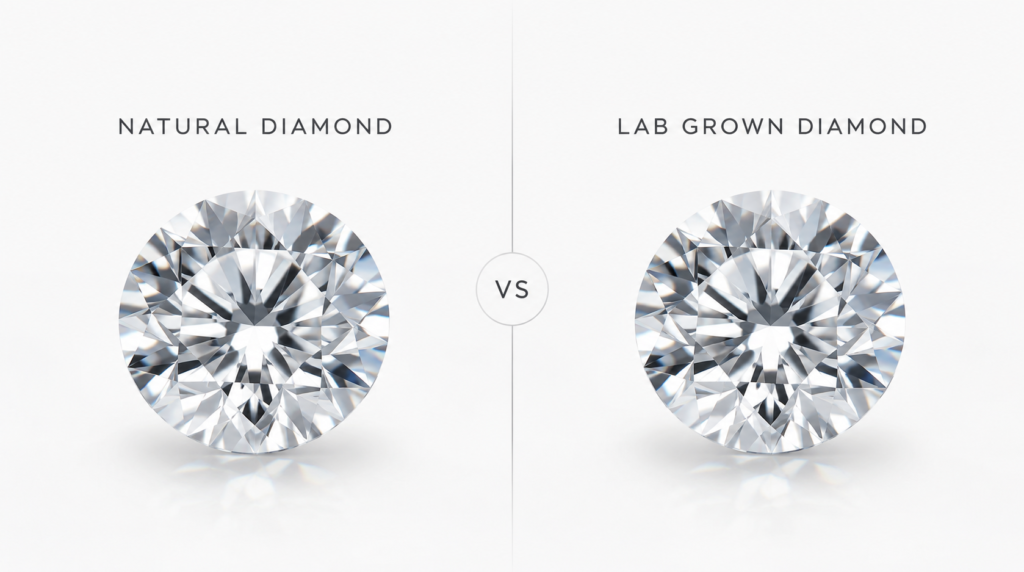
While both are genuine diamonds with similar physical properties, their origin and formation process are different.
This guide explains the key comparisons between natural and lab grown diamonds, including formation, grading, identification, and certification.
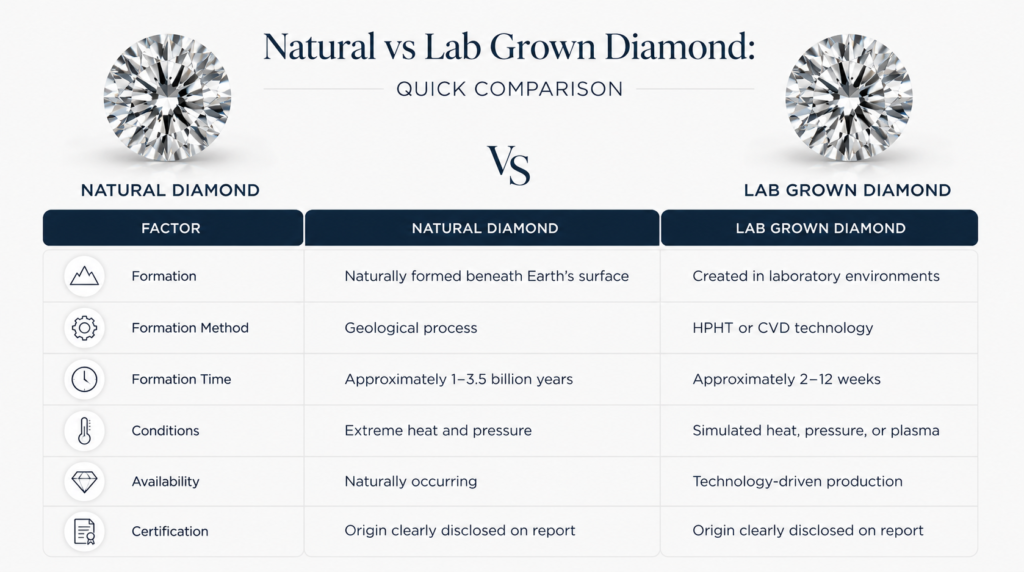
Natural vs Lab Grown Diamond: Quick Comparison
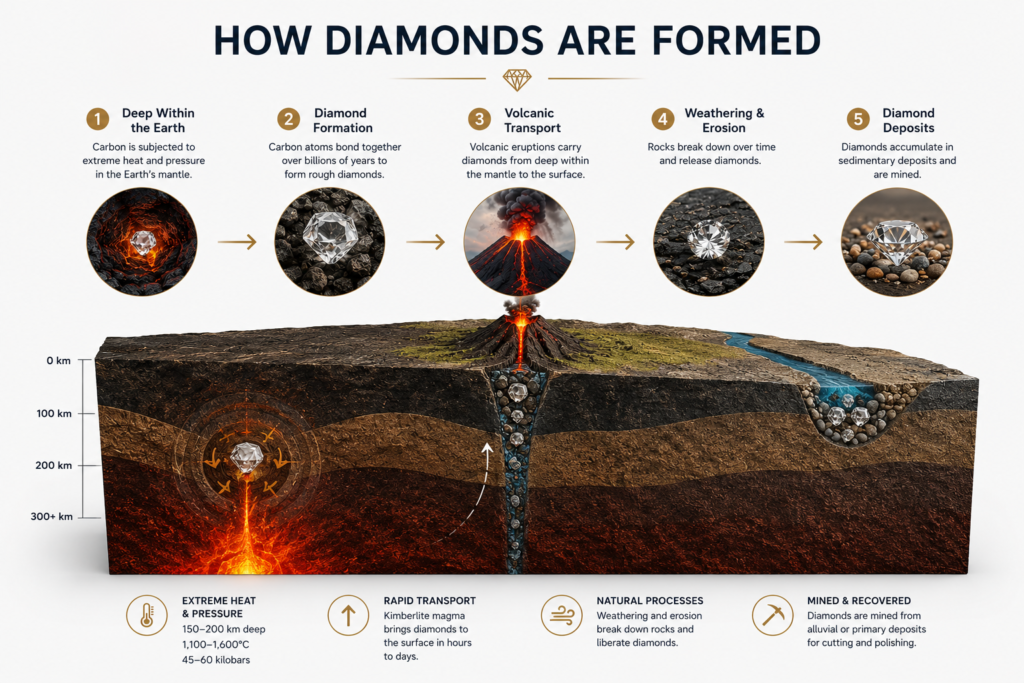
How Natural Diamonds Are Formed
Natural diamonds are formed deep within the Earth under extreme heat and pressure over billions of years.
They are later brought closer to the surface through volcanic activity and eventually extracted from diamond-bearing deposits.
Because of their natural geological origin, each diamond develops unique internal growth characteristics over time
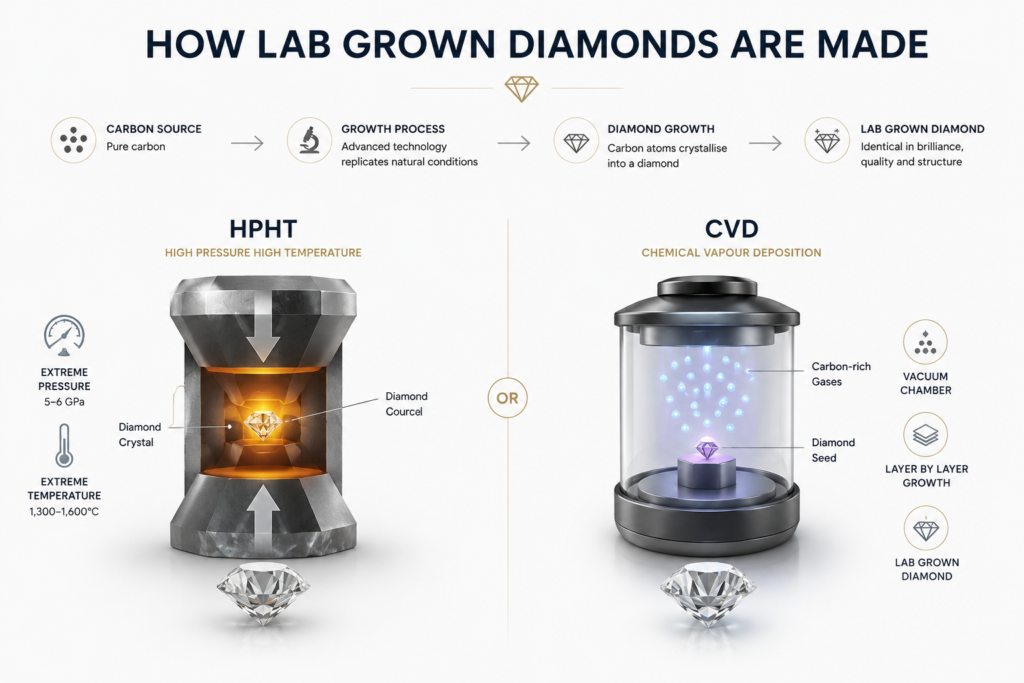
How Lab Grown Diamonds Are Made
Lab grown diamonds are created using advanced technological processes that replicate the conditions under which diamonds naturally form.
Unlike natural diamonds, which take billions of years to develop, lab grown diamonds can be produced within weeks.
Two major methods are commonly used:
HPHT (High Pressure High Temperature)
HPHT technology recreates the pressure and temperature conditions found deep within the Earth’s mantle, allowing carbon atoms to crystallise into a diamond.
CVD (Chemical Vapour Deposition)
CVD diamonds are grown inside a vacuum chamber using carbon-rich gases, where carbon atoms gradually deposit layer by layer onto a diamond seed crystal.
Natural and Lab Grown Diamonds: Key Comparisons
Origin
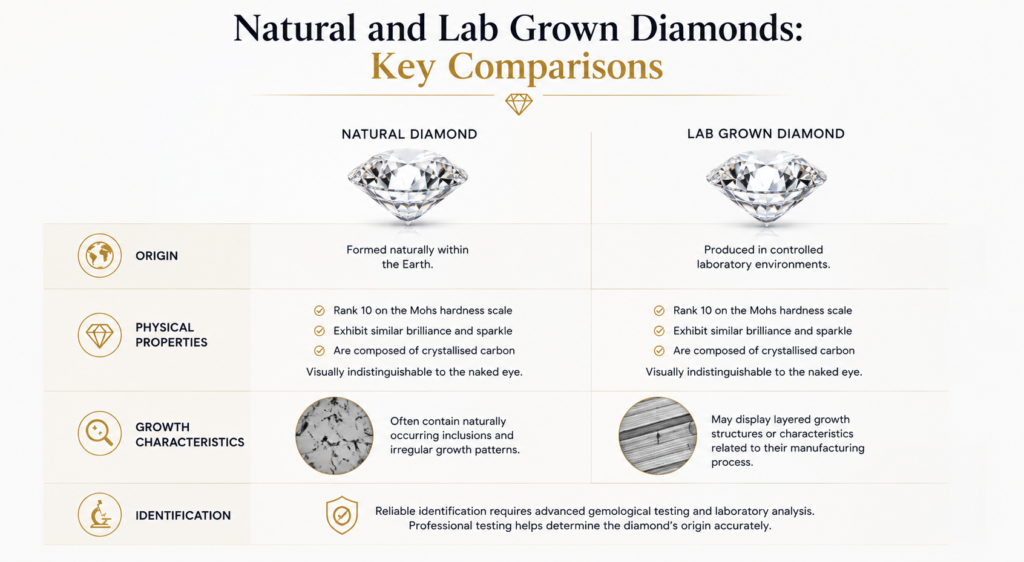
Natural diamonds are formed naturally within the Earth, while lab grown diamonds are produced in controlled laboratory environments.
Physical Properties
Both natural and lab grown diamonds:
- Rank 10 on the Mohs hardness scale
- Exhibit similar brilliance and sparkle
- Are composed of crystallised carbon
To the naked eye, they are usually visually indistinguishable.
Growth Characteristics
Natural diamonds often contain naturally occurring inclusions and irregular growth patterns.
Lab grown diamonds may display layered growth structures or characteristics related to their manufacturing process.
Identification
Reliable identification requires advanced gemological testing and laboratory analysis.
Professional testing helps determine the diamond’s origin accurately.
Certification, Grading & Origin Disclosure
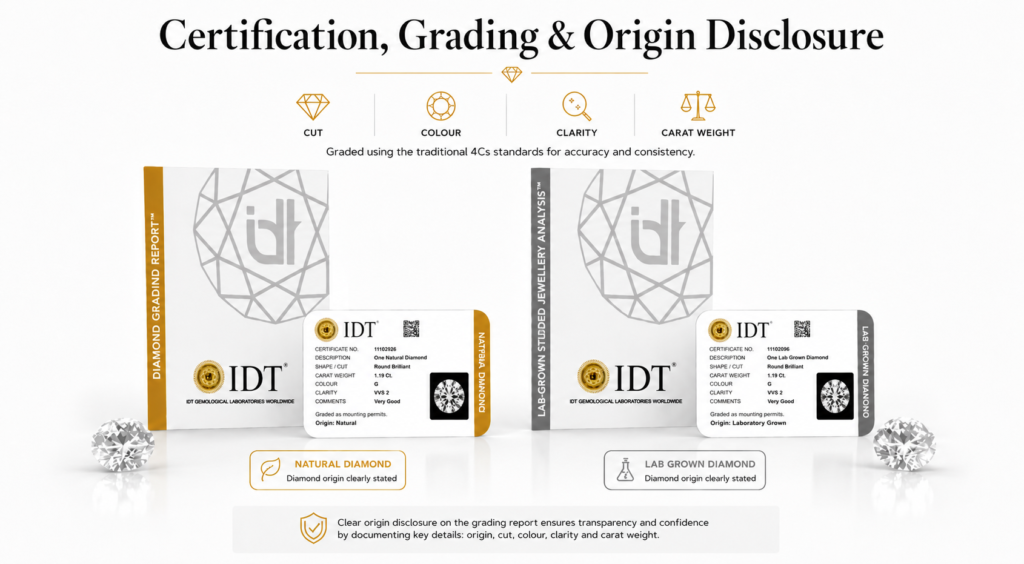
Both natural and lab grown diamonds are graded using the traditional 4Cs standards:
- Cut
- Colour
- Clarity
- Carat Weight
Because natural and lab grown diamonds can appear visually similar, clear origin disclosure on the grading report is extremely important.
A diamond grading report should clearly mention whether the diamond is:
- Natural Diamond
or - Laboratory Grown Diamond
Certification helps provide transparency and confidence during diamond purchases by documenting important grading information such as:
- Diamond origin
- Cut
- Colour
- Clarity
- Carat weight
IDT Certification: Diamond Origin Clearly Stated
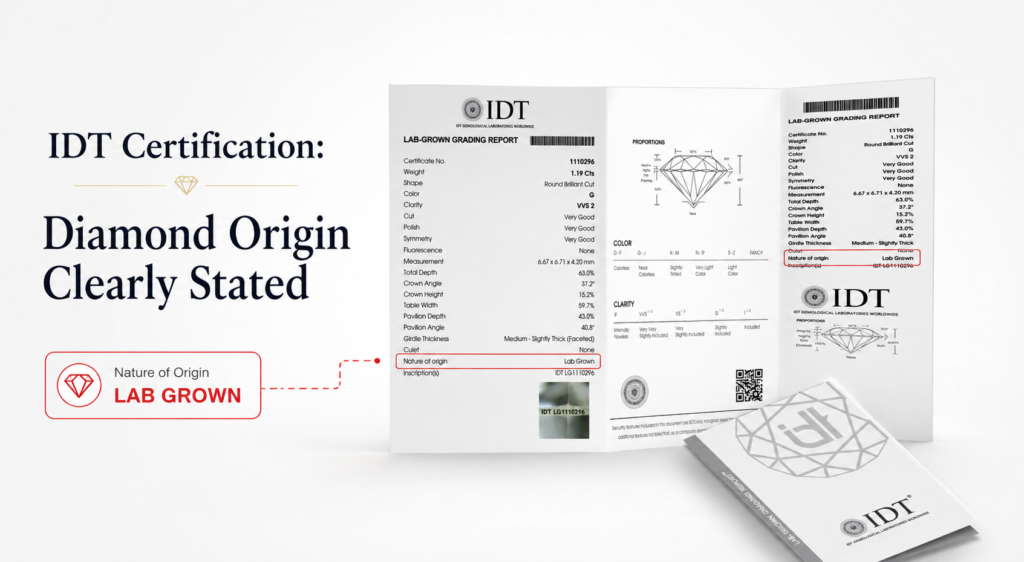
An IDT grading report clearly states the diamond’s origin along with its grading information, helping buyers better understand the diamond they are purchasing.
Clear origin disclosure supports transparency and informed diamond buying decisions.
Which Diamond Is Right for You?
The choice between natural and lab grown diamonds depends on individual preference and purchasing priorities.
Regardless of preference, buyers should ensure their diamond is accompanied by a grading report from a reputable gemological laboratory that clearly states the diamond’s origin.
Frequently Asked Questions
Can you tell a lab grown diamond from a natural diamond by looking at it?
No. Accurate identification usually requires professional gemological testing.
Why is IDT certification important?
An IDT Gemological Laboratories grading report clearly discloses whether a diamond is natural or laboratory grown, along with its grading information.
Do lab grown diamonds have the same hardness as natural diamonds?
Yes. Both rank 10 on the Mohs hardness scale.
Why is origin disclosure important?
Origin disclosure helps ensure transparency in diamond transactions.
Is certification important for both natural and lab grown diamonds?
Yes. Certification provides documented grading information and clear origin disclosure for both categories of diamonds.