
Your Astrologer Recommended a Gemstone. But Is It Really Natural?
Your astrologer recommends a Yellow Sapphire (Pukhraj) for Jupiter.
Or a Blue Sapphire (Neelam) for Saturn.
Maybe a Ruby (Manik) for the Sun, Emerald (Panna) for Mercury, Pearl (Moti) for the Moon, Coral (Moonga) for Mars, or Cat’s Eye (Lehsunia) for Ketu.
You prepare to invest in a gemstone for astrological use.
But before you wear it, ask yourself one important question:
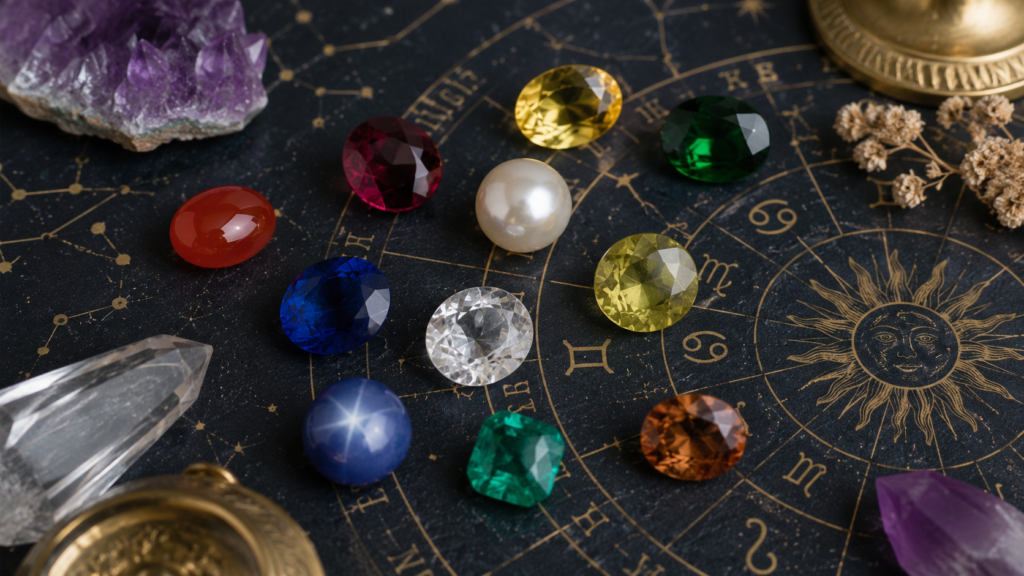
How do you know the gemstone is actually natural and untreated?
According to IDT laboratory data from 2026, more than 300 gemstones sold as “astrology grade” were identified as synthetic, glass-filled, or treated during testing.
Most buyers cannot distinguish between:
- Natural gemstones
- Treated gemstones
- Synthetic gemstones
- Imitation stones
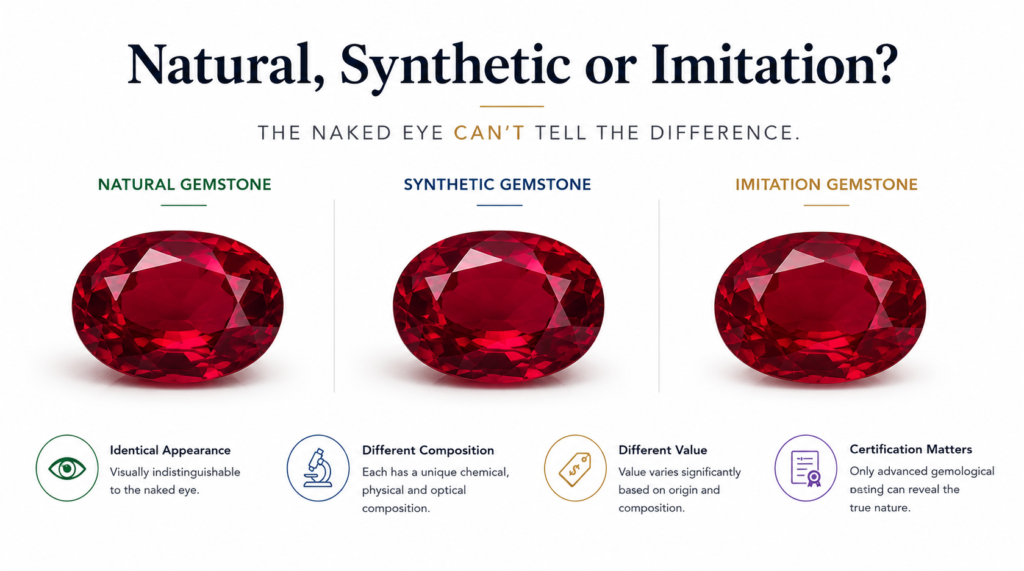
Many of these materials look nearly identical to the naked eye while having completely different origins and characteristics.
This is why gemstone certification has become one of the most important steps before wearing an astrology gemstone.
Whether you are buying a Yellow Sapphire, Blue Sapphire, Ruby, Emerald, Pearl, Coral, or Cat’s Eye, independent certification helps you understand exactly what you are getting.
What Is Gemstone Certification?
Gemstone certification is the process of examining and evaluating a gemstone in a professional gemological laboratory.
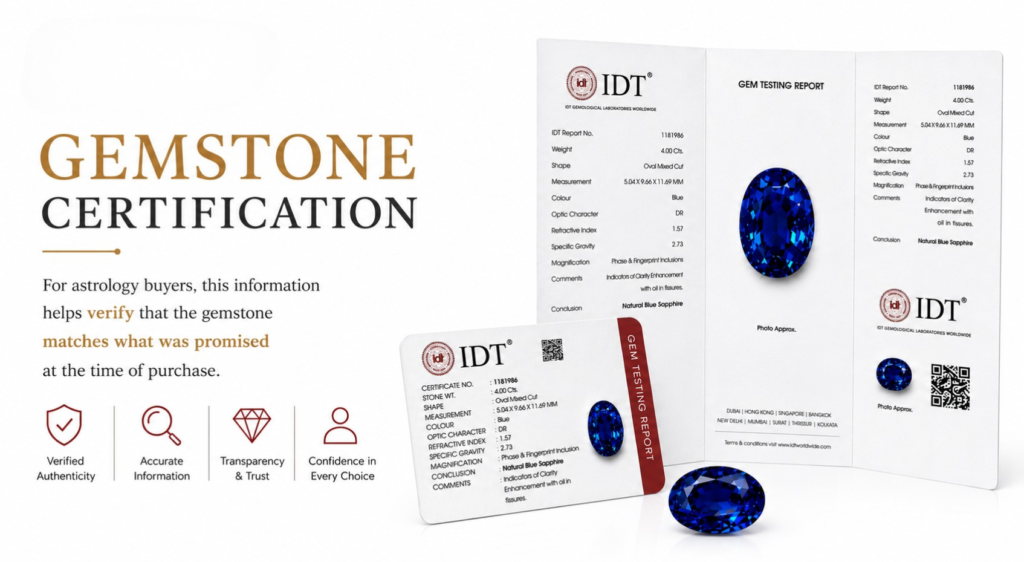
After testing, the laboratory issues a gemstone certificate or gemstone report that provides information about the stone’s identity and characteristics.
What Does a Gemstone Certificate Reveal?
A gemstone certificate provides independent information about:
- Gemstone identification
- Natural or synthetic origin
- Presence of treatments
- Weight and measurements
- Colour and transparency
- Other gemological observations
For astrology buyers, this information helps verify that the gemstone matches what was promised at the time of purchase.
Why Gemstone Certification Is Important for Astrology Gemstones
When buying jewellery for fashion, buyers often focus on appearance.
When buying gemstones for astrology, buyers usually focus on authenticity.
Real Case from IDT (2026)
A family in Mumbai brought a ruby to IDT after their astrologer recommended verification.
The stone had been sold as a “Burma Ruby.”
IDT testing revealed:
- Lead-glass-filled ruby
- Origin: Not Burma
- Treatment: Glass-filled
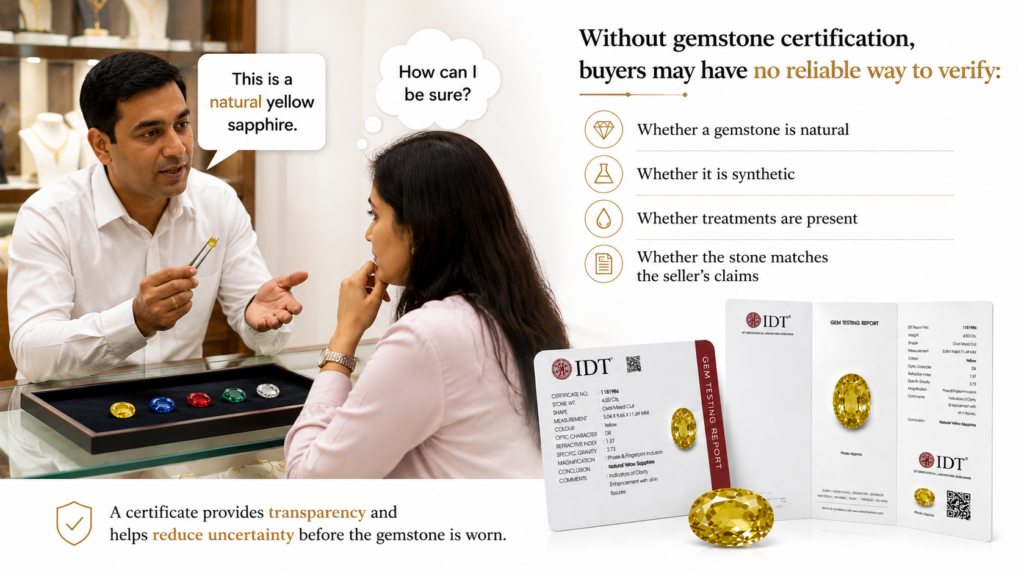
Without gemstone certification, buyers may have no reliable way to verify:
- Whether a gemstone is natural
- Whether it is synthetic
- Whether treatments are present
- Whether the stone matches the seller’s claims
A certificate provides transparency and helps reduce uncertainty before the gemstone is worn.
Natural, Synthetic and Imitation Gemstones: What’s the Difference?
One of the most common sources of confusion is understanding the difference between natural, synthetic, and imitation gemstones.
Natural Gemstones
Natural gemstones are formed by geological processes in nature over millions of years.
Examples include:
- Natural Yellow Sapphire
- Natural Blue Sapphire
- Natural Ruby
- Natural Emerald
Synthetic Gemstones
Synthetic gemstones are created in laboratories but possess similar chemical compositions to their natural counterparts.
They are real gemstones, but they are not naturally formed.
Imitation Gemstones
Imitation gemstones are materials designed to resemble genuine gemstones but may have completely different physical and chemical properties.
Examples include:
- Glass
- Cubic Zirconia
- Doublets
- Composite stones
To the average buyer, all three categories can appear remarkably similar.
That is why professional gemstone certification is essential before making a purchase.
Why Treatments Matter for Astrology
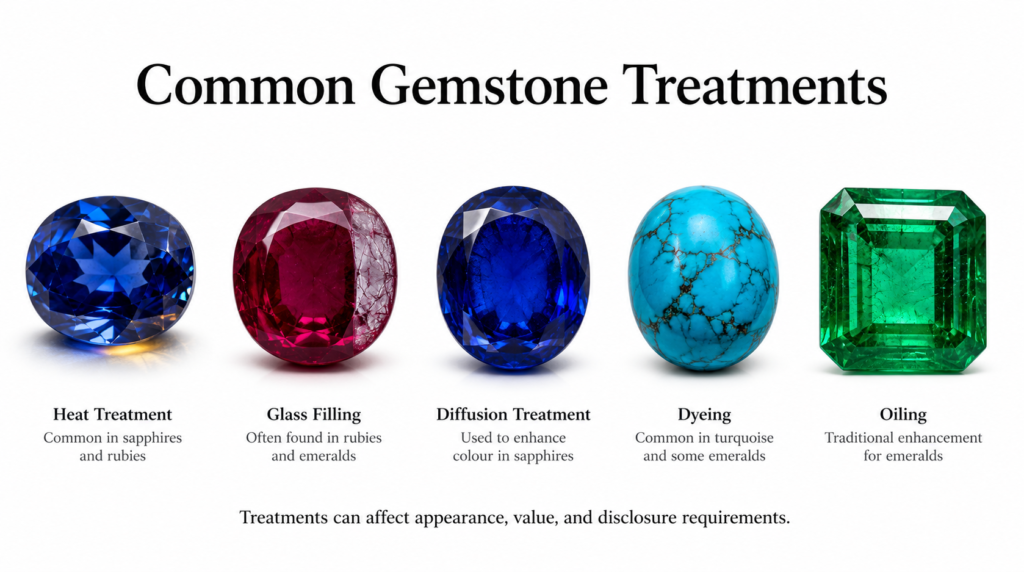
Many gemstones available in the market undergo treatments to improve their appearance.
While some treatments are accepted within the gemstone trade when properly disclosed, they can significantly affect how a gemstone is perceived by astrology buyers.
Common Gemstone Treatments
- Heat Treatment – Common in sapphires and rubies
- Glass Filling – Often found in rubies and emeralds
- Diffusion Treatment – Used to enhance colour in sapphires
- Dyeing – Common in turquoise and some emeralds
- Oiling – Traditional enhancement for emeralds
These treatments can usually be detected through professional gemological testing.
Many astrologers prefer natural, untreated gemstones for astrological use. As a result, buyers often seek gemstones accompanied by certification from an independent laboratory.
Gaurav Issar, Founder, IDT
“We see families bring stones to IDT based on their astrologer’s advice. Our job is to test whether the gemstone is natural or synthetic and whether indications of heating or other treatments are present. We report the facts so buyers and astrologers can make informed decisions.”
Common Problems Found During Gemstone Testing
Over 23 years and more than 15 million pieces certified, IDT laboratories have encountered many situations where gemstones were not exactly what buyers believed them to be.
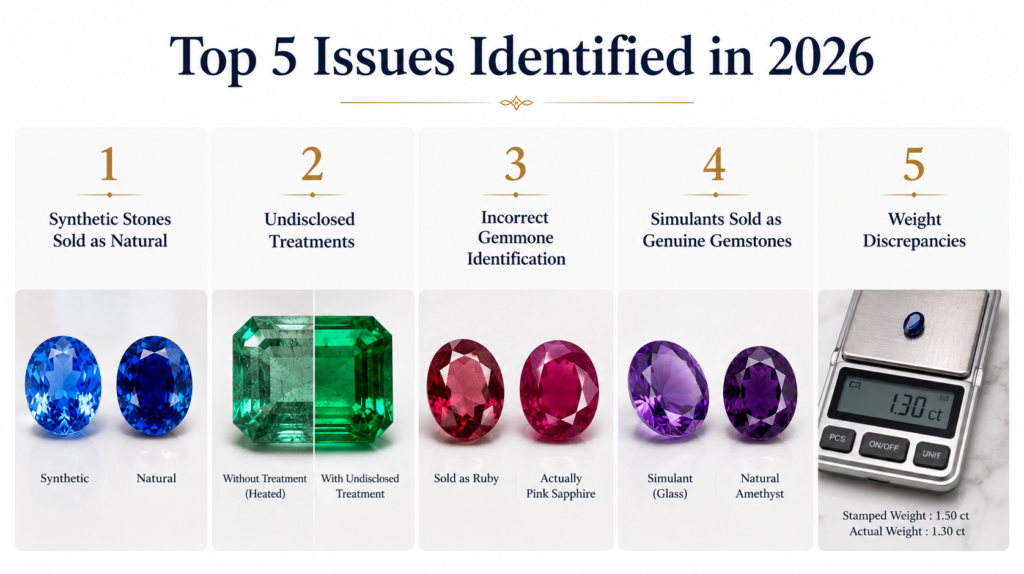
Top 5 Issues Identified in 2026
1. Synthetic Stones Sold as Natural
Lab-grown rubies represented as natural rubies.
2. Undisclosed Treatments
Yellow sapphires sold as “unheated” that showed treatment indications during testing.
3. Incorrect Gemstone Identification
Blue Spinel represented as Blue Sapphire despite being a completely different mineral.
4. Simulants Sold as Genuine Gemstones
Composite or glass-filled materials represented as natural emeralds.
5. Weight Discrepancies
Gemstones that differed from the prescribed weight recommended by the astrologer.
Most buyers do not intentionally make mistakes. They simply lack access to specialized testing equipment and gemological expertise.
Gemstone certification helps bridge that gap.
Would an Astrology Gemstone Work if It Is Synthetic or Treated?
This is one of the most frequently asked questions among astrology gemstone buyers.
Different astrologers may have different views regarding gemstone suitability for astrological purposes.
However, one thing remains consistent:
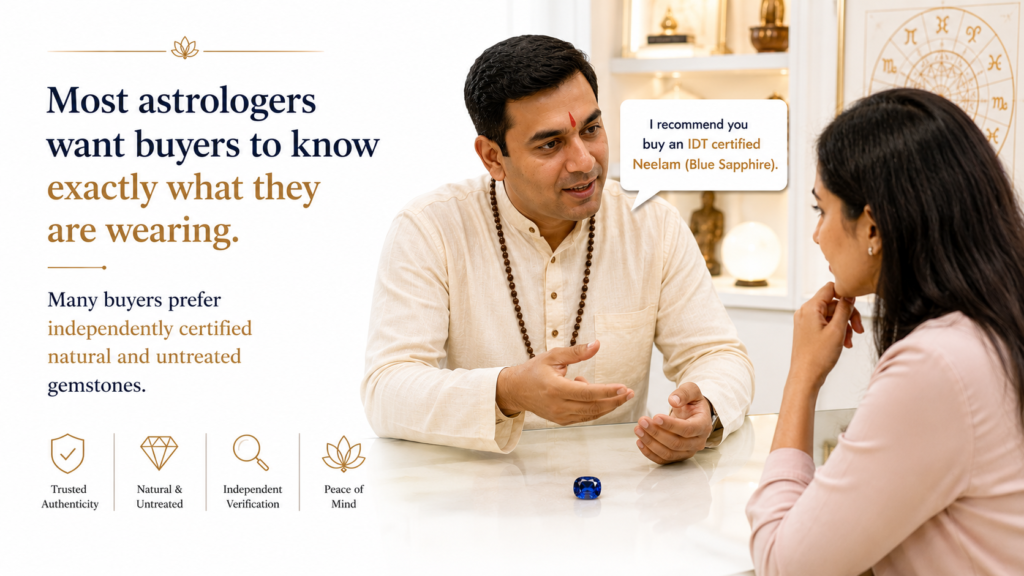
Most astrologers want buyers to know exactly what they are wearing.
For this reason, many buyers prefer independently certified natural and untreated gemstones.
Certification enables informed decisions based on facts rather than assumptions.
How to Verify a Gemstone Certificate Before You Buy
Receiving a certificate is important. Verifying the certificate is equally important.
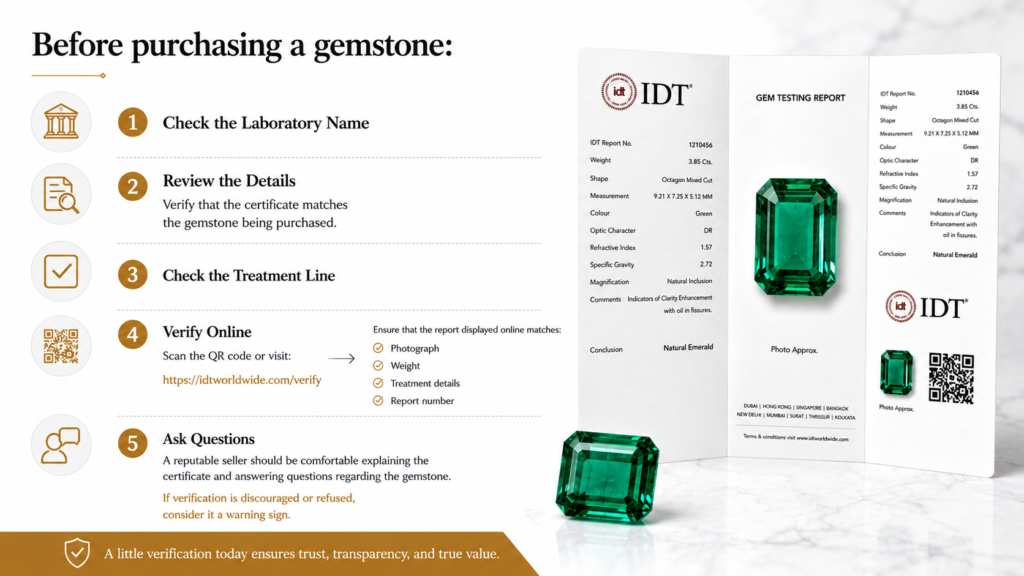
Before purchasing a gemstone:
1. Check the Laboratory Name
Ensure the certificate has been issued by a recognized gemological laboratory.
Look for:
IDT Gemological Laboratories Worldwide
Est. 2003 | 15M+ Pieces Certified | Official Certifiers of Miss India Crown
2. Review the Details
Verify that the certificate matches the gemstone being purchased.
Check:
- Weight
- Measurements
- Colour
- Treatment observations
3. Check the Treatment Line
For astrology buyers, this is often one of the most important sections of the report.
Look for statements such as:
- No indications of heating
- No indications of treatment
If terms such as the following appear, discuss them with your astrologer:
- Heated
- Diffusion treated
- Glass-filled
- Oiled
4. Verify Online
Scan the QR code or visit:
https://idtworldwide.com/verify
Ensure that the report displayed online matches:
- Photograph
- Weight
- Treatment details
- Report number
5. Ask Questions
A reputable seller should be comfortable explaining the certificate and answering questions regarding the gemstone.
If verification is discouraged or refused, consider it a warning sign.
What Should You Look for in the Best Gemstone Certification in India?
When evaluating a gemstone certificate, consider the following factors:
Independent Testing
The certificate should come from an independent gemological laboratory rather than the seller.
Transparent Reporting
The report should clearly disclose:
- Natural or synthetic origin
- Treatments detected
- Gemstone identification
Online Verification
The ability to verify a report online provides an additional layer of confidence.
Industry Reputation
Choose laboratories with established expertise and a proven history of gemstone testing.
Why Certified Gemstones Give You Greater Confidence
Buying an astrology gemstone is often a significant financial and emotional investment.
Whether you are purchasing:
- Yellow Sapphire for Jupiter
- Blue Sapphire for Saturn
- Ruby for the Sun
- Emerald for Mercury
You want confidence in what you are wearing.
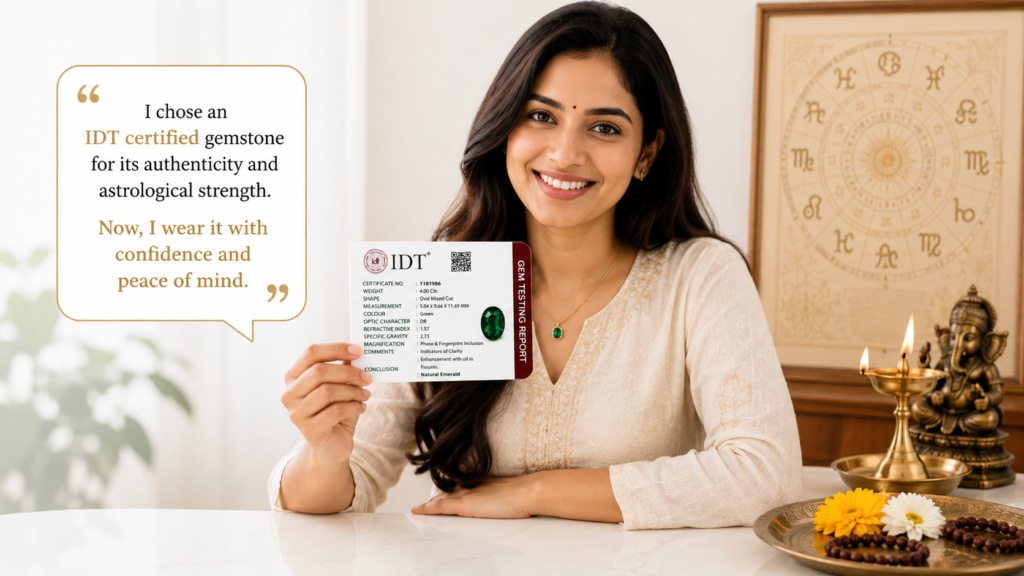
Gemstone certification provides independent information about the stone and helps you understand exactly what you are purchasing.
For many buyers, that peace of mind is just as valuable as the gemstone itself.
Gold has BIS Hallmark. Diamonds have IDT. Gemstones have IDT too.
IDT nahi toh deal hi nahi.
Frequently Asked Questions
What is gemstone certification?
Gemstone certification is the process of testing and evaluating a gemstone in a gemological laboratory and issuing a report describing its characteristics, including natural or synthetic origin, treatments, weight, and colour.
Why is gemstone certification important for astrology?
Many astrologers prefer natural, untreated gemstones. Certification helps confirm whether a gemstone is natural and whether treatments are present.
Can I tell if a gemstone is natural by looking at it?
Usually not. Natural, synthetic, and imitation gemstones often appear similar to the naked eye. Professional testing is typically required.
Is gemstone certification necessary for astrology gemstones?
Many buyers choose certification because they want independent confirmation of the gemstone they intend to wear.
How can I verify a gemstone certificate?
Review the laboratory details, check the treatment section, and verify the report online through the laboratory’s official verification system.
What is the difference between natural and lab-grown Yellow Sapphire?
Natural Yellow Sapphire forms in nature over millions of years. Lab-grown Yellow Sapphire is manufactured in a laboratory. Certification identifies the difference.
Can heated gemstones be used for astrology?
Different astrologers have different opinions. Buyers should consult their astrologer and review treatment information disclosed on the certificate.