You Buy a Diamond for Love. You Sell It for Value.
Whether it is an upgrade, an emergency, or an estate sale, the day may come when you need to sell your diamond.
At resale, emotion matters less and proof matters more. A buyer wants to know what the diamond actually is, whether it is natural, what its 4Cs are, and whether it has been treated.
That is where a diamond certificate becomes important.
IDT diamond certification supports diamond resale value by giving buyers verified information instead of guesswork. It does not guarantee a fixed resale price, but it helps the buyer evaluate the diamond with more confidence.

How Jewellers Value Diamonds for Buyback
When you sell diamond jewellery, the jeweller is not only looking at the design. They are checking the diamond’s identity and quality.
Here are the three main questions they need answered:
1. Is it natural?
Without a diamond certificate stating Conclusion: Natural Diamond, the jeweller may need to test it first. That takes time and adds risk.
For more on risks of uncertified stones, see The Hidden Risk of Buying Uncertified Diamonds.
2. What are the exact 4Cs?
Color, clarity, cut, and carat weight affect value. With certified diamonds, these details are recorded on the diamond grading certificate.
Without certification, the jeweller has to grade the diamond again and may give a more conservative offer to protect against error.
3. Has it been treated?
The Comments section on an IDT report states No indications of treatment or lists the treatment, if present.
Treatment disclosure is important because treated diamonds may have different market values. If treatment is not disclosed, it can reduce trust during resale.
With IDT certification, these questions are answered faster.
The buyer can scan the QR code or verify the report number online.
Without certification, the jeweller starts with uncertainty.
That uncertainty can delay the process and may affect the offer.
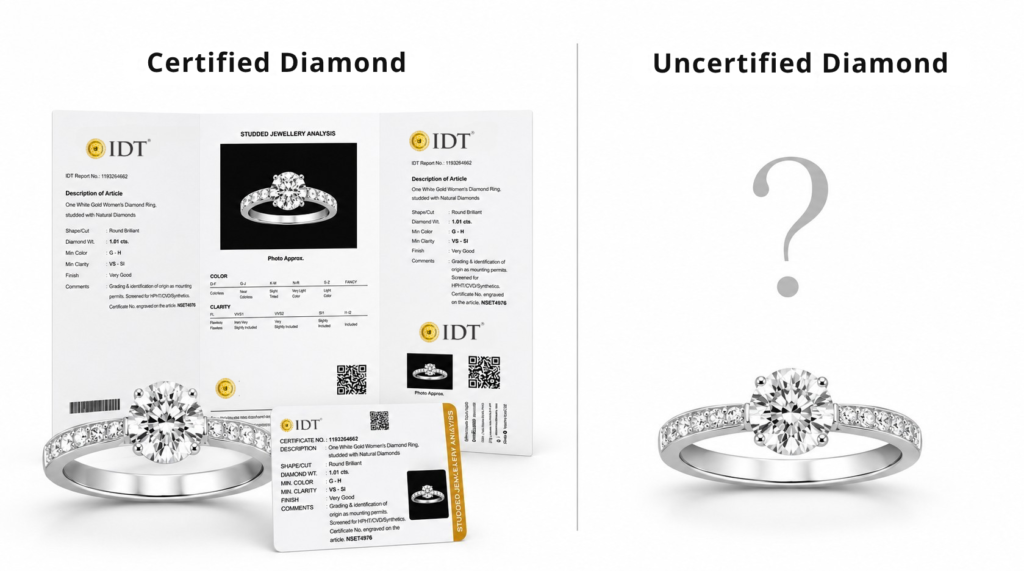
Certified vs Uncertified Diamonds at Resale: What Actually Happens
| Factor | Certified Diamond | Uncertified Diamond |
| Natural origin | Report clearly states the conclusion | Buyer may need additional testing |
| 4Cs | Color, clarity, cut, and carat are documented | Jeweller must re-grade the diamond |
| Treatment status | Treatment details are disclosed in the report | Treatment may be unknown until tested |
| Buyer confidence | Higher, because details are verified | Lower, because the buyer takes more risk |
| Time required | Faster verification through QR or report number | Slower process due to testing and checking |
| Offer discussion | Based on documented details | May be based on conservative assumptions |
This is why the resale value of certified diamonds is usually better protected. The diamond certificate does not change the diamond itself, but it gives the buyer the proof needed to evaluate it properly.
For example, a certified diamond allows the buyer to check the report, verify the 4Cs, and make an offer faster. An uncertified diamond usually needs testing first, which can delay the process and lead to a more cautious offer.
What Type of IDT Certificate Protects Resale Value?
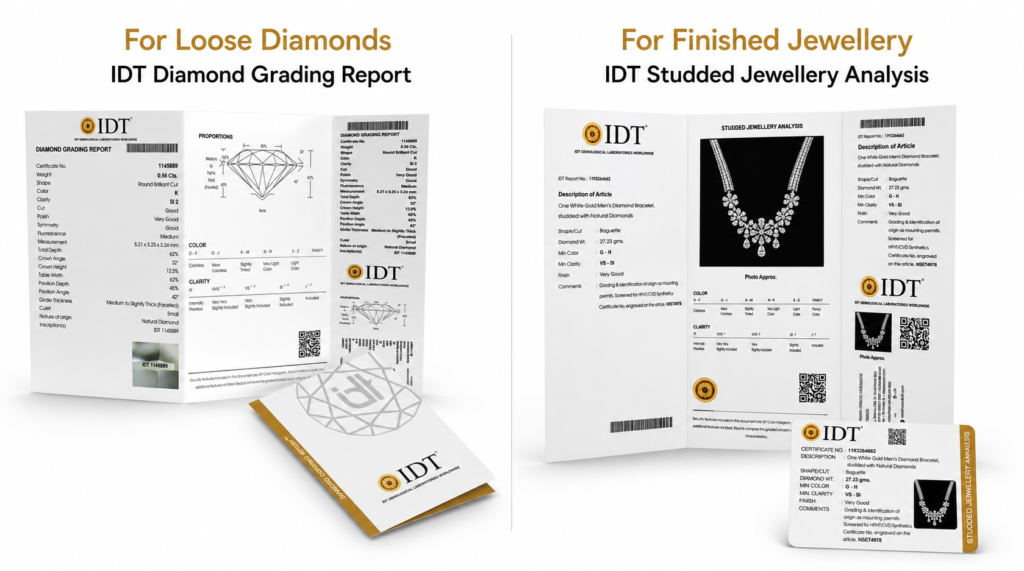
1. For Loose Diamonds: Diamond Grading Report
This is your diamond grading certificate. It includes important details such as carat weight, color, clarity, cut, measurements, plot diagram, and laser inscription of the report number on the girdle, where applicable.
At resale: The buyer can verify the report, match the stone’s details, and confirm that it is the same diamond.
2. For Finished Jewellery: Studded Jewellery Analysis
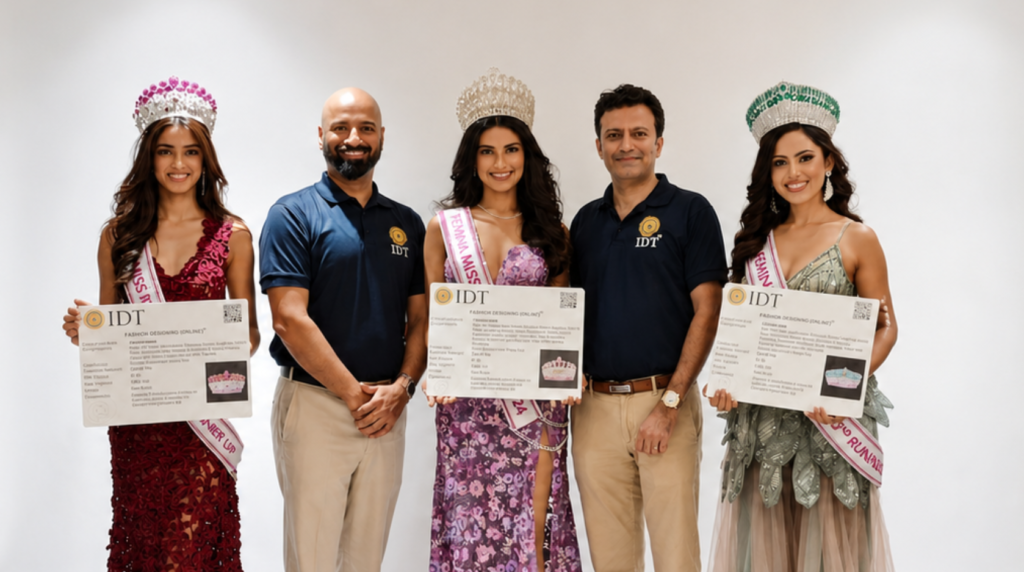
This is used for rings, necklaces, earrings, bracelets, and other diamond jewellery. IDT also certified the Miss India 2024 crowns under its jewellery certification process.
Includes: Total diamond weight, minimum color grade, minimum clarity grade, metal details, and laser engraving of certificate number on the jewellery, if opted by the jeweller.
At resale: The buyer can verify the report and check the engraving if present. This helps support the value of the complete jewellery piece.
Key point: Loose diamonds need a Diamond Grading Report, while finished jewellery needs Studded Jewellery Analysis. Both help support diamond resale value.
For details on reading each report, see How to Read an IDT Certificate.
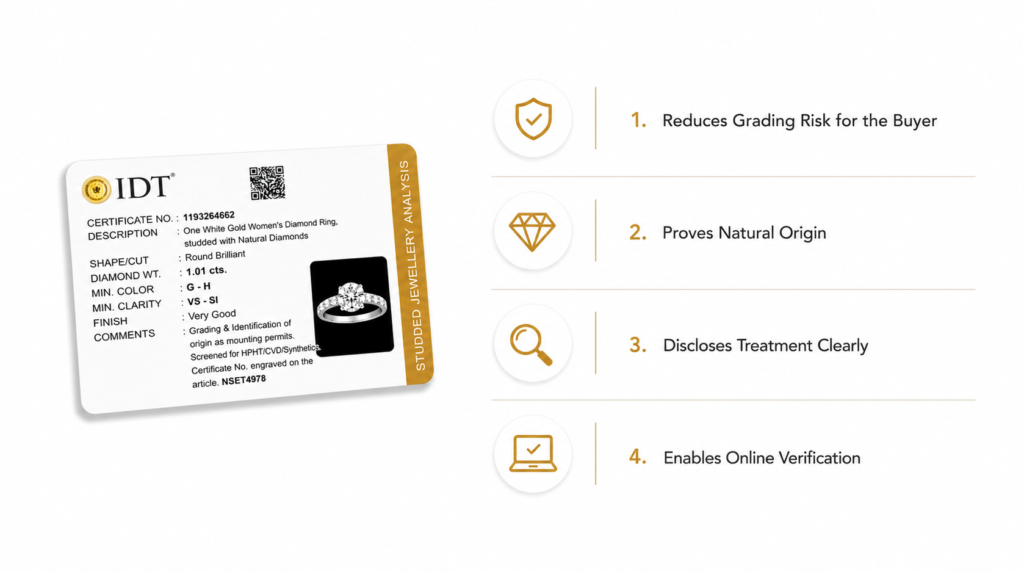
4 Ways IDT Certification Supports Diamond Resale Value
1. Reduces Grading Risk for the Buyer
A jeweller buying an uncertified diamond has to re-grade it. If they grade it too high, they may lose money. Because of this, uncertified diamonds may receive more conservative offers.
With IDT certification: The buyer gets documented grades and can make an offer based on verified details.
2. Proves Natural Origin
Conclusion: Natural Diamond on an IDT report helps answer one of the biggest resale questions: Is the diamond natural or lab-grown?
Without certification, the buyer may need additional testing before making a decision.
3. Discloses Treatment Clearly
If a diamond is clarity enhanced, HPHT treated, or has any other disclosed treatment, the report mentions it in the Comments section.
Buyers may still purchase treated diamonds, but they need to know the facts. Certification helps keep the transaction transparent.
4. Enables Online Verification
Every IDT certificate has a Report Number and QR code. The buyer can check the report details online, which helps reduce doubt and makes the resale process smoother.
What About Diamonds Without Laser Inscription or Engraving?
If your Diamond Grading Report does not have laser inscription, the report can still be useful. The jeweller can match the diamond using measurements, plot diagram, and other report details.
For studded jewellery, laser engraving is a special in-lab service chosen by some jewellers. The Studded Jewellery Analysis report is valid whether or not laser engraving is present. Verification through the Report Number helps confirm authenticity.
How to Maximise Your Diamond’s Resale Value
If you have not bought yet:
- Buy certified diamonds only. Ask for an IDT Diamond Grading Report for loose diamonds or Studded Jewellery Analysis for diamond jewellery.
- Keep the certificate safe. You may need it for diamond buyback, upgrade, insurance, or resale.
- Check the Report Number, Conclusion, and Comments before you buy.
- Verify the report online before making the payment.
If you already own a diamond:
- Get it certified by IDT if it is uncertified. You can bring it to an IDT laboratory in Delhi, Mumbai, Surat, Kolkata, Thrissur, Chennai, or Dubai.
- Keep the certificate with the diamond. Store both safely together.
- Share the report with buyers so they can evaluate the diamond with confidence.
Quote from Gaurav Issar, Founder, IDT
“A diamond without a certificate is a story. A certified diamond is an asset. IDT certified the Miss India 2024 crowns, featuring 12,349 natural diamonds, because when value must be proven, only facts work. That is the same standard we apply to your diamond.”
The IDT Standard: Your Diamond’s Passport
Think of your IDT certificate as your diamond’s passport. Without it, selling, insuring, upgrading, or passing it on becomes harder because the diamond’s identity is not clearly documented.
IDT certified the Miss India 2024 crowns because national symbols demand proof. Your diamond deserves the same standard of verification.
Before you sell: Find your IDT Diamond Grading Report or Studded Jewellery Analysis.
Before you buy: Ask for IDT certification.
Before you trust the value: Check the Report Number, Conclusion, and Comments.
Because diamond resale value is not only about what you paid. It is about what you can prove.
Gold has BIS Hallmark. Diamonds have IDT. Gemstones have IDT too.
IDT nahi to deal hi nahi.
Frequently Asked Questions
Do certified diamonds have better resale value?
Certified diamonds usually have better resale support because the diamond certificate provides independent proof of the 4Cs, natural origin, and treatment status. This helps buyers make more confident offers.
Does diamond certification increase resale price?
Diamond certification does not change the physical quality of a diamond. It supports market value by providing verified information, so buyers do not have to rely only on assumptions.
Is diamond certification necessary for resale?
Certification is not always compulsory, but many jewellers, insurers, and buyback programs may prefer diamonds with independent diamond certification. Without it, the diamond usually needs to be tested first.
Which diamond certificate is best for resale?
For loose diamonds, ask for a Diamond Grading Report. For finished diamond jewellery, ask for Studded Jewellery Analysis. Both reports help protect diamond resale value by documenting important details.
Can I sell an uncertified diamond?
Yes, but most buyers may require testing before making an offer. Getting IDT certification before you sell helps reduce doubt and makes the process smoother.