Top 15 Diamond Mines in the World: Where Diamonds Are Found
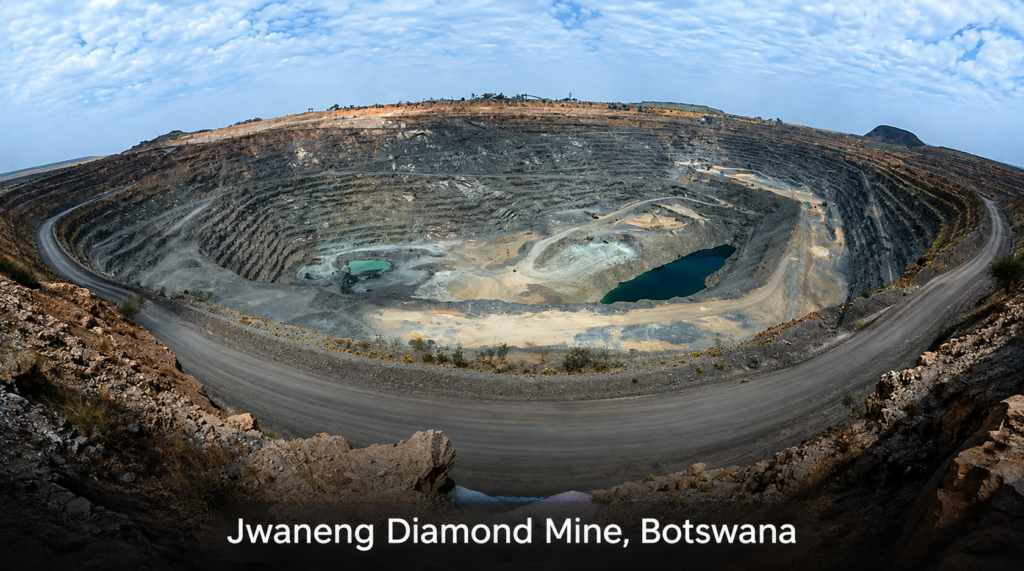
Before a natural diamond reaches a jewellery store, it begins its journey deep within the Earth. Natural diamonds form under extreme heat and pressure over geological timescales. They are eventually brought closer to the Earth’s surface through volcanic activity and can be recovered from kimberlite pipes, alluvial deposits and even the seabed. Today, major diamond mines in the world are found across Botswana, Russia, Angola, Canada, South Africa and Lesotho. From mines producing millions of carats to legendary locations known for enormous or rare coloured diamonds, here are 15 of the world’s most famous diamond mines. Note: This list considers global importance, production history, famous discoveries and significance to the natural diamond industry. It is not a strict ranking by annual production or reserves. Top 15 Diamond Mines in the World at a Glance Diamond Mine Country Famous For Jwaneng Botswana One of the richest diamond mines by value Orapa Botswana One of the world’s largest open-pit diamond mines Karowe Botswana Exceptional diamonds over 1,000 carats Catoca Angola Major African diamond production Luele Angola Major new diamond project Cullinan South Africa The 3,106-carat Cullinan Diamond Venetia South Africa Major South African diamond mine Letšeng Lesotho Large, high-value white diamonds Gahcho Kué Canada Major Canadian diamond production Ekati Canada Canada’s first major diamond mine Diavik Canada Over 150 million carats produced before closure Aikhal Russia Major Yakutian diamond operation Udachny Russia Large underground diamond mine Mir Russia Iconic giant open-pit mine Argyle Australia Famous pink and red diamonds 1. Jwaneng Diamond Mine, Botswana Location: BotswanaKnown for: Exceptional diamond value Jwaneng is one of the most famous diamond mines in the world and is widely described as one of the richest diamond mines by value. It is operated by Debswana, a partnership between the Government of Botswana and De Beers. Jwaneng remains a major producer, with De Beers reporting more than 2.2 million carats recovered in Q1 2026 alone. 2. Orapa Diamond Mine, Botswana Location: BotswanaKnown for: Enormous open-pit operation Orapa is another major Debswana mine and one of the world’s best-known open-pit diamond operations. Mining began in the early 1970s, helping transform Botswana into one of the world’s leading natural diamond-producing countries. Orapa continues to operate today and remains an important contributor to Botswana’s diamond production. 3. Karowe Diamond Mine, Botswana Location: BotswanaKnown for: Extremely large diamonds Karowe has become famous for something extraordinary: very large natural diamonds. According to Lucara Diamond, Karowe is the only diamond mine to have recovered nine diamonds weighing more than 1,000 carats each. Its major discoveries include the 1,109-carat Lesedi La Rona and the enormous 2,488-carat rough diamond recovered in 2024. An underground project is being developed to extend Karowe’s mine life to approximately 2038. 4. Catoca Diamond Mine, Angola Location: AngolaKnown for: Large-scale diamond production Catoca is one of Africa’s best-known diamond mines and has played a major role in Angola’s emergence as an important natural diamond producer. Located in Lunda Sul Province, Catoca is a large kimberlite mining operation producing rough diamonds for the international market. Together with newer projects, it has helped establish Angola as an increasingly important player in global diamond mining. 5. Luele Diamond Mine, Angola Location: AngolaKnown for: One of Angola’s major new diamond projects Luele represents a newer chapter in African diamond mining. Located in Angola’s diamond-rich Lunda region, the deposit has become increasingly important as the country expands its natural diamond production. Its development also shows how the geography of global diamond supply continues to evolve beyond long-established mines. 6. Cullinan Diamond Mine, South Africa Location: South AfricaKnown for: The world’s largest gem-quality rough diamond Few diamond mines have produced a discovery as famous as Cullinan. In 1905, the mine produced the legendary Cullinan Diamond, weighing approximately 3,106 carats in its rough form. It remains the largest gem-quality rough diamond ever discovered. Cullinan is also famous for rare blue diamonds and exceptional Type II diamonds and continues to be an important South African mine. 7. Venetia Diamond Mine, South Africa Location: Limpopo, South AfricaKnown for: Major modern South African diamond production Venetia is one of South Africa’s most important modern diamond mines. The operation has been transitioning from open-pit to underground mining, with underground production beginning in 2023. De Beers reported strong underground production during the first half of 2026, although it has proposed a two-year production pause beginning in the second half of 2026 as part of changes responding to diamond-market conditions. 8. Letšeng Diamond Mine, Lesotho Location: LesothoKnown for: Large, high-quality white diamonds Located high in the mountains of Lesotho, Letšeng has built a reputation for producing exceptional large diamonds. Gem Diamonds describes Letšeng as the highest average dollar-per-carat kimberlite diamond mine in the world. The mine continues to produce notable stones. In June 2026, it recovered an exceptional 346.99-carat Type II white diamond. 9. Gahcho Kué Diamond Mine, Canada Location: Northwest Territories, CanadaKnown for: Major Canadian diamond production Gahcho Kué is one of Canada’s important operating diamond mines. Located in the remote Northwest Territories, it is jointly owned by De Beers and Mountain Province Diamonds. Production increased strongly during the first half of 2026 as higher-grade ore from a new mining area was processed. 10. Ekati Diamond Mine, Canada Location: Northwest Territories, CanadaKnown for: Canada’s first major diamond mine Ekati transformed Canadian diamond history when commercial production began in 1998. It became Canada’s first major diamond mine and helped prove that the country’s remote northern region contained commercially important diamond deposits. Its current mine plan runs to around 2028, while further projects could potentially extend mining considerably longer. 11. Diavik Diamond Mine, Canada Location: Northwest Territories, CanadaKnown for: More than 150 million carats produced Diavik was one of Canada’s most significant diamond mines. But unlike many older lists of famous diamond mines, Diavik should now be described as a closed mine. After 23 years of operations and more than 150 million carats of rough diamonds, Diavik produced its final diamonds in March 2026. Its closure marks the end of an important chapter in
Would You Know If Your Diamond Was Swapped?
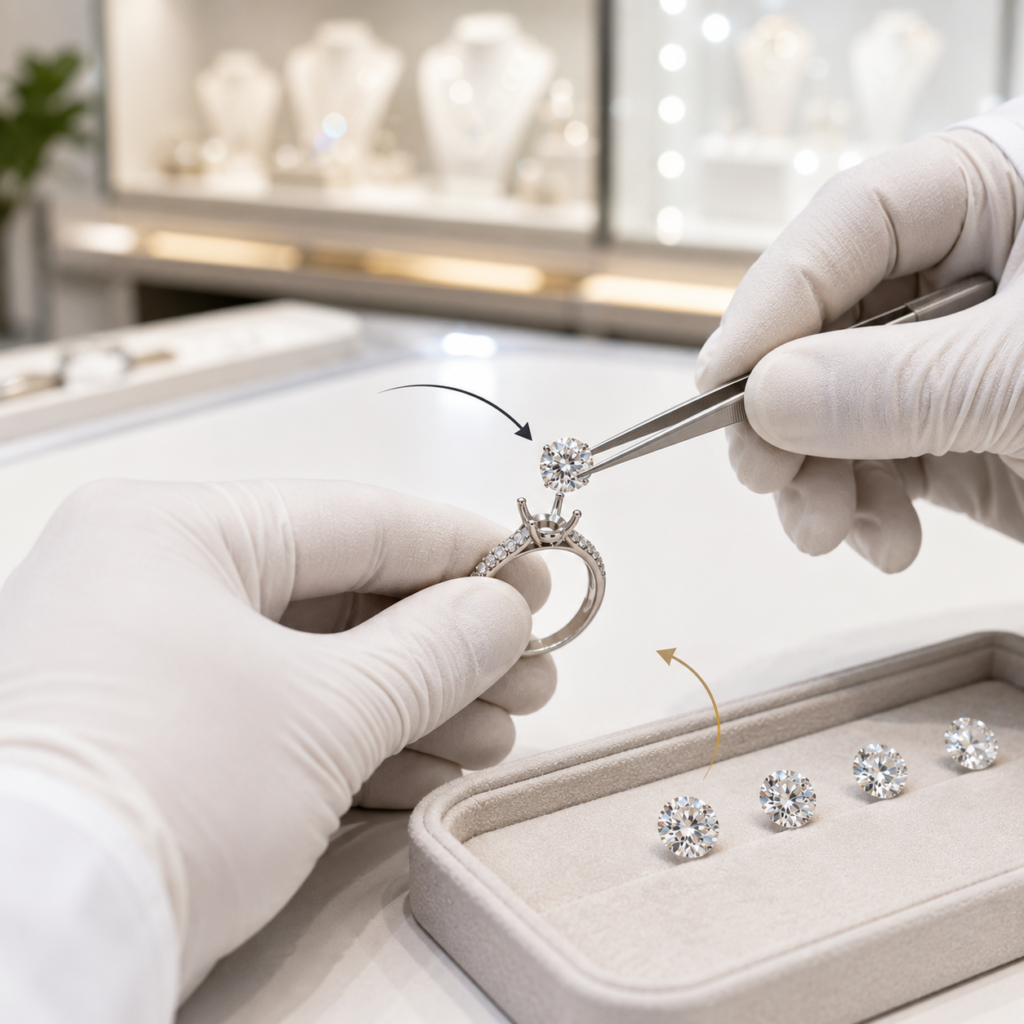
You leave your diamond ring at a jeweller for cleaning, resizing, or a prong repair. When you collect it a few days later, would you know if it’s the same diamond? Most diamonds look remarkably similar to the untrained eye. Without an independent record of your diamond’s identifying characteristics, it can be difficult to distinguish one stone from another. While diamond swapping is uncommon, especially with reputable jewellers, it is a concern many consumers have. Independent diamond certification helps establish a record of the diamond examined by a gemological laboratory, making future verification easier. In this guide, we’ll explain how laser inscriptions, QR verification, and gemological reports work together to help identify your diamond. What Is a Diamond Laser Inscription? A laser inscription is a microscopic marking engraved on the girdle, the thin outer edge of a diamond. It is not visible to the naked eye and generally requires a jeweller’s microscope or a 10× loupe to view. Many certified diamonds, particularly larger stones, carry a laser inscription. Whether an inscription is present depends on factors such as the diamond’s size and the laboratory’s certification policy. When present, the inscription often corresponds to the report number shown on the laboratory certificate. How Diamond Identification Works A laboratory report documents several identifying characteristics of a diamond, which may include: Together, these characteristics create a record of the diamond examined at the time of certification. How Diamond Certification Helps A diamond certificate provides more than grading information. It also creates an independent reference that can assist with future identification. Depending on the report, this may include: Because internal inclusions are naturally occurring, they can help distinguish one diamond from another when documented. Three Steps Before Leaving Your Jewellery for Service Before handing over your jewellery for cleaning, repair, or resizing, consider taking a few simple precautions. 1. Keep a Copy of Your Certificate Store your original laboratory report safely and keep a digital copy for quick reference. 2. Check the Laser Inscription If your diamond has an inscription, ask the jeweller to show it under magnification before leaving the jewellery. Make a note of the inscription number. 3. Photograph Your Jewellery Take clear photographs of the jewellery from multiple angles. While photographs cannot replace laboratory documentation, they can serve as a useful personal reference. How to Check Your Diamond After Collection When you receive your jewellery back: Verify the Certificate Use the report number or QR code to access the issuing laboratory’s official verification page. Confirm that the report details correspond with your jewellery. Compare Identifying Features Review the certificate and compare: Confirm the Laser Inscription Where applicable, view the inscription under magnification and ensure it matches the report number. What If My Diamond Has No Inscription? Not every diamond carries a laser inscription. Smaller diamonds and some older certifications may not include one. In such cases, laboratories may rely on other identifying characteristics, including: If your diamond has never been independently certified, obtaining a laboratory report can establish a useful reference for the future. Why IDT Certification Matters An IDT Diamond Certificate provides an independent and detailed record of the diamond examined by IDT Gemological Laboratories. It documents the diamond’s identifying characteristics, helping you verify and recognise your stone in the future. IDT Certification can support: Whether you are purchasing a new diamond, inheriting jewellery, or leaving a treasured ring with a jeweller, an IDT Certificate provides reliable information and an added level of assurance. Always insist on IDT Certification. Frequently Asked Questions Can laser inscriptions be copied? In some circumstances, a laser inscription can be recreated if the inscription number is known. This is one reason laboratories may also document additional identifying characteristics, such as internal inclusions and photographs, where applicable. Do all certified diamonds have laser inscriptions? No. Many laboratories offer laser inscription for eligible diamonds, but policies vary depending on the laboratory and certification service. What if my diamond was certified years ago? Older reports may still be useful if they can be verified and accurately match the diamond. If additional reassurance is needed, the diamond can usually be submitted for a fresh examination. Can a diamond be identified without a laser inscription? Yes. Gemological laboratories can often identify diamonds using a combination of measurements, internal characteristics, and other gemological observations.
Why Certified Diamonds Have Better Resale Value
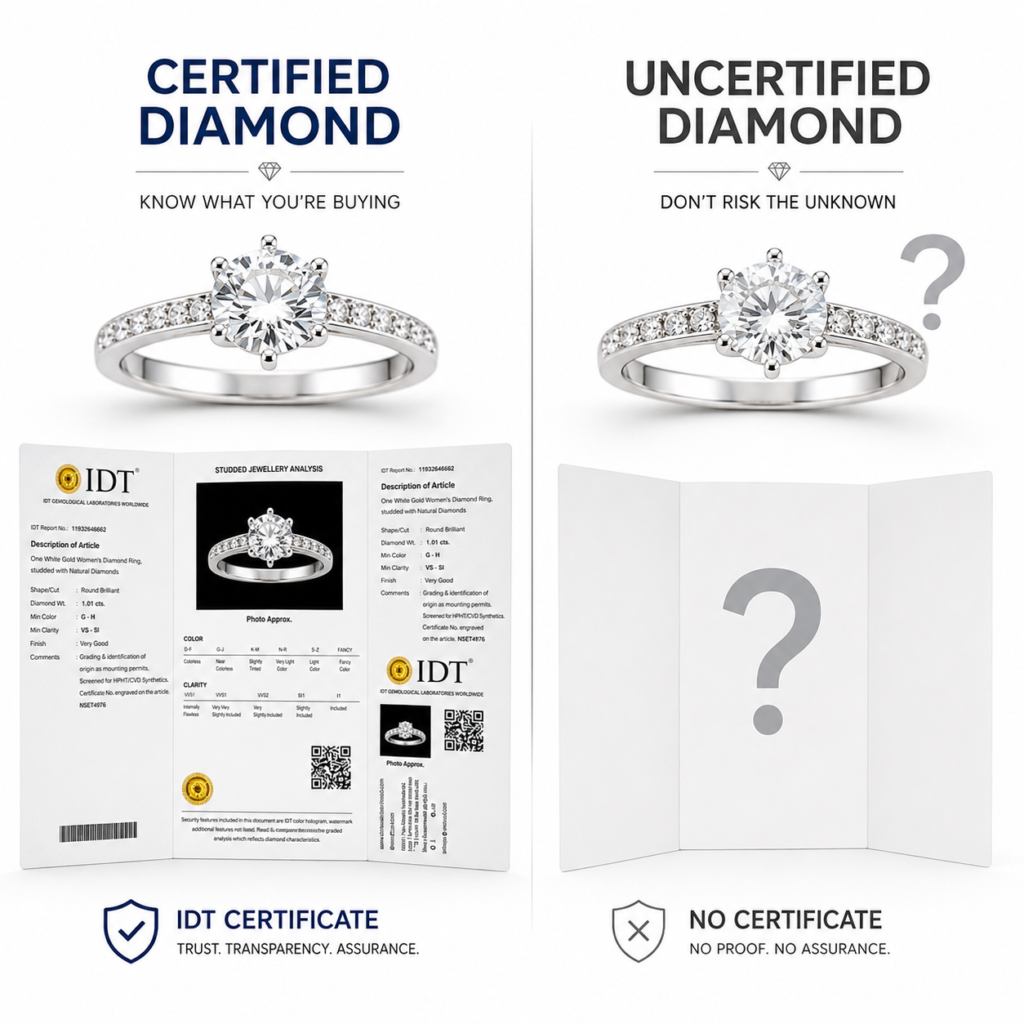
You Buy a Diamond for Love. You Sell It for Value. Whether it is an upgrade, an emergency, or an estate sale, the day may come when you need to sell your diamond. At resale, emotion matters less and proof matters more. A buyer wants to know what the diamond actually is, whether it is natural, what its 4Cs are, and whether it has been treated. That is where a diamond certificate becomes important. IDT diamond certification supports diamond resale value by giving buyers verified information instead of guesswork. It does not guarantee a fixed resale price, but it helps the buyer evaluate the diamond with more confidence. How Jewellers Value Diamonds for Buyback When you sell diamond jewellery, the jeweller is not only looking at the design. They are checking the diamond’s identity and quality. Here are the three main questions they need answered: 1. Is it natural? Without a diamond certificate stating Conclusion: Natural Diamond, the jeweller may need to test it first. That takes time and adds risk. For more on risks of uncertified stones, see The Hidden Risk of Buying Uncertified Diamonds. 2. What are the exact 4Cs? Color, clarity, cut, and carat weight affect value. With certified diamonds, these details are recorded on the diamond grading certificate. Without certification, the jeweller has to grade the diamond again and may give a more conservative offer to protect against error. 3. Has it been treated? The Comments section on an IDT report states No indications of treatment or lists the treatment, if present. Treatment disclosure is important because treated diamonds may have different market values. If treatment is not disclosed, it can reduce trust during resale. With IDT certification, these questions are answered faster.The buyer can scan the QR code or verify the report number online. Without certification, the jeweller starts with uncertainty.That uncertainty can delay the process and may affect the offer. Certified vs Uncertified Diamonds at Resale: What Actually Happens Factor Certified Diamond Uncertified Diamond Natural origin Report clearly states the conclusion Buyer may need additional testing 4Cs Color, clarity, cut, and carat are documented Jeweller must re-grade the diamond Treatment status Treatment details are disclosed in the report Treatment may be unknown until tested Buyer confidence Higher, because details are verified Lower, because the buyer takes more risk Time required Faster verification through QR or report number Slower process due to testing and checking Offer discussion Based on documented details May be based on conservative assumptions This is why the resale value of certified diamonds is usually better protected. The diamond certificate does not change the diamond itself, but it gives the buyer the proof needed to evaluate it properly. For example, a certified diamond allows the buyer to check the report, verify the 4Cs, and make an offer faster. An uncertified diamond usually needs testing first, which can delay the process and lead to a more cautious offer. What Type of IDT Certificate Protects Resale Value? 1. For Loose Diamonds: Diamond Grading Report This is your diamond grading certificate. It includes important details such as carat weight, color, clarity, cut, measurements, plot diagram, and laser inscription of the report number on the girdle, where applicable. At resale: The buyer can verify the report, match the stone’s details, and confirm that it is the same diamond. 2. For Finished Jewellery: Studded Jewellery Analysis This is used for rings, necklaces, earrings, bracelets, and other diamond jewellery. IDT also certified the Miss India 2024 crowns under its jewellery certification process. Includes: Total diamond weight, minimum color grade, minimum clarity grade, metal details, and laser engraving of certificate number on the jewellery, if opted by the jeweller. At resale: The buyer can verify the report and check the engraving if present. This helps support the value of the complete jewellery piece. Key point: Loose diamonds need a Diamond Grading Report, while finished jewellery needs Studded Jewellery Analysis. Both help support diamond resale value. For details on reading each report, see How to Read an IDT Certificate. 4 Ways IDT Certification Supports Diamond Resale Value 1. Reduces Grading Risk for the Buyer A jeweller buying an uncertified diamond has to re-grade it. If they grade it too high, they may lose money. Because of this, uncertified diamonds may receive more conservative offers. With IDT certification: The buyer gets documented grades and can make an offer based on verified details. 2. Proves Natural Origin Conclusion: Natural Diamond on an IDT report helps answer one of the biggest resale questions: Is the diamond natural or lab-grown? Without certification, the buyer may need additional testing before making a decision. 3. Discloses Treatment Clearly If a diamond is clarity enhanced, HPHT treated, or has any other disclosed treatment, the report mentions it in the Comments section. Buyers may still purchase treated diamonds, but they need to know the facts. Certification helps keep the transaction transparent. 4. Enables Online Verification Every IDT certificate has a Report Number and QR code. The buyer can check the report details online, which helps reduce doubt and makes the resale process smoother. What About Diamonds Without Laser Inscription or Engraving? If your Diamond Grading Report does not have laser inscription, the report can still be useful. The jeweller can match the diamond using measurements, plot diagram, and other report details. For studded jewellery, laser engraving is a special in-lab service chosen by some jewellers. The Studded Jewellery Analysis report is valid whether or not laser engraving is present. Verification through the Report Number helps confirm authenticity. How to Maximise Your Diamond’s Resale Value If you have not bought yet: If you already own a diamond: Quote from Gaurav Issar, Founder, IDT “A diamond without a certificate is a story. A certified diamond is an asset. IDT certified the Miss India 2024 crowns, featuring 12,349 natural diamonds, because when value must be proven, only facts work. That is the same standard we apply to your diamond.” The IDT Standard: Your Diamond’s Passport Think of your IDT certificate
How IDT Certified the Miss India 2024 Crowns
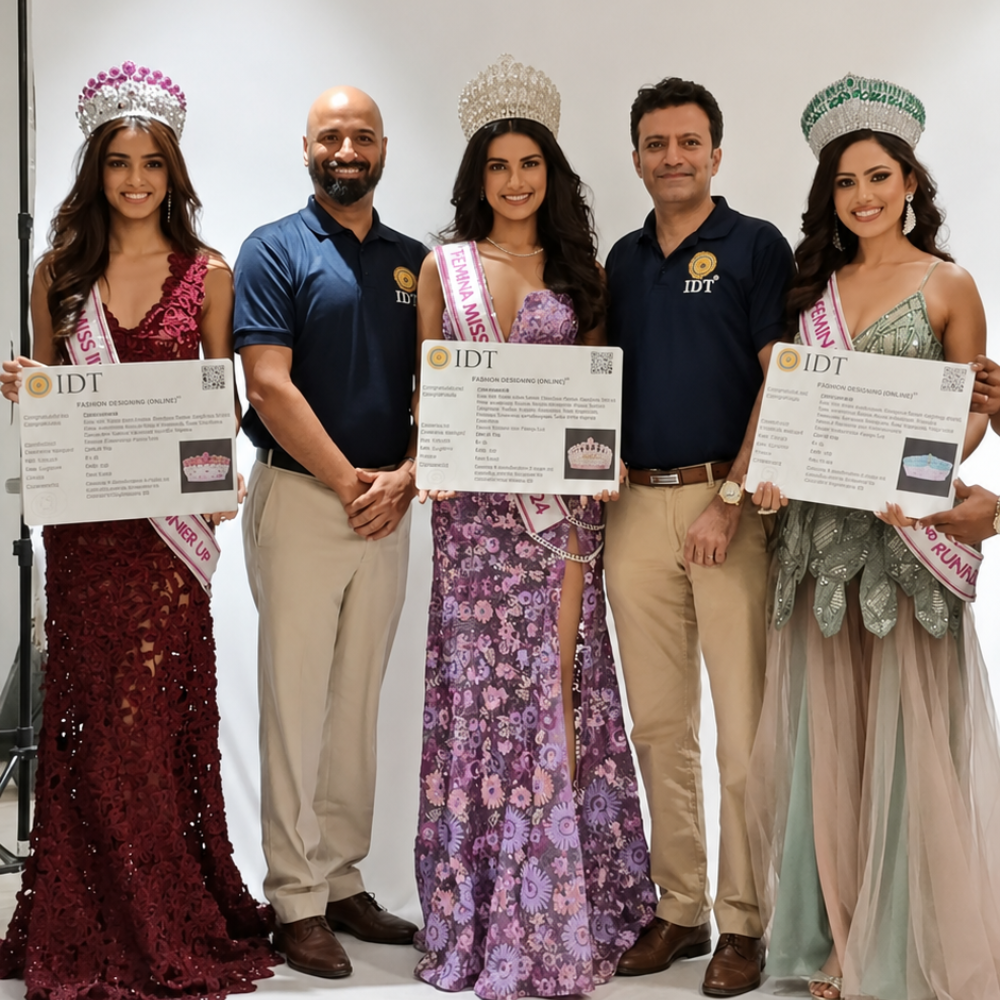
Every year, the Femina Miss India crown becomes a symbol of excellence, confidence, and national pride. Before these crowns reached the winners, they underwent independent gemological certification. The three Femina Miss India 2024 crowns, handcrafted by Narayan Jewellers, were proudly certified by IDT Gemological Laboratories Worldwide. When something represents India, every detail matters. The Three Miss India 2024 Crowns IDT carried out Studded Jewellery Analysis for all three crowns before they were presented on stage. Femina Miss India World 2024, Winner: Nikita Porwal Femina Miss India 2024, 1st Runner-Up: Rekha Pandey Femina Miss India 2024, 2nd Runner-Up: Aayushi Dholakia Combined Total How the Crowns Were Certified The Femina Miss India 2024 crowns were submitted to IDT for Studded Jewellery Analysis. IDT gemologists examined the finished jewellery using advanced gemological instruments and documented the findings in individual certification reports. Each report includes a unique Report Number and QR Code, allowing anyone to verify the certificate online at https://idtworldwide.com/verify-your-report/. This independent certification provides transparency and confidence for valuable jewellery. Why IDT Was Chosen Since 2003, IDT has certified more than 15 million diamonds, gemstones, and jewellery pieces through laboratories across India and the Middle East. As an independent gemological laboratory, IDT does not sell diamonds or jewellery. Its role is to examine, test, and certify them with accuracy and transparency. The same expertise trusted for the Miss India crowns is applied to every jewellery piece submitted for certification. Gaurav Issar, Founder, IDT “The Miss India crowns carry the pride of a nation. Every jewellery piece we certify, whether it is a national crown or a customer’s engagement ring, is examined with the same commitment to accuracy, transparency, and trust.” What This Means for Your Jewellery The Miss India crown is a national symbol. Your diamond is a personal one. Both deserve the same level of trust. Before buying diamond jewellery: If you already own diamond jewellery, you can also visit an IDT laboratory for jewellery testing and certification. Before You Buy Diamond Jewellery The Femina Miss India 2024 crowns were handcrafted by Narayan Jewellers and independently certified by IDT Gemological Laboratories Worldwide. If the jewellery chosen to represent India was independently certified, your jewellery deserves the same confidence. Before you buy diamond jewellery, ask for an IDT Certificate. Verify every report at https://idtworldwide.com/verify-your-report/ Gold has BIS Hallmark. Diamonds have IDT. Gemstones have IDT too. IDT nahi toh diamond lena hi nahi. Frequently Asked Questions Who certified the Miss India 2024 crowns? IDT Gemological Laboratories Worldwide independently certified all three Femina Miss India 2024 crowns through Studded Jewellery Analysis. Who made the Miss India 2024 crowns? The crowns were handcrafted by Narayan Jewellers and independently certified by IDT Gemological Laboratories Worldwide. How many diamonds are in the Miss India 2024 crowns? Together, the three crowns contain 12,349 Natural Diamonds. What is diamond certification? Diamond certification is an independent laboratory assessment that verifies a diamond or jewellery piece through scientific testing and documentation. Why should I buy certified diamond jewellery? Certification provides confidence that your jewellery has been independently examined and documented by a trusted gemological laboratory. Can I verify an IDT certificate online? Yes. Every IDT certificate includes a unique Report Number and QR Code that can be verified at www.idtworldwide.com/verify.
Why Diamond Certification Matters More Than Ever in 2026

The diamond industry has changed significantly over the past few years. Buyers today have more choices than ever before, from natural diamonds and lab grown diamonds to a wide range of online and international jewellery sellers. While these options give consumers greater flexibility, they also make it more important to verify what is being purchased. A diamond may look beautiful, but its true quality cannot be determined by appearance alone. Important characteristics such as carat weight, colour, clarity, cut quality, and origin require professional evaluation. This is where diamond certification plays a crucial role. In 2026, diamond certification is no longer viewed as an optional document. It has become an important tool that helps buyers understand exactly what they are purchasing and provides independent verification of a diamond’s characteristics. What Is Diamond Certification? Diamond certification is the process of examining and grading a diamond in a professional gemological laboratory. After examination, a gemological laboratory issues a grading report that records the diamond’s key characteristics. At IDT Gemological Laboratories Worldwide, each report is designed to provide buyers with documented information that can be independently verified through the laboratory’s verification system. A diamond certificate typically includes: This information allows buyers to compare diamonds based on documented facts rather than marketing claims. Why Diamond Certification Matters More in 2026 Growing Online Diamond Purchases Online jewellery shopping continues to expand, making certification more important than ever. When purchasing a diamond online, buyers cannot physically inspect the stone before making a decision. A grading report provides important information about the diamond and helps buyers compare different options with greater confidence. As online purchases continue to grow, many consumers now actively verify report numbers through laboratory portals, including IDT’s report verification platform, before completing a purchase. Increased Availability of Lab Grown Diamonds Lab grown diamonds are now widely available across global markets. To the naked eye, natural and lab grown diamonds often appear identical. Professional testing is required to determine their origin accurately. Certification helps ensure proper disclosure and allows consumers to make informed purchasing decisions based on their personal preferences and budget. Better Informed Consumers Modern buyers conduct extensive research before making major purchases. Many consumers now compare grading reports, verify certificate numbers, and learn about the 4Cs before buying a diamond. As awareness grows, certification has become an expected part of the buying process rather than an additional feature. Buyers want proof of quality, not just promises. Protection Against Incorrect Quality Claims Most consumers do not have the specialised equipment needed to assess a diamond accurately. Two diamonds may appear similar while having significant differences in quality characteristics. Certification provides an independent evaluation and documents those characteristics in a professional grading report. This helps buyers understand exactly what they are purchasing and reduces confusion regarding quality grades. Benefits of Buying Certified Diamonds Greater Transparency Certification provides detailed information about a diamond’s characteristics and allows buyers to make decisions based on verified data. Easier Comparison A grading report makes it easier to compare multiple diamonds and evaluate their quality objectively. Verification and Authenticity Many laboratories now provide online verification systems that allow buyers to confirm the authenticity of their reports using a unique report number. Documentation for Future Reference A diamond certificate serves as a permanent record of the stone’s characteristics and can be useful for insurance, resale, or future verification purposes. What Should You Check in a Diamond Certificate? Before purchasing a diamond, review the grading report carefully. Pay attention to: If online verification is available, always cross-check the report details through the laboratory’s verification portal. Common Mistakes Buyers Make Many consumers still focus primarily on: While these factors may influence a purchase decision, they should not replace independent certification. A diamond’s beauty can be seen, but its quality must be verified. The Importance of Choosing a Reputable Certification Laboratory Not all grading reports are prepared using the same procedures. Choosing a recognised gemological laboratory that follows established grading protocols and provides report verification facilities can contribute to greater transparency during the purchasing process. IDT Gemological Laboratories Worldwide uses advanced testing technology and grading procedures to evaluate diamonds and issue detailed grading reports. Through IDT’s report verification system, consumers can cross-check report details and better understand the characteristics of the diamond they are purchasing. Diamond Certification and Consumer Trust Trust has become one of the most important factors in the jewellery industry. Whether a customer is purchasing an engagement ring, solitaire diamond, or diamond jewellery, certification helps create confidence by providing independent documentation of the stone’s characteristics. As consumers become more knowledgeable, certified diamonds continue to gain preference over uncertified alternatives. Conclusion In 2026, diamond certification is an essential part of responsible diamond buying. With the growth of online jewellery shopping, wider availability of lab grown diamonds, and increasing consumer awareness, independent verification has become more important than ever. A diamond certificate helps verify authenticity, quality, and grading accuracy through professional testing. It allows buyers to make informed decisions and understand exactly what they are purchasing. Before buying any diamond, always review the grading report and verify it through the issuing laboratory whenever possible. Frequently Asked Questions How can I verify an IDT diamond certificate? IDT diamond reports can be verified through the official IDT verification portal by entering the report number. Verification allows consumers to cross-check the report details issued by the laboratory. Why is diamond certification important? Diamond certification provides independent verification of a diamond’s quality and helps buyers make informed purchasing decisions. Can a diamond certificate identify lab grown diamonds? Yes. Professional gemological laboratories use advanced testing methods to determine whether a diamond is natural or lab grown. What information is included in an IDT diamond grading report? Depending on the report type, IDT diamond grading reports may include details such as carat weight, colour grade, clarity grade, cut quality, measurements, fluorescence information, and a unique report number for verification.. Should I buy a diamond without certification? A certified diamond provides documented information about its characteristics and offers greater transparency
What Is a Diamond Certificate? A Beginner’s Complete Guide
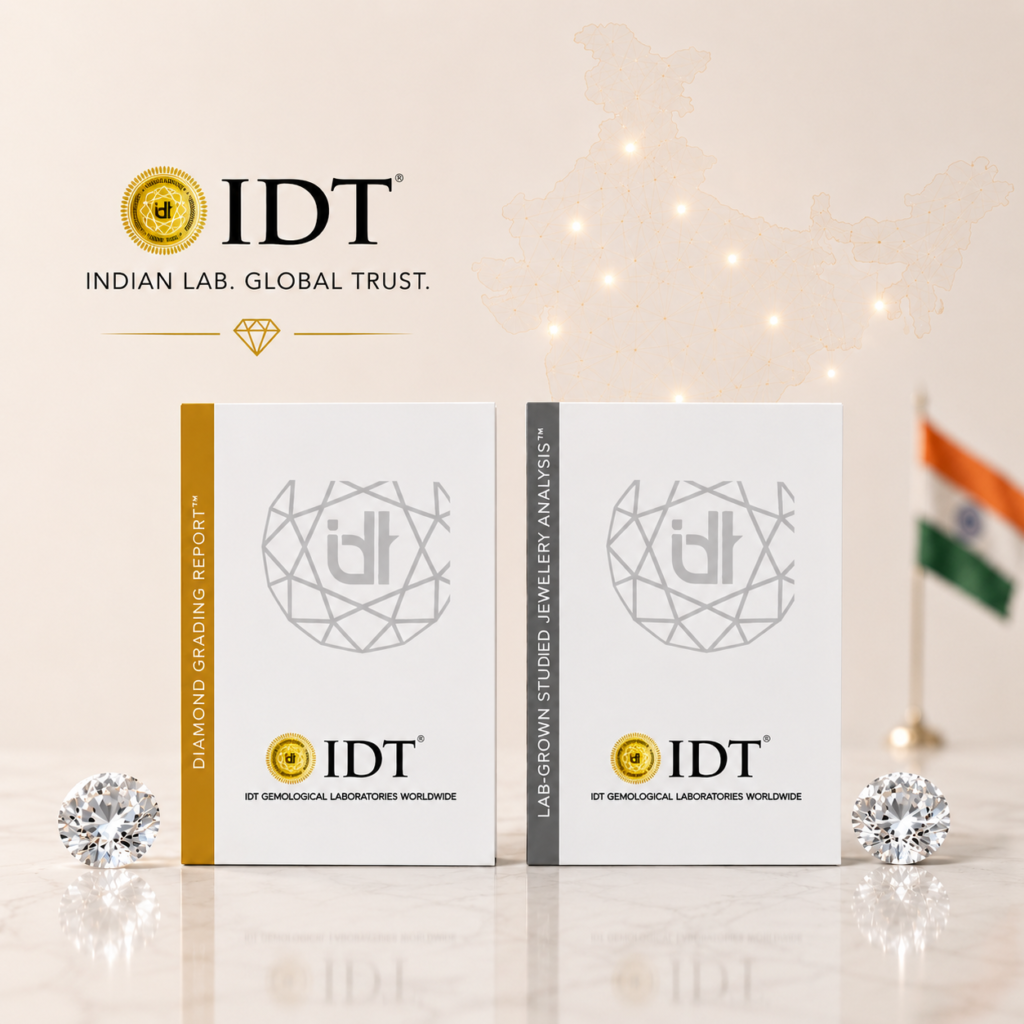
Buying a diamond is one of life’s most meaningful purchases. A diamond certificate, also called a diamond grading report, is the single document that tells you exactly what you’re getting. Here’s everything you need to know before you buy. Whether you’re shopping for an engagement ring, a gift, or an investment stone, you’ve almost certainly heard the phrase “certified diamond.” But what does that actually mean? What does a diamond certificate contain, who issues it, and why does diamond certification in India matter so much in today’s market? At IDT Gemological Laboratories, we’ve assessed and certified thousands of diamonds across India. In this complete beginner’s guide, we break down everything simply, so you can shop with total confidence. What Is a Diamond Certificate? A diamond certificate, officially called a diamond grading report, is an official document issued by an independent gemological laboratory after a thorough scientific examination of a diamond. Think of it as the diamond’s identity card, an unbiased, third party verification of its quality. The certificate does not assign a monetary value to the diamond. Instead, it objectively describes the stone’s physical and optical characteristics using internationally recognised grading standards. This protects you, the buyer, from overpaying and ensures you receive exactly the diamond quality you’re promised. Key point: A diamond certificate is issued by a laboratory, never by the jeweller selling the stone. This independence is what makes the document trustworthy. Always look for a certificate from IDT Gemological Laboratories before making any diamond purchase. What Does a Diamond Grading Report Include? A comprehensive diamond grading report from IDT Gemological Laboratories covers all the characteristics that determine a diamond’s quality and value. Here is what you’ll find: Cut Grades how well the diamond has been faceted and finished, directly determining its brilliance and fire. Ranges from Excellent to Poor. Colour Measures the absence of colour on a D (colourless) to Z (light yellow/brown) scale. The less colour, the rarer and more valuable the stone. Clarity Evaluates internal inclusions and surface blemishes under 10× magnification. Ranges from Flawless (FL) to Included (I3). Carat Weight The precise weight of the diamond, measured to the nearest hundredth of a carat. Directly impacts value alongside the other three Cs. Beyond the 4Cs, a complete IDT diamond grading report also includes: ● Diamond shape and cutting style (e.g. Round Brilliant, Princess, Oval) ● Measurements, precise dimensions in millimetres ● Polish and symmetry grades ● Fluorescence (whether the stone glows under UV light and its intensity) ● A plotting diagram showing the exact location of inclusions ● A unique certificate number for verification ● Security features to prevent forgery Why Is Diamond Certification Important? Without a diamond certificate, you’re essentially taking the seller’s word for the quality of your stone. That’s a significant risk, especially given that two diamonds that look nearly identical to the naked eye can differ enormously in value based on their grading. Here’s what diamond certification protects you from: Misrepresentation A seller may describe a diamond as “VS1 clarity” when it’s actually SI2. A certificate removes all ambiguity. Synthetic or Treated Stones Certified labs test for synthetic diamonds and treatments like laser drilling or fracture filling. Price Manipulation With a grading report in hand, you can accurately compare prices across jewellers and ensure you’re paying a fair market rate. Resale and Insurance Problems Certified diamonds are far easier to insure and resell, as their characteristics are documented by an independent authority. Diamond Certification in India: What You Need to Know India is the world’s largest diamond cutting and polishing hub. Over 90% of the world’s diamonds are processed in Surat alone. This makes access to credible diamond certification in India not just important, but essential. As Indian consumers become more sophisticated, demand for independently certified diamonds has surged. Buyers in cities like Mumbai, Delhi, Surat, Chennai, and Hyderabad increasingly insist on seeing a diamond grading report before purchase, and rightfully so. IDT Gemological Laboratories is one of India’s premier diamond certification bodies, combining internationally aligned grading methodology with deep local expertise. Our reports are recognised and trusted by jewellers, traders, and consumers across the country. When you see an IDT certificate, you can buy with complete confidence. How to Read a Diamond Certificate Receiving a diamond certificate for the first time can feel overwhelming. Here’s a simple walkthrough of how to read an IDT diamond grading report: Section on the Certificate What It Tells You What to Look For Report Number Unique ID for the certificate Verify online at IDT’s portal Shape & Style The diamond’s shape Round Brilliant = most brilliant Measurements Dimensions in mm Confirms size matches listing Carat Weight Exact weight Cross check with seller’s claims Colour Grade D to Z colour scale D to F = colourless, most valuable Clarity Grade FL to I3 inclusion scale VS1 to VS2 = excellent value sweet spot Cut Grade Excellent to Poor Prioritise Excellent or Very Good Polish & Symmetry Finishing quality Excellent / Very Good = best Fluorescence UV glow intensity None to Faint preferred for most buyers Clarity Plot Map of inclusions Fewer markings = cleaner stone Certified vs. Uncertified Diamonds You may encounter uncertified diamonds priced attractively lower than certified stones. Here’s why that discount rarely benefits you: ● You cannot independently verify the quality claims made by the seller ● Resale value is significantly lower without documentation ● Insurance providers often require certification for high value stones ● The risk of purchasing a synthetic, treated, or misrepresented stone is substantially higher The small premium paid for a certified diamond is almost always recovered in peace of mind, accurate pricing, and resale value. Always ask for the IDT diamond grading report. Frequently Asked Questions Is a diamond certificate the same as a diamond appraisal? No. A diamond certificate, or grading report, objectively describes the diamond’s quality characteristics. An appraisal assigns a monetary value, often for insurance purposes. You typically need both, the certificate first, then an appraisal based on it. Can I get an
7 Things to Check Before Buying a Diamond

Buying a diamond is exciting. Whether it is for an engagement ring, a wedding gift, or a piece of jewellery for yourself, it is often a meaningful purchase. But if you have ever tried shopping for diamonds, you already know how confusing it can feel. Different prices, technical terms, and many options can make the process overwhelming. The good news is that you do not need to be a gem expert to make a smart choice. Knowing a few important things before you buy can make the entire experience much easier. Here are 7 things every buyer should check before purchasing a diamond. 1. Check if the Diamond Is Certified One of the first questions you should ask a jeweller is simple: Does this diamond come with a certificate? A diamond certificate is issued by an independent gemological laboratory after the stone has been examined carefully. It confirms the authenticity of the diamond and provides important details about its quality. Laboratories such as IDT Gemological Laboratories Worldwide test diamonds using advanced gemological equipment and provide grading reports that help buyers understand exactly what they are purchasing. Without certification, it becomes much harder to verify the true characteristics of a diamond. 2. Learn the Basics of the 4Cs You will often hear jewellers talk about the 4Cs. These are the main factors used to evaluate diamonds. Cut affects how well the diamond reflects light and sparkles. Color refers to how colorless the diamond appears. Clarity describes natural inclusions or tiny marks within the stone. Carat weight tells you how large the diamond is. These four elements together determine the overall quality and value of a diamond. A grading report from IDT Gemological Laboratories Worldwide explains these characteristics clearly so buyers can compare diamonds more easily. 3. Confirm Whether the Diamond Is Natural or Lab Grown Many buyers today are surprised to learn that diamonds can have different origins. Natural diamonds form deep within the Earth over millions of years. Lab grown diamonds are created in controlled laboratory environments using advanced technology. Both are real diamonds, but they are not the same in terms of origin and pricing. This is why transparency is important. A certification report from IDT Gemological Laboratories Worldwide clearly identifies whether the diamond is natural or laboratory grown. Knowing this helps buyers make an informed choice. 4. Pay Attention to the Cut When people think about diamonds, they often focus only on size. But experienced gemologists will tell you that cut quality has a huge impact on how a diamond looks. A well cut diamond reflects light beautifully and appears more brilliant. On the other hand, a poorly cut diamond may look dull even if it is larger. Professional grading laboratories such as IDT Gemological Laboratories Worldwide evaluate cut quality carefully during the certification process. 5. Take Time to Compare Options It is rarely a good idea to buy the first diamond you see. Even if two diamonds look very similar, they can have different grades in clarity, color, or cut. Comparing a few options can help you understand the differences in quality and price. Certification reports from a trusted laboratory like IDT Gemological Laboratories Worldwide make these comparisons much easier because the diamonds have been graded using professional standards. 6. Look at the Jewellery Craftsmanship The diamond is important, but the jewellery itself also matters. Take a close look at the setting, the finishing, and the overall craftsmanship of the piece. A well designed setting can enhance the appearance of the diamond while also keeping it secure. Good craftsmanship ensures that the jewellery will remain durable and comfortable to wear over time. 7. Ask for Proper Documentation Before completing the purchase, make sure the jeweller provides proper documentation. Your invoice should include important information such as the diamond’s weight, the type of diamond, and certification details. Keeping these records is helpful for future verification, resale, or insurance purposes. When a diamond comes with certification from IDT Gemological Laboratories Worldwide, buyers have additional assurance that the stone has been independently tested and graded. Final Thoughts Buying a diamond does not have to be complicated. A little awareness can make a big difference when choosing something so valuable. Checking certification, understanding the 4Cs, confirming the diamond’s origin, and comparing options are simple steps that help buyers make confident decisions. Most importantly, always look for diamonds that have been independently tested and certified by trusted gemological laboratories such as IDT Gemological Laboratories Worldwide. Certification brings transparency and helps ensure that what you are buying matches what you are being told. A diamond is meant to last a lifetime, so it is worth taking the time to choose wisely.