
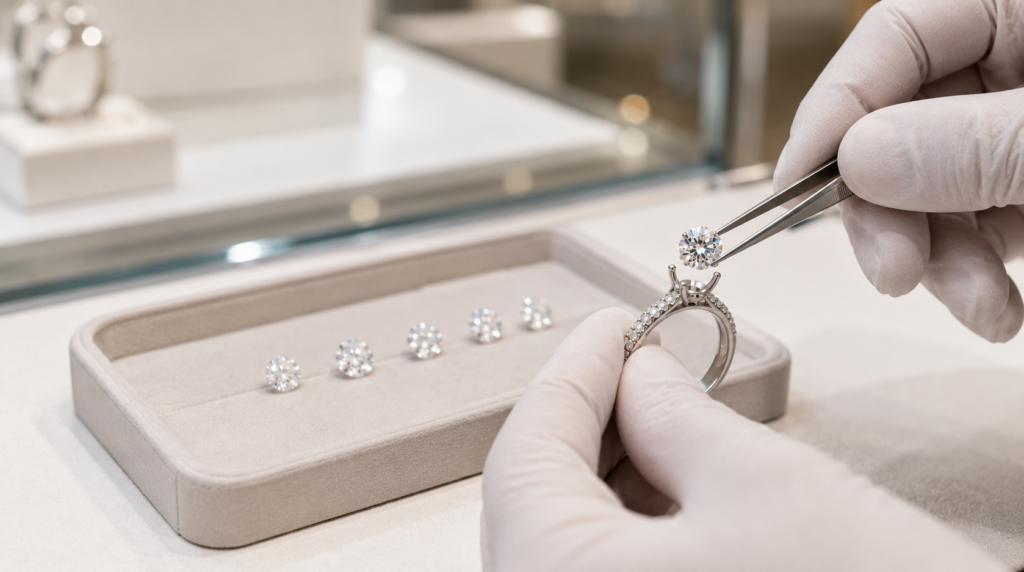
You leave your diamond ring at a jeweller for cleaning, resizing, or a prong repair.
When you collect it a few days later, would you know if it’s the same diamond?
Most diamonds look remarkably similar to the untrained eye. Without an independent record of your diamond’s identifying characteristics, it can be difficult to distinguish one stone from another.
While diamond swapping is uncommon, especially with reputable jewellers, it is a concern many consumers have. Independent diamond certification helps establish a record of the diamond examined by a gemological laboratory, making future verification easier.
In this guide, we’ll explain how laser inscriptions, QR verification, and gemological reports work together to help identify your diamond.
What Is a Diamond Laser Inscription?
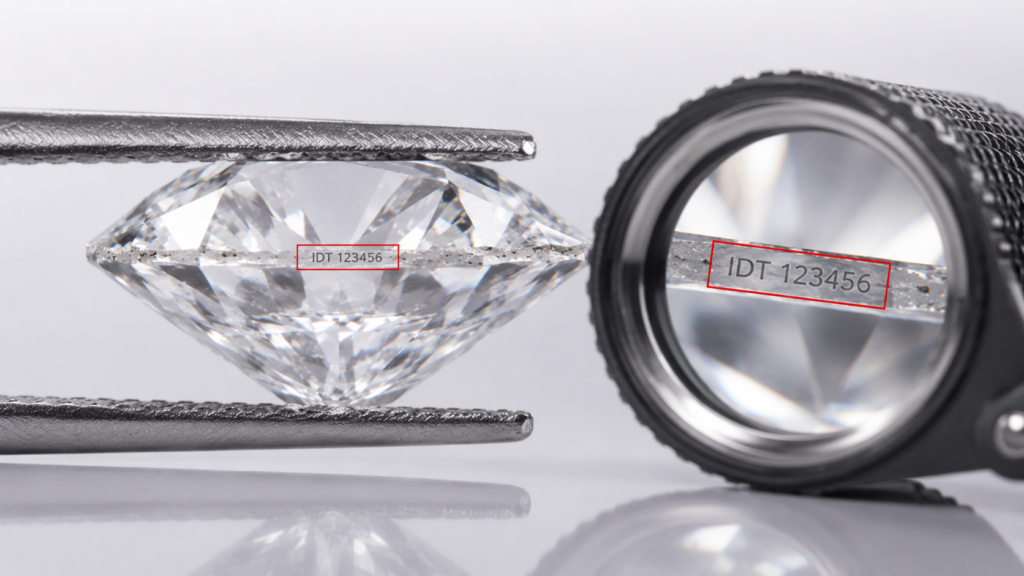
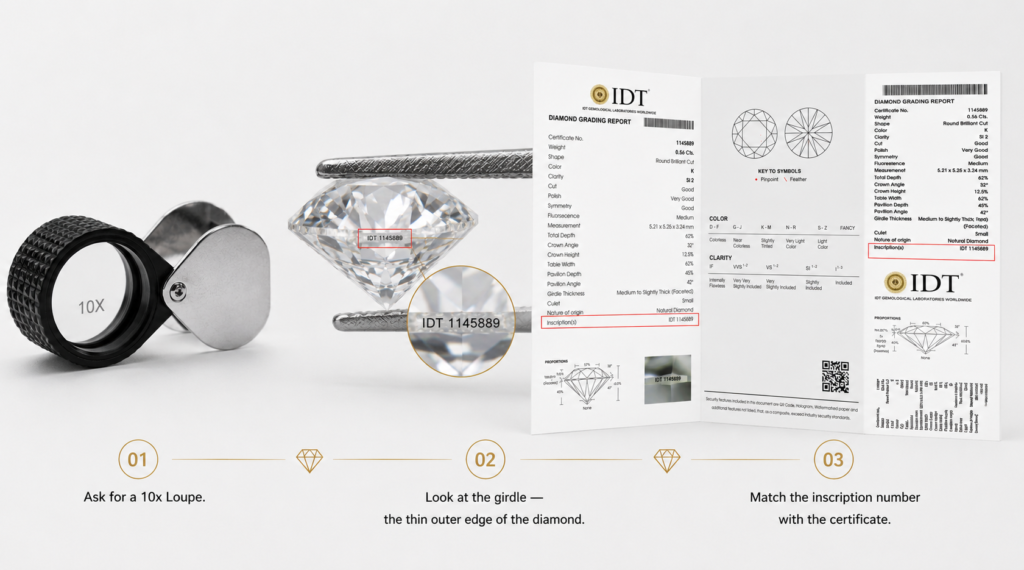
A laser inscription is a microscopic marking engraved on the girdle, the thin outer edge of a diamond.
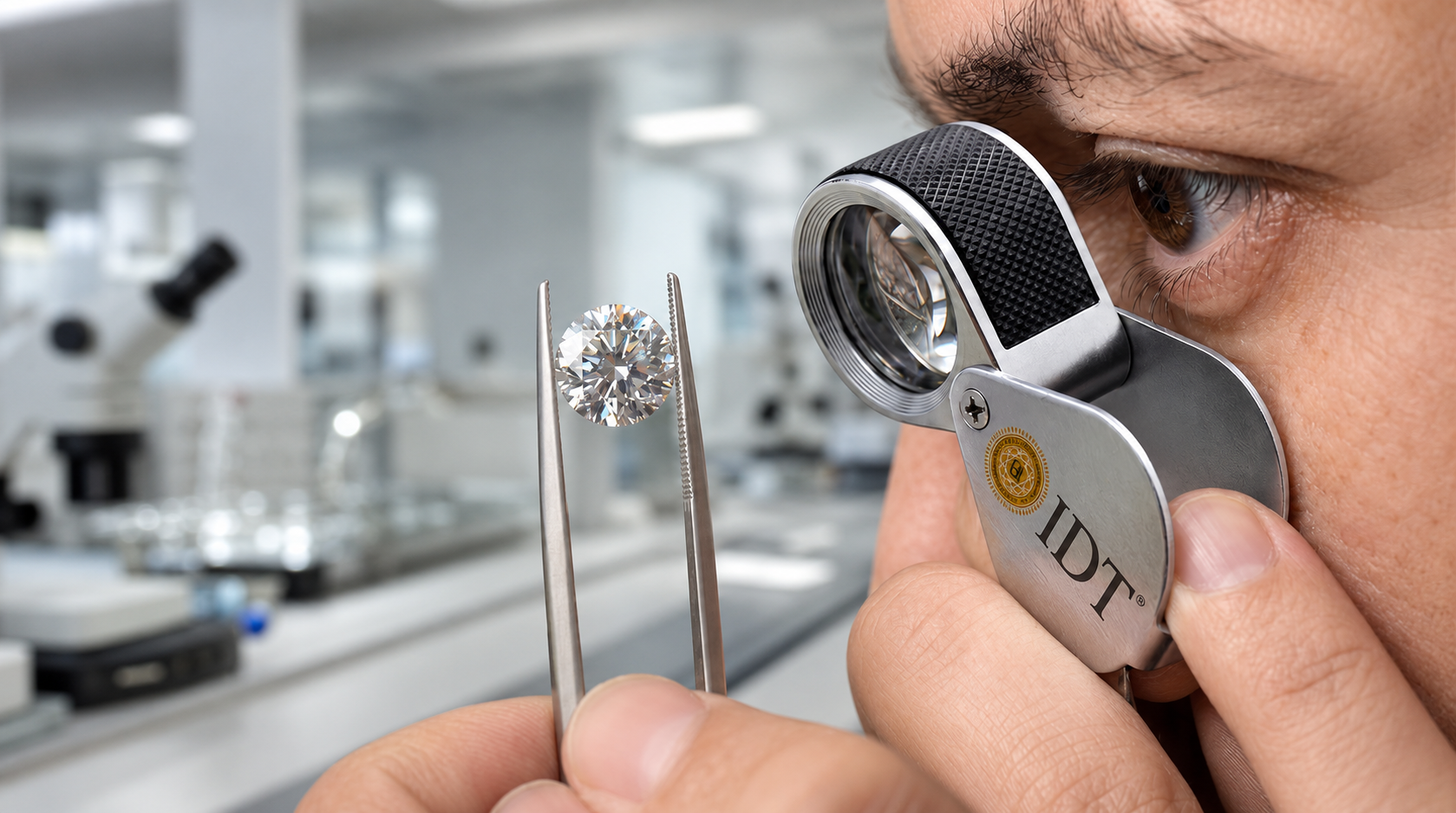
It is not visible to the naked eye and generally requires a jeweller’s microscope or a 10× loupe to view.
Many certified diamonds, particularly larger stones, carry a laser inscription. Whether an inscription is present depends on factors such as the diamond’s size and the laboratory’s certification policy.
When present, the inscription often corresponds to the report number shown on the laboratory certificate.
How Diamond Identification Works
A laboratory report documents several identifying characteristics of a diamond, which may include:
- Carat weight
- Measurements
- Colour and clarity, where applicable
- Plotting or internal inclusion characteristics, depending on the report type
- Photograph, where available
- Laser inscription details, where applicable
Together, these characteristics create a record of the diamond examined at the time of certification.
How Diamond Certification Helps
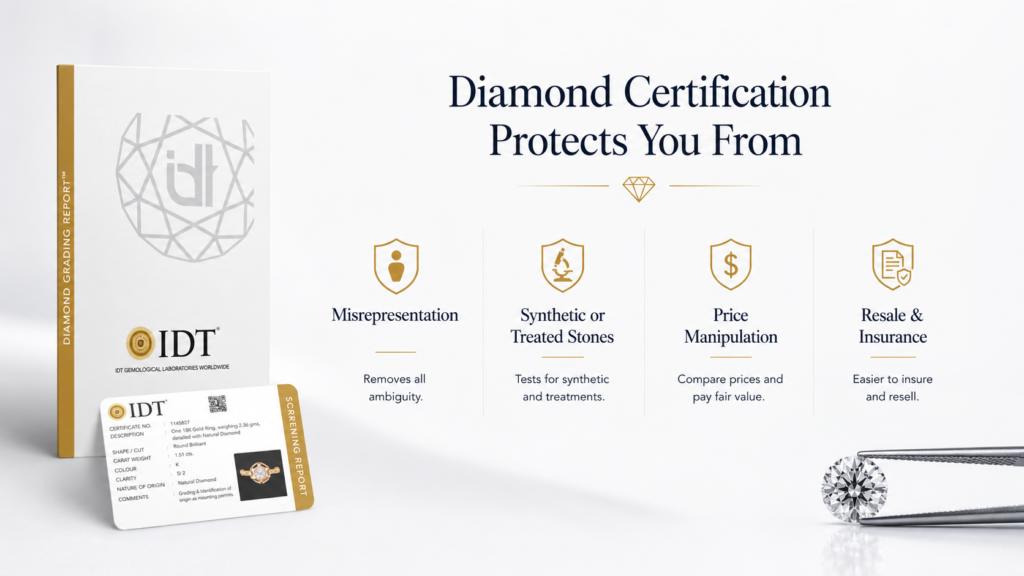
A diamond certificate provides more than grading information.
It also creates an independent reference that can assist with future identification.
Depending on the report, this may include:
- Laboratory report number
- QR verification
- Diamond photograph
- Internal inclusion characteristics
- Laser inscription details, where applicable
Because internal inclusions are naturally occurring, they can help distinguish one diamond from another when documented.
Three Steps Before Leaving Your Jewellery for Service
Before handing over your jewellery for cleaning, repair, or resizing, consider taking a few simple precautions.
1. Keep a Copy of Your Certificate
Store your original laboratory report safely and keep a digital copy for quick reference.
2. Check the Laser Inscription
If your diamond has an inscription, ask the jeweller to show it under magnification before leaving the jewellery.
Make a note of the inscription number.
3. Photograph Your Jewellery
Take clear photographs of the jewellery from multiple angles.
While photographs cannot replace laboratory documentation, they can serve as a useful personal reference.
How to Check Your Diamond After Collection
When you receive your jewellery back:
Verify the Certificate
Use the report number or QR code to access the issuing laboratory’s official verification page.
Confirm that the report details correspond with your jewellery.
Compare Identifying Features
Review the certificate and compare:
- Weight
- Measurements
- Photograph, if available
- Other identifying observations
Confirm the Laser Inscription
Where applicable, view the inscription under magnification and ensure it matches the report number.
What If My Diamond Has No Inscription?
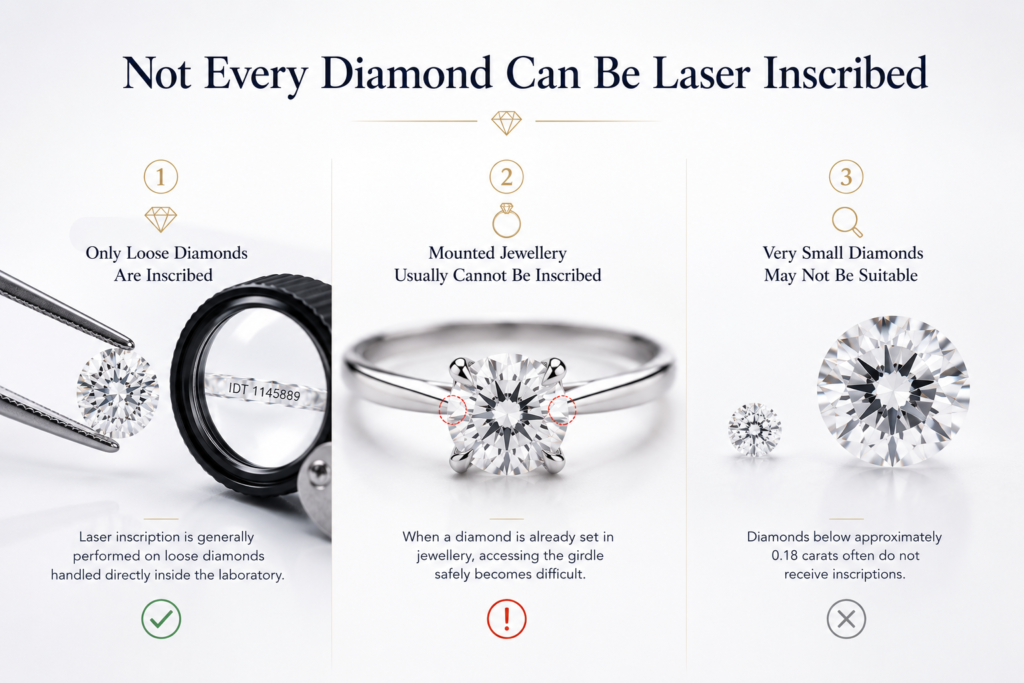
Not every diamond carries a laser inscription.
Smaller diamonds and some older certifications may not include one.
In such cases, laboratories may rely on other identifying characteristics, including:
- Carat weight
- Measurements
- Internal inclusion characteristics
- Photographs, where available
- Other gemological observations
If your diamond has never been independently certified, obtaining a laboratory report can establish a useful reference for the future.
Why IDT Certification Matters
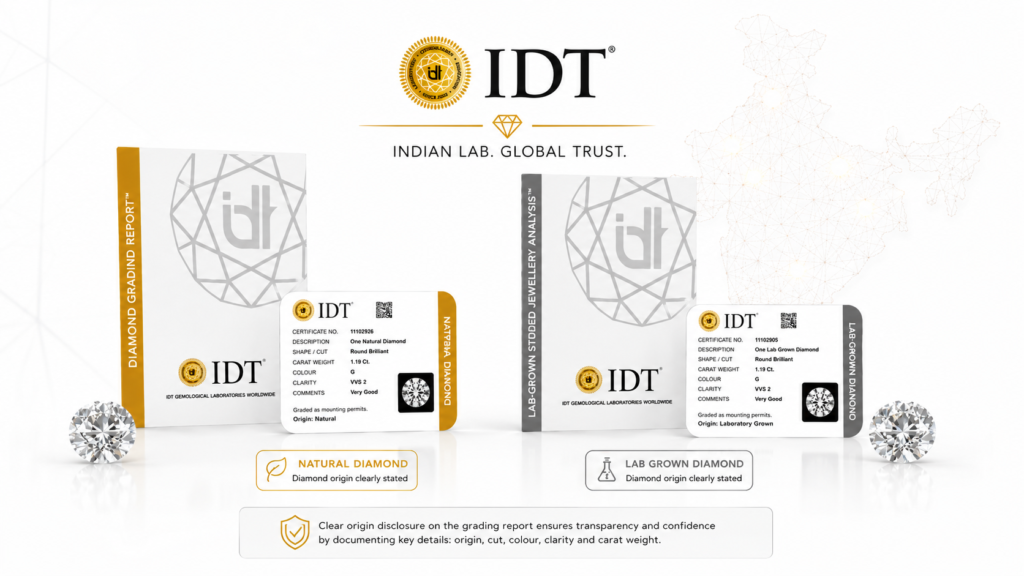
An IDT Diamond Certificate provides an independent and detailed record of the diamond examined by IDT Gemological Laboratories. It documents the diamond’s identifying characteristics, helping you verify and recognise your stone in the future.
IDT Certification can support:
- Future diamond verification
- Insurance and valuation documentation
- Greater confidence during resale
- Transparency when buying or inheriting jewellery
- Peace of mind during repairs, resizing, or cleaning
Whether you are purchasing a new diamond, inheriting jewellery, or leaving a treasured ring with a jeweller, an IDT Certificate provides reliable information and an added level of assurance.
Always insist on IDT Certification.
Frequently Asked Questions
Can laser inscriptions be copied?
In some circumstances, a laser inscription can be recreated if the inscription number is known.
This is one reason laboratories may also document additional identifying characteristics, such as internal inclusions and photographs, where applicable.
Do all certified diamonds have laser inscriptions?
No.
Many laboratories offer laser inscription for eligible diamonds, but policies vary depending on the laboratory and certification service.
What if my diamond was certified years ago?
Older reports may still be useful if they can be verified and accurately match the diamond.
If additional reassurance is needed, the diamond can usually be submitted for a fresh examination.
Can a diamond be identified without a laser inscription?
Yes.
Gemological laboratories can often identify diamonds using a combination of measurements, internal characteristics, and other gemological observations.