
Before a natural diamond reaches a jewellery store, it begins its journey deep within the Earth.
Natural diamonds form under extreme heat and pressure over geological timescales. They are eventually brought closer to the Earth’s surface through volcanic activity and can be recovered from kimberlite pipes, alluvial deposits and even the seabed.
Today, major diamond mines in the world are found across Botswana, Russia, Angola, Canada, South Africa and Lesotho.
From mines producing millions of carats to legendary locations known for enormous or rare coloured diamonds, here are 15 of the world’s most famous diamond mines.
Note: This list considers global importance, production history, famous discoveries and significance to the natural diamond industry. It is not a strict ranking by annual production or reserves.
Top 15 Diamond Mines in the World at a Glance
| Diamond Mine | Country | Famous For |
| Jwaneng | Botswana | One of the richest diamond mines by value |
| Orapa | Botswana | One of the world’s largest open-pit diamond mines |
| Karowe | Botswana | Exceptional diamonds over 1,000 carats |
| Catoca | Angola | Major African diamond production |
| Luele | Angola | Major new diamond project |
| Cullinan | South Africa | The 3,106-carat Cullinan Diamond |
| Venetia | South Africa | Major South African diamond mine |
| Letšeng | Lesotho | Large, high-value white diamonds |
| Gahcho Kué | Canada | Major Canadian diamond production |
| Ekati | Canada | Canada’s first major diamond mine |
| Diavik | Canada | Over 150 million carats produced before closure |
| Aikhal | Russia | Major Yakutian diamond operation |
| Udachny | Russia | Large underground diamond mine |
| Mir | Russia | Iconic giant open-pit mine |
| Argyle | Australia | Famous pink and red diamonds |
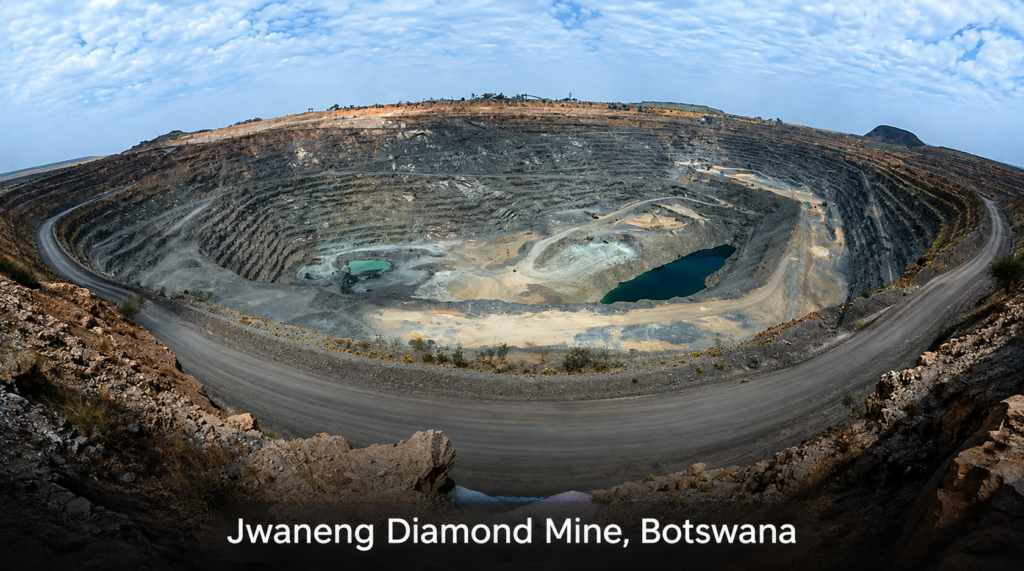
1. Jwaneng Diamond Mine, Botswana
Location: Botswana
Known for: Exceptional diamond value
Jwaneng is one of the most famous diamond mines in the world and is widely described as one of the richest diamond mines by value.
It is operated by Debswana, a partnership between the Government of Botswana and De Beers.
Jwaneng remains a major producer, with De Beers reporting more than 2.2 million carats recovered in Q1 2026 alone.
2. Orapa Diamond Mine, Botswana
Location: Botswana
Known for: Enormous open-pit operation
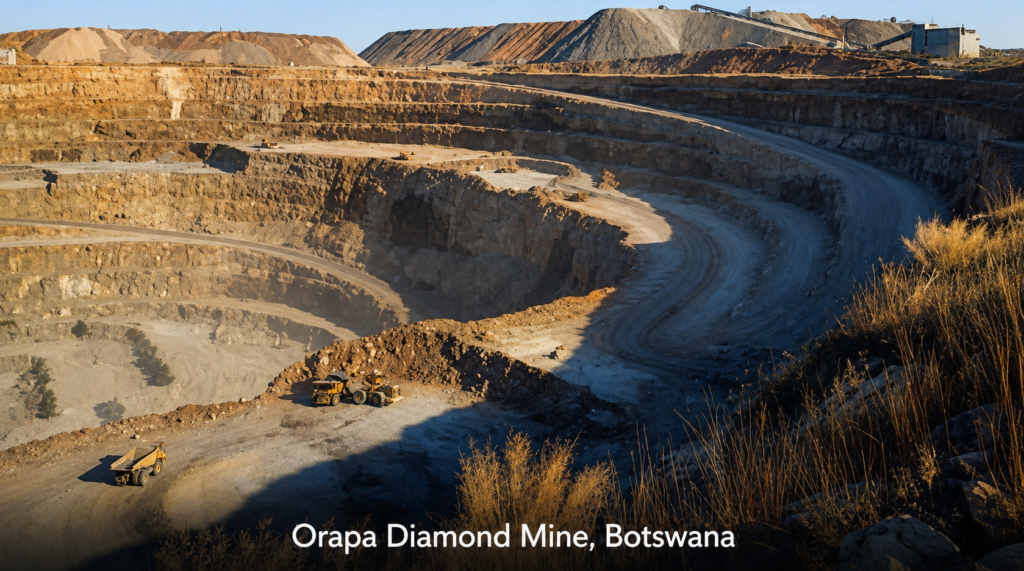
Orapa is another major Debswana mine and one of the world’s best-known open-pit diamond operations.
Mining began in the early 1970s, helping transform Botswana into one of the world’s leading natural diamond-producing countries.
Orapa continues to operate today and remains an important contributor to Botswana’s diamond production.
3. Karowe Diamond Mine, Botswana
Location: Botswana
Known for: Extremely large diamonds
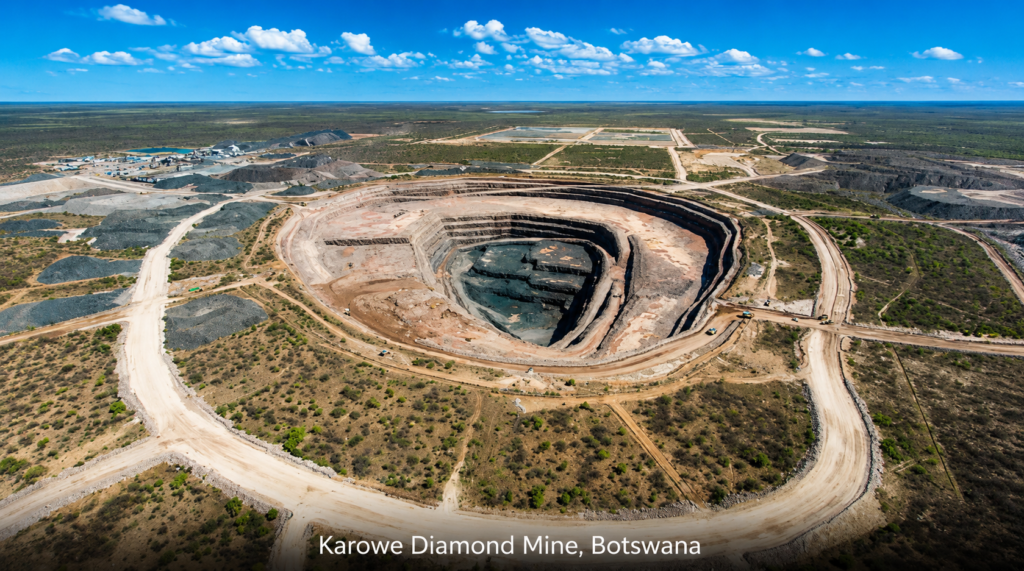
Karowe has become famous for something extraordinary: very large natural diamonds.
According to Lucara Diamond, Karowe is the only diamond mine to have recovered nine diamonds weighing more than 1,000 carats each.
Its major discoveries include the 1,109-carat Lesedi La Rona and the enormous 2,488-carat rough diamond recovered in 2024.
An underground project is being developed to extend Karowe’s mine life to approximately 2038.
4. Catoca Diamond Mine, Angola
Location: Angola
Known for: Large-scale diamond production
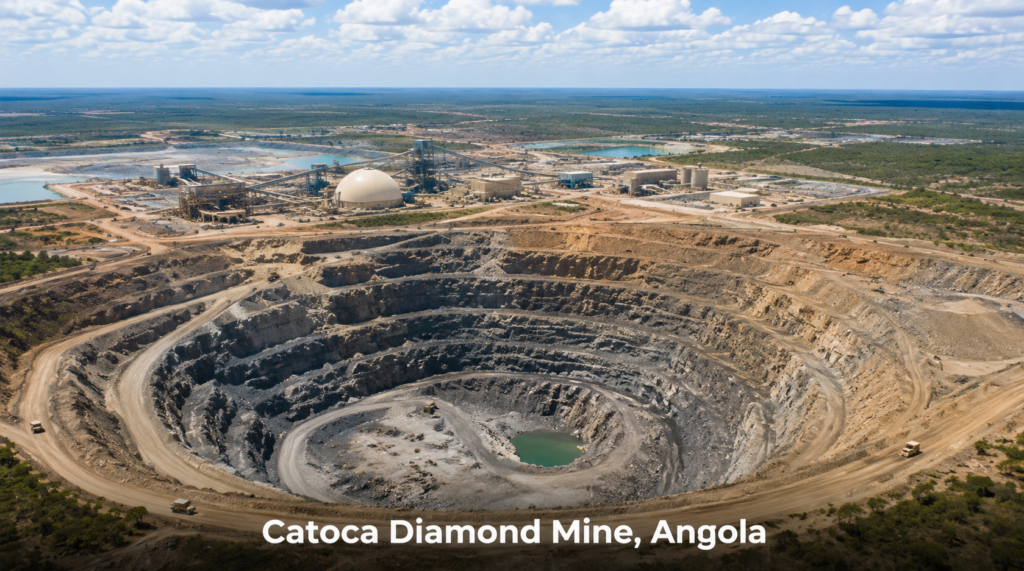
Catoca is one of Africa’s best-known diamond mines and has played a major role in Angola’s emergence as an important natural diamond producer.
Located in Lunda Sul Province, Catoca is a large kimberlite mining operation producing rough diamonds for the international market.
Together with newer projects, it has helped establish Angola as an increasingly important player in global diamond mining.
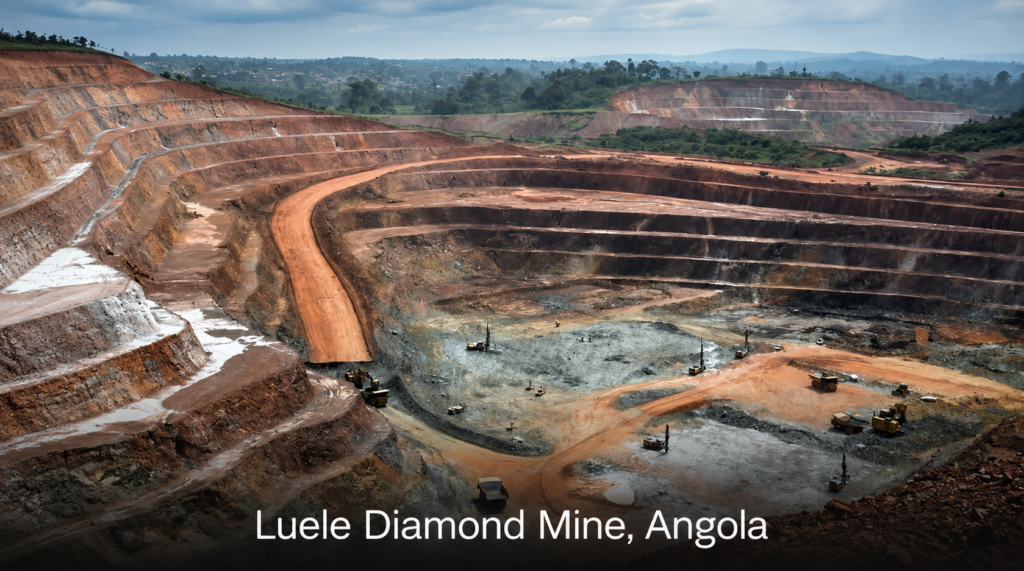
5. Luele Diamond Mine, Angola
Location: Angola
Known for: One of Angola’s major new diamond projects
Luele represents a newer chapter in African diamond mining.
Located in Angola’s diamond-rich Lunda region, the deposit has become increasingly important as the country expands its natural diamond production.
Its development also shows how the geography of global diamond supply continues to evolve beyond long-established mines.
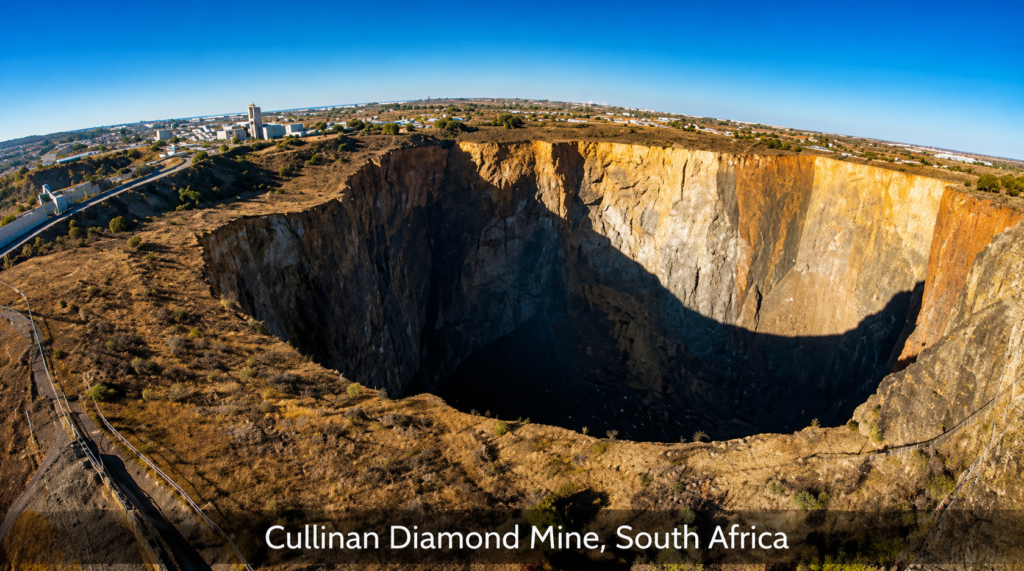
6. Cullinan Diamond Mine, South Africa
Location: South Africa
Known for: The world’s largest gem-quality rough diamond
Few diamond mines have produced a discovery as famous as Cullinan.
In 1905, the mine produced the legendary Cullinan Diamond, weighing approximately 3,106 carats in its rough form.
It remains the largest gem-quality rough diamond ever discovered.
Cullinan is also famous for rare blue diamonds and exceptional Type II diamonds and continues to be an important South African mine.
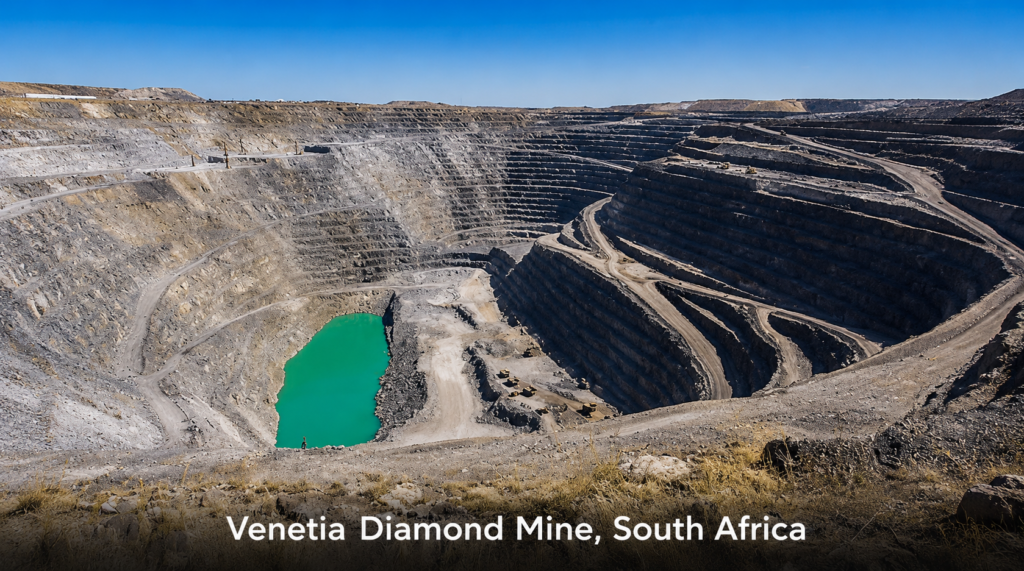
7. Venetia Diamond Mine, South Africa
Location: Limpopo, South Africa
Known for: Major modern South African diamond production
Venetia is one of South Africa’s most important modern diamond mines.
The operation has been transitioning from open-pit to underground mining, with underground production beginning in 2023.
De Beers reported strong underground production during the first half of 2026, although it has proposed a two-year production pause beginning in the second half of 2026 as part of changes responding to diamond-market conditions.
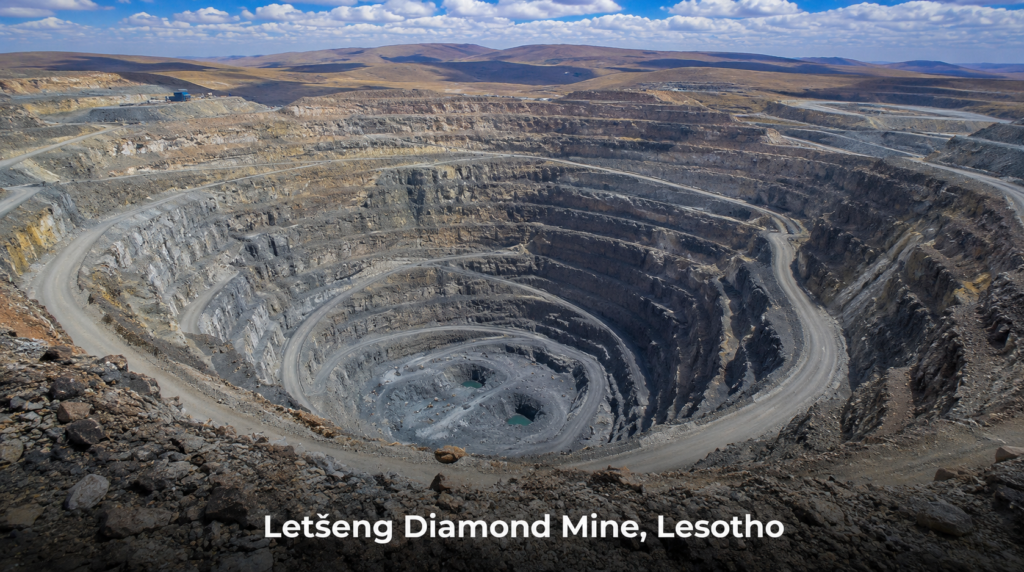
8. Letšeng Diamond Mine, Lesotho
Location: Lesotho
Known for: Large, high-quality white diamonds
Located high in the mountains of Lesotho, Letšeng has built a reputation for producing exceptional large diamonds.
Gem Diamonds describes Letšeng as the highest average dollar-per-carat kimberlite diamond mine in the world.
The mine continues to produce notable stones. In June 2026, it recovered an exceptional 346.99-carat Type II white diamond.
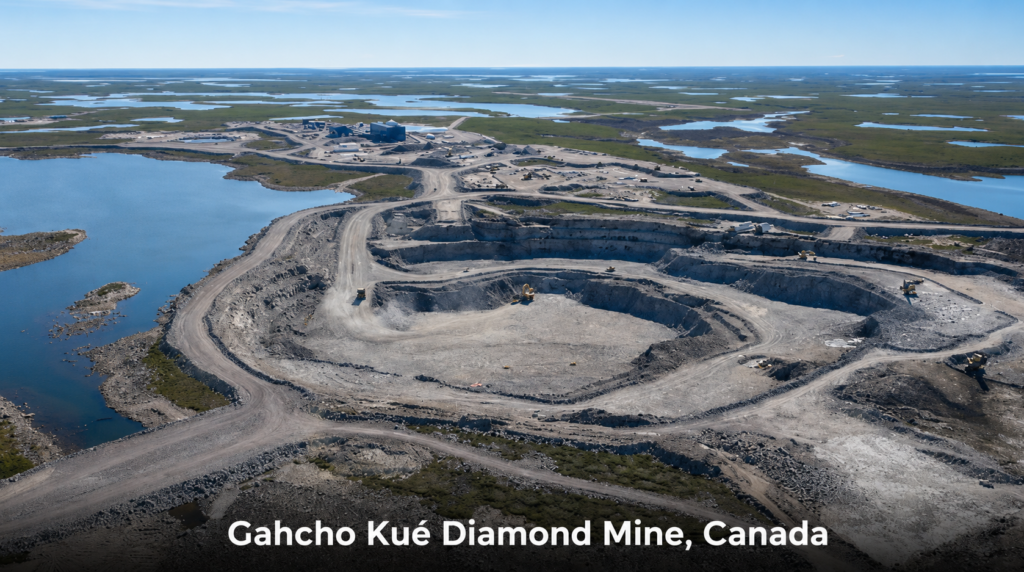
9. Gahcho Kué Diamond Mine, Canada
Location: Northwest Territories, Canada
Known for: Major Canadian diamond production
Gahcho Kué is one of Canada’s important operating diamond mines.
Located in the remote Northwest Territories, it is jointly owned by De Beers and Mountain Province Diamonds.
Production increased strongly during the first half of 2026 as higher-grade ore from a new mining area was processed.
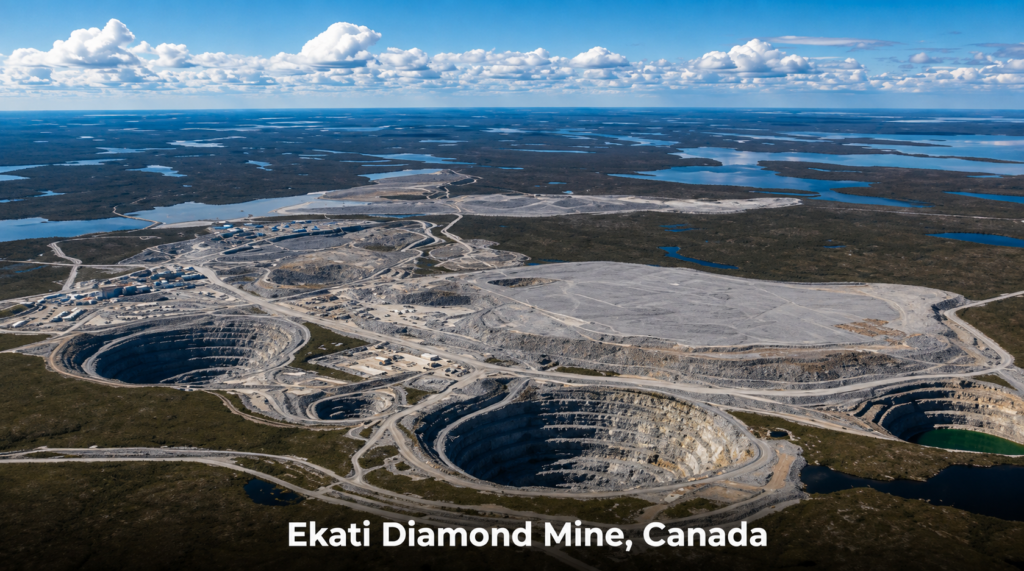
10. Ekati Diamond Mine, Canada
Location: Northwest Territories, Canada
Known for: Canada’s first major diamond mine
Ekati transformed Canadian diamond history when commercial production began in 1998.
It became Canada’s first major diamond mine and helped prove that the country’s remote northern region contained commercially important diamond deposits.
Its current mine plan runs to around 2028, while further projects could potentially extend mining considerably longer.
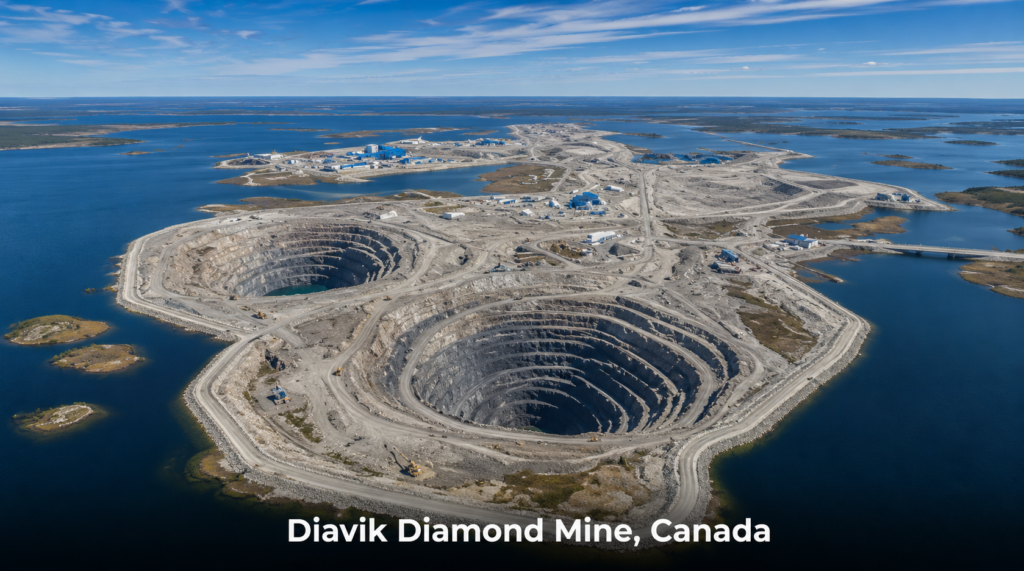
11. Diavik Diamond Mine, Canada
Location: Northwest Territories, Canada
Known for: More than 150 million carats produced
Diavik was one of Canada’s most significant diamond mines.
But unlike many older lists of famous diamond mines, Diavik should now be described as a closed mine.
After 23 years of operations and more than 150 million carats of rough diamonds, Diavik produced its final diamonds in March 2026.
Its closure marks the end of an important chapter in Canadian diamond mining.
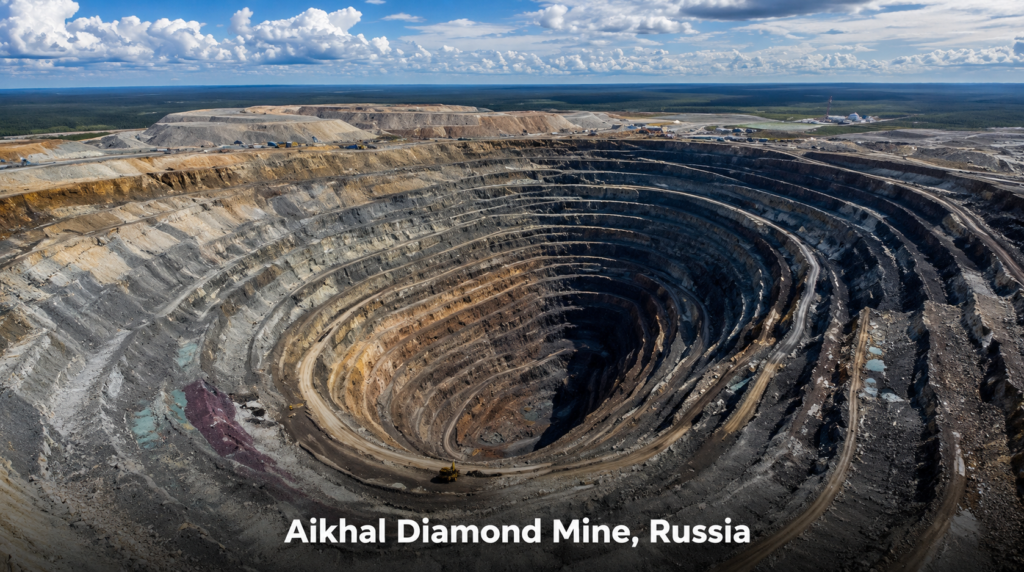
12. Aikhal Diamond Mine, Russia
Location: Yakutia, Russia
Known for: Major Russian diamond production
Aikhal is part of Russia’s enormous diamond-mining industry in Yakutia.
The region contains several important kimberlite deposits and has helped make Russia one of the world’s largest natural diamond producers.
ALROSA lists Aikhal as an underground operation with a target production capacity of approximately 3 million carats annually.
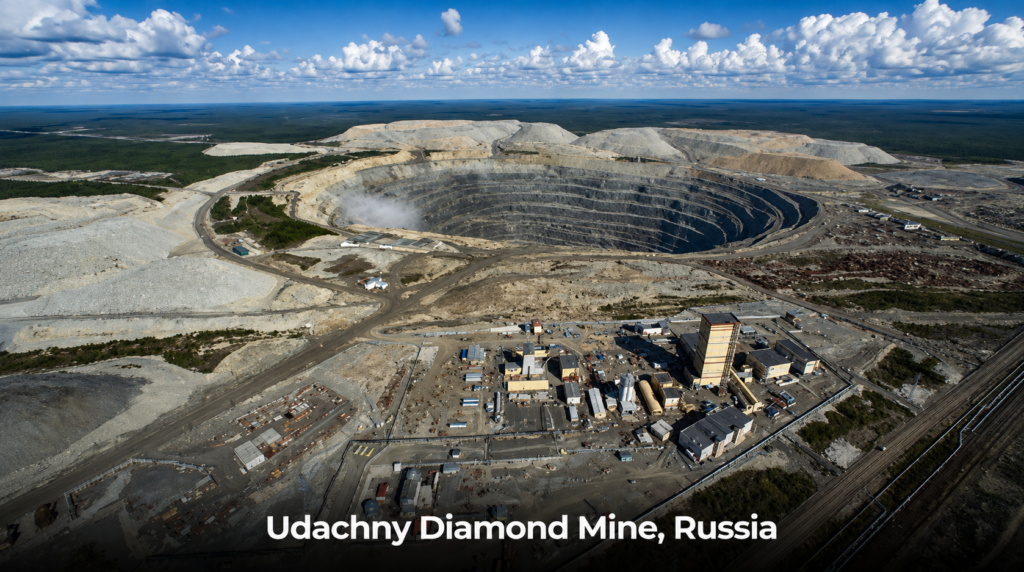
13. Udachny Diamond Mine, Russia
Location: Yakutia, Russia
Known for: Large underground diamond resources
Udachny is another major Russian diamond operation.
After decades of open-pit mining, operations transitioned underground.
ALROSA lists the Udachny underground mine with a target production capacity of around 4 to 5 million carats per year, highlighting its continued importance to Russia’s natural diamond industry.
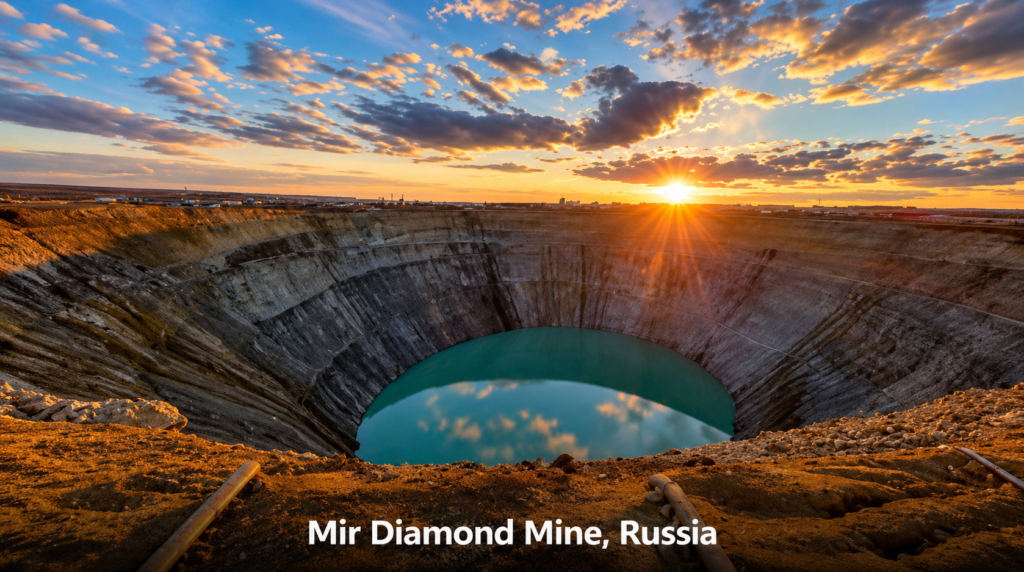
14. Mir Diamond Mine, Russia
Location: Mirny, Russia
Known for: Its enormous open pit
The Mir Mine is one of the most visually recognisable diamond mines ever created.
Its huge open pit became an icon of Russian diamond mining.
Mining at the original Mir pipe was suspended following an accident in 2017, and the deposit remains under conservation while future underground development is considered.
ALROSA’s long-term strategy includes the proposed Mir-Gluboky underground project, with production currently targeted for 2034.
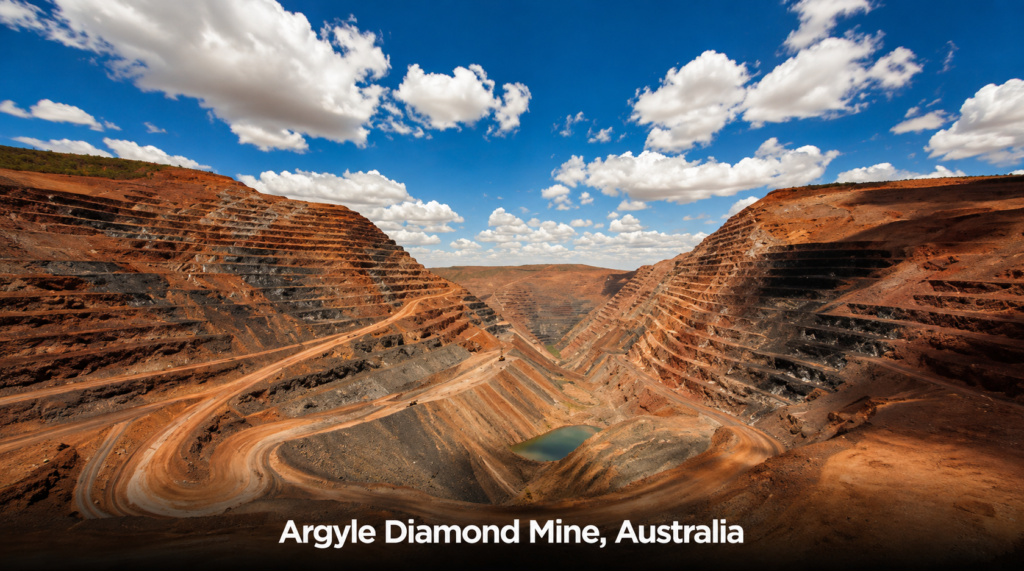
15. Argyle Diamond Mine, Australia
Location: Western Australia
Known for: Rare pink diamonds
Argyle changed the global coloured-diamond market.
The mine became world-famous for its distinctive pink, red and purple diamonds, some of which rank among the rarest coloured diamonds in the world.
Argyle produced more than 865 million carats of rough diamonds during approximately 37 years of operations.
However, it is important to note that Argyle is no longer an operating diamond mine. Mining ended in November 2020.
Its pink diamonds continue to make Argyle one of the most famous names in diamond history.
What About Diamond Mines in India?
India has an extraordinary place in diamond history.
For centuries, the Indian subcontinent was the world’s principal known source of diamonds, with historic mining regions producing stones that eventually entered royal collections around the world.
Today, India’s modern diamond-mining activity is much smaller.
The country’s best-known modern diamond mine is the Majhgawan Diamond Mine near Panna in Madhya Pradesh.
India may no longer be one of the world’s largest diamond-mining countries, but it remains deeply important to the global diamond story, particularly through its modern diamond cutting and polishing industry.
How Are Diamonds Mined?
Not every diamond is recovered in the same way.
The main methods include:
Open-pit mining: Diamond-bearing rock is extracted from large surface excavations.
Underground mining: Tunnels and shafts are used to reach deeper diamond-bearing ore.
Alluvial mining: Diamonds that have been transported by rivers are recovered from sediments and gravel.
Marine mining: Diamond-bearing material is recovered from the seabed, particularly along parts of the southern African coastline.
Once recovered, rough diamonds are sorted before entering the cutting, polishing and jewellery manufacturing process.
From Diamond Mine to IDT Certification
The mine may tell us where the journey of a natural diamond began, but it does not tell us everything about the polished diamond in front of us.
Diamonds from the same mine can differ significantly in carat weight, colour, clarity, proportions and other characteristics.
Today’s jewellery market also includes both natural and laboratory-grown diamonds, which can appear extremely similar to the unaided eye.
This is where professional gemological testing becomes important.
At IDT Gemological Laboratories Worldwide, diamonds are examined using gemological testing and advanced analytical methods. Depending on the type of report, an IDT Diamond Report can provide important information including:
- Natural or laboratory-grown identification
- Carat weight
- Colour
- Clarity
- Measurements and proportions
- Fluorescence
- Other identifying characteristics

A diamond’s mine may be part of its origin story.
IDT Certification helps you understand the diamond itself.
Always insist on IDT Certification.
Frequently Asked Questions About Diamond Mines
Which is the richest diamond mine in the world?
Botswana’s Jwaneng Diamond Mine is widely recognised as one of the richest diamond mines in the world by the value of the diamonds it produces.
Which is the largest diamond mine in the world?
There is no single answer because mines can be compared by physical area, production, reserves or value. Orapa is famous for its enormous open-pit operation, while Jwaneng is particularly important in terms of value.
Which countries have the most important diamond mines?
Russia, Botswana, Angola, Canada and South Africa are among the world’s most important natural diamond-producing countries.
Does India have a diamond mine?
Yes. The best-known modern diamond mine in India is the Majhgawan Diamond Mine near Panna in Madhya Pradesh.
Which diamond mine produced the largest diamond?
The Cullinan Mine in South Africa produced the approximately 3,106-carat Cullinan Diamond in 1905, the largest gem-quality rough diamond ever discovered.
Which diamond mine is famous for pink diamonds?
Australia’s Argyle Mine became internationally famous for rare natural pink diamonds. The mine closed in November 2020.
Is the Diavik Diamond Mine still operating?
No. Rio Tinto confirmed that Diavik produced its final diamonds in March 2026 after 23 years of operation and more than 150 million carats of production.