
If an astrologer recommends a gemstone for a particular planet, you may come across several stones associated with the same planet.
For example, yellow sapphire is traditionally associated with Jupiter, while citrine and yellow topaz may also be suggested as substitutes by some astrologers.
But these are different gemstones with different identities and values.
That is why, apart from knowing which gemstone has been prescribed, it is equally important to know what gemstone you are actually buying.
In Vedic astrology, nine primary gemstones are traditionally associated with the Navagrahas. These are commonly referred to as Navratna gemstones or Navagraha gemstones.
This guide explains the primary planetary gemstones, commonly suggested substitutes and how gemstone certification can help you verify what you are buying.
Important: IDT does not advise which gemstone a person should wear for astrological purposes. The associations mentioned below reflect traditional Vedic astrology practices. Always consult your astrologer for a personal recommendation.
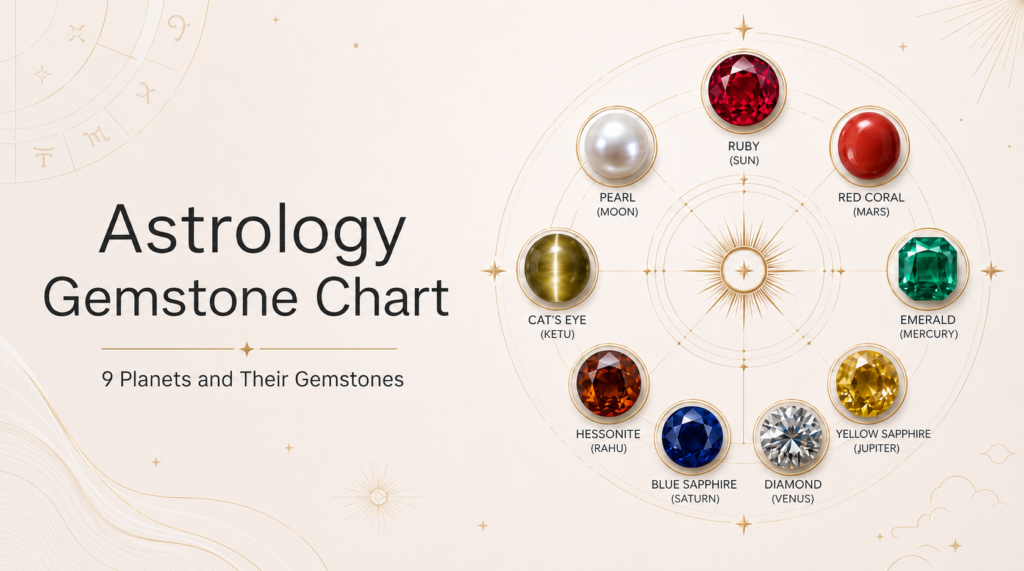
Complete Astrology Gemstone Chart: 9 Planets and Their Gemstones
| Planet | Primary Gemstone | Common Name |
| Sun | Ruby | Manik |
| Moon | Pearl | Moti |
| Mars | Red Coral | Moonga |
| Mercury | Emerald | Panna |
| Jupiter | Yellow Sapphire | Pukhraj |
| Venus | Diamond | Heera |
| Saturn | Blue Sapphire | Neelam |
| Rahu | Hessonite Garnet | Gomed |
| Ketu | Chrysoberyl Cat’s Eye | Lehsunia |
These nine gemstones make up the traditional Navratna gemstone system.
However, an astrologer may sometimes recommend a substitute stone depending on the individual’s horoscope, requirements or budget.
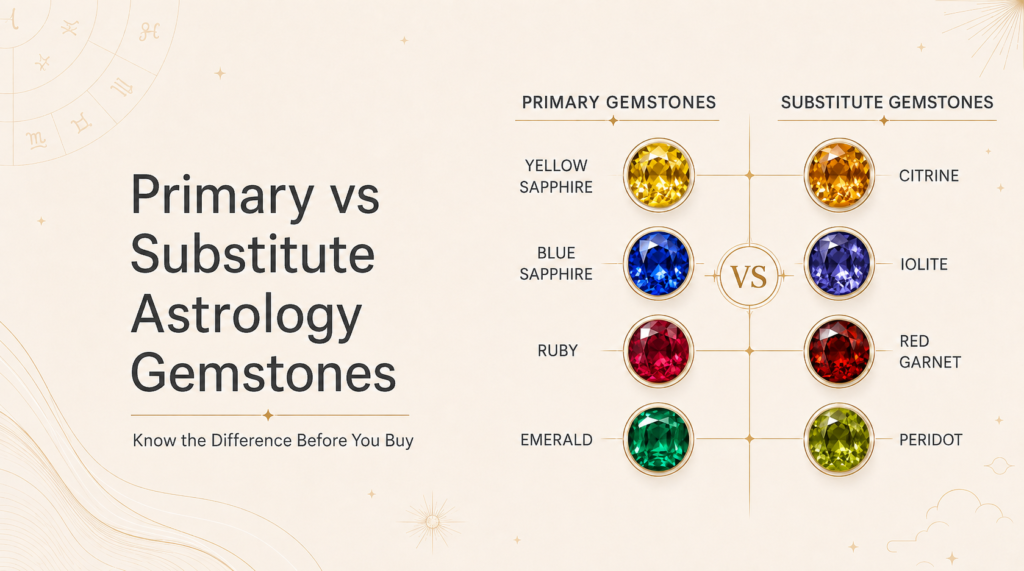
Primary vs Substitute Astrology Gemstones
A primary gemstone is the stone traditionally associated with a particular planet in the Navratna system.
A substitute gemstone is an alternative that some astrologers may recommend instead of the primary gemstone.
Examples include:
- Jupiter: Yellow sapphire is the primary gemstone. Citrine or yellow topaz may be suggested as substitutes.
- Saturn: Blue sapphire is primary. Iolite or amethyst may be suggested as substitutes.
- Sun: Ruby is primary. Red garnet or red spinel may be suggested as substitutes.
- Mercury: Emerald is primary. Peridot or green onyx may be suggested as substitutes.
- Venus: Diamond is primary. White sapphire or white zircon may be suggested as substitutes.
Substitute recommendations can vary between astrologers, so always follow the prescription given specifically to you.
Where the Problem Begins
The issue is not necessarily buying a substitute gemstone.
The issue is buying one gemstone while being told it is another.
For example, if you knowingly purchase citrine as a substitute for yellow sapphire and pay accordingly, the transaction is transparent.
But if you are sold citrine as yellow sapphire, you are not receiving the gemstone represented to you at the time of purchase.
That is where independent gemstone certification becomes important.
Why Knowing the Exact Gemstone Matters
Many coloured gemstones can appear similar to an untrained eye.
A yellow sapphire and citrine, for example, may both appear yellow, but they belong to completely different mineral species.
Similarly, natural and synthetic gemstones may look very similar without proper gemological testing.
Visual appearance alone therefore cannot always confirm:
- The exact gemstone species
- Whether it is natural or synthetic
- Whether certain treatments have been detected
- Whether the gemstone matches what was represented at purchase
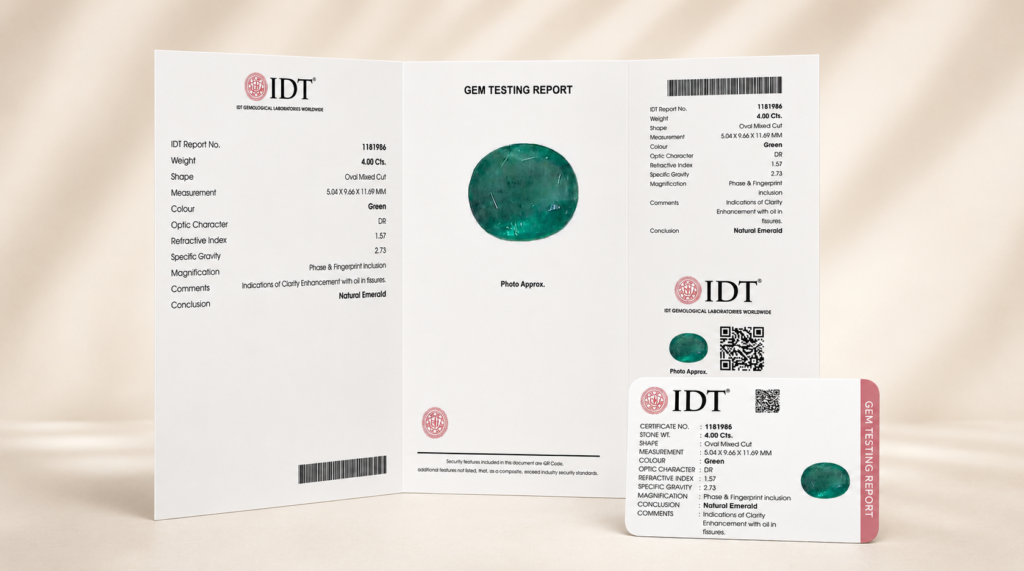
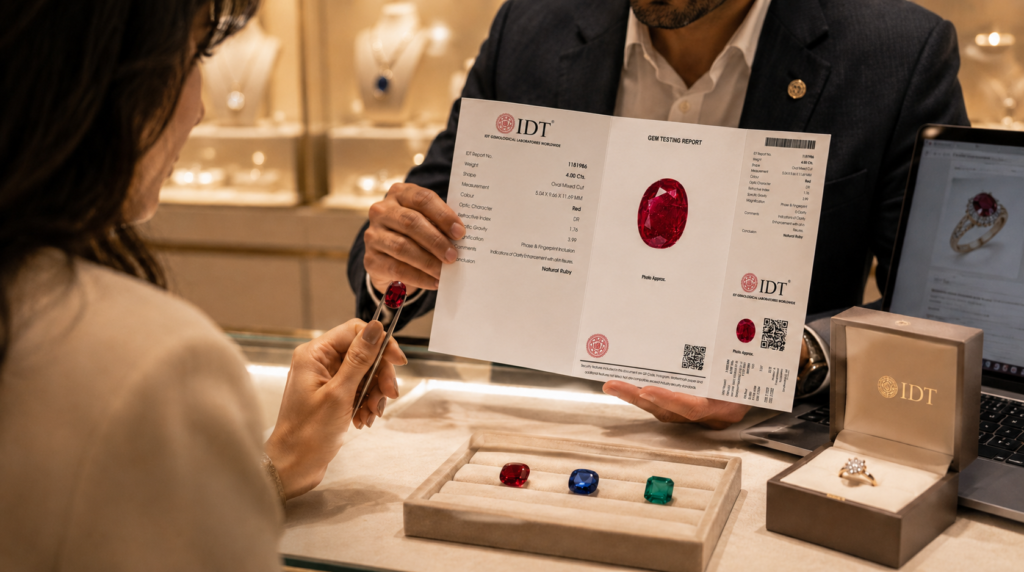
A gemological laboratory examines the gemstone using professional testing methods and records the findings on a report.
How IDT Gemstone Certification Helps
IDT Gemological Laboratories independently tests gemstones and reports their gemological characteristics.
IDT does not decide whether a gemstone is astrologically suitable for you.
Instead, certification helps answer a different question:
What gemstone do you actually have?
For example, testing can help distinguish between:
- Yellow sapphire and citrine
- Ruby and red garnet
- Emerald and other green gemstones
- Natural and synthetic gemstones
- Gemstones with or without detectable treatment indications
Once you know what the gemstone is, you can compare the report with:
- What the seller represented to you
- What you paid for
- What your astrologer prescribed
Learn more about Gemstone Certification.
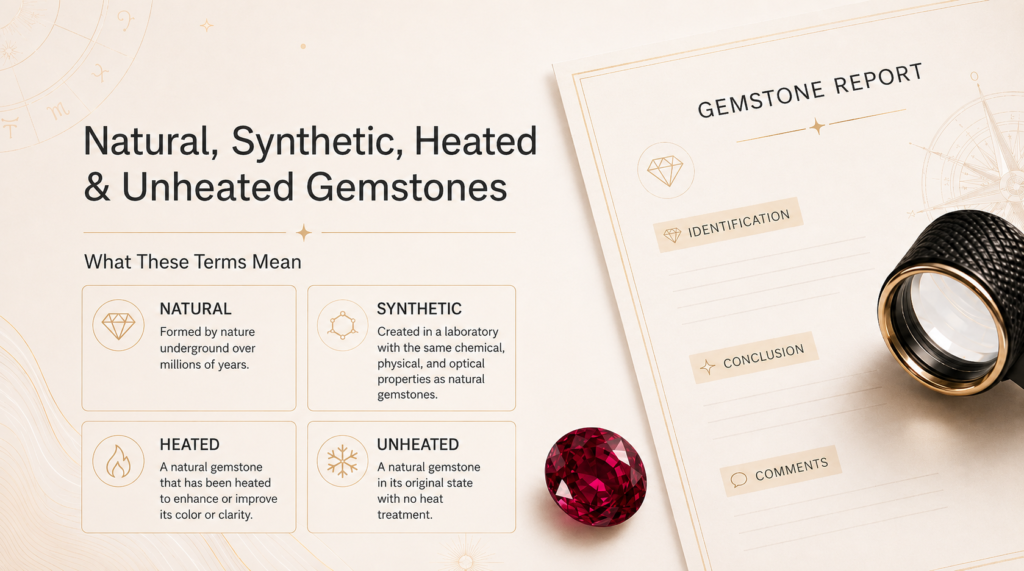
Natural, Synthetic, Heated and Unheated Gemstones
When purchasing an astrology gemstone, you may frequently hear terms such as natural, synthetic, heated and unheated.
These terms should not be used interchangeably.
Natural Gemstone
A natural gemstone has formed through geological processes rather than being manufactured in a laboratory.
Synthetic or Lab-Grown Gemstone
A synthetic or laboratory-grown gemstone is produced in a controlled environment rather than formed naturally.
Heated Gemstone
Some gemstones may undergo heat treatment to modify or improve their appearance.
Unheated Gemstone
An unheated gemstone shows no indications of heat treatment during gemological examination.
Different astrologers may have different preferences regarding natural, synthetic, treated or untreated gemstones.
IDT’s role is not to determine which one you should wear. It is to test the gemstone and report the findings.
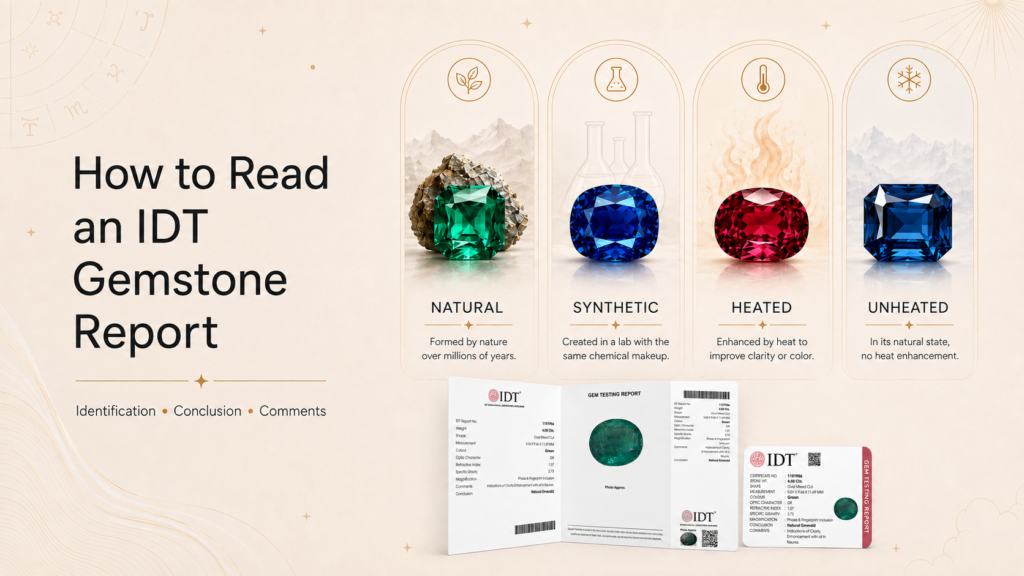
How to Read the Relevant Information on an IDT Gemstone Report
When checking an IDT gemstone certificate, focus on what the report actually confirms.
1. Gemstone Identification
Check the gemstone identification stated on the report.
This tells you what gemstone was identified during testing.
For example:
Natural Corundum – Yellow
and
Natural Quartz – Citrine
represent different gemstone materials, even though both may appear yellow.
2. Conclusion
The Conclusion states whether the tested gemstone is identified as Natural or Synthetic/Lab Grown, where applicable.
If you were specifically told that you were purchasing a natural gemstone, this is an important section to check.
3. Comments
The Comments section records treatment-related observations where applicable.
For gemstones where heat treatment can be evaluated, the report may state:
- No indications of heating
- Indications of heating
If your astrologer has specifically recommended an unheated gemstone, check this section carefully.
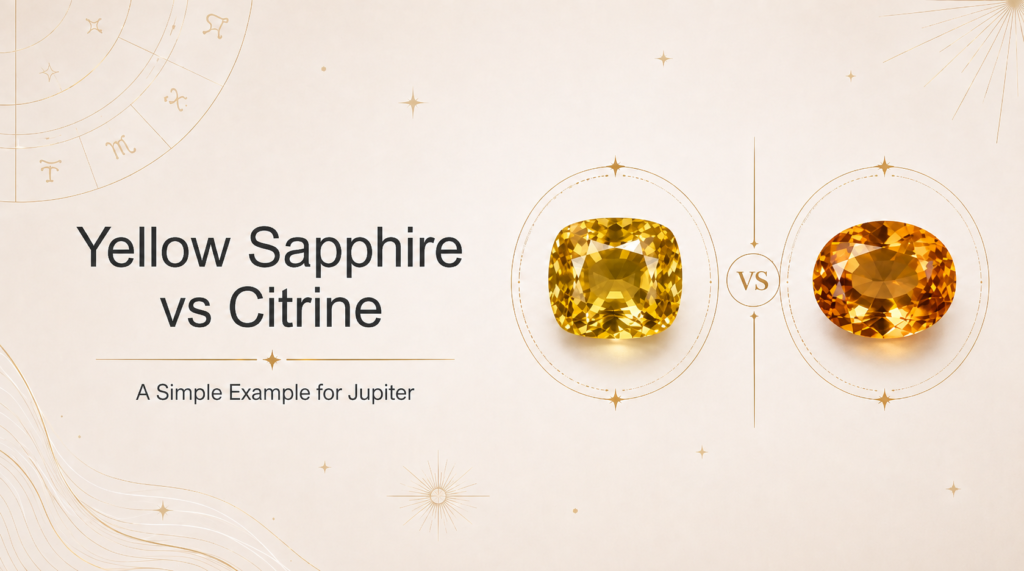
A Simple Example: Yellow Sapphire vs Citrine
Suppose your astrologer recommends a yellow sapphire for Jupiter.
At the jewellery store, you are offered a yellow stone.
By appearance alone, you may not be able to confirm whether it is yellow sapphire or another yellow gemstone.
Gemological testing may identify it as:
Natural Corundum – Yellow
or
Natural Quartz – Citrine
Both are gemstones, but they are not the same gemstone.
Certification therefore helps you know what you are purchasing before comparing it with your astrologer’s recommendation.
See Yellow Sapphire Certification for more information.
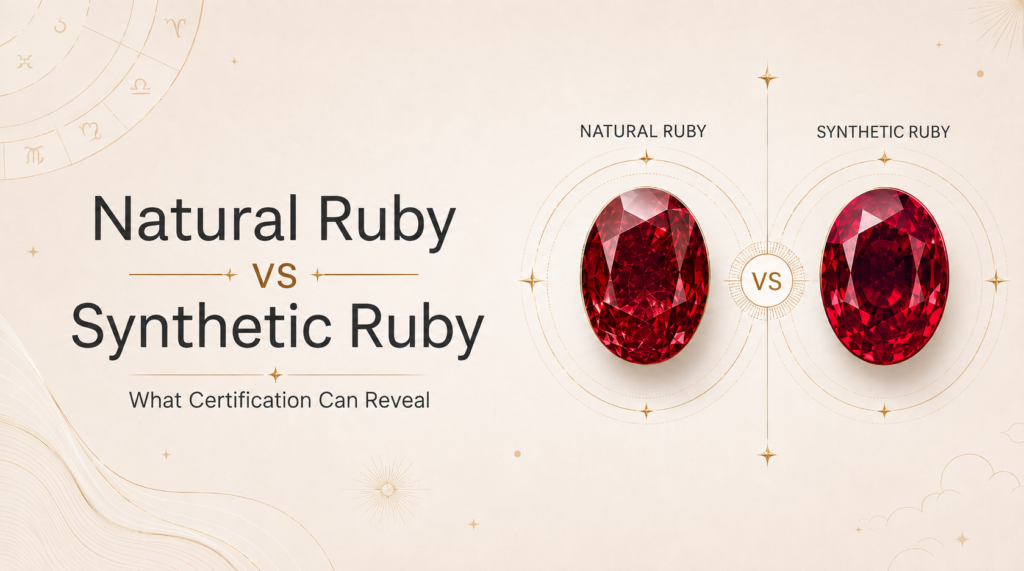
Natural Ruby vs Synthetic Ruby
The same concern can arise when purchasing a ruby for the Sun.
A buyer may specifically request a natural ruby, while the stone being offered could be synthetic.
Professional testing helps establish the identity of the gemstone and whether it is natural or synthetic.
If your requirement is specifically a natural gemstone, check the Conclusion on the IDT report before making your decision.
Read more about Ruby Certification.
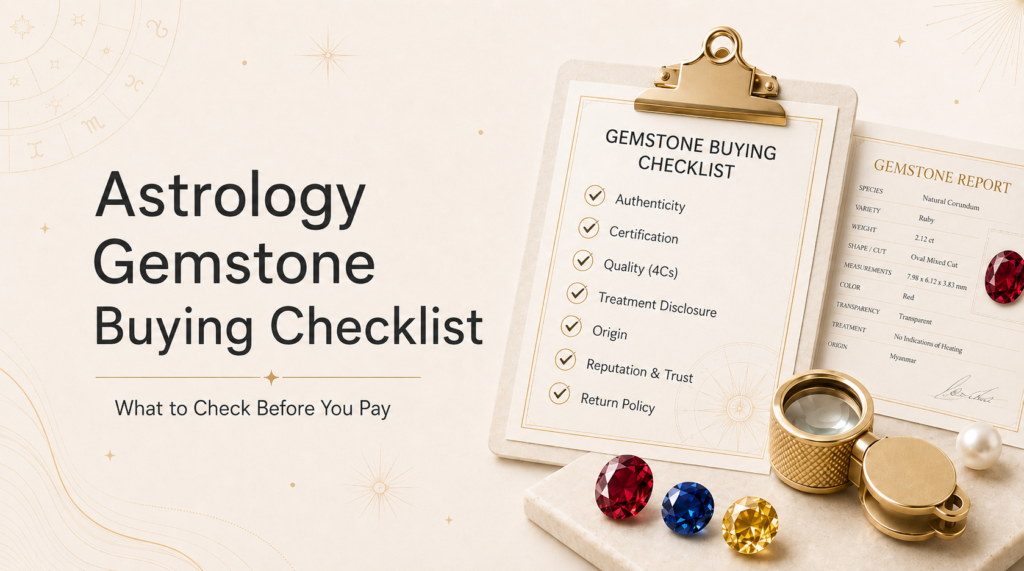
Astrology Gemstone Buying Checklist
Before buying a gemstone recommended for astrological purposes:
1. Know Exactly What Your Astrologer Recommended
Ask whether the recommendation specifies:
- Primary gemstone or substitute
- Natural or synthetic
- Heated or unheated
- Gemstone weight
- Metal or setting requirements
2. Ask the Seller What Gemstone Is Being Sold
Do not rely only on colour or appearance.
Ask for the exact gemstone name.
3. Get the Gemstone Professionally Tested
Ask for an independent gemstone certification report so that you can verify the identity of the stone.
4. Check Whether It Is Natural or Synthetic
If natural origin is important to your purchase, review the Conclusion on the report.
5. Check Treatment Information
If an unheated gemstone has been prescribed, check the Comments section for relevant treatment information.
6. Verify the IDT Certificate Online
Scan the QR code or enter the report number at:
idtworldwide.com/verify
Make sure the online report details match the certificate and gemstone submitted.
7. Compare the Report With What You Were Told
The gemstone should match:
- The seller’s representation
- Your purchase requirement
- Your astrologer’s prescription
Before You Buy an Astrology Gemstone, Know What You Are Buying
Whether you are buying ruby for the Sun, yellow sapphire for Jupiter, emerald for Mercury or blue sapphire for Saturn, the first step is knowing exactly what gemstone you have.
Primary and substitute gemstones can both be legitimate choices when they are clearly disclosed and correctly represented.
What matters is transparency.
Before paying, check the gemstone identification, review the relevant information on the certificate and verify the IDT report online.
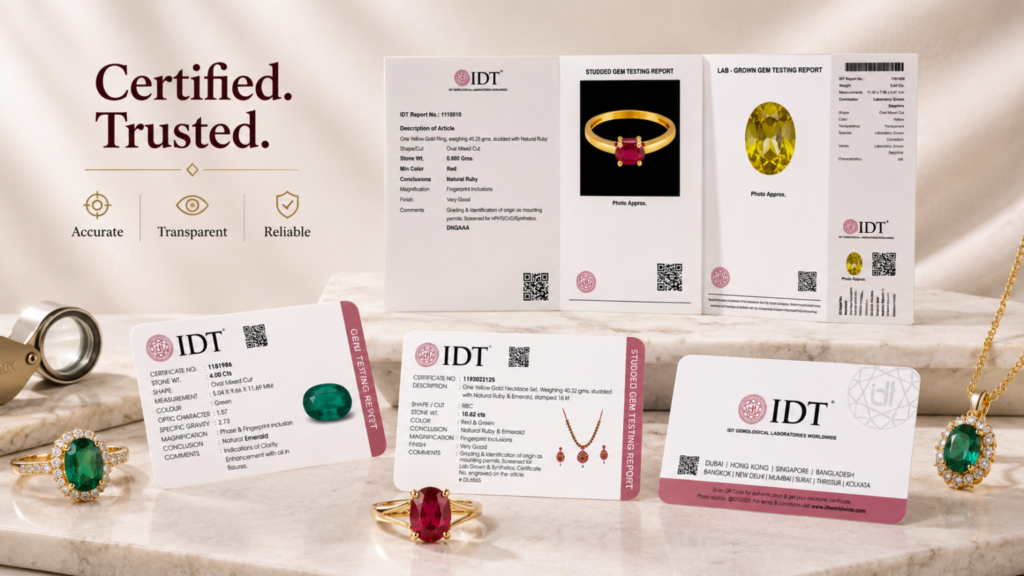
Your astrologer can tell you which gemstone to wear.
IDT helps tell you what gemstone you actually have.
Always insist on IDT Certification.
Frequently Asked Questions
Which gemstone is for Saturn?
In traditional Vedic astrology, blue sapphire or Neelam is the primary gemstone associated with Saturn.
Some astrologers may recommend stones such as iolite or amethyst as substitutes depending on the individual and their budget.
Always consult your astrologer before wearing an astrology gemstone.
Which gemstone is for Jupiter?
Yellow sapphire or Pukhraj is traditionally associated with Jupiter.
Citrine and yellow topaz may also be suggested as substitute stones by some astrologers.
Because these are different gemstone species, certification can help confirm whether the stone being sold to you is actually yellow sapphire, citrine or another gemstone.
Which gemstone is for the Sun?
Ruby or Manik is traditionally associated with the Sun.
Some astrologers may recommend red garnet or red spinel as alternatives.
If you are purchasing ruby specifically, professional testing can help confirm the identity of the gemstone.
Which gemstone is for Mercury?
Emerald or Panna is traditionally associated with Mercury.
Some astrologers may suggest peridot or green onyx as substitutes.
Always confirm the exact recommendation with your astrologer before purchasing.
Which gemstones are associated with Rahu and Ketu?
Hessonite garnet or Gomed is traditionally associated with Rahu.
Chrysoberyl cat’s eye or Lehsunia is traditionally associated with Ketu.
These gemstones can have look-alikes, so identification through professional gemstone testing can help confirm what you are buying.
Can I wear citrine instead of yellow sapphire?
Some astrologers prescribe citrine as a substitute for yellow sapphire, particularly when budget is a consideration.
However, whether it is suitable for you is an astrological question and should be confirmed with your astrologer.
From a gemological perspective, yellow sapphire and citrine are different gemstones, and your certification report can help establish which one you have.
Does IDT tell me which gemstone I should wear?
No.
IDT is a gemological laboratory and does not prescribe gemstones based on astrology, zodiac signs or horoscopes.
IDT tests gemstones and reports their gemological characteristics.
You and your astrologer can then determine whether the tested gemstone matches the recommendation you were given.