
When choosing a diamond, you will often hear words like round, oval, emerald, princess, brilliant and cushion.
But there is one common misunderstanding: diamond shape and diamond cut are not the same thing.
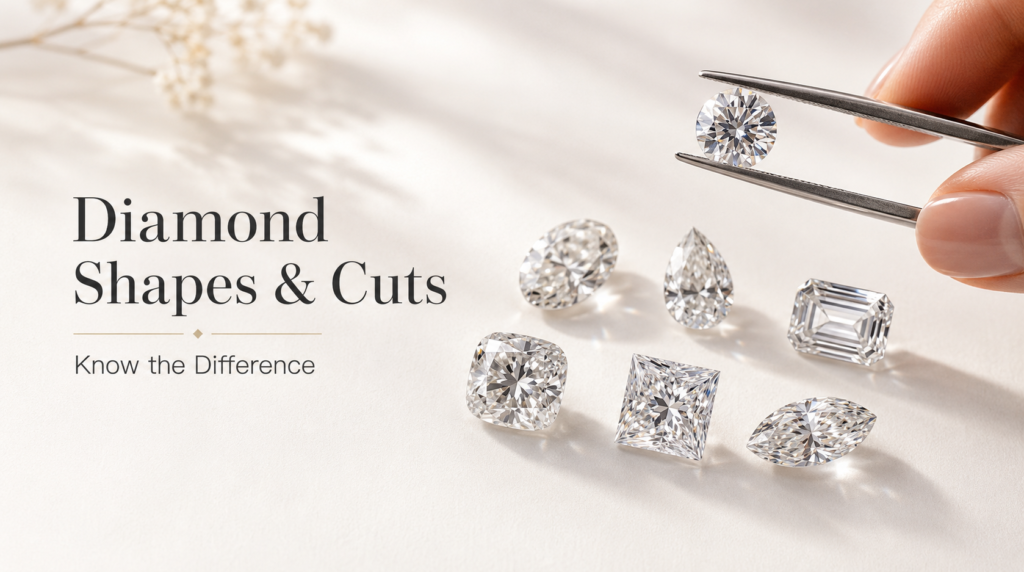
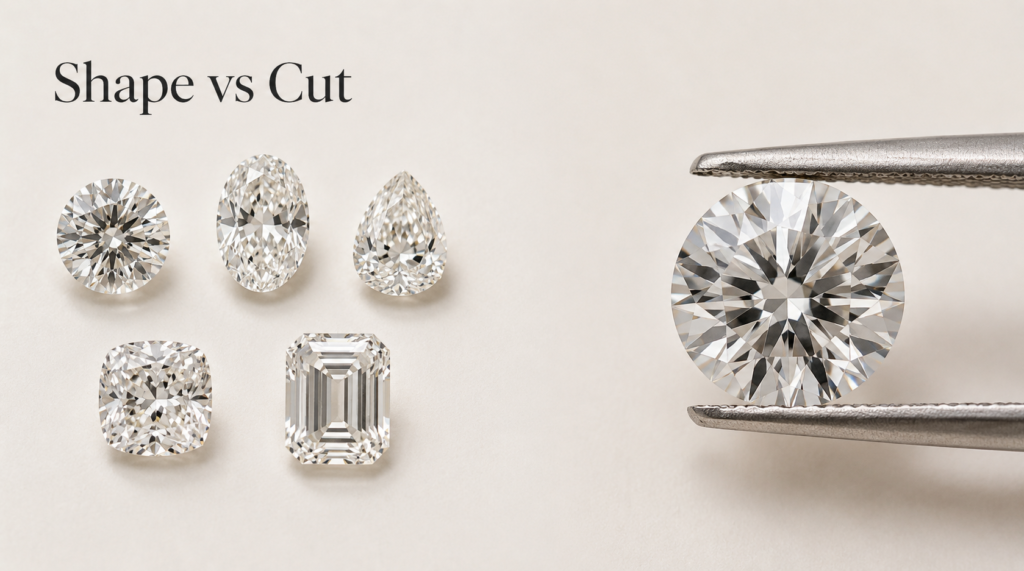
The shape of a diamond describes its visible outline, such as round, oval, pear or square. The cut relates to the way the diamond has been fashioned, including its facets, proportions and how effectively it interacts with light.
Understanding the difference between diamond shapes and cuts can help you look beyond appearance and better understand what makes one diamond sparkle differently from another.
In this guide, we explain the most popular diamond shapes, types of diamond cuts, how cut affects brilliance, and what to look for when choosing a diamond.
Diamond Shape vs Diamond Cut: What Is the Difference?
Although the terms are frequently used interchangeably, they describe different characteristics.
Diamond Shape
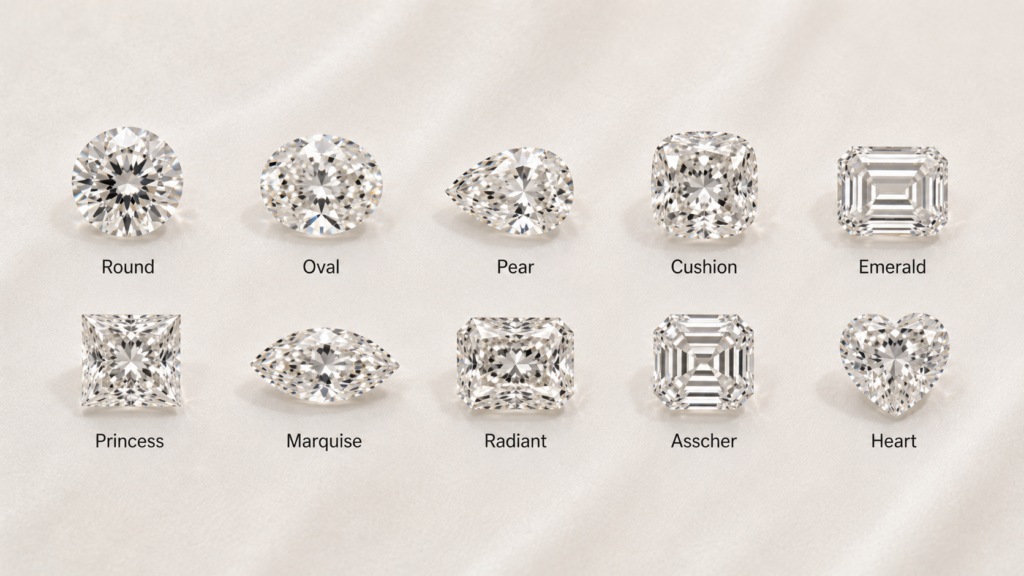
Diamond shape refers to the outline or silhouette of a diamond when viewed from above.
Examples include:
- Round
- Oval
- Pear
- Cushion
- Emerald
- Princess
- Marquise
- Radiant
- Asscher
- Heart
Round is the most commonly recognised diamond shape. Shapes other than round are generally referred to as fancy shapes.
Diamond Cut
Diamond cut relates to the diamond’s design, facet arrangement, proportions and craftsmanship.
A diamond’s facets determine how light enters the stone, travels through it and returns to the viewer. This affects three important aspects of its appearance:
Brightness: The amount of white light reflected by the diamond.
Fire: The flashes of spectral colours created as light disperses.
Scintillation: The flashes of light and dark seen as the diamond, light source or viewer moves.
This is why two diamonds of the same shape and carat weight can look noticeably different.
A well-cut diamond can appear bright and lively, while less effective proportions may allow more light to escape instead of returning through the top of the stone.
Diamond Shapes and Cuts at a Glance
| Diamond Shape | Common Cutting Style | Overall Appearance |
|---|---|---|
| Round | Brilliant | Maximum emphasis on brilliance and sparkle |
| Oval | Modified brilliant | Elongated and brilliant |
| Princess | Brilliant / modified brilliant | Square, modern and sparkling |
| Cushion | Brilliant / modified brilliant | Soft square or rectangular outline |
| Emerald | Step cut | Clean, elegant flashes of light |
| Pear | Modified brilliant | Teardrop-shaped and elongated |
| Marquise | Modified brilliant | Long, pointed and dramatic |
| Radiant | Brilliant / mixed style | Rectangular or square with strong sparkle |
| Asscher | Step cut | Square, geometric and architectural |
| Heart | Modified brilliant | Distinctive and symbolic |
10 Popular Diamond Shapes Explained
1. Round Brilliant Diamond
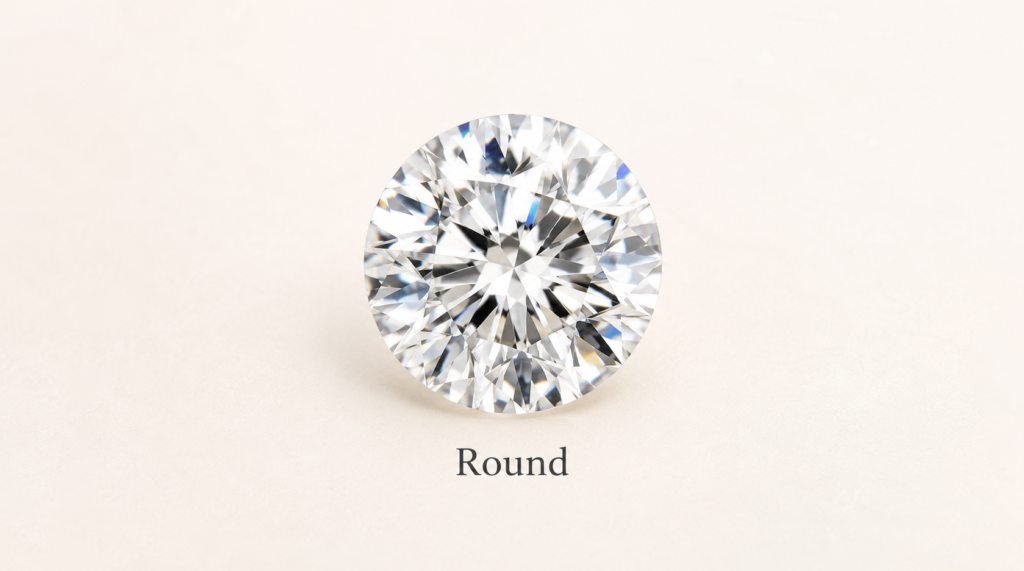
The round brilliant diamond is perhaps the most recognised diamond shape in the world.
A standard round brilliant is designed with 57 or 58 facets, depending on whether a culet facet is present. Its carefully arranged facets are designed to optimise the diamond’s interaction with light.
Why choose a round diamond?
Round diamonds are ideal for someone looking for:
- Strong brilliance
- A timeless appearance
- Versatility across jewellery styles
- A classic solitaire or engagement ring
Because its proportions and light performance have been extensively studied, the round brilliant also has well-established systems for assessing cut quality.
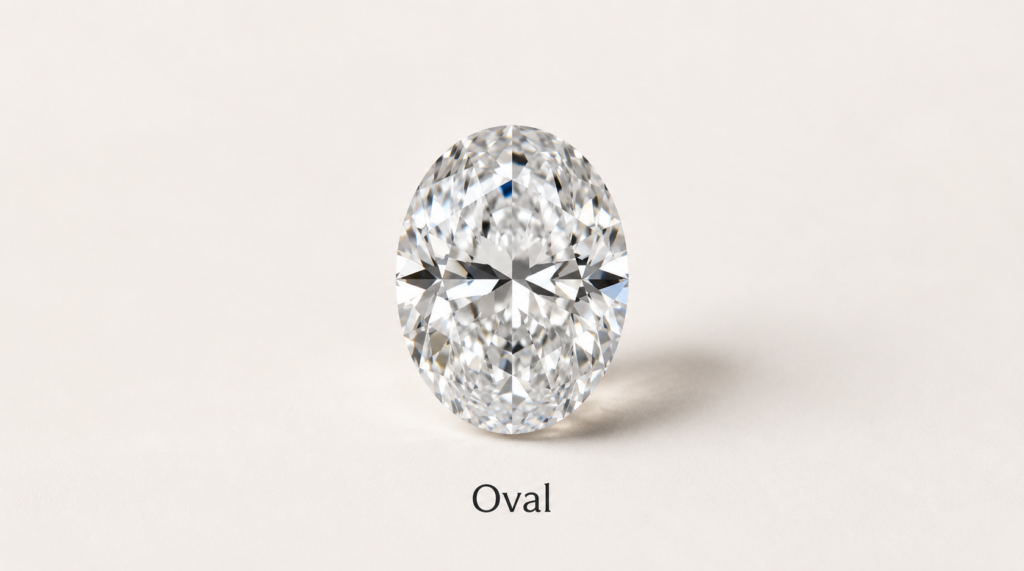
2. Oval Diamond
An oval diamond combines an elongated silhouette with brilliant-style faceting.
It offers plenty of sparkle while creating a longer appearance across the finger.
Why choose an oval diamond?
Oval diamonds are popular for:
- An elegant, elongated appearance
- A contemporary alternative to round
- Engagement rings and solitaire jewellery
- Creating greater visual spread across the finger
One feature to observe in oval diamonds is the bow-tie effect, a darker pattern that may appear across the centre of some elongated brilliant-cut diamonds.
The strength and appearance of this effect can vary from one diamond to another, making visual evaluation important.
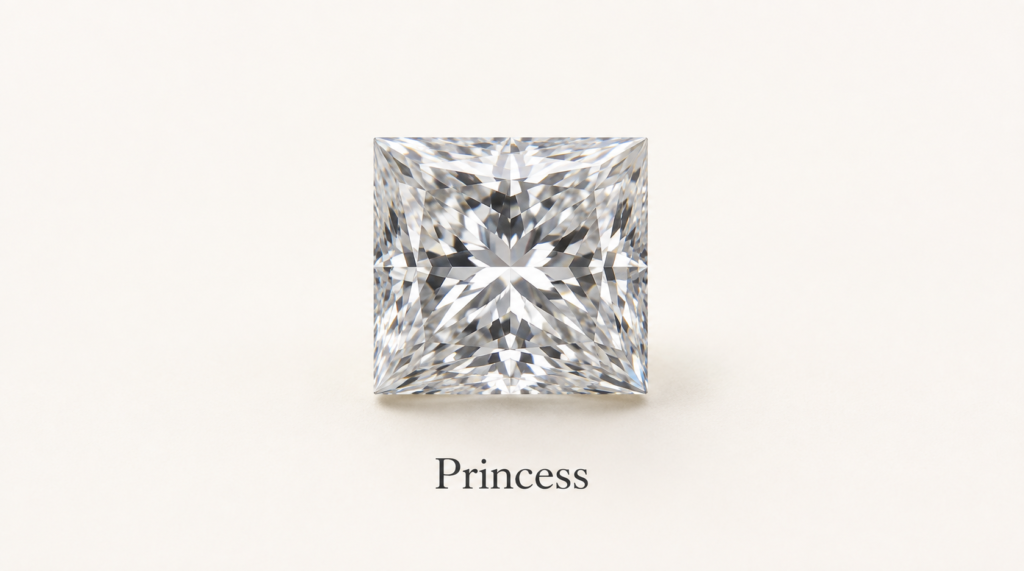
3. Princess Cut Diamond
The princess cut diamond typically has a square or slightly rectangular outline with pointed corners and brilliant-style faceting.
It combines a sharp geometric appearance with strong light activity.
Why choose a princess cut?
It suits buyers looking for:
- A modern square diamond
- Strong sparkle
- Clean geometric lines
- Contemporary jewellery designs
Because the corners are pointed, the setting should provide appropriate protection to reduce the possibility of damage from impact.
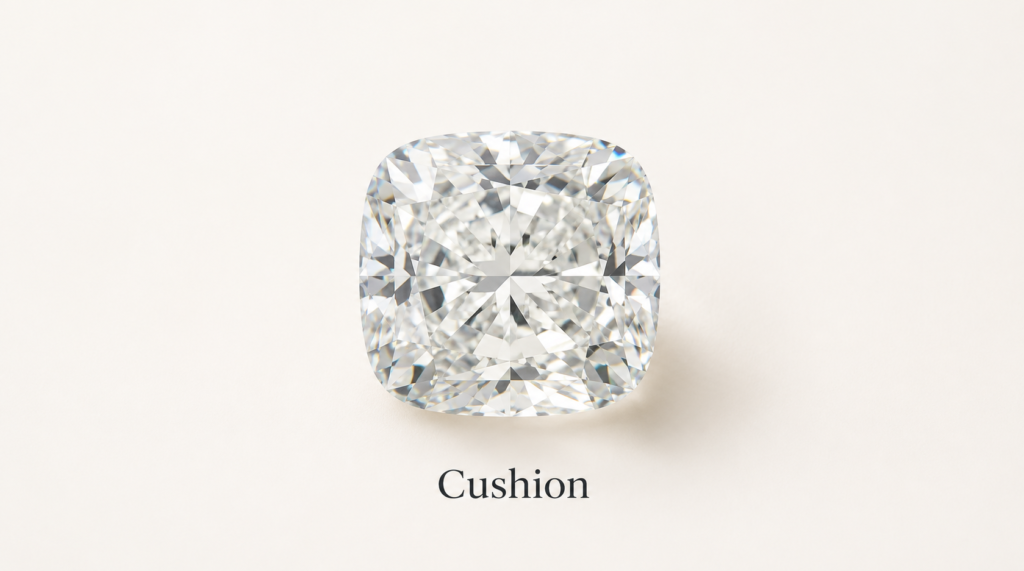
4. Cushion Cut Diamond
A cushion cut diamond usually has a square or rectangular outline with softened, rounded corners.
Its appearance resembles a cushion, which gives the shape its name.
There are several cushion faceting variations, meaning two cushion diamonds may have noticeably different sparkle patterns.
Why choose a cushion diamond?
Choose cushion if you prefer:
- Soft rounded corners
- A romantic or vintage-inspired appearance
- A combination of classic and modern styling
- Distinctive facet patterns
This variation is also why it is important to evaluate the individual diamond rather than choosing only by the name of the shape.
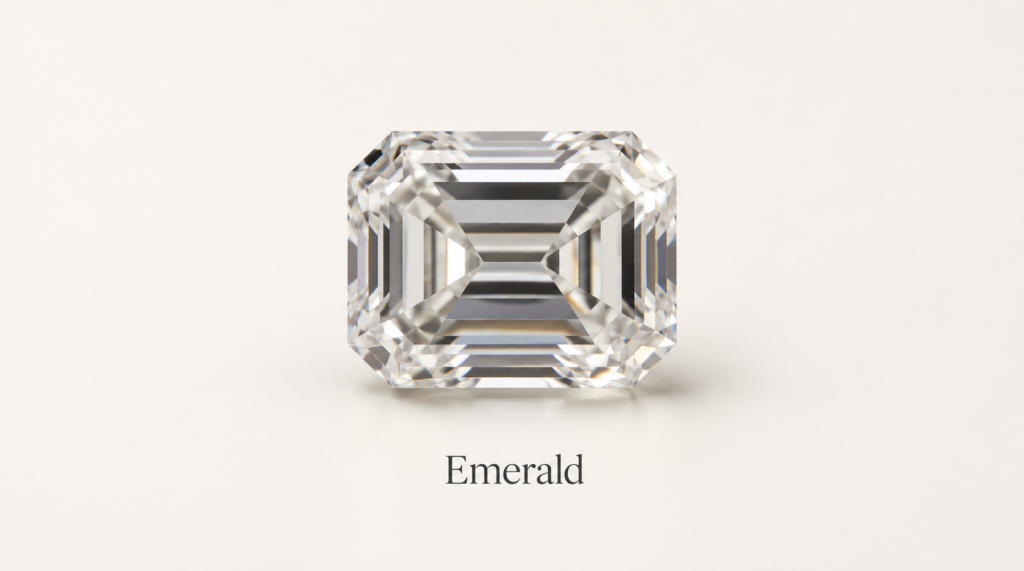
5. Emerald Cut Diamond
An emerald cut diamond is generally rectangular with cropped corners and a step-cut facet arrangement.
Unlike brilliant cuts, which use many smaller facets to create intense scintillation, step cuts use longer, parallel facets.
This produces broad flashes and the distinctive hall-of-mirrors appearance associated with emerald cuts.
Why choose an emerald cut?
It is suited to those who prefer:
- Understated elegance
- Long, clean lines
- A sophisticated geometric appearance
- Broad flashes rather than intense sparkle
Because step cuts have larger, more open facets, internal characteristics can sometimes be easier to notice than in brilliant-style cuts.
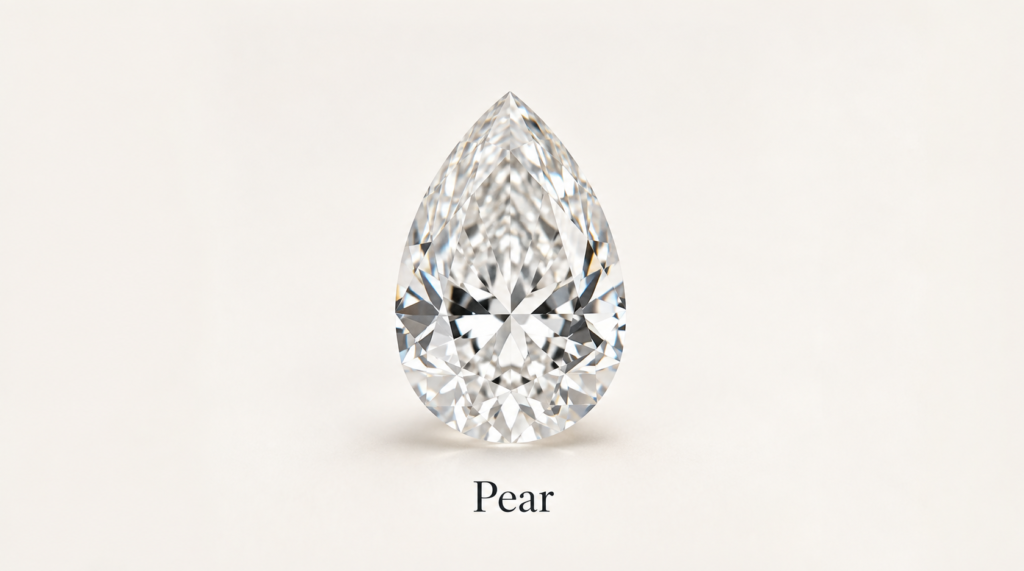
6. Pear-Shaped Diamond
The pear-shaped diamond, also known as a teardrop shape, combines a rounded end with a single pointed tip.
It is typically fashioned using modified brilliant-style facets.
Why choose a pear diamond?
Pear shapes work well for:
- Distinctive engagement rings
- Pendants and earrings
- An elongated appearance
- Jewellery with a more individual look
The pointed end is an important area to protect when the diamond is set into jewellery.
As with oval and marquise diamonds, some pear-shaped diamonds may also show a bow-tie effect.
7. Marquise Diamond
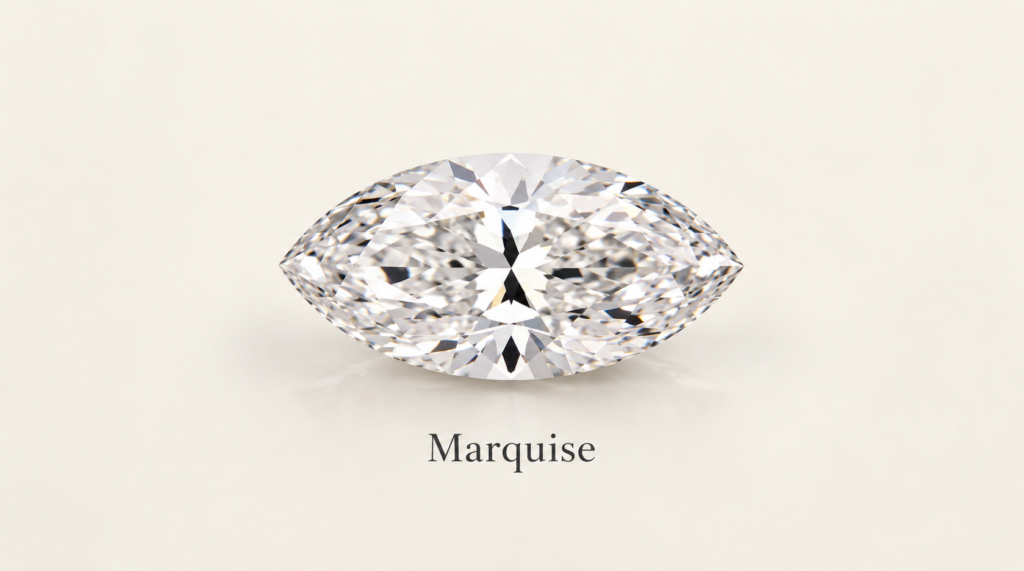
A marquise diamond has an elongated body with pointed ends on both sides.
Its long outline can create substantial visual presence when viewed from above.
Why choose a marquise diamond?
It is ideal for:
- A dramatic elongated look
- Vintage or statement jewellery
- Creating the visual impression of longer fingers
- Someone seeking a less conventional shape
Symmetry is particularly noticeable in a marquise. The two pointed ends and curved sides should create a visually balanced outline.
8. Radiant Cut Diamond
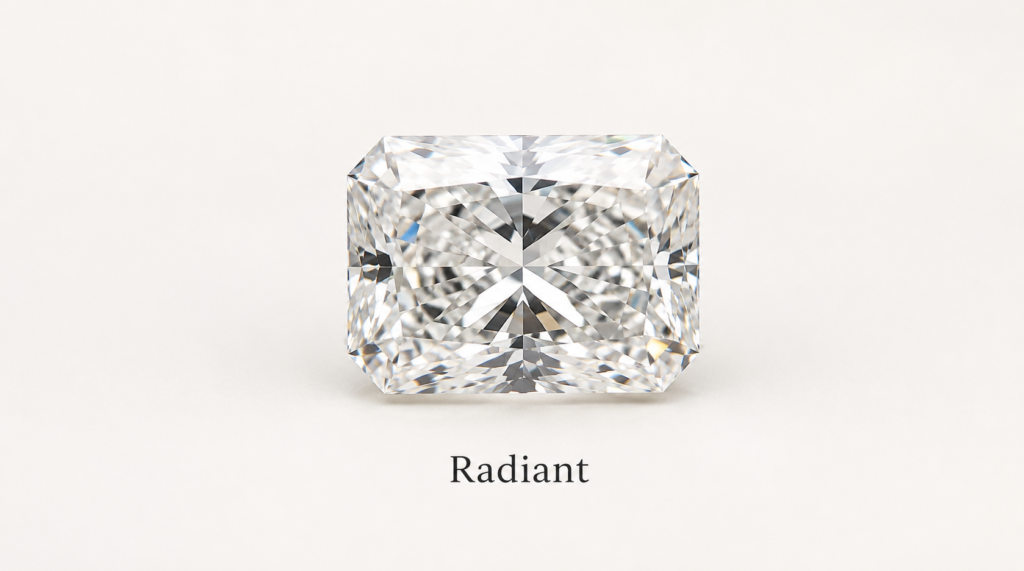
The radiant cut diamond is generally square or rectangular with cropped corners and brilliant-style or mixed faceting.
It combines the structured outline associated with rectangular diamonds with more active sparkle.
Why choose a radiant diamond?
Radiant cuts offer:
- Strong brilliance
- A modern geometric outline
- More forgiving cropped corners
- Square and rectangular variations
A radiant can be an interesting option for someone who likes the overall outline of an emerald-shaped diamond but prefers a more brilliant facet pattern.
9. Asscher Cut Diamond
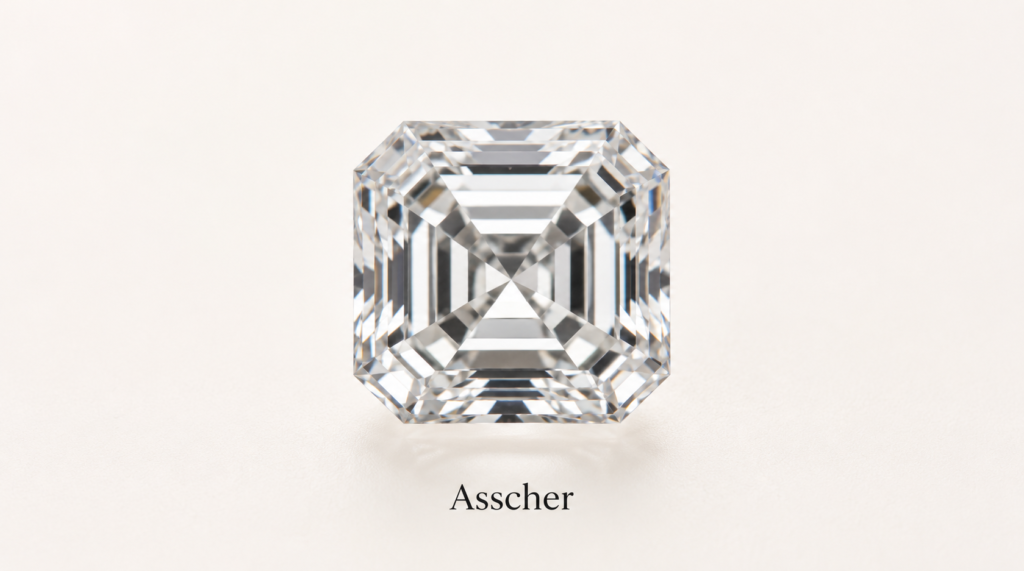
The Asscher cut is generally square with cropped corners and step-cut facets.
It shares some visual characteristics with the emerald cut but has a more symmetrical, square appearance.
Why choose an Asscher diamond?
It is particularly suited to:
- Art Deco-inspired jewellery
- Vintage designs
- Geometric aesthetics
- Buyers who prefer broad flashes of light over intense scintillation
Its open step facets make the diamond’s internal appearance especially important when comparing stones.
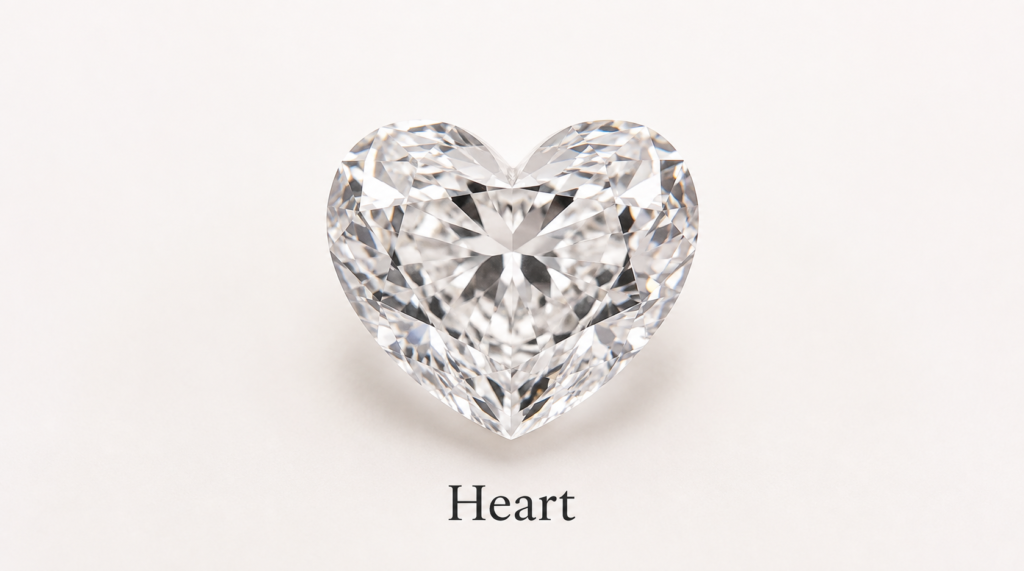
10. Heart-Shaped Diamond
The heart-shaped diamond is one of the most distinctive fancy diamond shapes.
Its appearance depends heavily on symmetry. The two lobes should look balanced, and the central cleft and lower point should be clearly defined.
Why choose a heart-shaped diamond?
It is commonly selected for:
- Romantic jewellery
- Pendants
- Statement rings
- Symbolic gifts
Because the outline is complex, craftsmanship plays an important role in creating an attractive and balanced heart shape.
What Are the Different Types of Diamond Cuts?
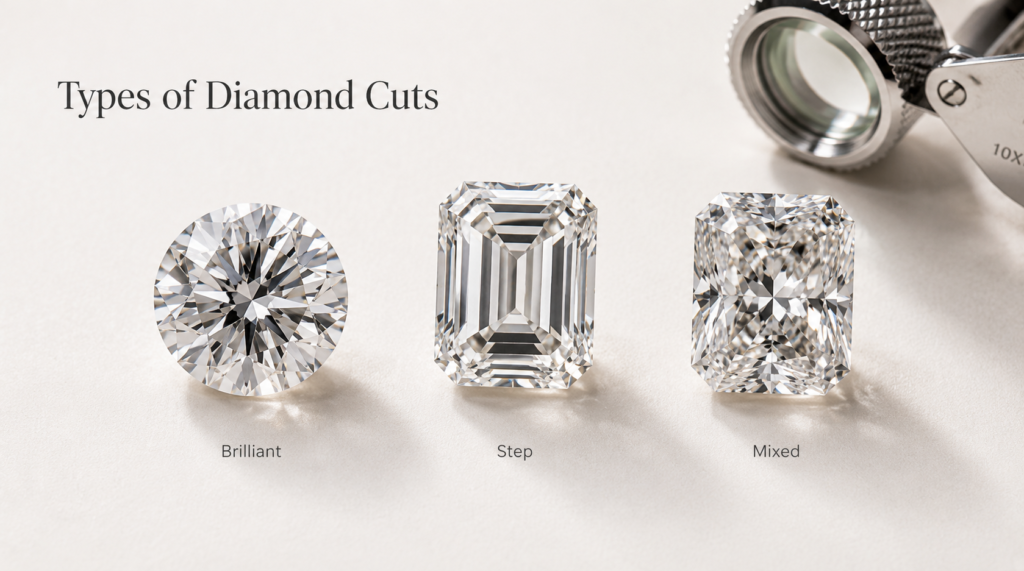
When people search for types of diamond cuts, they are often actually looking for diamond shapes.
From a gemological perspective, it is helpful to understand the broader cutting or faceting styles too.
Brilliant Cut
Brilliant-style cuts use numerous triangular and kite-shaped facets designed to produce strong brightness, fire and scintillation.
Examples include:
- Round brilliant
- Oval
- Pear
- Marquise
- Heart
- Many cushion variations
The round brilliant is the best-known example.
Step Cut
Step cuts use longer facets arranged in parallel rows.
Instead of producing numerous small flashes, they tend to create larger reflections and a cleaner, more architectural appearance.
Examples include:
- Emerald cut
- Asscher cut
Step cuts can also make colour and internal characteristics more noticeable because of their broad, open facet pattern.
Mixed or Modified Cuts
Some diamonds combine or modify different faceting concepts to achieve a particular balance of brilliance, shape and visual character.
Radiant cuts and many modern fancy-shaped diamonds can use variations in facet arrangement.
This is one reason why the shape name alone does not tell you everything about how a diamond will look.
Which Diamond Shape Sparkles the Most?
If your priority is maximum brilliance, the round brilliant is generally considered the benchmark.
Its facet arrangement and proportions have been extensively developed to optimise light return.
However, this does not mean every round diamond will automatically sparkle more than every fancy-shaped diamond.
Cut quality matters.
A beautifully fashioned fancy-shaped diamond can have stronger visual appeal than a poorly proportioned diamond of another shape.
The individual diamond must always be evaluated rather than relying only on the name of its shape.
Which Diamond Shape Looks the Biggest?
Carat measures weight, not visible size.
This means two 1-carat diamonds can appear different in size when viewed from above.
Elongated shapes such as:
- Oval
- Pear
- Marquise
can sometimes create a larger visual spread because their weight is distributed across a longer outline.
However, dimensions, proportions and depth also influence how large a diamond appears.
This is why measurements should be considered alongside carat weight.
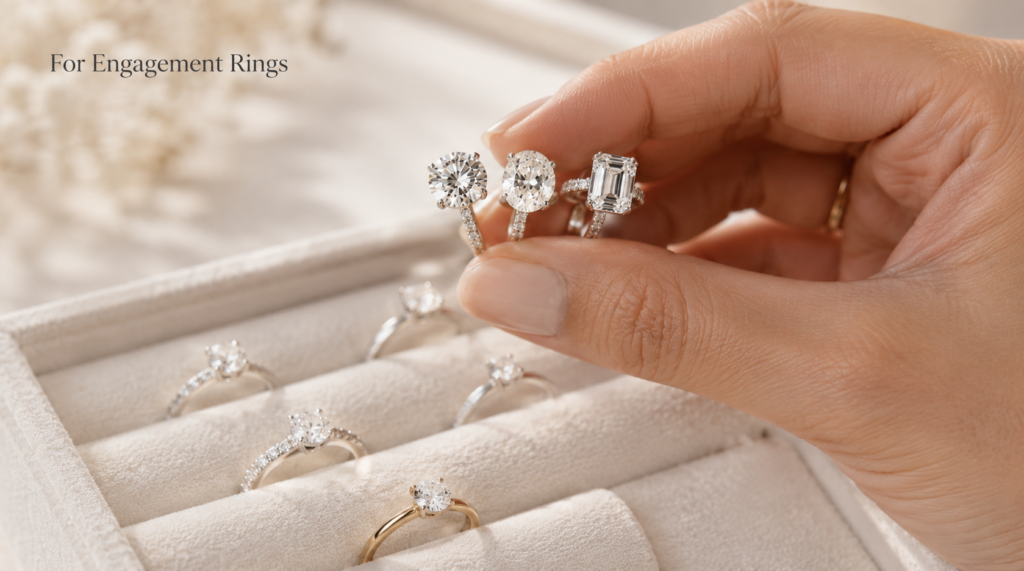
Which Diamond Shape Is Best for an Engagement Ring?
There is no single best diamond shape.
The right choice depends on personal style, jewellery design and the appearance you prefer.
For example:
For maximum classic brilliance: Round brilliant
For an elongated modern look: Oval
For a geometric contemporary look: Princess or radiant
For understated elegance: Emerald
For vintage-inspired jewellery: Cushion or Asscher
For something distinctive: Pear or marquise
For something symbolic: Heart
Instead of asking which diamond shape is universally best, ask which shape best matches the wearer and the jewellery design.
Does Diamond Shape Affect Quality?
Shape itself is not a quality grade.
A round diamond is not automatically better than an oval diamond, and an emerald cut is not automatically better or worse than a cushion.
Quality assessment considers multiple characteristics.
For diamonds, these commonly include the 4Cs:
- Cut
- Colour
- Clarity
- Carat Weight
Other characteristics such as measurements, polish, symmetry, fluorescence, proportions and diamond origin may also be documented depending on the grading report and diamond.
Why IDT Diamond Certification Matters
Choosing a diamond does not end with choosing a shape.
Two diamonds may look similar to the unaided eye while differing in their quality characteristics or origin.
Professional gemological evaluation provides documented information that helps buyers understand what they are purchasing.
An IDT Diamond Grading Report may document characteristics including:
- Shape and cutting style
- Measurements
- Carat weight
- Colour grade
- Clarity grade
- Cut grade, where applicable
- Polish
- Symmetry
- Fluorescence
- Proportion information
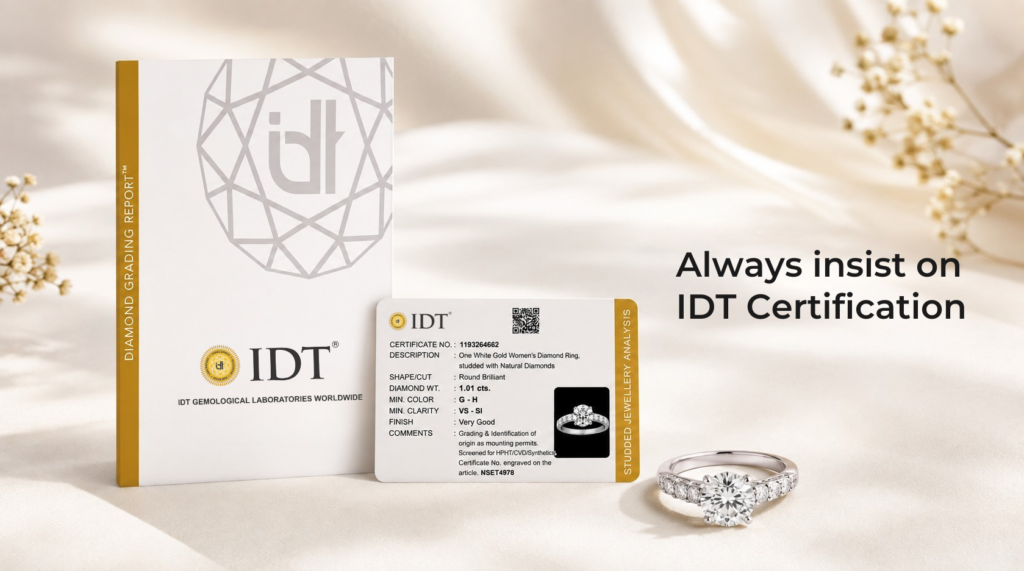
IDT also provides independent gemological testing and certification solutions for natural diamonds, laboratory-grown diamonds and diamond jewellery.
Understanding the shape tells you how the diamond looks.
Understanding the cut tells you more about how the diamond has been fashioned and interacts with light.
And understanding the grading report gives you documented information about what you are buying.
Before choosing a diamond only for its appearance, understand what lies behind its sparkle. Always insist on IDT Certification.
Frequently Asked Questions About Diamond Shapes and Cuts
What is the difference between diamond shape and diamond cut?
Diamond shape describes the visible outline of the diamond, such as round, oval, pear or square. Diamond cut relates to its facet arrangement, proportions and craftsmanship, which influence how it interacts with light.
What are the most popular diamond shapes?
Popular diamond shapes include round, oval, princess, cushion, emerald, pear, marquise, radiant, Asscher and heart.
Which diamond shape has the most sparkle?
The round brilliant is designed to produce strong brilliance, fire and scintillation and is generally considered the benchmark for diamond sparkle.
Are oval and round diamonds cut differently?
Yes. Although both commonly use brilliant-style faceting, their proportions, outlines and facet arrangements differ. Oval diamonds also have an elongated shape and may display a bow-tie effect.
Which diamond shapes can look larger?
Elongated shapes such as oval, pear and marquise can sometimes appear larger face-up for their carat weight because of their visual spread. Actual appearance depends on the diamond’s measurements and proportions.
What is a fancy-shaped diamond?
In diamond terminology, shapes other than round are generally known as fancy shapes. These include oval, pear, marquise, heart, emerald, princess and other non-round outlines.
Is emerald cut a shape or a cut?
The term emerald cut describes both a rectangular or square outline with cropped corners and a characteristic step-cut facet arrangement. This is one reason diamond shape and cutting terminology can sometimes overlap.
Do laboratory-grown diamonds come in different shapes?
Yes. Laboratory-grown diamonds can be fashioned into many of the same popular shapes as natural diamonds, including round, oval, pear, princess, cushion, emerald and others.
Does certification mention the diamond shape?
A comprehensive diamond grading report typically documents the diamond’s shape and cutting style along with other characteristics. IDT Diamond Grading Reports include shape and cutting style, measurements and other applicable grading information.
Should I choose a diamond based only on shape?
No. Shape is largely a matter of preference, but the diamond should also be evaluated for its cut, colour, clarity, carat weight, proportions and other relevant characteristics. Professional certification helps provide documented information about these factors.