Why Certified Diamonds Have Better Resale Value
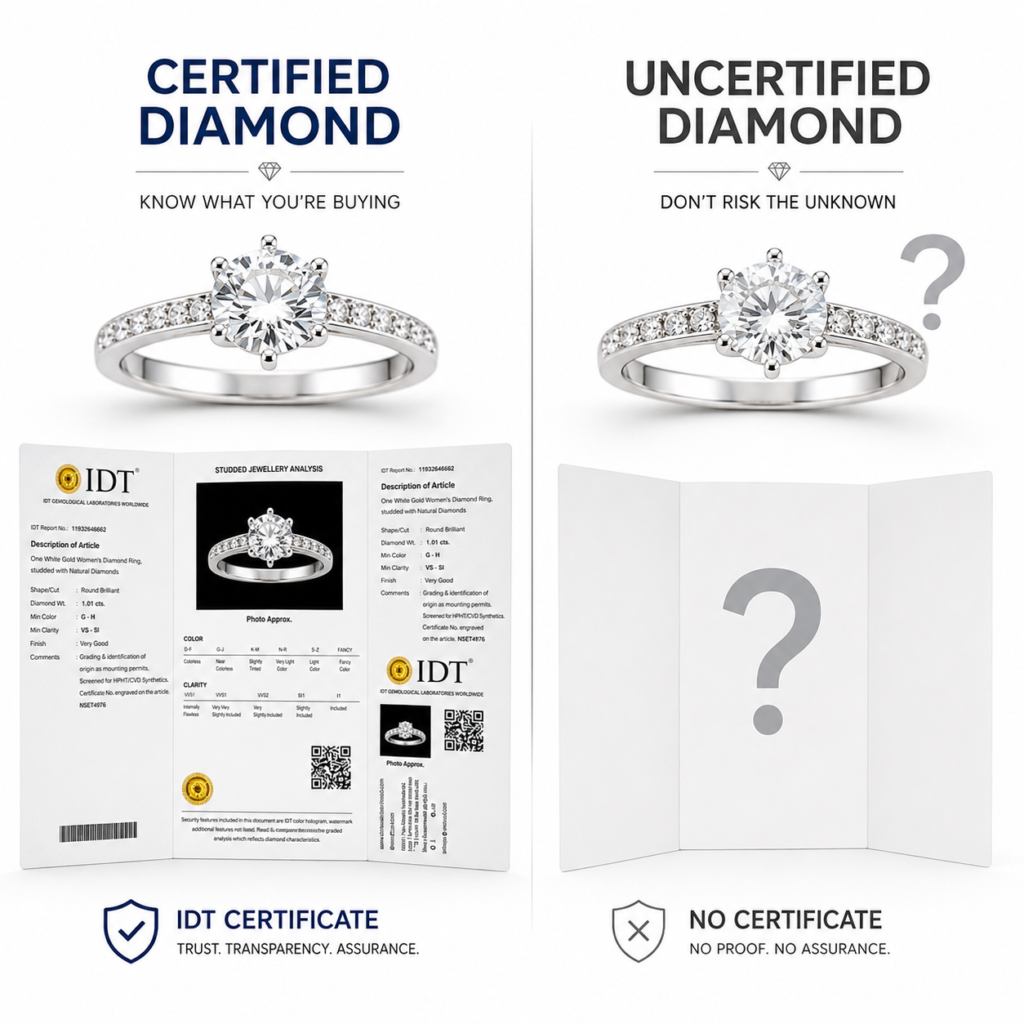
You Buy a Diamond for Love. You Sell It for Value. Whether it is an upgrade, an emergency, or an estate sale, the day may come when you need to sell your diamond. At resale, emotion matters less and proof matters more. A buyer wants to know what the diamond actually is, whether it is natural, what its 4Cs are, and whether it has been treated. That is where a diamond certificate becomes important. IDT diamond certification supports diamond resale value by giving buyers verified information instead of guesswork. It does not guarantee a fixed resale price, but it helps the buyer evaluate the diamond with more confidence. How Jewellers Value Diamonds for Buyback When you sell diamond jewellery, the jeweller is not only looking at the design. They are checking the diamond’s identity and quality. Here are the three main questions they need answered: 1. Is it natural? Without a diamond certificate stating Conclusion: Natural Diamond, the jeweller may need to test it first. That takes time and adds risk. For more on risks of uncertified stones, see The Hidden Risk of Buying Uncertified Diamonds. 2. What are the exact 4Cs? Color, clarity, cut, and carat weight affect value. With certified diamonds, these details are recorded on the diamond grading certificate. Without certification, the jeweller has to grade the diamond again and may give a more conservative offer to protect against error. 3. Has it been treated? The Comments section on an IDT report states No indications of treatment or lists the treatment, if present. Treatment disclosure is important because treated diamonds may have different market values. If treatment is not disclosed, it can reduce trust during resale. With IDT certification, these questions are answered faster.The buyer can scan the QR code or verify the report number online. Without certification, the jeweller starts with uncertainty.That uncertainty can delay the process and may affect the offer. Certified vs Uncertified Diamonds at Resale: What Actually Happens Factor Certified Diamond Uncertified Diamond Natural origin Report clearly states the conclusion Buyer may need additional testing 4Cs Color, clarity, cut, and carat are documented Jeweller must re-grade the diamond Treatment status Treatment details are disclosed in the report Treatment may be unknown until tested Buyer confidence Higher, because details are verified Lower, because the buyer takes more risk Time required Faster verification through QR or report number Slower process due to testing and checking Offer discussion Based on documented details May be based on conservative assumptions This is why the resale value of certified diamonds is usually better protected. The diamond certificate does not change the diamond itself, but it gives the buyer the proof needed to evaluate it properly. For example, a certified diamond allows the buyer to check the report, verify the 4Cs, and make an offer faster. An uncertified diamond usually needs testing first, which can delay the process and lead to a more cautious offer. What Type of IDT Certificate Protects Resale Value? 1. For Loose Diamonds: Diamond Grading Report This is your diamond grading certificate. It includes important details such as carat weight, color, clarity, cut, measurements, plot diagram, and laser inscription of the report number on the girdle, where applicable. At resale: The buyer can verify the report, match the stone’s details, and confirm that it is the same diamond. 2. For Finished Jewellery: Studded Jewellery Analysis This is used for rings, necklaces, earrings, bracelets, and other diamond jewellery. IDT also certified the Miss India 2024 crowns under its jewellery certification process. Includes: Total diamond weight, minimum color grade, minimum clarity grade, metal details, and laser engraving of certificate number on the jewellery, if opted by the jeweller. At resale: The buyer can verify the report and check the engraving if present. This helps support the value of the complete jewellery piece. Key point: Loose diamonds need a Diamond Grading Report, while finished jewellery needs Studded Jewellery Analysis. Both help support diamond resale value. For details on reading each report, see How to Read an IDT Certificate. 4 Ways IDT Certification Supports Diamond Resale Value 1. Reduces Grading Risk for the Buyer A jeweller buying an uncertified diamond has to re-grade it. If they grade it too high, they may lose money. Because of this, uncertified diamonds may receive more conservative offers. With IDT certification: The buyer gets documented grades and can make an offer based on verified details. 2. Proves Natural Origin Conclusion: Natural Diamond on an IDT report helps answer one of the biggest resale questions: Is the diamond natural or lab-grown? Without certification, the buyer may need additional testing before making a decision. 3. Discloses Treatment Clearly If a diamond is clarity enhanced, HPHT treated, or has any other disclosed treatment, the report mentions it in the Comments section. Buyers may still purchase treated diamonds, but they need to know the facts. Certification helps keep the transaction transparent. 4. Enables Online Verification Every IDT certificate has a Report Number and QR code. The buyer can check the report details online, which helps reduce doubt and makes the resale process smoother. What About Diamonds Without Laser Inscription or Engraving? If your Diamond Grading Report does not have laser inscription, the report can still be useful. The jeweller can match the diamond using measurements, plot diagram, and other report details. For studded jewellery, laser engraving is a special in-lab service chosen by some jewellers. The Studded Jewellery Analysis report is valid whether or not laser engraving is present. Verification through the Report Number helps confirm authenticity. How to Maximise Your Diamond’s Resale Value If you have not bought yet: If you already own a diamond: Quote from Gaurav Issar, Founder, IDT “A diamond without a certificate is a story. A certified diamond is an asset. IDT certified the Miss India 2024 crowns, featuring 12,349 natural diamonds, because when value must be proven, only facts work. That is the same standard we apply to your diamond.” The IDT Standard: Your Diamond’s Passport Think of your IDT certificate
Heated vs Unheated Sapphire: Which Is Better for You?
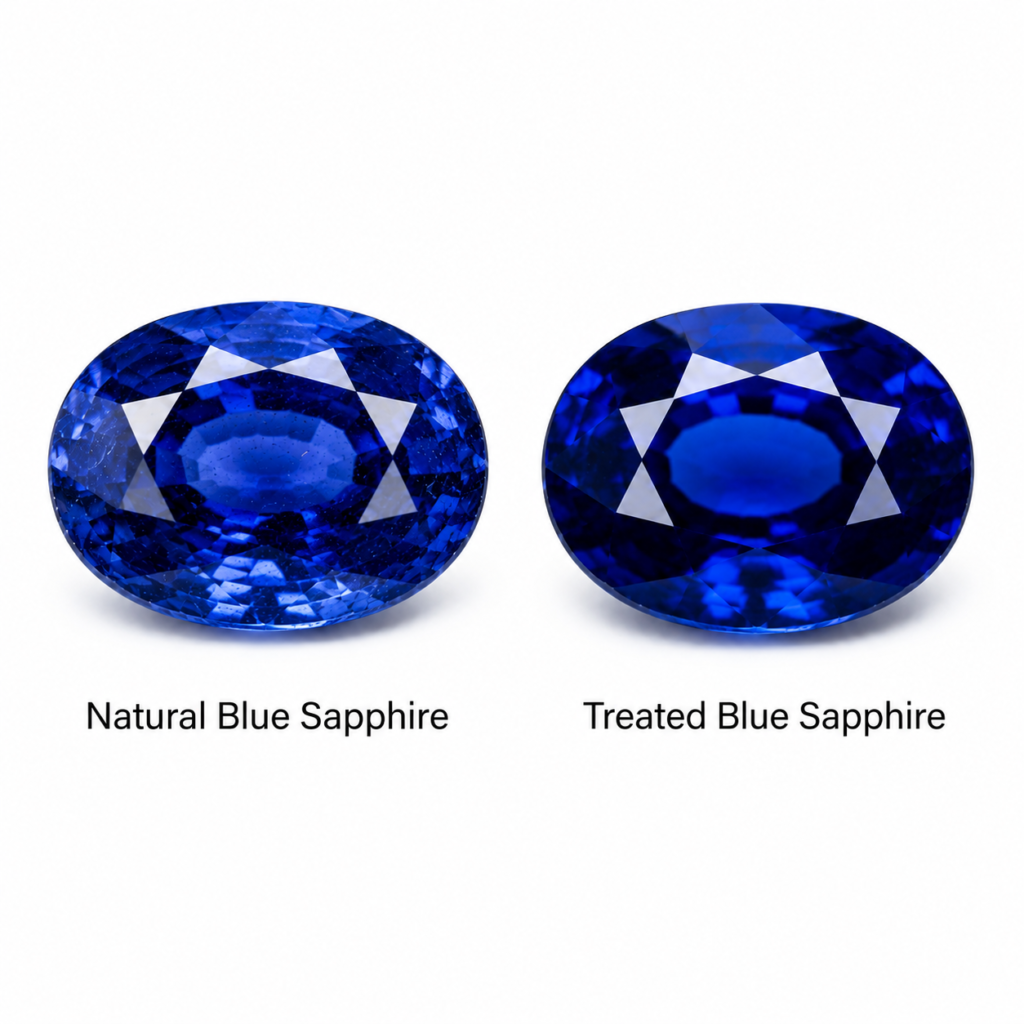
90% of Blue and Yellow Sapphires Are Heated. Does It Matter? Walk into any jewellery store. Ask for “blue sapphire” or “yellow sapphire”. Most stones you see have been heated. Heat treatment is standard in the gem trade. It makes pale sapphires vivid blue. It makes cloudy sapphires cleaner. It makes yellow sapphires brighter. But here’s the problem: Most buyers don’t know their stone is heated. And for astrology, that detail is critical. IDT lab data, 2026: In the last 12 months, IDT tested 1,500+ sapphires. 62% showed indications of heating after testing. Many buyers assumed their stones were unheated, but only a gemological test can confirm. This guide explains heated vs unheated sapphire, how IDT detects treatment, and why your gemstone certification must state it clearly. What Is Heat Treatment in Sapphires? Heat treatment means exposing a sapphire to high temperatures, around 1700°C to 1800°C, in a controlled furnace. No chemicals are added. The heat changes the sapphire’s internal structure. What it does: Key fact: Heated sapphire is still natural sapphire. It started in the earth. Humans only applied heat. But the treatment must be disclosed on the certificate. What Is Unheated Sapphire? Unheated sapphire means the stone came out of the earth with its color and clarity intact. No high heat was applied. Only basic cutting and polishing. Why it’s rare: Most sapphires from the earth are too pale, too dark, or too silky to sell. Only a small percentage of mined sapphires are gem quality without heating. That’s why unheated sapphires are less common. Known sources: Kashmir, Burma, Sri Lanka, Madagascar produce sapphires. However, stones from any source can be heated or unheated. Only testing confirms it. Heated vs Unheated: 5 Key Differences Important: You cannot tell heated vs unheated by eye. Both can be vivid blue or yellow. Only gemstone certification from a lab like IDT can confirm. Can Heated Sapphire Be Used for Astrology? Different astrologers have different views. Many astrologers who prescribe blue sapphire for Saturn or yellow sapphire for Jupiter request “natural, unheated sapphire”. They believe heating alters the stone’s natural energy. Other astrologers may accept heated if the stone is natural and the color is good. IDT’s role: We do not advise on astrology. We test the stone and report facts. Our certificate has a “Comment” line that states: You and your astrologer decide if it matches the prescription. How IDT Detects Heat Treatment in Sapphire When you bring a blue or yellow sapphire to IDT labs in Delhi, Mumbai, Surat, Kolkata, Thrissur, Chennai, or our three Dubai locations, here’s how we check for heating: Result: Your IDT certificate removes doubt. You know exactly what you’re buying. Quote from Gaurav Issar, Founder, IDT: “Sapphire buyers ask us daily: is it heated or unheated? You cannot assume. IDT tests every sapphire for heat. If it’s heated, we state Indications of heating. If it’s not, we state No indications of heating. Check the Comment line on your IDT certificate. Then verify free at idtworldwide.com/verify.” 4 Common Myths About Heated Sapphire Myth 1: “Heated means fake” Fact: Heated sapphire is 100% natural sapphire. Only heat was applied. It is not synthetic or glass. Myth 2: “I can tell unheated by color” Fact: You cannot. Some heated sapphires are more vivid than unheated. Some unheated sapphires are pale. Only a lab test confirms. Myth 3: “All jewellers disclose heating” Fact: IDT data shows most buyers are unaware their sapphire is heated until it’s tested. Always ask for gemstone certification. Myth 4: “Unheated is always better” Fact: For astrology, many prefer unheated. For jewellery, heated can be more beautiful. “Better” depends on your need. But you must know which one you have. How to Buy Safely: Your Unheated Sapphire Checklist Before you buy blue or yellow sapphire: IDT is an independent gemological laboratory. We do not sell gemstones. We test stones for buyers and issue certificates. You can verify any IDT certificate free before purchase or before wearing. Which Is Better: Heated or Unheated? There is no universal “better.” There is only “better for your purpose.” And you can only decide if your IDT certificate tells you the truth. Frequently Asked Questions What is the difference between heated and unheated sapphire? Heated sapphire is natural sapphire that was exposed to high heat to improve color or clarity. Unheated sapphire had no heat treatment. Both are natural. IDT certificates state “Indications of heating” or “No indications of heating.” Is heated sapphire bad for astrology? Different astrologers have different views. Many astrologers prefer unheated, untreated sapphire for astrological use. Always check with your astrologer and check the Comment line on your IDT certificate. Can IDT detect if my sapphire is heated? Yes. IDT gemologists use microscopy, spectroscopy, and advanced instruments to detect indications of heating. The result is stated clearly on your IDT report. Are most blue sapphires heated? Yes. The majority of blue and yellow sapphires in the market are heat treated. Unheated sapphires are less common. That’s why gemstone certification is critical. Does heating affect durability? No. Heat treatment is stable and permanent. A heated sapphire is as durable as an unheated sapphire. The difference is rarity and astrological preference. Which gemstone certificate is best in India for sapphire? Look for certificates from established labs that clearly state “Natural” or “Synthetic” and “No indications of heating” or “Indications of heating.” IDT Gemological Laboratories Worldwide provides both and has certified 15M+ pieces. Before You Buy Sapphire, Check the Treatment Line Heated sapphire is beautiful. Unheated sapphire is less common. Both are natural. But for astrology, for peace of mind, you need to know which one you have. Check your IDT gemstone certificate free: Enter your Report Number at idtworldwide.com/verify Look for two lines: Because when it comes to sapphire, knowing treatment matters. Gold has BIS Hallmark. Diamonds have IDT. Gemstones have IDT too. IDT nahi to deal hi nahi.
The Rise of Colored Gemstone Investment: Why Certification Matters More Than Ever
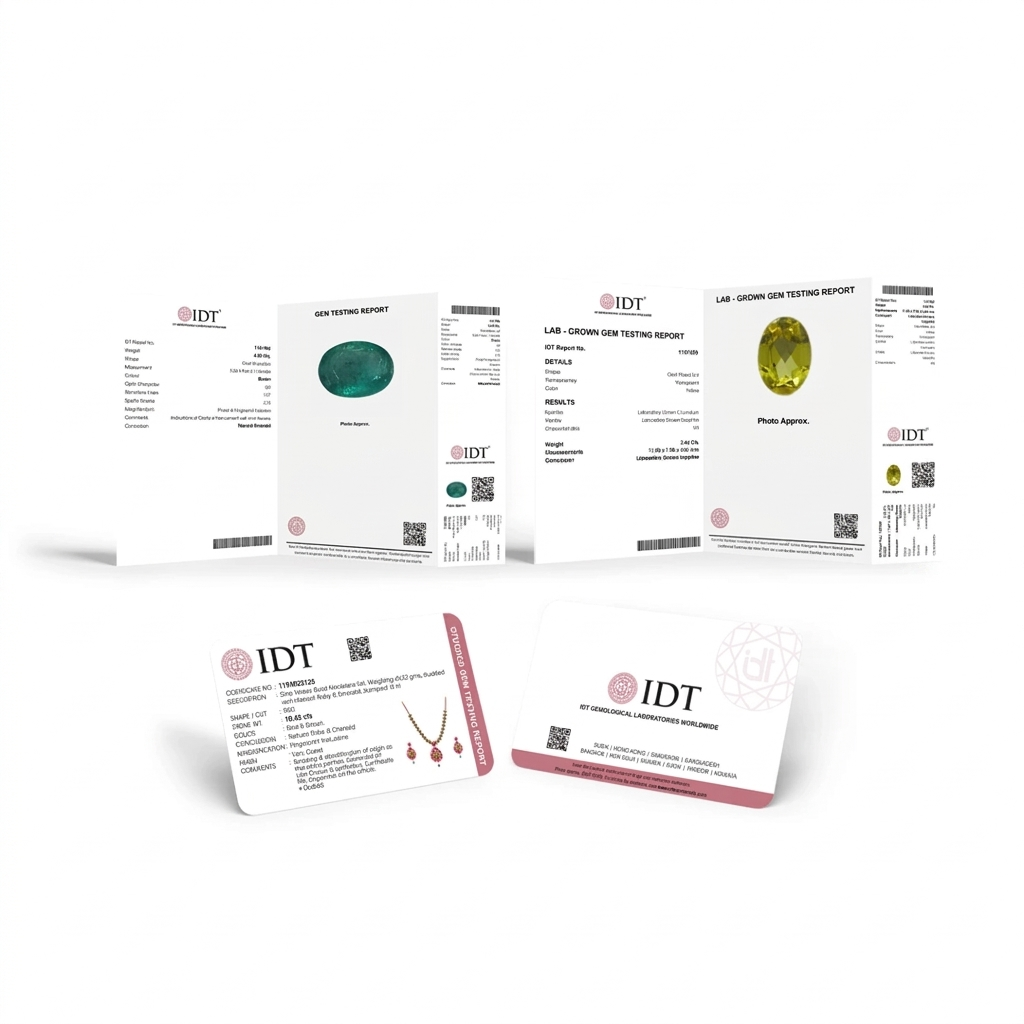
Colored gemstones like rubies, sapphires, emeralds, spinels, and tourmalines have fascinated people for centuries. Today, they are more accessible than ever through jewellery stores, exhibitions, online platforms, and private sellers. But as interest in colored gemstones grows, so does the importance of knowing exactly what you are buying. A vivid red gemstone may look like a ruby, but it could actually be spinel, garnet, glass-filled material, or even a lab-grown stone. Similarly, a blue gemstone could be a natural sapphire, treated topaz, aquamarine, or synthetic sapphire. Without proper scientific testing, it is extremely difficult to identify gemstones accurately with the naked eye. That is why colored gemstone certification has become more important than ever. Why Colored Gemstones Are Difficult to Identify Unlike diamonds, colored gemstones come in a wide variety of mineral species, treatments, and origins. Many stones can appear visually similar even though they have completely different values and scientific characteristics. For example: This is why professional gemstone testing is essential. Modern gemological laboratories use scientific equipment and advanced testing methods to identify gemstones accurately without damaging them. What Is Colored Gemstone Certification? Colored gemstone certification is a scientific analysis performed by a professional gemological laboratory to determine: A gemstone certificate is not a price valuation. It is an evidence-based identity document that scientifically explains what the gemstone actually is. At IDT Gemological Laboratories, gemstones are tested using advanced gemological methods designed to provide accurate and transparent reporting. How Gemological Laboratories Test Gemstones Professional gemstone laboratories use multiple scientific methods to analyze gemstones. These may include: Refractive Index Testing Measures how light travels through the gemstone. Different gem species have unique optical properties. Spectroscopy Helps identify trace elements, treatments, and growth patterns invisible to the naked eye. Inclusion Analysis Microscopic inclusions inside gemstones can help determine whether a stone is natural or synthetic. Fluorescence Testing Some gemstones react differently under ultraviolet light, helping gemologists identify treatments and origins. Growth Structure Analysis Used to differentiate natural gemstones from lab-grown gemstones. These methods allow laboratories to identify gemstones accurately without causing damage to the stone. Why Gemstone Certification Matters for Buyers The gemstone market today is global and highly accessible. While this offers buyers more choices, it also increases the risk of misinformation and undisclosed treatments. Certification becomes important in situations such as: A gemstone testing report provides clarity, transparency, and confidence. Natural vs Lab-Grown Gemstones One of the biggest areas of confusion today is the difference between natural and lab-grown gemstones. Lab-grown gemstones are real gemstones with the same chemical composition as natural stones. However, they are created in controlled laboratory environments instead of forming naturally inside the Earth over millions of years. Both natural and lab-grown gemstones are legitimate products. What matters is proper disclosure. Scientific testing is the only reliable way to confirm whether a gemstone is natural or lab-grown. Why Treatment Detection Is Important Many colored gemstones in the market undergo treatments to improve their appearance. Common gemstone treatments include: These treatments are widely accepted in the gemstone industry when properly disclosed. However, untreated gemstones can have significantly different market values compared to treated stones. A professional gemstone certification report helps identify detectable treatments and provides transparency to buyers. Certification for Mounted Jewellery Many people own gemstone jewellery where the stones are already mounted in rings, pendants, or earrings. Removing gemstones from jewellery for testing is not always practical. That is why specialized studded gemstone testing reports are important. Using non-invasive testing techniques, gemological laboratories can often identify mounted gemstones and detect treatments without damaging the jewellery. This is especially useful for: The IDT Standard: Scientific Clarity You Can Trust At IDT Gemological Laboratories, every gemstone report is built on scientific testing, transparent analysis, and evidence-based reporting. Our laboratory uses advanced gemological methods to identify gemstone species, determine whether a stone is natural or lab-grown, and detect detectable treatments using non-destructive testing techniques. Depending on the gemstone and how it is submitted, testing may include: IDT offers specialized testing solutions for different gemstone requirements, including: Natural Gem Testing Report Designed for loose natural gemstones. Identifies gemstone species, variety, and detectable treatments through detailed scientific analysis. Lab Grown Gem Testing Report Used to determine whether a gemstone is laboratory-grown through advanced spectroscopic and microscopic examination. Studded Gem Testing Report Designed for mounted gemstone jewellery where stones cannot be removed easily. Uses non-invasive testing methods to examine gemstones without damaging the jewellery. Every report issued by IDT Gemological Laboratories is created with a focus on scientific accuracy, transparency, and responsible gemological reporting. Whether the gemstone is loose or mounted, natural or lab-grown, professional certification helps provide the clarity needed to better understand what the gemstone truly is. FAQs 1. What is colored gemstone certification? Colored gemstone certification is a scientific testing process used to identify a gemstone’s species, origin type, and detectable treatments through professional gemological analysis. 2. Can gemstone certification identify lab-grown gemstones? Yes. Advanced gemological testing can identify whether a gemstone is natural or lab-grown by analyzing growth structures and spectroscopic signatures. 3. Why is gemstone treatment detection important? Treatments can significantly affect a gemstone’s appearance and market value. Certification helps disclose detectable treatments transparently. 4. Can mounted gemstone jewellery be certified? Yes. Many gemological laboratories offer testing for mounted jewellery using non-invasive techniques without removing the gemstone. 5. Is a gemstone certificate the same as a valuation? No. A gemstone certificate identifies and analyzes the gemstone scientifically. It does not determine resale or market price.