
Top 15 Diamond Mines in the World: Where Diamonds Are Found
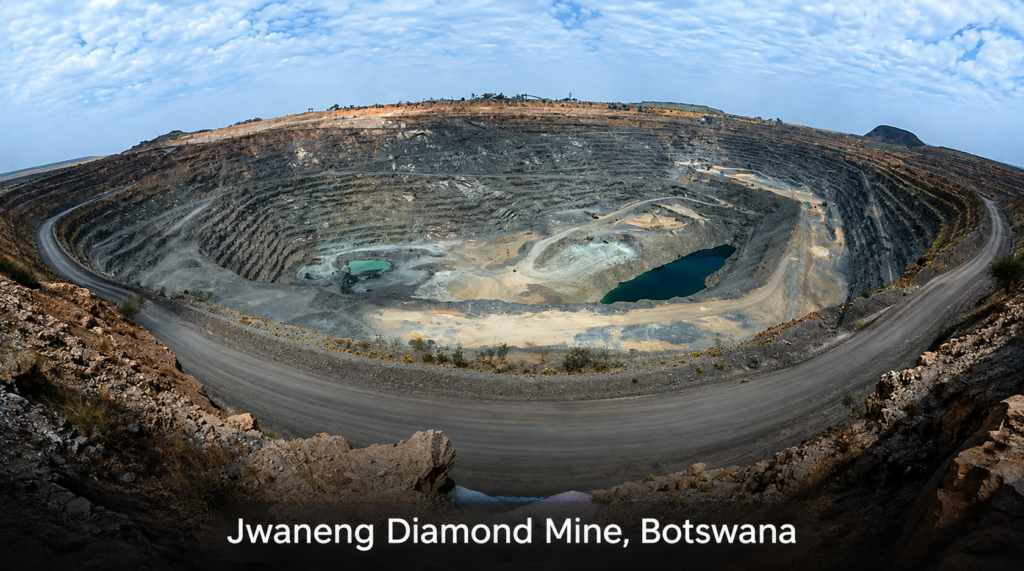
Before a natural diamond reaches a jewellery store, it begins its journey deep within the Earth. Natural diamonds form under extreme heat and pressure over geological timescales. They are eventually brought closer to the Earth’s surface through volcanic activity and can be recovered from kimberlite pipes, alluvial deposits and even the seabed. Today, major diamond mines in the world are found across Botswana, Russia, Angola, Canada, South Africa and Lesotho. From mines producing millions of carats to legendary locations known for enormous or rare coloured diamonds, here are 15 of the world’s most famous diamond mines. Note: This list considers global importance, production history, famous discoveries and significance to the natural diamond industry. It is not a strict ranking by annual production or reserves. Top 15 Diamond Mines in the World at a Glance Diamond Mine Country Famous For Jwaneng Botswana One of the richest diamond mines by value Orapa Botswana One of the world’s largest open-pit diamond mines Karowe Botswana Exceptional diamonds over 1,000 carats Catoca Angola Major African diamond production Luele Angola Major new diamond project Cullinan South Africa The 3,106-carat Cullinan Diamond Venetia South Africa Major South African diamond mine Letšeng Lesotho Large, high-value white diamonds Gahcho Kué Canada Major Canadian diamond production Ekati Canada Canada’s first major diamond mine Diavik Canada Over 150 million carats produced before closure Aikhal Russia Major Yakutian diamond operation Udachny Russia Large underground diamond mine Mir Russia Iconic giant open-pit mine Argyle Australia Famous pink and red diamonds 1. Jwaneng Diamond Mine, Botswana Location: BotswanaKnown for: Exceptional diamond value Jwaneng is one of the most famous diamond mines in the world and is widely described as one of the richest diamond mines by value. It is operated by Debswana, a partnership between the Government of Botswana and De Beers. Jwaneng remains a major producer, with De Beers reporting more than 2.2 million carats recovered in Q1 2026 alone. 2. Orapa Diamond Mine, Botswana Location: BotswanaKnown for: Enormous open-pit operation Orapa is another major Debswana mine and one of the world’s best-known open-pit diamond operations. Mining began in the early 1970s, helping transform Botswana into one of the world’s leading natural diamond-producing countries. Orapa continues to operate today and remains an important contributor to Botswana’s diamond production. 3. Karowe Diamond Mine, Botswana Location: BotswanaKnown for: Extremely large diamonds Karowe has become famous for something extraordinary: very large natural diamonds. According to Lucara Diamond, Karowe is the only diamond mine to have recovered nine diamonds weighing more than 1,000 carats each. Its major discoveries include the 1,109-carat Lesedi La Rona and the enormous 2,488-carat rough diamond recovered in 2024. An underground project is being developed to extend Karowe’s mine life to approximately 2038. 4. Catoca Diamond Mine, Angola Location: AngolaKnown for: Large-scale diamond production Catoca is one of Africa’s best-known diamond mines and has played a major role in Angola’s emergence as an important natural diamond producer. Located in Lunda Sul Province, Catoca is a large kimberlite mining operation producing rough diamonds for the international market. Together with newer projects, it has helped establish Angola as an increasingly important player in global diamond mining. 5. Luele Diamond Mine, Angola Location: AngolaKnown for: One of Angola’s major new diamond projects Luele represents a newer chapter in African diamond mining. Located in Angola’s diamond-rich Lunda region, the deposit has become increasingly important as the country expands its natural diamond production. Its development also shows how the geography of global diamond supply continues to evolve beyond long-established mines. 6. Cullinan Diamond Mine, South Africa Location: South AfricaKnown for: The world’s largest gem-quality rough diamond Few diamond mines have produced a discovery as famous as Cullinan. In 1905, the mine produced the legendary Cullinan Diamond, weighing approximately 3,106 carats in its rough form. It remains the largest gem-quality rough diamond ever discovered. Cullinan is also famous for rare blue diamonds and exceptional Type II diamonds and continues to be an important South African mine. 7. Venetia Diamond Mine, South Africa Location: Limpopo, South AfricaKnown for: Major modern South African diamond production Venetia is one of South Africa’s most important modern diamond mines. The operation has been transitioning from open-pit to underground mining, with underground production beginning in 2023. De Beers reported strong underground production during the first half of 2026, although it has proposed a two-year production pause beginning in the second half of 2026 as part of changes responding to diamond-market conditions. 8. Letšeng Diamond Mine, Lesotho Location: LesothoKnown for: Large, high-quality white diamonds Located high in the mountains of Lesotho, Letšeng has built a reputation for producing exceptional large diamonds. Gem Diamonds describes Letšeng as the highest average dollar-per-carat kimberlite diamond mine in the world. The mine continues to produce notable stones. In June 2026, it recovered an exceptional 346.99-carat Type II white diamond. 9. Gahcho Kué Diamond Mine, Canada Location: Northwest Territories, CanadaKnown for: Major Canadian diamond production Gahcho Kué is one of Canada’s important operating diamond mines. Located in the remote Northwest Territories, it is jointly owned by De Beers and Mountain Province Diamonds. Production increased strongly during the first half of 2026 as higher-grade ore from a new mining area was processed. 10. Ekati Diamond Mine, Canada Location: Northwest Territories, CanadaKnown for: Canada’s first major diamond mine Ekati transformed Canadian diamond history when commercial production began in 1998. It became Canada’s first major diamond mine and helped prove that the country’s remote northern region contained commercially important diamond deposits. Its current mine plan runs to around 2028, while further projects could potentially extend mining considerably longer. 11. Diavik Diamond Mine, Canada Location: Northwest Territories, CanadaKnown for: More than 150 million carats produced Diavik was one of Canada’s most significant diamond mines. But unlike many older lists of famous diamond mines, Diavik should now be described as a closed mine. After 23 years of operations and more than 150 million carats of rough diamonds, Diavik produced its final diamonds in March 2026. Its closure marks the end of an important chapter in
History of Jewellery: From Ancient Adornment to Modern Jewellery
Jewellery existed long before diamonds were cut, gold was hallmarked or gemstones were examined in laboratories. Some of the oldest known personal ornaments date back at least 142,000 years, when early humans used perforated shells as beads. Thousands of years later, civilisations began working with gold, silver, coloured stones and eventually diamonds to create jewellery that represented beauty, power, faith, wealth and identity. From the bead makers of the Indus Valley and the goldsmiths of ancient Egypt to Mughal jewellery, Victorian designs, Art Deco diamonds and today’s scientifically tested gemstones, the history of jewellery is also a history of human civilisation. So, how did jewellery evolve from a simple shell into the diamond and gemstone jewellery we recognise today? History of Jewellery at a Glance Period Approximate Time What Changed Prehistoric Jewellery 142,000+ years ago Shells, bones and natural materials used as personal ornaments Ancient Civilisations c. 4000 BCE onwards Goldworking, gemstones, amulets and elaborate jewellery developed Indus Valley Civilisation c. 3300 to 1300 BCE Advanced bead-making, metalwork and stone ornaments flourished Ancient Greece & Rome c. 800 BCE to 476 CE Gemstones, cameos, rings and symbolic jewellery became widespread Medieval Period c. 5th to 15th century Jewellery reflected religion, rank and social status Renaissance c. 15th to 17th century Gemstones, enamel and increasingly elaborate jewellery flourished Mughal India 16th to 18th century Gemstones, Kundan, enamel and royal jewellery reached extraordinary levels of craftsmanship Georgian Era 1714 to 1837 Handcrafted gold and silver jewellery and increasingly gem-focused designs Victorian Era 1837 to 1901 Romantic, symbolic and mourning jewellery evolved with fashion Art Nouveau c. 1890 to 1910 Nature-inspired forms and artistic enamel work Edwardian / Belle Époque c. 1901 to 1915 Delicate platinum and diamond jewellery Art Deco 1920s to 1930s Geometric forms, bold contrast and new diamond cuts Retro & Mid-Century 1940s to 1950s Bold gold jewellery followed by glamorous post-war designs Contemporary Jewellery 1960s to present Technology, global design, laboratory-grown diamonds and gemological certification Where Did Jewellery Begin? The beginning of jewellery takes us much further into the past than most people realise. Archaeologists discovered perforated marine shells in Bizmoune Cave in Morocco from deposits dating back at least 142,000 years. Researchers believe these shell beads were deliberately worn as ornaments and may have communicated identity or social relationships. These early ornaments did not contain gold or diamonds. Humans initially used materials available around them, including: The purpose of jewellery was probably never purely decorative. Personal ornaments could communicate identity, membership, belief, status or relationships within a community. This makes jewellery one of humanity’s oldest forms of visual communication. Jewellery in the Ancient World As settlements grew into organised civilisations, jewellery became increasingly sophisticated. The discovery and working of metals transformed ornament making. Gold was particularly valued because of its beauty, malleability and resistance to corrosion. Gemstones added something else: colour. Jewellery in Ancient Mesopotamia Some remarkable examples of early gold jewellery have been recovered from ancient Mesopotamia. Royal burials at Ur, dating to the third millennium BCE, contained elaborate ornaments combining gold with materials such as lapis lazuli and carnelian. Jewellery was closely linked with power and social standing. Headdresses, necklaces, earrings and other ornaments demonstrated both craftsmanship and access to rare materials arriving through early trade networks. The jewellery trade was already becoming international. Jewellery in Ancient Egypt Few ancient civilisations are associated with jewellery as strongly as Egypt. Gold was widely used for personal adornment, royal objects, religious pieces and funerary jewellery. Surviving Egyptian gold objects date back to the fourth millennium BCE. Egyptian jewellery frequently incorporated materials such as: But an Egyptian jewel was often more than an ornament. Scarabs, protective amulets and symbolic motifs could have religious or spiritual meaning. Jewellery was worn in life and was also placed with the deceased. Colour itself could carry meaning, while access to certain materials demonstrated wealth and social position. Ancient Egyptian jewellery therefore combined beauty, belief, craftsmanship and status in a way that continues to fascinate jewellers today. History of Jewellery in India India deserves a particularly important place in the history of jewellery. The Indian subcontinent developed one of the world’s richest and most continuous jewellery traditions, influenced over thousands of years by regional craftsmanship, royal patronage, religion, trade and access to gemstones. Its importance extends beyond jewellery design. India also played a central role in the early history of diamonds. Jewellery in the Indus Valley Civilisation The story begins with the Indus Valley Civilisation, which flourished more than 4,000 years ago. Archaeological evidence shows considerable skill in ornament making. Craftspeople produced beads, bangles, necklaces and other ornaments using materials including: Bead-making was particularly sophisticated. Carnelian and other stones were shaped, drilled and polished, while extensive trading networks helped move materials and finished ornaments between settlements and distant regions. Jewellery was already becoming a specialised craft rather than simply decoration. Jewellery in Ancient and Classical India As Indian kingdoms and empires developed, jewellery became deeply connected with society, religion, ceremony and royal life. Sculptures, paintings and surviving ornaments show men and women wearing elaborate earrings, necklaces, armlets, waist belts, anklets, rings and hair ornaments. Gold became particularly significant, while pearls and coloured gemstones added variety and symbolism. Jewellery could communicate: Many of these associations remain visible in Indian jewellery traditions today. India and the Early History of Diamonds India holds another extraordinary place in gem history. For centuries, the Indian subcontinent was the world’s principal known source of diamonds. Diamonds were mined, traded and worked in India long before major deposits were discovered elsewhere. Historical research describes India as central to the early mining, finishing and wearing of diamonds, with diamond-working knowledge later spreading towards Europe. Indian diamonds would eventually travel through international trade routes and become part of royal collections across the world. This relationship between India and diamonds would shape global jewellery history for centuries. The Mughal Influence on Indian Jewellery The Mughal period transformed Indian jewellery design through an extraordinary meeting of Indian craftsmanship, Persian aesthetics, gemstones and imperial patronage.
Diamond Shapes and Cuts: A Complete Guide to Choosing the Right Diamond
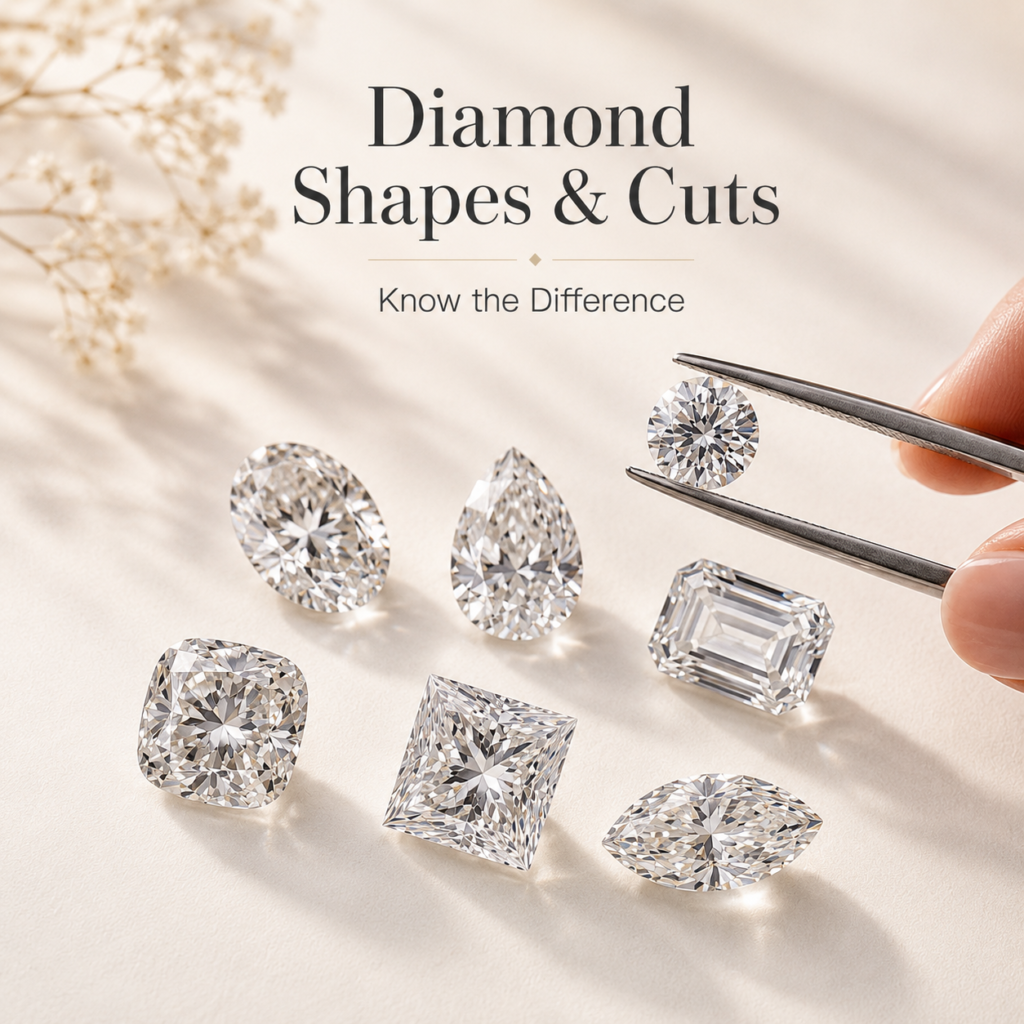
When choosing a diamond, you will often hear words like round, oval, emerald, princess, brilliant and cushion. But there is one common misunderstanding: diamond shape and diamond cut are not the same thing. The shape of a diamond describes its visible outline, such as round, oval, pear or square. The cut relates to the way the diamond has been fashioned, including its facets, proportions and how effectively it interacts with light. Understanding the difference between diamond shapes and cuts can help you look beyond appearance and better understand what makes one diamond sparkle differently from another. In this guide, we explain the most popular diamond shapes, types of diamond cuts, how cut affects brilliance, and what to look for when choosing a diamond. Diamond Shape vs Diamond Cut: What Is the Difference? Although the terms are frequently used interchangeably, they describe different characteristics. Diamond Shape Diamond shape refers to the outline or silhouette of a diamond when viewed from above. Examples include: Round is the most commonly recognised diamond shape. Shapes other than round are generally referred to as fancy shapes. Diamond Cut Diamond cut relates to the diamond’s design, facet arrangement, proportions and craftsmanship. A diamond’s facets determine how light enters the stone, travels through it and returns to the viewer. This affects three important aspects of its appearance: Brightness: The amount of white light reflected by the diamond. Fire: The flashes of spectral colours created as light disperses. Scintillation: The flashes of light and dark seen as the diamond, light source or viewer moves. This is why two diamonds of the same shape and carat weight can look noticeably different. A well-cut diamond can appear bright and lively, while less effective proportions may allow more light to escape instead of returning through the top of the stone. Diamond Shapes and Cuts at a Glance Diamond Shape Common Cutting Style Overall Appearance Round Brilliant Maximum emphasis on brilliance and sparkle Oval Modified brilliant Elongated and brilliant Princess Brilliant / modified brilliant Square, modern and sparkling Cushion Brilliant / modified brilliant Soft square or rectangular outline Emerald Step cut Clean, elegant flashes of light Pear Modified brilliant Teardrop-shaped and elongated Marquise Modified brilliant Long, pointed and dramatic Radiant Brilliant / mixed style Rectangular or square with strong sparkle Asscher Step cut Square, geometric and architectural Heart Modified brilliant Distinctive and symbolic 10 Popular Diamond Shapes Explained 1. Round Brilliant Diamond The round brilliant diamond is perhaps the most recognised diamond shape in the world. A standard round brilliant is designed with 57 or 58 facets, depending on whether a culet facet is present. Its carefully arranged facets are designed to optimise the diamond’s interaction with light. Why choose a round diamond? Round diamonds are ideal for someone looking for: Because its proportions and light performance have been extensively studied, the round brilliant also has well-established systems for assessing cut quality. 2. Oval Diamond An oval diamond combines an elongated silhouette with brilliant-style faceting. It offers plenty of sparkle while creating a longer appearance across the finger. Why choose an oval diamond? Oval diamonds are popular for: One feature to observe in oval diamonds is the bow-tie effect, a darker pattern that may appear across the centre of some elongated brilliant-cut diamonds. The strength and appearance of this effect can vary from one diamond to another, making visual evaluation important. 3. Princess Cut Diamond The princess cut diamond typically has a square or slightly rectangular outline with pointed corners and brilliant-style faceting. It combines a sharp geometric appearance with strong light activity. Why choose a princess cut? It suits buyers looking for: Because the corners are pointed, the setting should provide appropriate protection to reduce the possibility of damage from impact. 4. Cushion Cut Diamond A cushion cut diamond usually has a square or rectangular outline with softened, rounded corners. Its appearance resembles a cushion, which gives the shape its name. There are several cushion faceting variations, meaning two cushion diamonds may have noticeably different sparkle patterns. Why choose a cushion diamond? Choose cushion if you prefer: This variation is also why it is important to evaluate the individual diamond rather than choosing only by the name of the shape. 5. Emerald Cut Diamond An emerald cut diamond is generally rectangular with cropped corners and a step-cut facet arrangement. Unlike brilliant cuts, which use many smaller facets to create intense scintillation, step cuts use longer, parallel facets. This produces broad flashes and the distinctive hall-of-mirrors appearance associated with emerald cuts. Why choose an emerald cut? It is suited to those who prefer: Because step cuts have larger, more open facets, internal characteristics can sometimes be easier to notice than in brilliant-style cuts. 6. Pear-Shaped Diamond The pear-shaped diamond, also known as a teardrop shape, combines a rounded end with a single pointed tip. It is typically fashioned using modified brilliant-style facets. Why choose a pear diamond? Pear shapes work well for: The pointed end is an important area to protect when the diamond is set into jewellery. As with oval and marquise diamonds, some pear-shaped diamonds may also show a bow-tie effect. 7. Marquise Diamond A marquise diamond has an elongated body with pointed ends on both sides. Its long outline can create substantial visual presence when viewed from above. Why choose a marquise diamond? It is ideal for: Symmetry is particularly noticeable in a marquise. The two pointed ends and curved sides should create a visually balanced outline. 8. Radiant Cut Diamond The radiant cut diamond is generally square or rectangular with cropped corners and brilliant-style or mixed faceting. It combines the structured outline associated with rectangular diamonds with more active sparkle. Why choose a radiant diamond? Radiant cuts offer: A radiant can be an interesting option for someone who likes the overall outline of an emerald-shaped diamond but prefers a more brilliant facet pattern. 9. Asscher Cut Diamond The Asscher cut is generally square with cropped corners and step-cut facets. It shares some visual characteristics with the emerald
Natural vs Synthetic vs Glass Filled Ruby: How to Tell the Difference
“Is My Ruby Real?” The Question IDT Gets Daily You’re buying a ruby for Sun in astrology. Or maybe for a ring. The seller says it is a “natural ruby” and the price looks good. But is it really natural? There are three common types of ruby you may come across in the market: The problem is that all three can look very similar to the eye. Based on stones submitted to IDT for testing in 2025 to 2026, approximately 41% of rubies represented as “natural” were actually synthetic or glass filled. Most buyers only found out after IDT testing. This guide explains the differences between these ruby types, how IDT identifies them, and why the Conclusion and Comments sections of your ruby certification matter before you buy. Type 1: Natural Ruby What is a Natural Ruby? Natural ruby is a variety of corundum that forms naturally in the earth over millions of years. Its red colour comes mainly from chromium. Rubies are mined in regions including Burma, Mozambique, Thailand, and Madagascar. Key Features Inclusions: Natural rubies often contain internal characteristics such as silk, crystals, and fingerprints. Exceptionally clean natural rubies are rare. Durability: Ruby has a hardness of 9 on the Mohs scale, making it suitable for jewellery. Astrology: In Vedic astrology, ruby is commonly associated with the Sun. Many astrologers prefer natural and unheated ruby. What the IDT Certificate May State Results: Natural Corundum, RedConclusion: NaturalComments: No indications of heating or Indications of heating Type 2: Synthetic Ruby or Lab Grown Ruby What is Synthetic Ruby? Synthetic ruby is corundum grown in a laboratory. It has the same basic chemical composition and hardness as natural ruby, but its origin is different. Natural ruby forms in the earth, while synthetic ruby is created under controlled laboratory conditions. How is Synthetic Ruby Made? Common production methods include: These processes can produce rubies that appear very clean to the naked eye. Key Features Inclusions: Synthetic rubies may appear eye clean or show characteristics such as curved growth lines under magnification. Durability: Synthetic ruby also has a hardness of 9 on the Mohs scale. Astrology: Views on synthetic ruby vary among astrologers. Many prefer natural ruby, while others may consider synthetic stones depending on individual beliefs and budget. What the IDT Certificate May State Results: Laboratory Grown Corundum, Red or Lab Grown Corundum, RedConclusion: Synthetic / Laboratory GrownComments: The growth method may also be mentioned when detected. Synthetic ruby is real corundum, but it is not naturally formed. The important thing is knowing exactly what you are buying and paying the appropriate price for it. Learn more in our Lab Grown Gemstone Guide. Type 3: Glass Filled Ruby or Lead Glass Ruby What is Glass Filled Ruby? Some natural rubies contain a large number of fractures. In glass filled ruby, these fractures are filled with glass to improve transparency and overall appearance. Why is Glass Filling Done? A heavily fractured ruby may look opaque or unattractive. Filling the fractures with glass can make the stone appear cleaner and more transparent. However, this treatment significantly affects its value, durability, and care requirements. Key Features Appearance: Glass filled ruby can appear surprisingly clean and bright for its price. Durability: The ruby itself is hard, but the glass filling is much softer and can be damaged by heat, acids, or certain jewellery cleaning methods. Value: Glass filled ruby is generally worth considerably less than a comparable untreated natural ruby. Disclosure: The treatment should always be disclosed to the buyer. What the IDT Certificate May State Results: Natural Corundum, RedConclusion: NaturalComments: Indications of clarity enhancement with glass or Lead glass filling detected Important: Glass filled rubies require special care. Heat used during jewellery repairs can damage the filling, so always check the Comments section of the gemstone report before repair Natural vs Synthetic vs Glass Filled Ruby: Key Differences Feature Natural Ruby Synthetic Ruby Glass Filled Ruby Origin Formed naturally in earth Grown in a laboratory Natural ruby treated with glass Material Natural corundum Laboratory grown corundum Natural corundum with glass filling Appearance Often shows natural inclusions Can appear very clean May appear unusually clean and transparent Hardness 9 on Mohs scale 9 on Mohs scale Ruby is 9, but glass filling is softer Value Generally higher Usually lower than comparable natural ruby Usually much lower than untreated natural ruby IDT Conclusion Natural Synthetic / Laboratory Grown Natural IDT Comments Heating status Growth information may be mentioned Glass filling or clarity enhancement disclosed How IDT Detects Each Type When you submit a ruby to IDT labs in Delhi, Mumbai, Surat, Kolkata, Thrissur, Chennai, or our three Dubai locations, gemologists examine the stone using specialised testing methods. 1. High Powered Microscopy Gemologists study internal characteristics and inclusions. Natural silk, synthetic growth features, and characteristics associated with glass filling can help identify the nature of the stone. 2. Spectroscopy Spectroscopic testing helps gemologists study how the stone interacts with light and can provide important information about its composition and origin. 3. UV Fluorescence Different rubies may react differently under ultraviolet light. These reactions provide additional information during testing. 4. Refractometer Refractive index testing helps identify gemstone materials and can also assist in recognising glass present at or near the surface. 5. Advanced Gemological Instruments Additional instruments and testing techniques may be used to confirm the gemstone species and detect treatments or laboratory growth. Understanding Your IDT Certificate Three sections are especially important: Results: Identifies the gemstone species. Conclusion: States whether the stone is natural or synthetic / laboratory grown. Comments: Provides information about treatments such as heating or glass filling. Quote from Gaurav Issar, Founder, IDT “Ruby buyers ask us daily: is it natural or synthetic? Is it glass filled? You cannot tell by eye. Synthetic can be flawless. Glass filled can look better than natural. IDT tests every ruby. Conclusion tells you if it’s Natural or Synthetic. Comments tells you if it’s heated or glass filled. Check both before you pay. Verify free at idtworldwide.com/verify.” 3
Gemstone for Which Planet? Complete Astrology Gemstone Chart (2026)
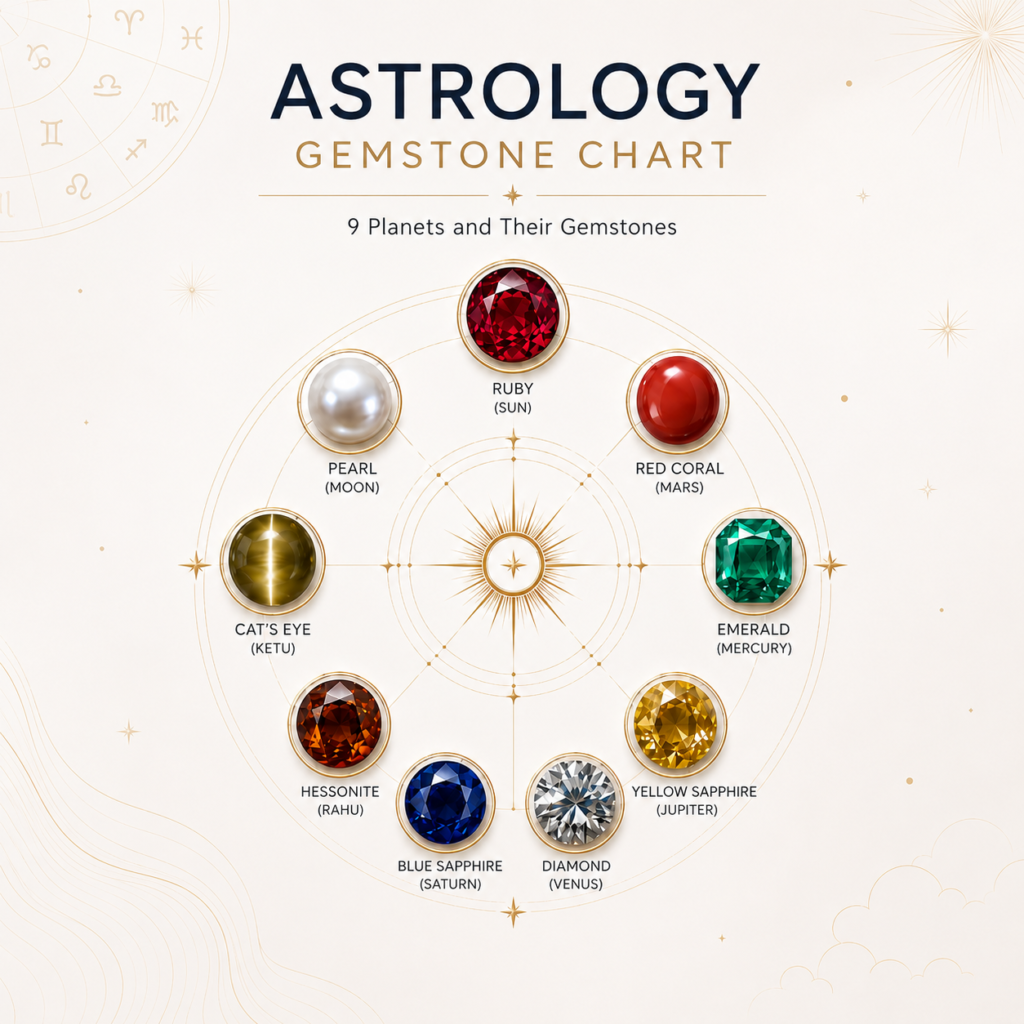
If an astrologer recommends a gemstone for a particular planet, you may come across several stones associated with the same planet. For example, yellow sapphire is traditionally associated with Jupiter, while citrine and yellow topaz may also be suggested as substitutes by some astrologers. But these are different gemstones with different identities and values. That is why, apart from knowing which gemstone has been prescribed, it is equally important to know what gemstone you are actually buying. In Vedic astrology, nine primary gemstones are traditionally associated with the Navagrahas. These are commonly referred to as Navratna gemstones or Navagraha gemstones. This guide explains the primary planetary gemstones, commonly suggested substitutes and how gemstone certification can help you verify what you are buying. Important: IDT does not advise which gemstone a person should wear for astrological purposes. The associations mentioned below reflect traditional Vedic astrology practices. Always consult your astrologer for a personal recommendation. Complete Astrology Gemstone Chart: 9 Planets and Their Gemstones Planet Primary Gemstone Common Name Sun Ruby Manik Moon Pearl Moti Mars Red Coral Moonga Mercury Emerald Panna Jupiter Yellow Sapphire Pukhraj Venus Diamond Heera Saturn Blue Sapphire Neelam Rahu Hessonite Garnet Gomed Ketu Chrysoberyl Cat’s Eye Lehsunia These nine gemstones make up the traditional Navratna gemstone system. However, an astrologer may sometimes recommend a substitute stone depending on the individual’s horoscope, requirements or budget. Primary vs Substitute Astrology Gemstones A primary gemstone is the stone traditionally associated with a particular planet in the Navratna system. A substitute gemstone is an alternative that some astrologers may recommend instead of the primary gemstone. Examples include: Substitute recommendations can vary between astrologers, so always follow the prescription given specifically to you. Where the Problem Begins The issue is not necessarily buying a substitute gemstone. The issue is buying one gemstone while being told it is another. For example, if you knowingly purchase citrine as a substitute for yellow sapphire and pay accordingly, the transaction is transparent. But if you are sold citrine as yellow sapphire, you are not receiving the gemstone represented to you at the time of purchase. That is where independent gemstone certification becomes important. Why Knowing the Exact Gemstone Matters Many coloured gemstones can appear similar to an untrained eye. A yellow sapphire and citrine, for example, may both appear yellow, but they belong to completely different mineral species. Similarly, natural and synthetic gemstones may look very similar without proper gemological testing. Visual appearance alone therefore cannot always confirm: A gemological laboratory examines the gemstone using professional testing methods and records the findings on a report. How IDT Gemstone Certification Helps IDT Gemological Laboratories independently tests gemstones and reports their gemological characteristics. IDT does not decide whether a gemstone is astrologically suitable for you. Instead, certification helps answer a different question: What gemstone do you actually have? For example, testing can help distinguish between: Once you know what the gemstone is, you can compare the report with: Learn more about Gemstone Certification. Natural, Synthetic, Heated and Unheated Gemstones When purchasing an astrology gemstone, you may frequently hear terms such as natural, synthetic, heated and unheated. These terms should not be used interchangeably. Natural Gemstone A natural gemstone has formed through geological processes rather than being manufactured in a laboratory. Synthetic or Lab-Grown Gemstone A synthetic or laboratory-grown gemstone is produced in a controlled environment rather than formed naturally. Heated Gemstone Some gemstones may undergo heat treatment to modify or improve their appearance. Unheated Gemstone An unheated gemstone shows no indications of heat treatment during gemological examination. Different astrologers may have different preferences regarding natural, synthetic, treated or untreated gemstones. IDT’s role is not to determine which one you should wear. It is to test the gemstone and report the findings. How to Read the Relevant Information on an IDT Gemstone Report When checking an IDT gemstone certificate, focus on what the report actually confirms. 1. Gemstone Identification Check the gemstone identification stated on the report. This tells you what gemstone was identified during testing. For example: Natural Corundum – Yellow and Natural Quartz – Citrine represent different gemstone materials, even though both may appear yellow. 2. Conclusion The Conclusion states whether the tested gemstone is identified as Natural or Synthetic/Lab Grown, where applicable. If you were specifically told that you were purchasing a natural gemstone, this is an important section to check. 3. Comments The Comments section records treatment-related observations where applicable. For gemstones where heat treatment can be evaluated, the report may state: If your astrologer has specifically recommended an unheated gemstone, check this section carefully. A Simple Example: Yellow Sapphire vs Citrine Suppose your astrologer recommends a yellow sapphire for Jupiter. At the jewellery store, you are offered a yellow stone. By appearance alone, you may not be able to confirm whether it is yellow sapphire or another yellow gemstone. Gemological testing may identify it as: Natural Corundum – Yellow or Natural Quartz – Citrine Both are gemstones, but they are not the same gemstone. Certification therefore helps you know what you are purchasing before comparing it with your astrologer’s recommendation. See Yellow Sapphire Certification for more information. Natural Ruby vs Synthetic Ruby The same concern can arise when purchasing a ruby for the Sun. A buyer may specifically request a natural ruby, while the stone being offered could be synthetic. Professional testing helps establish the identity of the gemstone and whether it is natural or synthetic. If your requirement is specifically a natural gemstone, check the Conclusion on the IDT report before making your decision. Read more about Ruby Certification. Astrology Gemstone Buying Checklist Before buying a gemstone recommended for astrological purposes: 1. Know Exactly What Your Astrologer Recommended Ask whether the recommendation specifies: 2. Ask the Seller What Gemstone Is Being Sold Do not rely only on colour or appearance. Ask for the exact gemstone name. 3. Get the Gemstone Professionally Tested Ask for an independent gemstone certification report so that you can verify the identity of the stone. 4. Check Whether
Gemstone Certification Guide: How to Read an IDT Gemstone Certificate
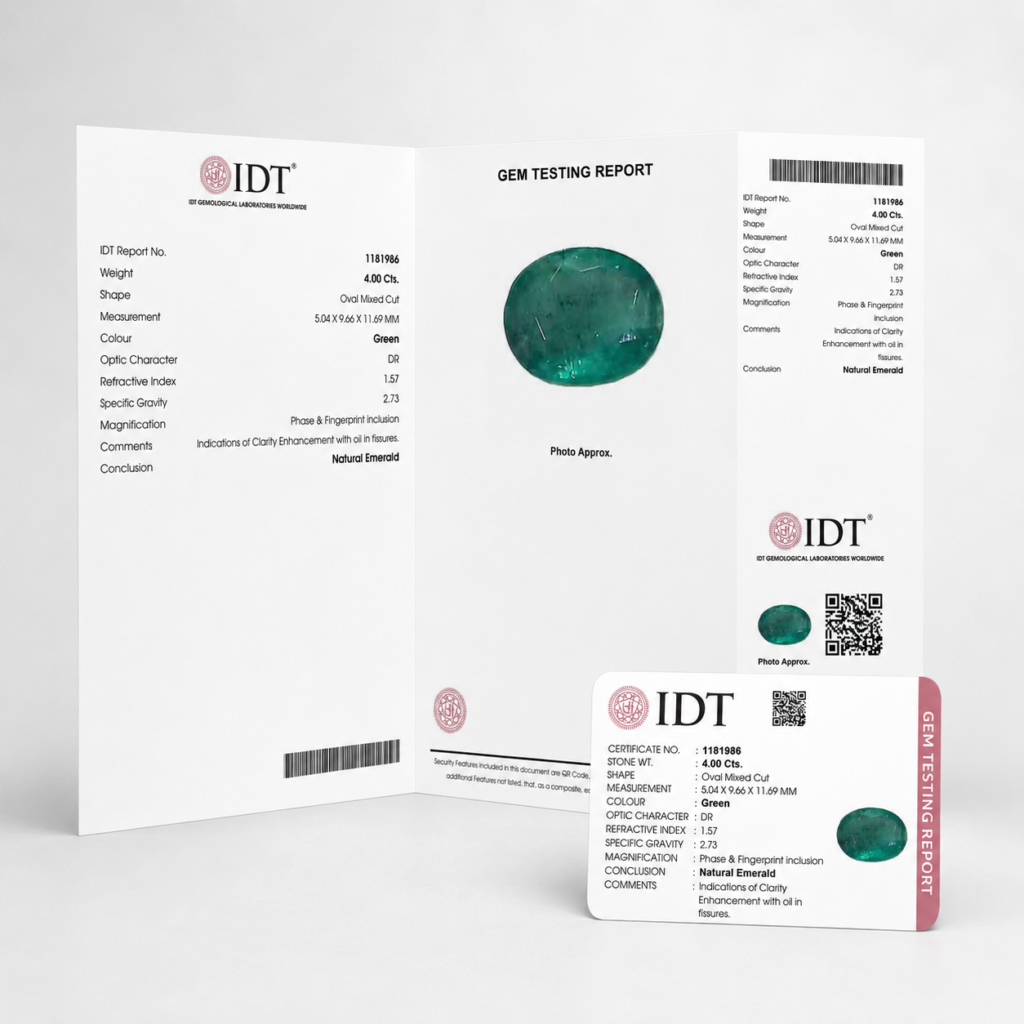
You Have the Gemstone Certificate. But Do You Know What It Says? You asked for gemstone certification. The seller handed you a gemstone certificate or gemological report. It contains terms such as Conclusion, Comments, Refractive Index, Specific Gravity, Optic Character and Magnification. But what do these fields actually mean? Which ones tell you whether a gemstone is natural or synthetic? And where should you look for information about treatments? Understanding a gemstone certificate can help you know what has actually been identified instead of relying only on colour, appearance or seller claims. This guide uses a real IDT GEM TESTING REPORT for a 4.00 Ct Emerald to explain the important fields on a gemstone certificate and how to read them. What Is Gemstone Certification? Gemstone certification is the process of having a gemstone examined by a gemological laboratory using professional testing methods and instruments. After examination, the laboratory issues a gemstone identification report containing information recorded during testing. Depending on the gemstone and report type, a gemstone certificate may provide information such as: Gemstone certification can help buyers understand whether the stone matches the description provided by the seller. For example, two green gemstones may appear similar to the eye, but professional gemological testing may identify them as completely different materials. This is why a gemstone certificate should be read carefully rather than relying only on the gemstone’s colour or appearance. What Is a Certified Gemstone? A certified gemstone is commonly used to describe a gemstone that has been examined by a gemological laboratory and is accompanied by a gemstone identification report. The report records the findings of the laboratory at the time of testing. However, having a certificate does not mean every gemstone is untreated, natural or of a particular quality. You still need to read the information written on the report. For example: The certificate tells you what the laboratory observed. This is why knowing how to read a gemstone certificate is just as important as asking for one. The 2 Most Important Fields on Every IDT Gemstone Certificate On the standard IDT Gem Testing Report, two of the most important fields for a buyer are: The Conclusion identifies the gemstone, while Comments may provide important information about detectable treatments or other observations. In this sample IDT gemstone certificate, the Conclusion reads: Natural Emerald Let’s understand what that means. 1. Conclusion What it says on this report:Natural Emerald What it means:The gemstone was identified as Emerald and determined to be natural rather than synthetic or laboratory grown. Emerald is the green variety of Beryl. Why it matters:This field tells you what the gemstone actually is. For example, if you purchased an Emerald but the Conclusion stated Natural Quartz – Green, the gemstone would not be Emerald. Similarly, if the Conclusion stated Synthetic Beryl – Green, the material would be laboratory grown rather than a natural Emerald. Always compare the Conclusion on the gemstone certificate with what the seller told you or what appears on your invoice. 2. Comments What it says on this report:Indications of Clarity Enhancement with oil in fissures. What it means:The Emerald shows indications of oil being present in surface-reaching fissures. Oiling is commonly used in Emeralds to improve their apparent clarity. Why it matters:The Comments section can contain important information about treatments. Depending on the gemstone, you may see observations such as: This information can affect how you evaluate, care for and understand the gemstone. See Emerald Certification. Image 2Alt text: IDT gemstone certificate Conclusion and Comments highlighted on Emerald report What Information Is Included in a Gemstone Certificate? A gemstone certificate may contain several identification and technical fields. While the exact information depends on the report and gemstone being tested, an IDT gemstone report may include: Some of these fields are easy for buyers to understand, while others are technical measurements used by gemologists during identification. The most important thing is to read the certificate as a whole rather than focusing only on the gemstone name. What Do Refractive Index, Specific Gravity and Optic Character Mean? Your gemstone certificate may contain technical fields that help gemologists identify the material. You do not need to perform these tests yourself, but understanding what they represent can make the report easier to read. Refractive Index (RI): 1.57 on This Report What it means:Refractive Index measures how light behaves when it enters and travels through a gemstone. Different gemstone species have characteristic RI ranges. Emerald, which belongs to the Beryl family, typically has an RI around the range recorded on this report. Why it matters:Refractive Index is one of the observations gemologists use when identifying a gemstone. The RI result is considered together with other gemological tests before the laboratory reaches its Conclusion. Specific Gravity (SG): 2.73 on This Report What it means:Specific Gravity relates to the density of a gemstone, or how heavy it is relative to its volume. Different gem materials can have different SG ranges. Why it matters:Specific Gravity can help gemologists distinguish between materials that may look similar. It is not generally interpreted alone. It forms part of the overall gemstone identification process. Optic Character: DR on This Report What it means:Optic Character describes how light behaves inside the gemstone. DR means Doubly Refractive. Emerald is typically doubly refractive. Why it matters:Optic behaviour provides another diagnostic observation that helps gemologists narrow down the identity of a gemstone. Magnification: Phase & Fingerprint Inclusion on This Report What it means:This field records internal features observed under magnification. Gemologists study inclusions because they may provide useful clues about gemstone identity, formation and, in some cases, natural or synthetic origin. Why it matters:Magnification observations are considered together with other gemological tests before the final Conclusion is issued. These technical fields support the gemstone identification process. You do not need to interpret each result independently, but they help show the observations used during professional gemstone testing. How to Read a Gemstone Certificate Step by Step When checking a gemstone certificate, start with the information that matters most
SYD 100 Diamond Testing Machine: Laboratory-Grade Diamond Detection for the Jewellery Trade
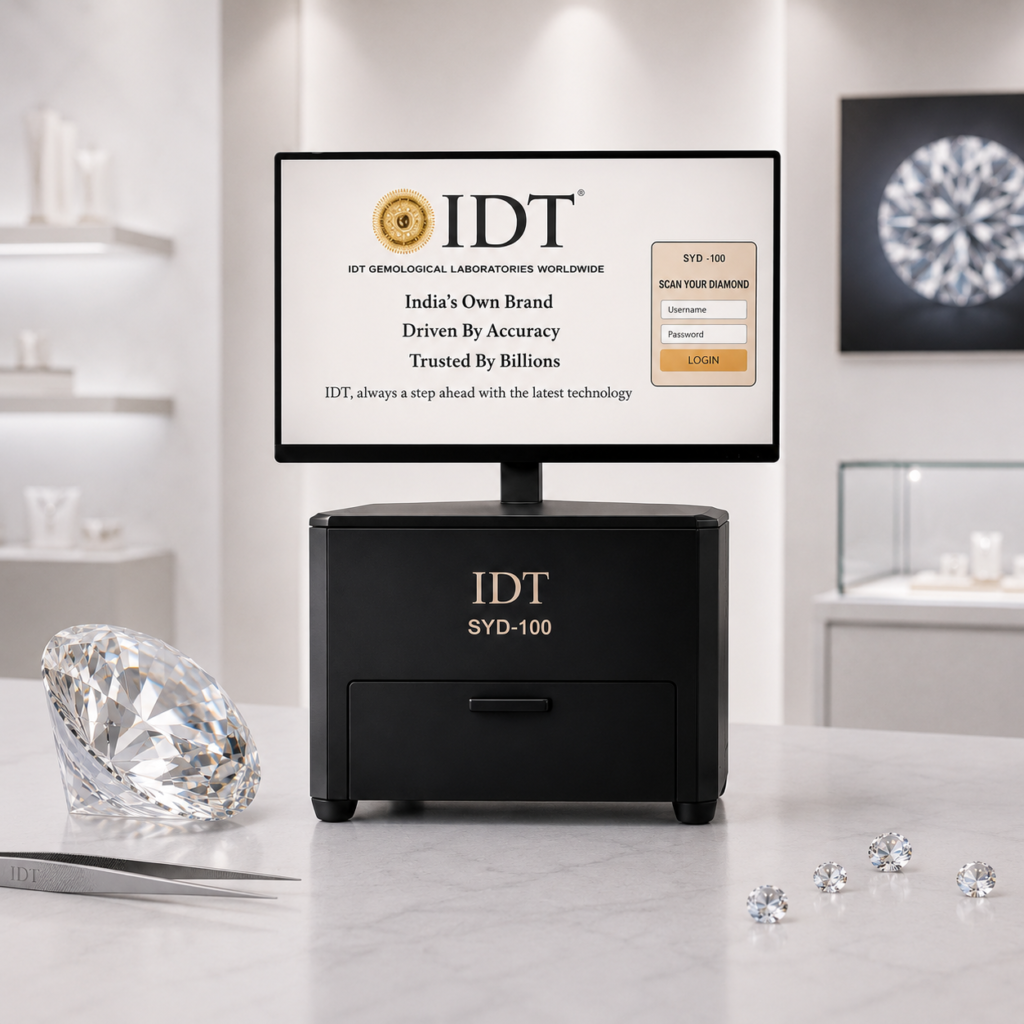
The diamond industry is evolving rapidly. Natural diamonds, laboratory-grown diamonds, treated stones, moissanite, zircon, and other simulants can often appear visually similar. For jewellers, manufacturers, wholesalers, and quality-control teams, identifying these stones accurately is essential. A basic handheld diamond tester may provide an initial indication, but today’s jewellery businesses require a more advanced and dependable solution. The SYD 100 Diamond Testing Machine, developed by IDT Gemological Laboratories, brings laboratory-grade diamond authentication technology into everyday jewellery environments. It provides fast and decisive identification of natural diamonds, lab-grown diamonds, treated stones, and simulants, whether they are loose, polished, or mounted in jewellery. What Is the SYD 100 Diamond Testing Machine? The SYD 100 is IDT’s proprietary diamond testing machine, designed for large jewellery articles and high-volume diamond screening. It combines advanced optical engineering, multiple UV fluorescence evaluation, AI-assisted interpretation, and IDT’s gemological expertise to provide consistent and trade-ready results. Unlike a conventional diamond tester that may only help distinguish a diamond from certain simulants, the SYD 100 examines multiple characteristics of a stone. This enables the machine to identify a wider spectrum of materials and treatments. The SYD 100 is suitable for testing: Every result reflects IDT’s scientific standards, helping jewellery businesses make informed decisions with greater confidence. Why Does the Jewellery Industry Need an Advanced Diamond Detector? The growing availability of laboratory-grown diamonds and highly convincing diamond simulants has made visual identification increasingly difficult. A stone may look like a natural diamond but could be laboratory-grown, treated, or even a simulant. Mounted jewellery can create an additional challenge because stones cannot always be removed for individual testing. This is where an advanced diamond detector such as the SYD 100 becomes important. The machine helps jewellery professionals screen stones before they are purchased, manufactured, sold, exchanged, or accepted for quality control. It brings scientific verification directly into jewellery stores, manufacturing units, wholesale offices, and quality-control departments. Reliable Jewellery Buy-Back and Resale Evaluation Buy-back, exchange, and resale are important parts of a jeweller’s business. Before accepting previously owned jewellery, jewellers need clarity on whether the stones are natural, laboratory-grown, treated, or simulants. The SYD 100 enables quick screening of mounted jewellery during buy-back and resale evaluation. This helps jewellers reduce the risk of accepting incorrectly represented stones, make better-informed valuation decisions, and conduct transactions with greater confidence. It also helps jewellers build customer trust by offering greater transparency and assurance during buy-back, exchange, and resale transactions. Customers feel more confident knowing that their jewellery has been checked using advanced diamond authentication technology. What Can the SYD 100 Identify? The SYD 100 offers a complete diamond authentication spectrum for the modern jewellery trade. Natural Diamonds The machine evaluates the stone’s optical and fluorescence behaviour to help identify natural diamonds accurately. Laboratory-Grown Diamonds The SYD 100 detects laboratory-grown diamonds created through both major production methods: This helps reduce the risk of laboratory-grown diamonds being unknowingly mixed with natural diamond parcels or jewellery. HPHT-Treated Diamonds Certain diamonds undergo HPHT treatment to improve or alter their appearance. The SYD 100 supports the identification of such treated stones, providing important information beyond basic diamond detection. Moissanite and Zircon Moissanite and zircon can resemble diamonds, especially to an untrained eye. The SYD 100 helps separate these simulants from natural and laboratory-grown diamonds. Mounted Jewellery One of the major advantages of the SYD 100 is its ability to screen diamonds without requiring them to be removed from the jewellery. It can accommodate large articles such as: Loose and Polished Stones The system can also be used for loose and polished diamonds, making it suitable for manufacturers, traders, wholesalers, and quality-control teams handling diamond parcels. Key Features of the SYD 100 Large Scanning Area The SYD 100 has a scanning area of 260 x 160 mm, allowing users to test large jewellery pieces and multiple stones efficiently. Its spacious testing chamber is particularly useful for necklace sets, chokers, bangles, bracelets, and high-volume loose-stone screening. Capacity of Up to 100 Carats The machine is designed to accommodate loose stones and jewellery articles with a combined capacity of up to 100 carats, making it suitable for businesses handling large quantities of diamonds. 60-Second Detection Cycles Time is critical in busy jewellery environments. The SYD 100 delivers fast detection cycles of approximately 60 seconds, helping businesses screen more articles without disrupting their workflow. AI-Assisted Interpretation AI-supported decisioning helps provide consistent and objective interpretation across different users and business locations. This reduces dependence on individual judgement and makes the testing process more standardised. Advanced Optical Engineering The machine uses advanced optical engineering to evaluate the behaviour and characteristics of stones that may not be visible through ordinary observation. Triple-UV and Fluorescence Science The SYD 100 uses multi-UV and fluorescence-based evaluation to study how stones react under different testing conditions. These reactions provide valuable information for separating natural diamonds, laboratory-grown diamonds, treated stones, and simulants. Compact, Trade-Ready Design Despite its high testing capacity, the SYD 100 is designed for real-world jewellery environments. Its dimensions are: 405 x 365 x 330 mm This allows the machine to be installed in manufacturing units, jewellery stores, wholesale offices, and dedicated quality-control areas. SYD 100 vs a Basic Handheld Diamond Tester A handheld diamond tester is commonly used to check whether a stone has certain thermal or electrical properties associated with diamonds. However, such devices may have limitations when testing laboratory-grown diamonds, treated stones, or mounted jewellery. The SYD 100 offers a more comprehensive approach. SYD 100 Diamond Testing Machine Basic Diamond Tester Designed for advanced diamond authentication Mainly used for preliminary screening Separates natural, lab-grown, treated, and simulant stones May distinguish diamonds from some simulants Screens large jewellery articles and multiple stones Usually tests one stone at a time AI-supported and objective interpretation Results may depend on probe placement Suitable for mounted and loose stones Limited application for mounted jewellery Uses optical, UV, fluorescence, and AI-based evaluation Primarily checks thermal or electrical behaviour For jewellery businesses, the SYD 100 is not simply a diamond tester. It is a
Jewellery Certification: Do You Know What’s Actually in Your Collection?
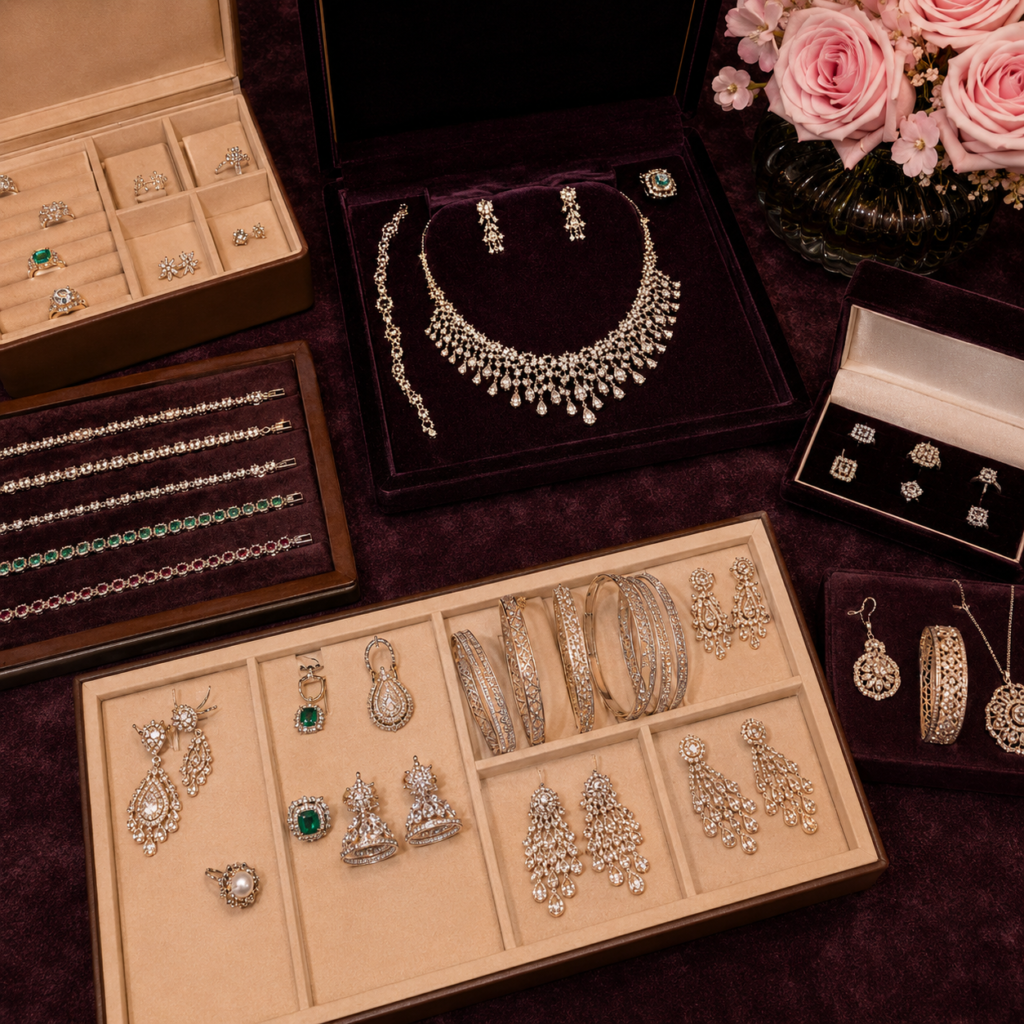
You have the bill. You have the jewellery box. But do you actually have proof of what’s inside your jewellery? Many people buy diamond or gemstone jewellery and assume the paperwork they receive tells the complete story. In reality, a purchase bill is not the same as a jewellery certificate. Likewise, a certificate for a solitaire diamond does not necessarily verify every diamond or gemstone in a finished jewellery piece. Whether you’re buying new jewellery, planning to sell it in the future, or simply want peace of mind, understanding jewellery certification can help you make informed decisions. This guide explains what jewellery certification is, what it verifies, how it differs from a bill or appraisal, and how you can verify your jewellery in just a few minutes. Table of Contents What Is Jewellery Certification? Jewellery certification is an independent examination of a jewellery piece by a gemological laboratory. The laboratory evaluates the diamonds and gemstones in the jewellery and documents their identity, characteristics, and other relevant observations in a report. This helps create an independent record of the jewellery at the time it was examined. For consumers, certification provides transparency. For jewellers, it helps demonstrate exactly what is being sold. Certificate vs Bill vs Appraisal – What’s the Difference? Many buyers confuse these three documents, but they serve very different purposes. Document Purpose Issued By Purchase Bill Proof of purchase and transaction Jeweller BIS Hallmark Confirms the purity of gold or precious metal BIS-authorised hallmarking centre Jewellery Certificate Documents the identity and characteristics of the diamonds and gemstones in the jewellery Independent gemological laboratory Jewellery Appraisal Provides an estimated value for insurance or other purposes Appraiser A purchase bill tells you what was sold. A hallmark relates to the precious metal. A jewellery certificate focuses on the diamonds and gemstones. An appraisal estimates value. Each document serves a different purpose. What Does Jewellery Certification Actually Check? A jewellery certification report typically evaluates several important aspects of a jewellery piece. 1. Stone Identification The laboratory identifies whether the stones are: 2. Treatment Detection Many gemstones undergo treatments to improve their appearance. Where detectable, laboratories may report treatments such as: Treatment disclosure helps buyers better understand the jewellery they own. 3. Weight Depending on the jewellery piece, the report may include: 4. Quality Characteristics For diamonds, reports may describe characteristics such as: For coloured gemstones, laboratories may describe characteristics including colour and other identifying observations. 5. Stone-to-Report Matching A jewellery report may also include features that help connect the physical jewellery to the report, such as: These features help identify the jewellery examined by the laboratory. Why Solitaire Certificates Aren’t Always Enough One of the most common misunderstandings among jewellery buyers is assuming that a solitaire certificate covers the entire jewellery piece. Imagine buying a ring with: The certificate may describe only the centre diamond. The side stones may not appear anywhere on that report. This doesn’t automatically mean anything is wrong. Many jewellers clearly explain what is and isn’t covered by a certificate. However, if you want documentation for the complete jewellery piece, it’s worth asking whether a jewellery certificate covering the entire item is available. For studded jewellery, a jewellery certificate generally provides a more complete record than a report covering only the centre stone. Three Red Flags Your Jewellery May Not Be Properly Certified 1. The Bill Says “Certified” But There’s No Report A bill mentioning “certified” without an accompanying laboratory report, report number, or QR code is not the same as independent certification. 2. The Report Cannot Be Verified If the report number cannot be verified on the issuing laboratory’s official website, or the report displays details that don’t match your jewellery, you should seek clarification before relying on it. 3. Only One Stone Is Documented If your jewellery contains multiple diamonds or gemstones but the report describes only a single centre stone, ask whether certification for the complete jewellery piece is available. How to Verify Your Existing Jewellery Verifying jewellery usually takes only a few minutes. Step 1 Locate the report number on your certificate. Step 2 Use the QR code or visit the issuing laboratory’s official verification page. Step 3 Compare the report with your jewellery. Check details such as: Step 4 Where applicable, ask your jeweller to show the laser inscription under magnification and confirm that it matches the report. Not every certified diamond carries a laser inscription. Whether an inscription is present depends on factors such as the diamond’s size and the laboratory’s certification policy. Why IDT Certification Matters IDT Certification adds an independent layer of trust and transparency to every jewellery purchase. It helps buyers clearly understand what they own and provides jewellers with a credible, independent record of the jewellery they sell. It also makes future verification, resale, insurance, or family transfers easier. Whether you are buying jewellery for yourself, as an investment, or as a family heirloom, IDT Certification gives you greater clarity, confidence, and peace of mind. Always insist on IDT Certification. Frequently Asked Questions Is jewellery certification mandatory in India? No. BIS hallmarking applies to gold purity under applicable regulations, while certification of diamonds and gemstones is generally voluntary. Can old jewellery be certified? Yes. Existing jewellery can usually be submitted to a gemological laboratory for examination. Depending on the jewellery design, stones may be tested while mounted or may require additional procedures. What is the difference between hallmark and jewellery certification? A hallmark relates to the purity of the precious metal. Jewellery certification documents the identity and characteristics of the diamonds and gemstones in the jewellery. Does a jewellery certificate include gold purity? Jewellery certificates primarily focus on the diamonds and gemstones. Gold purity is generally addressed through BIS hallmarking. Is a jewellery certificate the same as an appraisal? No. A jewellery certificate documents gemological observations. An appraisal estimates monetary value for purposes such as insurance or valuation.
Would You Know If Your Diamond Was Swapped?
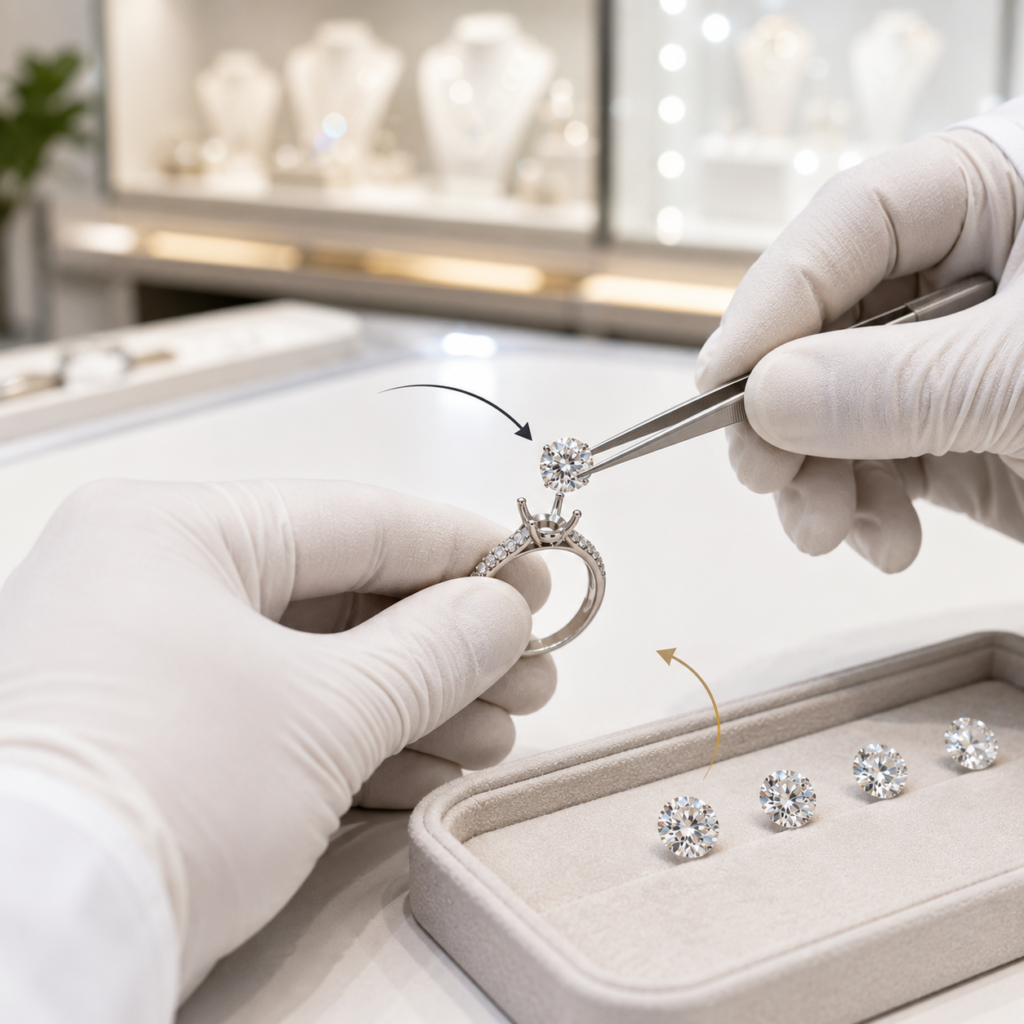
You leave your diamond ring at a jeweller for cleaning, resizing, or a prong repair. When you collect it a few days later, would you know if it’s the same diamond? Most diamonds look remarkably similar to the untrained eye. Without an independent record of your diamond’s identifying characteristics, it can be difficult to distinguish one stone from another. While diamond swapping is uncommon, especially with reputable jewellers, it is a concern many consumers have. Independent diamond certification helps establish a record of the diamond examined by a gemological laboratory, making future verification easier. In this guide, we’ll explain how laser inscriptions, QR verification, and gemological reports work together to help identify your diamond. What Is a Diamond Laser Inscription? A laser inscription is a microscopic marking engraved on the girdle, the thin outer edge of a diamond. It is not visible to the naked eye and generally requires a jeweller’s microscope or a 10× loupe to view. Many certified diamonds, particularly larger stones, carry a laser inscription. Whether an inscription is present depends on factors such as the diamond’s size and the laboratory’s certification policy. When present, the inscription often corresponds to the report number shown on the laboratory certificate. How Diamond Identification Works A laboratory report documents several identifying characteristics of a diamond, which may include: Together, these characteristics create a record of the diamond examined at the time of certification. How Diamond Certification Helps A diamond certificate provides more than grading information. It also creates an independent reference that can assist with future identification. Depending on the report, this may include: Because internal inclusions are naturally occurring, they can help distinguish one diamond from another when documented. Three Steps Before Leaving Your Jewellery for Service Before handing over your jewellery for cleaning, repair, or resizing, consider taking a few simple precautions. 1. Keep a Copy of Your Certificate Store your original laboratory report safely and keep a digital copy for quick reference. 2. Check the Laser Inscription If your diamond has an inscription, ask the jeweller to show it under magnification before leaving the jewellery. Make a note of the inscription number. 3. Photograph Your Jewellery Take clear photographs of the jewellery from multiple angles. While photographs cannot replace laboratory documentation, they can serve as a useful personal reference. How to Check Your Diamond After Collection When you receive your jewellery back: Verify the Certificate Use the report number or QR code to access the issuing laboratory’s official verification page. Confirm that the report details correspond with your jewellery. Compare Identifying Features Review the certificate and compare: Confirm the Laser Inscription Where applicable, view the inscription under magnification and ensure it matches the report number. What If My Diamond Has No Inscription? Not every diamond carries a laser inscription. Smaller diamonds and some older certifications may not include one. In such cases, laboratories may rely on other identifying characteristics, including: If your diamond has never been independently certified, obtaining a laboratory report can establish a useful reference for the future. Why IDT Certification Matters An IDT Diamond Certificate provides an independent and detailed record of the diamond examined by IDT Gemological Laboratories. It documents the diamond’s identifying characteristics, helping you verify and recognise your stone in the future. IDT Certification can support: Whether you are purchasing a new diamond, inheriting jewellery, or leaving a treasured ring with a jeweller, an IDT Certificate provides reliable information and an added level of assurance. Always insist on IDT Certification. Frequently Asked Questions Can laser inscriptions be copied? In some circumstances, a laser inscription can be recreated if the inscription number is known. This is one reason laboratories may also document additional identifying characteristics, such as internal inclusions and photographs, where applicable. Do all certified diamonds have laser inscriptions? No. Many laboratories offer laser inscription for eligible diamonds, but policies vary depending on the laboratory and certification service. What if my diamond was certified years ago? Older reports may still be useful if they can be verified and accurately match the diamond. If additional reassurance is needed, the diamond can usually be submitted for a fresh examination. Can a diamond be identified without a laser inscription? Yes. Gemological laboratories can often identify diamonds using a combination of measurements, internal characteristics, and other gemological observations.
Birthstones by Month: Meanings, Colours and Benefits
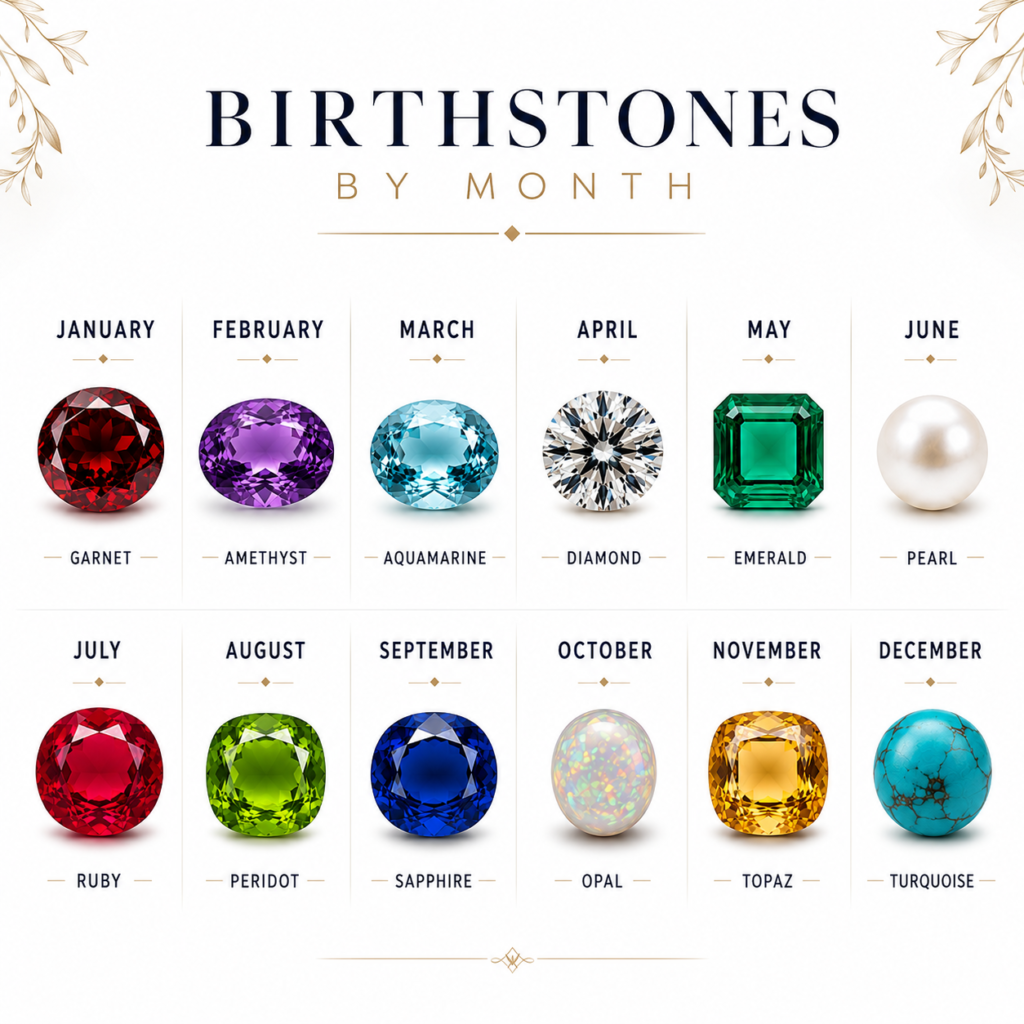
Birthstones are gemstones traditionally associated with the month in which a person is born. They are commonly worn in rings, pendants, bracelets and earrings as symbols of identity, personality and personal milestones. But birthstones were not assigned to months because of a proven scientific connection. The tradition is believed to have developed from ancient associations between 12 gemstones, the 12 zodiac signs and the 12 months of the year. The official birthstone list commonly followed by the jewellery industry was established in 1912 and has been updated over time. The benefits associated with birthstones come from history, folklore and cultural beliefs. They should not be treated as scientifically or medically proven effects. Their real appeal lies in the personal meaning they add to jewellery. Birthstones by Month Chart Month Birthstone Colour Traditionally Represents January Garnet Red, green, orange and purple Protection and commitment February Amethyst Purple Clarity and calmness March Aquamarine, Bloodstone Blue, dark green and red Peace and courage April Diamond Colourless and fancy colours Strength and lasting love May Emerald Green Growth and renewal June Pearl, Alexandrite, Moonstone White, colour-changing and iridescent Purity and transformation July Ruby Red Passion and confidence August Peridot, Spinel, Sardonyx Green and multiple colours Positivity and protection September Sapphire Blue and multiple colours Loyalty and truth October Opal, Tourmaline Multicoloured Creativity and individuality November Topaz, Citrine Yellow, orange, blue and pink Warmth and prosperity December Turquoise, Tanzanite, Zircon Blue and blue-violet Protection and new beginnings January Birthstone: Garnet Garnet became January’s recognised birthstone through historical birthstone traditions and the modern official list. It traditionally represents protection, friendship, commitment and prosperity. Garnet was once carried by travellers as a protective gemstone and was believed to promote confidence and happiness. Although deep red is its best-known colour, Garnet also occurs in vibrant green, orange, yellow and purple varieties, giving January-born jewellery buyers more choices than they may expect. Explore Garnet colours, meaning, jewellery, care and more in our complete guide to the January Birthstone: Garnet. February Birthstone: Amethyst Amethyst is February’s birthstone and has long been associated with calmness, clear thinking and emotional balance. Its name comes from the Greek amethystos, linked to the ancient belief that the gemstone helped its wearer remain clear-headed and in control. Its shades range from soft lilac to deep royal purple, making it suitable for both delicate everyday jewellery and bold statement pieces. Learn more about Amethyst colours, meaning, jewellery and care in our complete February Birthstone: Amethyst guide. March Birthstones: Aquamarine and Bloodstone Aquamarine and Bloodstone are the birthstones for March. Aquamarine’s name means “seawater”, and ancient sailors believed it offered protection during sea journeys. It represents peace, clarity, communication and harmony. Bloodstone, recognised by its dark green colour and red spots, traditionally represents strength, courage and vitality. Aquamarine suits elegant, modern jewellery, while Bloodstone is an interesting choice for buyers who prefer earthy and unconventional designs. Explore both March gemstones in detail in our Aquamarine and Bloodstone birthstone guide. April Birthstone: Diamond Diamond is April’s birthstone and traditionally represents clarity, strength, commitment and eternal love. Its exceptional hardness and ancient natural formation have made it a symbol of something valuable and enduring. Diamond jewellery is suitable for birthdays, engagements, anniversaries and future heirlooms. Buyers should confirm whether a Diamond is natural, laboratory-grown or treated, as these categories may look similar but have different origins and market values. Discover more about Diamond meaning, colours, jewellery and certification in our April Birthstone: Diamond guide. May Birthstone: Emerald Emerald is associated with May, and its rich green colour has long symbolised spring, rebirth, renewal and growth. Traditionally, Emerald represents prosperity, wisdom, hope and successful new beginnings. Its unmistakable green colour makes it a striking choice for rings, pendants and statement jewellery. Natural Emeralds commonly contain inclusions, and many are treated with oil or resin to improve their appearance, so treatment disclosure is important. Learn more about Emerald colours, meaning, jewellery, treatments and care in our May Birthstone: Emerald guide. June Birthstones: Pearl, Alexandrite and Moonstone June has three birthstones. Pearl represents purity, humility and elegance. Alexandrite, known for changing colour under different lighting, represents transformation, balance and adaptability. Moonstone displays a soft floating glow and is traditionally connected with intuition, calmness and new beginnings. Together, they give June-born buyers three very different options: timeless Pearl, rare colour-changing Alexandrite or softly glowing Moonstone. Explore Pearl, Alexandrite and Moonstone in detail in our complete June Birthstones guide. July Birthstone: Ruby Ruby is July’s birthstone, and its vivid red colour has long been associated with love, passion, power and youthful energy. It was traditionally believed to give its wearer courage, protection and success in love. Ruby is especially meaningful for romantic gifts, milestone jewellery and heirloom pieces. Since natural, synthetic, heated and fracture-filled Rubies can appear similar, their origin and treatment status should be checked before purchase. Learn more about Ruby colours, meaning, jewellery, treatments and care in our July Birthstone: Ruby guide. August Birthstones: Peridot, Spinel and Sardonyx August has three recognised birthstones. Peridot represents positivity, protection and prosperity and was historically worn as a protective talisman. Spinel represents renewal, hope and resilience and is available in colours such as red, pink, purple, blue and black. Sardonyx represents courage, stability and strength. These choices make August especially interesting for buyers seeking anything from bright green jewellery to colourful or vintage-inspired designs. Discover Peridot, Spinel and Sardonyx in our complete August Birthstones guide. September Birthstone: Sapphire Sapphire is September’s birthstone and traditionally represents truth, loyalty, sincerity and wisdom. It has been worn by royalty and religious leaders for centuries, strengthening its connection with nobility and faithfulness. Although best known in blue, Sapphire is also available in pink, yellow, green, purple, orange and white. Its durability makes it a popular choice for engagement rings and jewellery intended for regular wear. Explore Sapphire colours, meaning, jewellery and care in our September Birthstone: Sapphire guide. October Birthstones: Opal and Tourmaline Opal and Tourmaline are October’s birthstones. Opal’s changing play-of-colour has made it a symbol of