
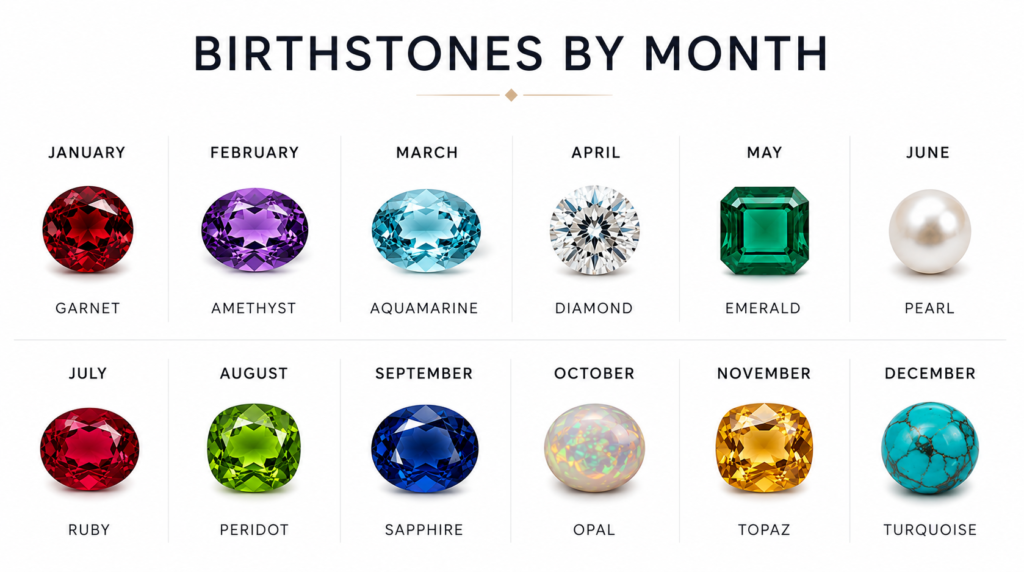
Birthstones are gemstones traditionally associated with the month in which a person is born. They are commonly worn in rings, pendants, bracelets and earrings as symbols of identity, personality and personal milestones.
But birthstones were not assigned to months because of a proven scientific connection. The tradition is believed to have developed from ancient associations between 12 gemstones, the 12 zodiac signs and the 12 months of the year. The official birthstone list commonly followed by the jewellery industry was established in 1912 and has been updated over time.
The benefits associated with birthstones come from history, folklore and cultural beliefs. They should not be treated as scientifically or medically proven effects. Their real appeal lies in the personal meaning they add to jewellery.
Birthstones by Month Chart
| Month | Birthstone | Colour | Traditionally Represents |
| January | Garnet | Red, green, orange and purple | Protection and commitment |
| February | Amethyst | Purple | Clarity and calmness |
| March | Aquamarine, Bloodstone | Blue, dark green and red | Peace and courage |
| April | Diamond | Colourless and fancy colours | Strength and lasting love |
| May | Emerald | Green | Growth and renewal |
| June | Pearl, Alexandrite, Moonstone | White, colour-changing and iridescent | Purity and transformation |
| July | Ruby | Red | Passion and confidence |
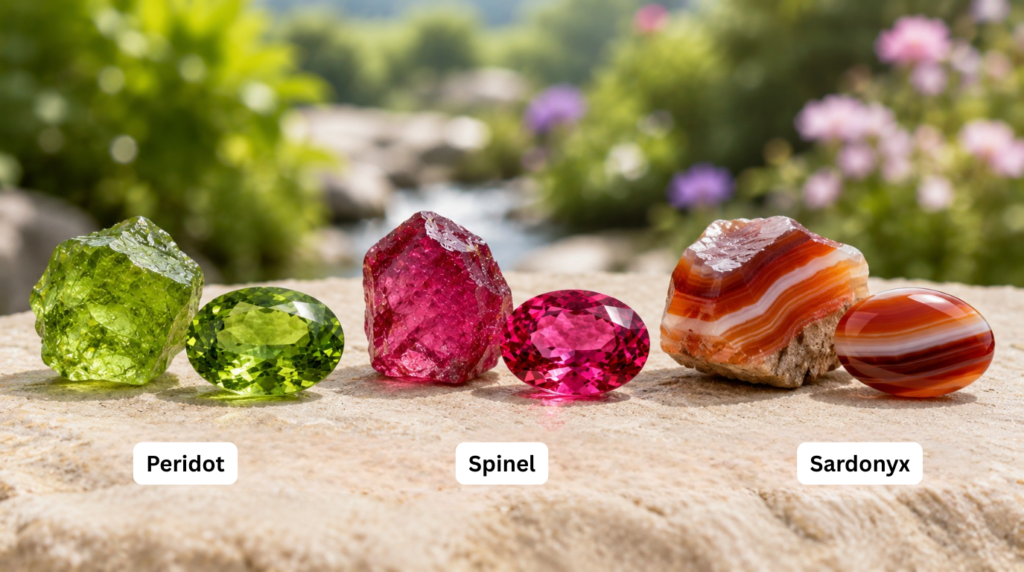
| August | Peridot, Spinel, Sardonyx | Green and multiple colours | Positivity and protection |
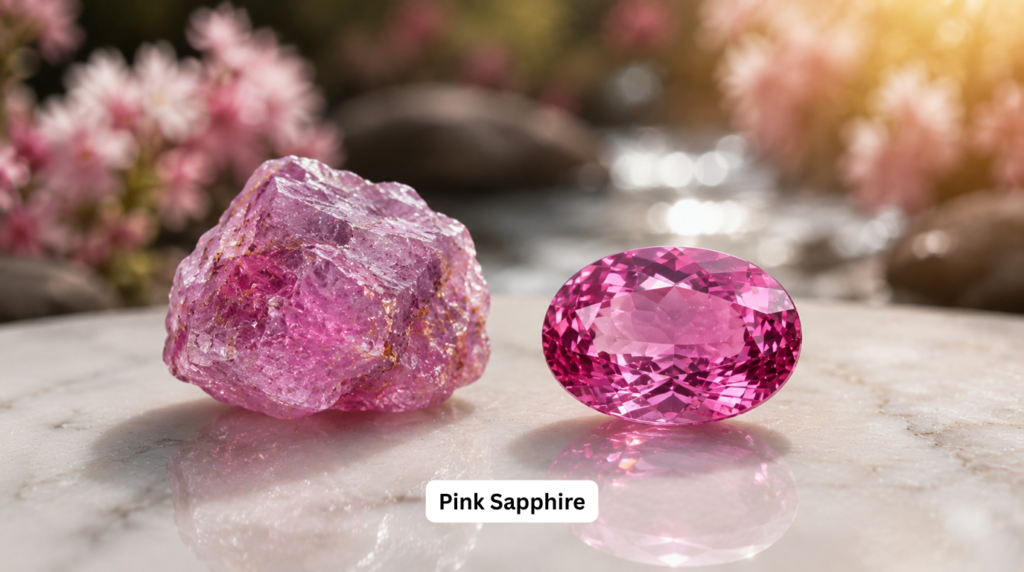
| September | Sapphire | Blue and multiple colours | Loyalty and truth |
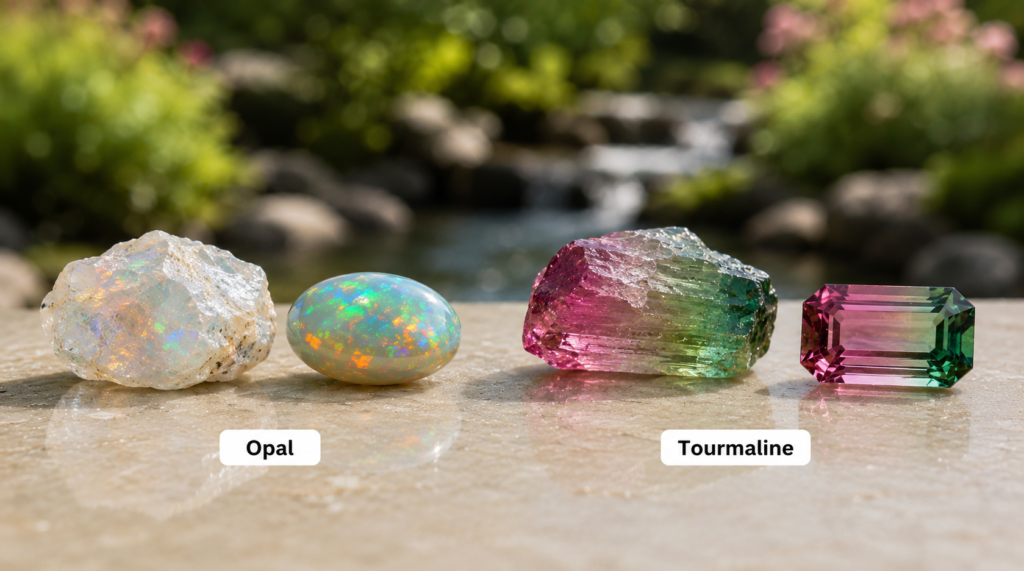
| October | Opal, Tourmaline | Multicoloured | Creativity and individuality |
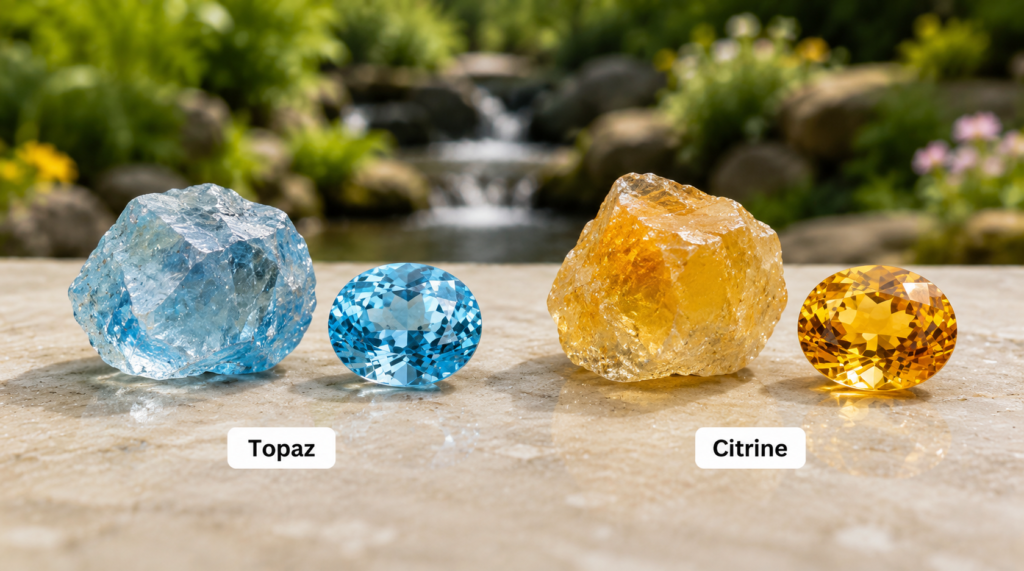
| November | Topaz, Citrine | Yellow, orange, blue and pink | Warmth and prosperity |
| December | Turquoise, Tanzanite, Zircon | Blue and blue-violet | Protection and new beginnings |
January Birthstone: Garnet
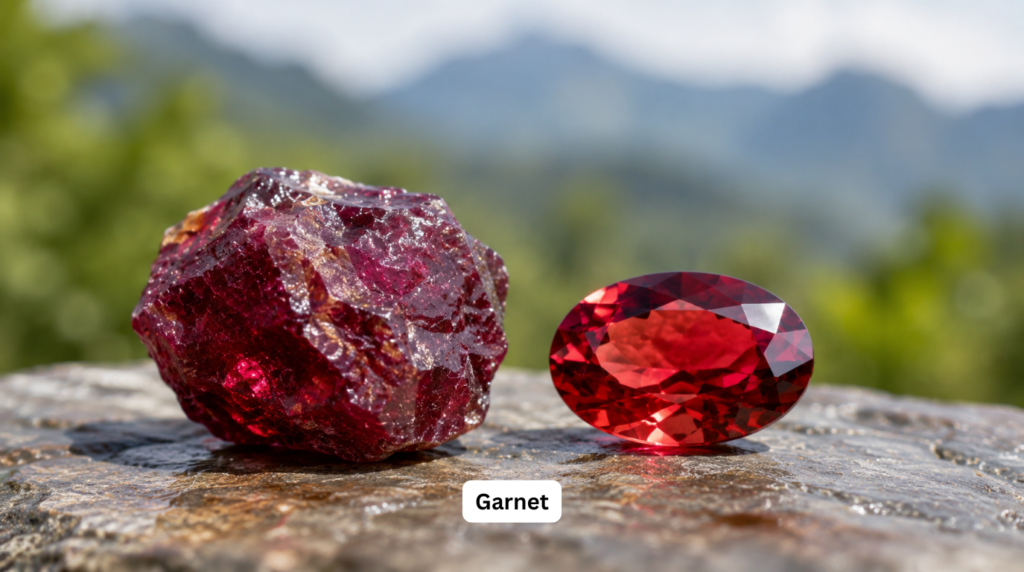
Garnet became January’s recognised birthstone through historical birthstone traditions and the modern official list. It traditionally represents protection, friendship, commitment and prosperity. Garnet was once carried by travellers as a protective gemstone and was believed to promote confidence and happiness. Although deep red is its best-known colour, Garnet also occurs in vibrant green, orange, yellow and purple varieties, giving January-born jewellery buyers more choices than they may expect.
February Birthstone: Amethyst
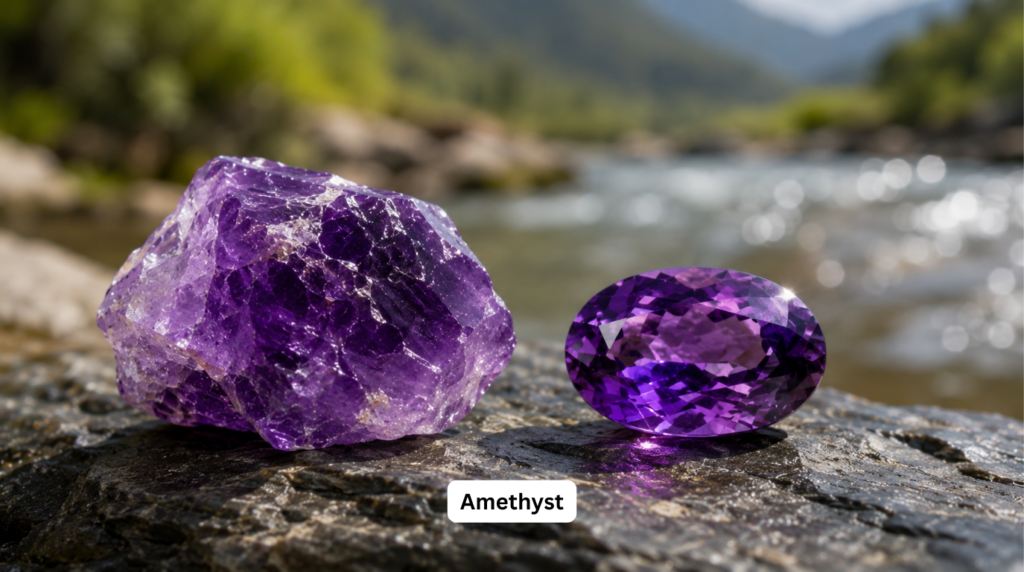
Amethyst is February’s birthstone and has long been associated with calmness, clear thinking and emotional balance. Its name comes from the Greek amethystos, linked to the ancient belief that the gemstone helped its wearer remain clear-headed and in control. Its shades range from soft lilac to deep royal purple, making it suitable for both delicate everyday jewellery and bold statement pieces.
March Birthstones: Aquamarine and Bloodstone
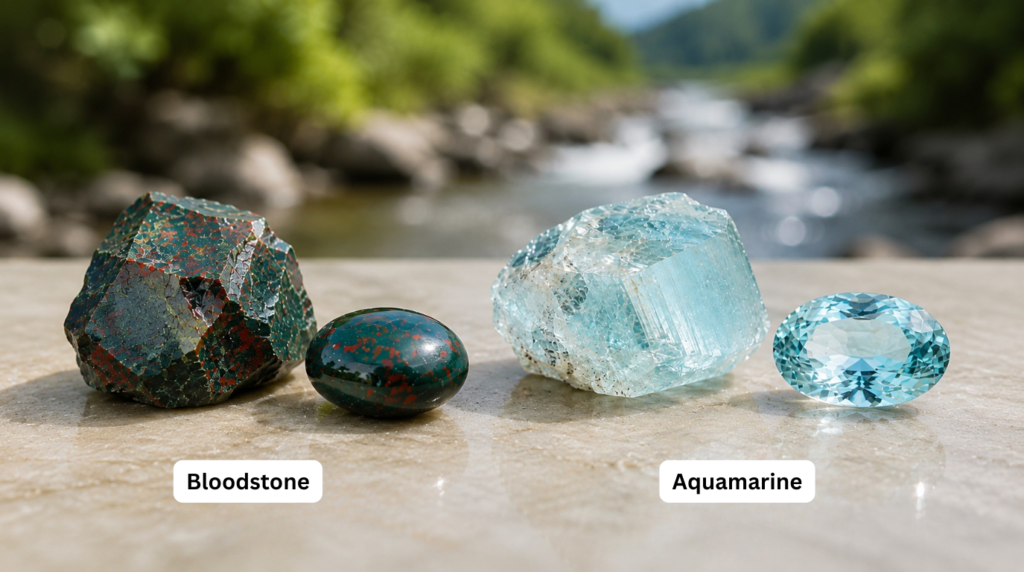
Aquamarine and Bloodstone are the birthstones for March. Aquamarine’s name means “seawater”, and ancient sailors believed it offered protection during sea journeys. It represents peace, clarity, communication and harmony. Bloodstone, recognised by its dark green colour and red spots, traditionally represents strength, courage and vitality. Aquamarine suits elegant, modern jewellery, while Bloodstone is an interesting choice for buyers who prefer earthy and unconventional designs.
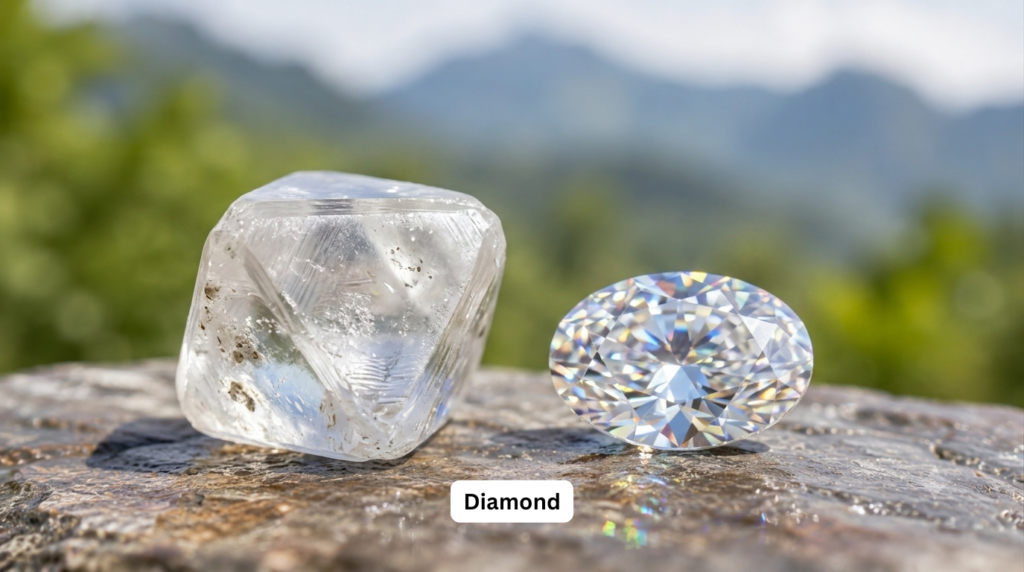
April Birthstone: Diamond
Diamond is April’s birthstone and traditionally represents clarity, strength, commitment and eternal love. Its exceptional hardness and ancient natural formation have made it a symbol of something valuable and enduring. Diamond jewellery is suitable for birthdays, engagements, anniversaries and future heirlooms. Buyers should confirm whether a Diamond is natural, laboratory-grown or treated, as these categories may look similar but have different origins and market values.
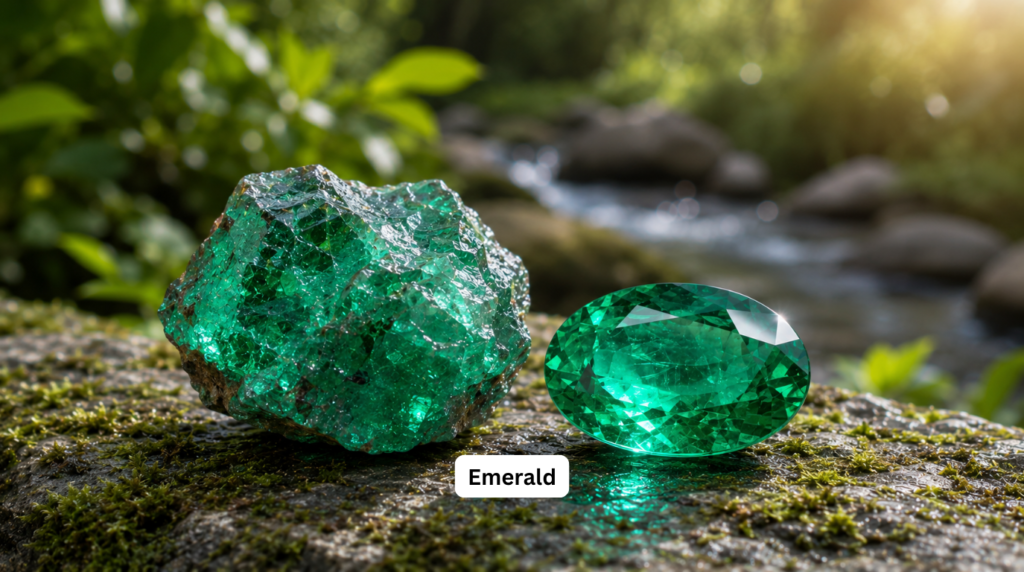
May Birthstone: Emerald
Emerald is associated with May, and its rich green colour has long symbolised spring, rebirth, renewal and growth. Traditionally, Emerald represents prosperity, wisdom, hope and successful new beginnings. Its unmistakable green colour makes it a striking choice for rings, pendants and statement jewellery. Natural Emeralds commonly contain inclusions, and many are treated with oil or resin to improve their appearance, so treatment disclosure is important.
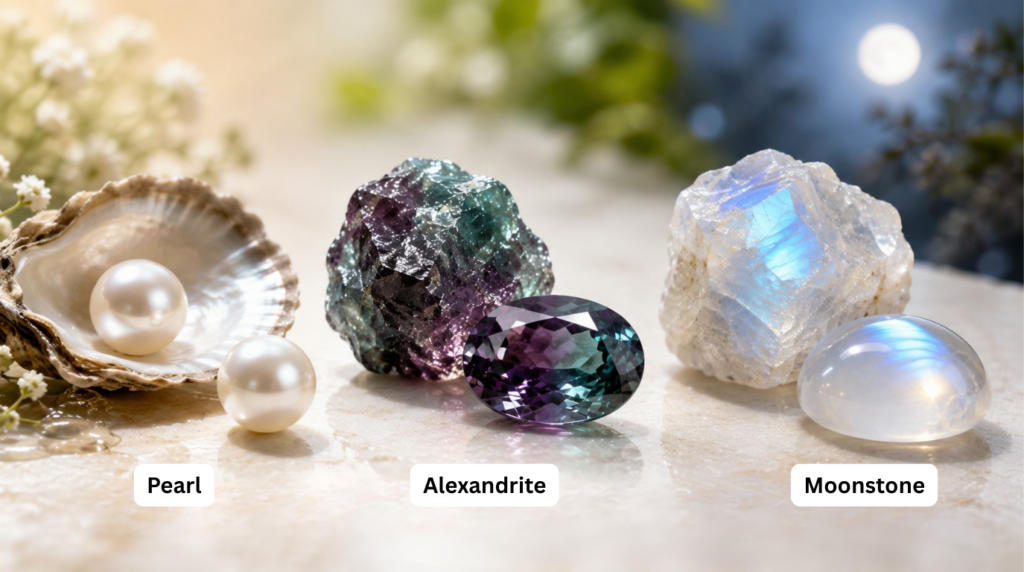
June Birthstones: Pearl, Alexandrite and Moonstone
June has three birthstones. Pearl represents purity, humility and elegance. Alexandrite, known for changing colour under different lighting, represents transformation, balance and adaptability. Moonstone displays a soft floating glow and is traditionally connected with intuition, calmness and new beginnings. Together, they give June-born buyers three very different options: timeless Pearl, rare colour-changing Alexandrite or softly glowing Moonstone.
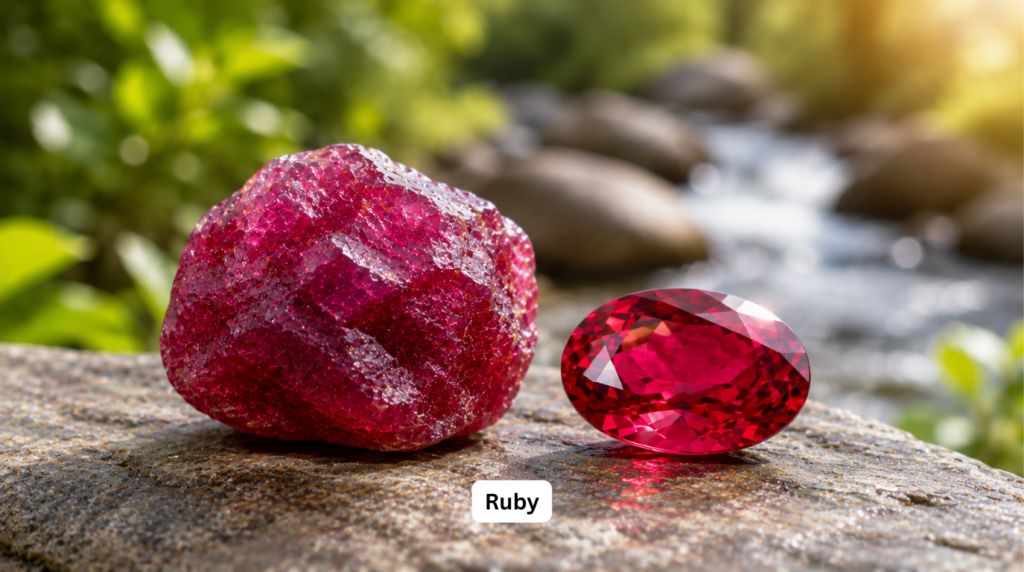
July Birthstone: Ruby
Ruby is July’s birthstone, and its vivid red colour has long been associated with love, passion, power and youthful energy. It was traditionally believed to give its wearer courage, protection and success in love. Ruby is especially meaningful for romantic gifts, milestone jewellery and heirloom pieces. Since natural, synthetic, heated and fracture-filled Rubies can appear similar, their origin and treatment status should be checked before purchase.
August Birthstones: Peridot, Spinel and Sardonyx
August has three recognised birthstones. Peridot represents positivity, protection and prosperity and was historically worn as a protective talisman. Spinel represents renewal, hope and resilience and is available in colours such as red, pink, purple, blue and black. Sardonyx represents courage, stability and strength. These choices make August especially interesting for buyers seeking anything from bright green jewellery to colourful or vintage-inspired designs.
September Birthstone: Sapphire
Sapphire is September’s birthstone and traditionally represents truth, loyalty, sincerity and wisdom. It has been worn by royalty and religious leaders for centuries, strengthening its connection with nobility and faithfulness. Although best known in blue, Sapphire is also available in pink, yellow, green, purple, orange and white. Its durability makes it a popular choice for engagement rings and jewellery intended for regular wear.
October Birthstones: Opal and Tourmaline
Opal and Tourmaline are October’s birthstones. Opal’s changing play-of-colour has made it a symbol of hope, creativity and imagination. Tourmaline represents individuality and artistic expression and is available in an exceptional range of colours, including pink, green, blue and multicoloured combinations. Every Opal and Tourmaline can look different, making October birthstone jewellery especially appealing to buyers who want something personal and distinctive.
November Birthstones: Topaz and Citrine
Topaz and Citrine are the birthstones for November. Their warm yellow and orange shades are traditionally associated with sunlight, happiness, confidence and prosperity. Topaz also occurs in blue, pink, brown and colourless varieties, while Citrine ranges from pale yellow to deep orange. They are attractive options for buyers who want bright and cheerful jewellery. Much of the blue Topaz in the market is treated, and some Citrine is produced by heating other Quartz varieties.
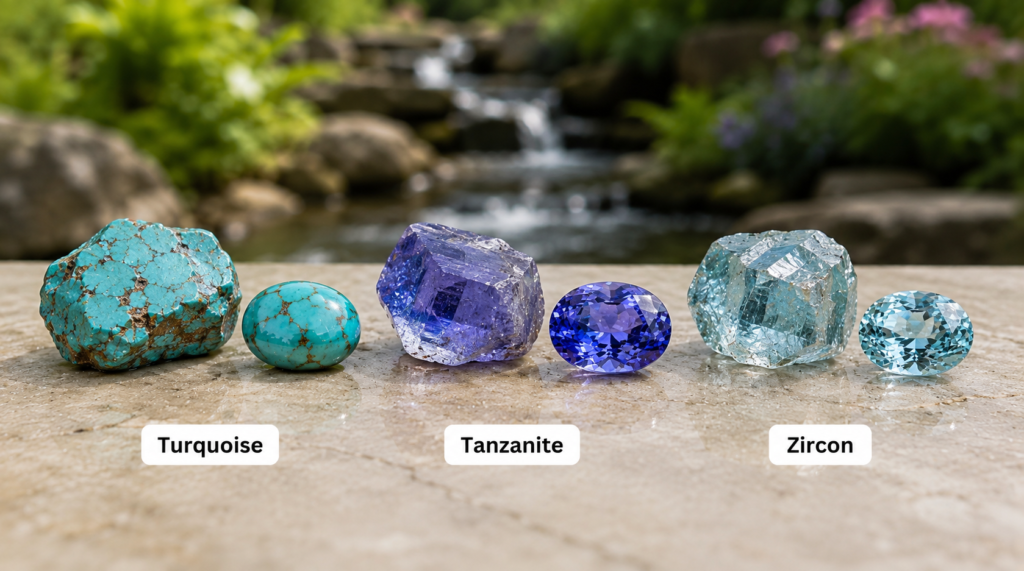
December Birthstones: Turquoise, Tanzanite and Zircon
December has three blue-toned birthstones. Turquoise traditionally represents protection, friendship and good fortune. Tanzanite’s blue-violet appearance is associated with transformation, individuality and new beginnings. Zircon represents wisdom and prosperity and is admired for its brilliance. Turquoise may be stabilised or dyed, and most Tanzanite is heat-treated. Zircon is a natural gemstone and should not be confused with laboratory-created cubic zirconia.
Do Birthstones Really Have Benefits?
The benefits of wearing birthstones are based on traditional beliefs and gemstone folklore. There is no scientific evidence that a birthstone can guarantee health, wealth, protection or success.
However, birthstones can offer meaningful emotional and personal benefits. They may represent the wearer’s identity, remind them of qualities such as courage or loyalty, mark an important date or create a connection with a loved one.
A parent may wear jewellery containing the birthstones of their children. Couples may combine their birthstones in one ring or pendant. Birthstones can also represent a wedding month, anniversary, graduation or another meaningful life event.
Why IDT Gemstone Certification Is Important
Birthstones available in the market may be natural, synthetic, treated, imitation, reconstructed or assembled. These differences are not always visible through colour or appearance alone.
For example, a red gemstone sold as Ruby may be natural Ruby, synthetic Ruby, Garnet, Spinel or glass. A blue gemstone sold as Sapphire may be synthetic, treated or a completely different gemstone.
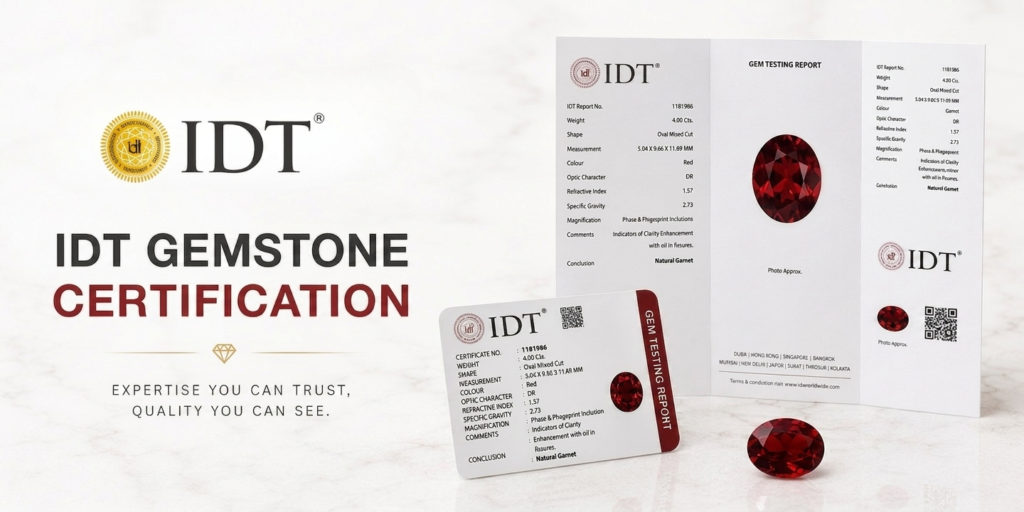
IDT Gemological Laboratories examines gemstones using professional gemological instruments and testing methods. An IDT Gemstone Identification Report can provide important information about the gemstone’s identity, natural or synthetic origin and detectable treatments, wherever applicable.
Certification is important because origin and treatments can affect a gemstone’s value, durability and care requirements. Before purchasing valuable birthstone jewellery or a loose gemstone, always insist on IDT Certification and verify the report through IDT’s official verification platform.
How to Choose the Right Birthstone
Begin with the wearer’s birth month, but also consider their favourite colour, jewellery style and lifestyle. A person born in a month with several birthstones can choose the option that suits them best.
Diamond, Ruby and Sapphire are generally suitable for jewellery worn regularly. Pearl, Opal, Turquoise and Moonstone require more careful handling and may be better suited to earrings, pendants or occasional-wear rings.
Before purchasing, ask:
- Is the gemstone natural or synthetic?
- Has it received any treatment?
- Is it suitable for daily wear?
- Does the invoice clearly describe it?
- Is it supported by an independent gemological report?
Caring for Birthstone Jewellery
Not every birthstone can be cleaned in the same way. Softer or treated gemstones may be damaged by heat, strong chemicals, steam or ultrasonic cleaning.
Store each jewellery piece separately in a soft pouch or lined box. Avoid exposing birthstones to perfumes, household cleaners and sudden temperature changes. Consult a qualified jewellery professional before cleaning valuable Emerald, Pearl, Opal or Turquoise jewellery.
Conclusion
Birthstones connect every month with a gemstone, colour and traditional meaning. Garnet represents protection, Amethyst symbolises clarity, Emerald reflects growth, Ruby stands for passion and Sapphire represents loyalty.
Their traditional benefits are not scientifically proven, but their personal and emotional value can make birthstone jewellery especially meaningful.
Whether you are buying a birthstone for yourself or gifting it to someone special, look beyond colour alone. Understand its identity, ask about treatments and always insist on IDT Certification before making an important purchase.
Frequently Asked Questions About Birthstones
What are the 12 main birthstones by month?
The main birthstones are Garnet for January, Amethyst for February, Aquamarine for March, Diamond for April, Emerald for May, Pearl for June, Ruby for July, Peridot for August, Sapphire for September, Opal for October, Topaz for November and Turquoise for December.
Some months also have additional recognised birthstones.
Why are birthstones associated with particular months?
The associations developed through ancient religious, cultural and astrological traditions connecting 12 gemstones with the zodiac and months. The official modern list used by the jewellery industry was established in 1912.
Why do some months have more than one birthstone?
Alternative gemstones were added over time to offer more choices in colour, availability, style and price. June, August and December each have three recognised birthstones.
Are the benefits of birthstones scientifically proven?
No. Benefits such as protection, confidence, prosperity and calmness come from traditional beliefs and folklore. They should not be treated as medical or scientific claims.
Can I wear a birthstone that is not connected with my birth month?
Yes. Birthstone jewellery is a personal choice. You may select a gemstone based on its colour, meaning, connection with a loved one or another important date.
Are all birthstones natural?
No. Birthstones may be natural, synthetic, treated, imitation, assembled or reconstructed. Professional gemological testing helps identify these differences.
How can I check whether a birthstone is genuine?
Appearance alone cannot reliably confirm a gemstone’s identity. Ask for an independent gemological report like IDT Certification and verify the report details through the laboratory’s official platform.
Why should I choose IDT Gemstone Certification for a birthstone?
IDT Gemstone Certification helps confirm the gemstone’s identity, whether it is natural or synthetic, and any detectable treatments, wherever applicable. This helps buyers make a more informed decision before purchasing valuable birthstone jewellery or loose gemstones.