Buying a diamond is one of life’s most meaningful purchases. A diamond certificate, also called a diamond grading report, is the single document that tells you exactly what you’re getting. Here’s everything you need to know before you buy.
Whether you’re shopping for an engagement ring, a gift, or an investment stone, you’ve almost certainly heard the phrase “certified diamond.” But what does that actually mean? What does a diamond certificate contain, who issues it, and why does diamond certification in India matter so much in today’s market?
At IDT Gemological Laboratories, we’ve assessed and certified thousands of diamonds across India. In this complete beginner’s guide, we break down everything simply, so you can shop with total confidence.
What Is a Diamond Certificate?
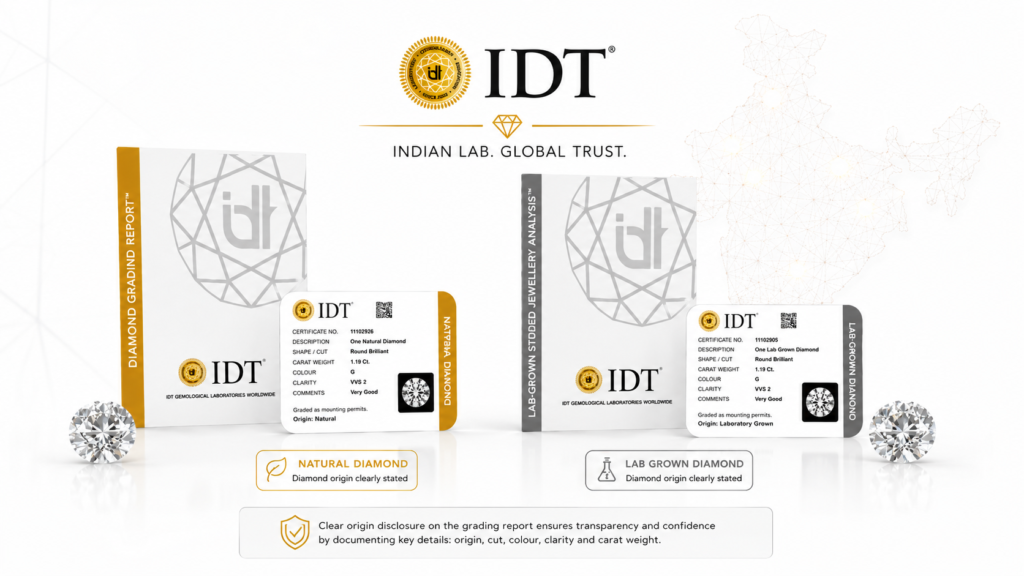
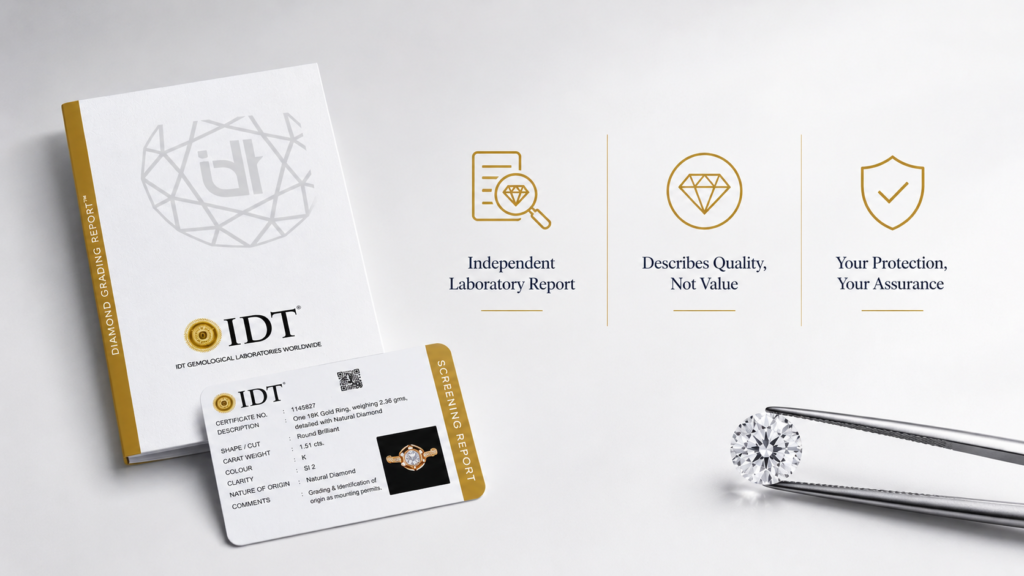
A diamond certificate, officially called a diamond grading report, is an official document issued by an independent gemological laboratory after a thorough scientific examination of a diamond. Think of it as the diamond’s identity card, an unbiased, third party verification of its quality.
The certificate does not assign a monetary value to the diamond. Instead, it objectively describes the stone’s physical and optical characteristics using internationally recognised grading standards. This protects you, the buyer, from overpaying and ensures you receive exactly the diamond quality you’re promised.
Key point: A diamond certificate is issued by a laboratory, never by the jeweller selling the stone. This independence is what makes the document trustworthy. Always look for a certificate from IDT Gemological Laboratories before making any diamond purchase.
What Does a Diamond Grading Report Include?
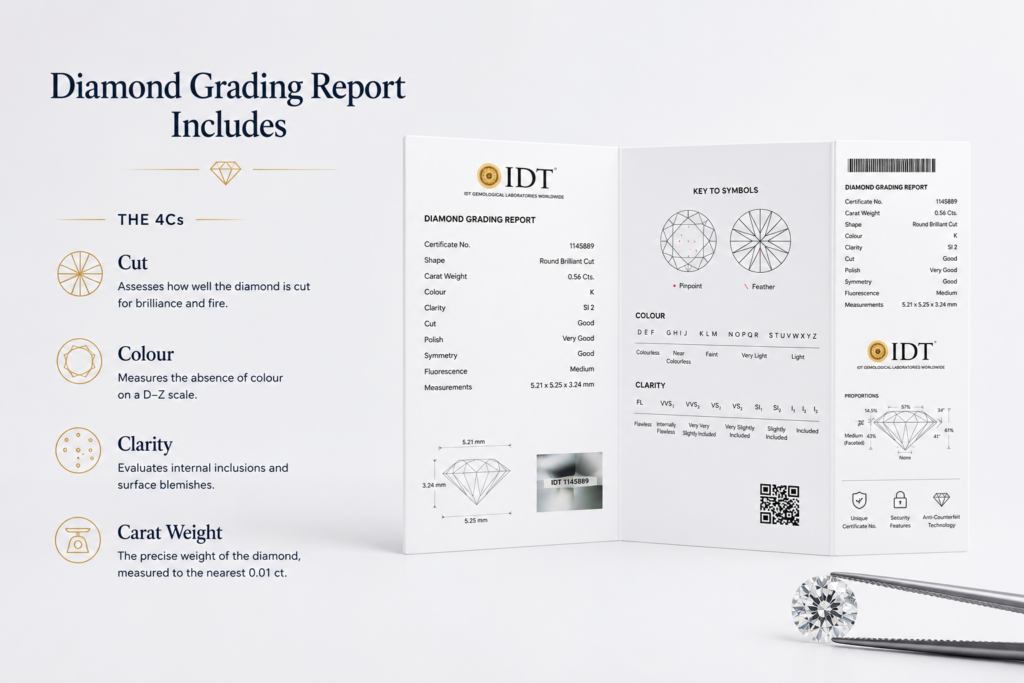
A comprehensive diamond grading report from IDT Gemological Laboratories covers all the characteristics that determine a diamond’s quality and value. Here is what you’ll find:
Cut
Grades how well the diamond has been faceted and finished, directly determining its brilliance and fire. Ranges from Excellent to Poor.
Colour
Measures the absence of colour on a D (colourless) to Z (light yellow/brown) scale. The less colour, the rarer and more valuable the stone.
Clarity
Evaluates internal inclusions and surface blemishes under 10× magnification. Ranges from Flawless (FL) to Included (I3).
Carat Weight
The precise weight of the diamond, measured to the nearest hundredth of a carat. Directly impacts value alongside the other three Cs.
Beyond the 4Cs, a complete IDT diamond grading report also includes:
● Diamond shape and cutting style (e.g. Round Brilliant, Princess, Oval)
● Measurements, precise dimensions in millimetres
● Polish and symmetry grades
● Fluorescence (whether the stone glows under UV light and its intensity)
● A plotting diagram showing the exact location of inclusions
● A unique certificate number for verification
● Security features to prevent forgery
Why Is Diamond Certification Important?
Without a diamond certificate, you’re essentially taking the seller’s word for the quality of your stone. That’s a significant risk, especially given that two diamonds that look nearly identical to the naked eye can differ enormously in value based on their grading.
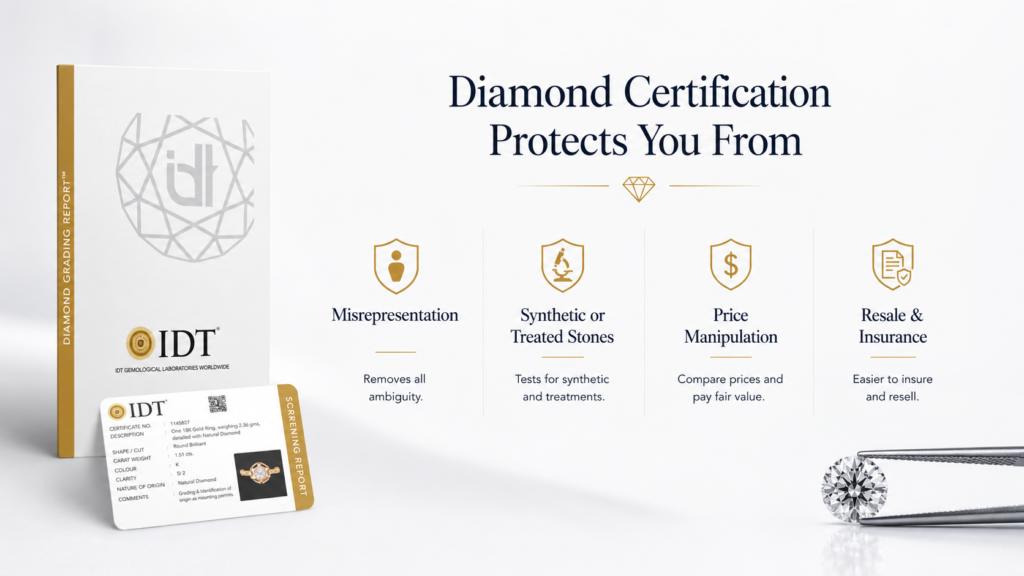
Here’s what diamond certification protects you from:
Misrepresentation
A seller may describe a diamond as “VS1 clarity” when it’s actually SI2. A certificate removes all ambiguity.
Synthetic or Treated Stones
Certified labs test for synthetic diamonds and treatments like laser drilling or fracture filling.
Price Manipulation
With a grading report in hand, you can accurately compare prices across jewellers and ensure you’re paying a fair market rate.
Resale and Insurance Problems
Certified diamonds are far easier to insure and resell, as their characteristics are documented by an independent authority.
Diamond Certification in India: What You Need to Know
India is the world’s largest diamond cutting and polishing hub. Over 90% of the world’s diamonds are processed in Surat alone. This makes access to credible diamond certification in India not just important, but essential.
As Indian consumers become more sophisticated, demand for independently certified diamonds has surged. Buyers in cities like Mumbai, Delhi, Surat, Chennai, and Hyderabad increasingly insist on seeing a diamond grading report before purchase, and rightfully so.
IDT Gemological Laboratories is one of India’s premier diamond certification bodies, combining internationally aligned grading methodology with deep local expertise. Our reports are recognised and trusted by jewellers, traders, and consumers across the country. When you see an IDT certificate, you can buy with complete confidence.
How to Read a Diamond Certificate
Receiving a diamond certificate for the first time can feel overwhelming. Here’s a simple walkthrough of how to read an IDT diamond grading report:
| Section on the Certificate | What It Tells You | What to Look For |
| Report Number | Unique ID for the certificate | Verify online at IDT’s portal |
| Shape & Style | The diamond’s shape | Round Brilliant = most brilliant |
| Measurements | Dimensions in mm | Confirms size matches listing |
| Carat Weight | Exact weight | Cross check with seller’s claims |
| Colour Grade | D to Z colour scale | D to F = colourless, most valuable |
| Clarity Grade | FL to I3 inclusion scale | VS1 to VS2 = excellent value sweet spot |
| Cut Grade | Excellent to Poor | Prioritise Excellent or Very Good |
| Polish & Symmetry | Finishing quality | Excellent / Very Good = best |
| Fluorescence | UV glow intensity | None to Faint preferred for most buyers |
| Clarity Plot | Map of inclusions | Fewer markings = cleaner stone |
Certified vs. Uncertified Diamonds
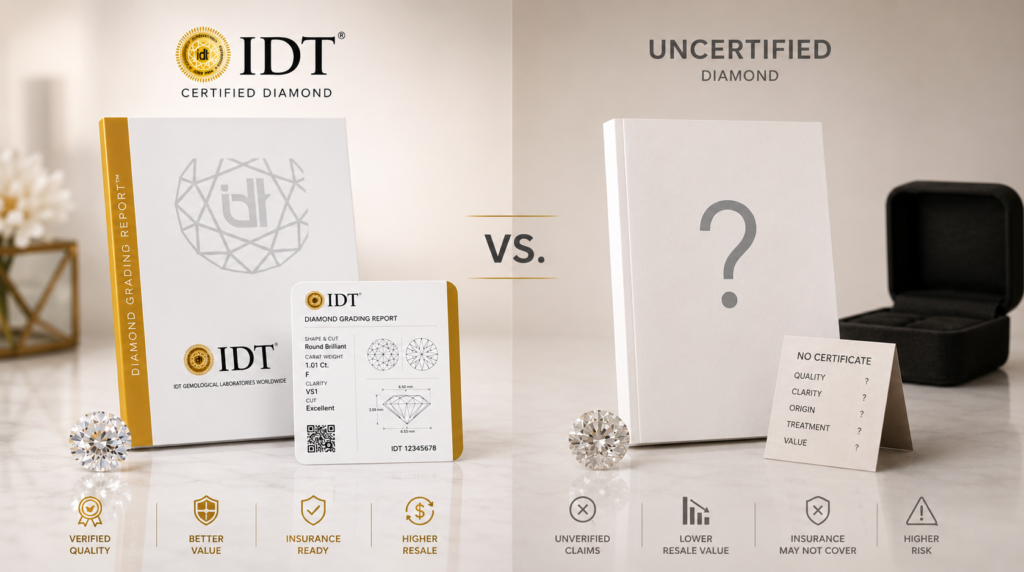
You may encounter uncertified diamonds priced attractively lower than certified stones.
Here’s why that discount rarely benefits you:
● You cannot independently verify the quality claims made by the seller
● Resale value is significantly lower without documentation
● Insurance providers often require certification for high value stones
● The risk of purchasing a synthetic, treated, or misrepresented stone is substantially higher
The small premium paid for a certified diamond is almost always recovered in peace of mind, accurate pricing, and resale value. Always ask for the IDT diamond grading report.
Frequently Asked Questions
Is a diamond certificate the same as a diamond appraisal?
No. A diamond certificate, or grading report, objectively describes the diamond’s quality characteristics. An appraisal assigns a monetary value, often for insurance purposes. You typically need both, the certificate first, then an appraisal based on it.
Can I get an existing diamond certified?
Absolutely. You can submit any unmounted diamond to IDT Gemological Laboratories for grading. Stones set in jewellery can sometimes be assessed, though an unmounted stone allows for the most accurate grading.
Does a higher grade certificate mean a more beautiful diamond?
Not necessarily. A diamond’s beauty is subjective and depends most heavily on cut quality. A well cut diamond with a slightly lower colour or clarity grade can appear more brilliant and beautiful than a poorly cut stone with higher grades. Use the certificate as a guide, not the only criterion.
How long does diamond certification take at IDT?
Processing times at IDT Gemological Laboratories vary by service level. Standard certification typically takes 3 to 15 business days. Expedited options are available for urgent requirements. Contact us directly for current turnaround times.
Is diamond certification important for lab grown diamonds too?
Yes. Lab grown diamonds require certification just as much as natural diamonds, to confirm their origin, grading, and ensure transparency in your purchase. IDT Gemological Laboratories certifies both natural and lab grown diamonds.