
You Have the Gemstone Certificate. But Do You Know What It Says?
You asked for gemstone certification. The seller handed you a gemstone certificate or gemological report.
It contains terms such as Conclusion, Comments, Refractive Index, Specific Gravity, Optic Character and Magnification.
But what do these fields actually mean? Which ones tell you whether a gemstone is natural or synthetic? And where should you look for information about treatments?
Understanding a gemstone certificate can help you know what has actually been identified instead of relying only on colour, appearance or seller claims.
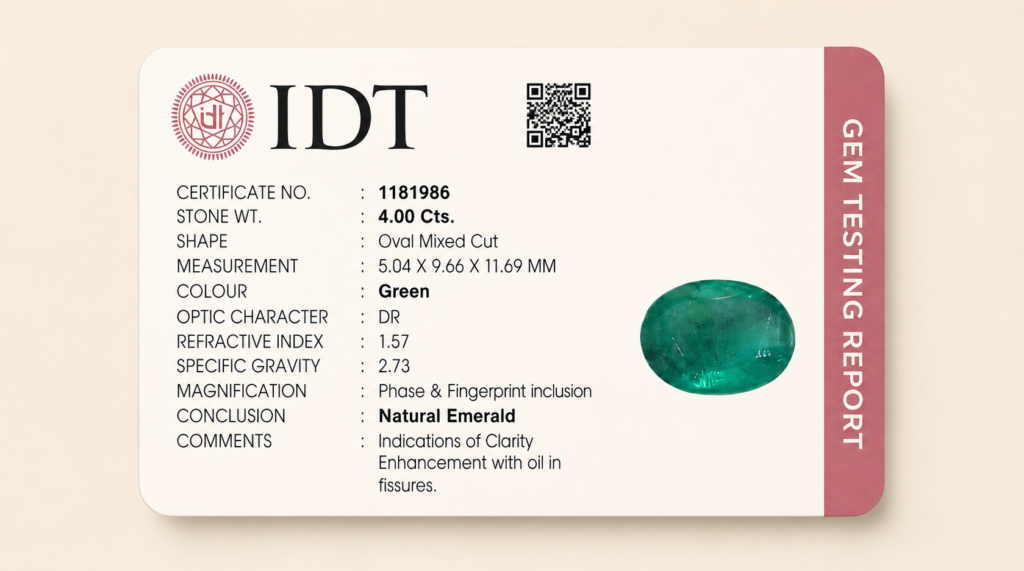
This guide uses a real IDT GEM TESTING REPORT for a 4.00 Ct Emerald to explain the important fields on a gemstone certificate and how to read them.
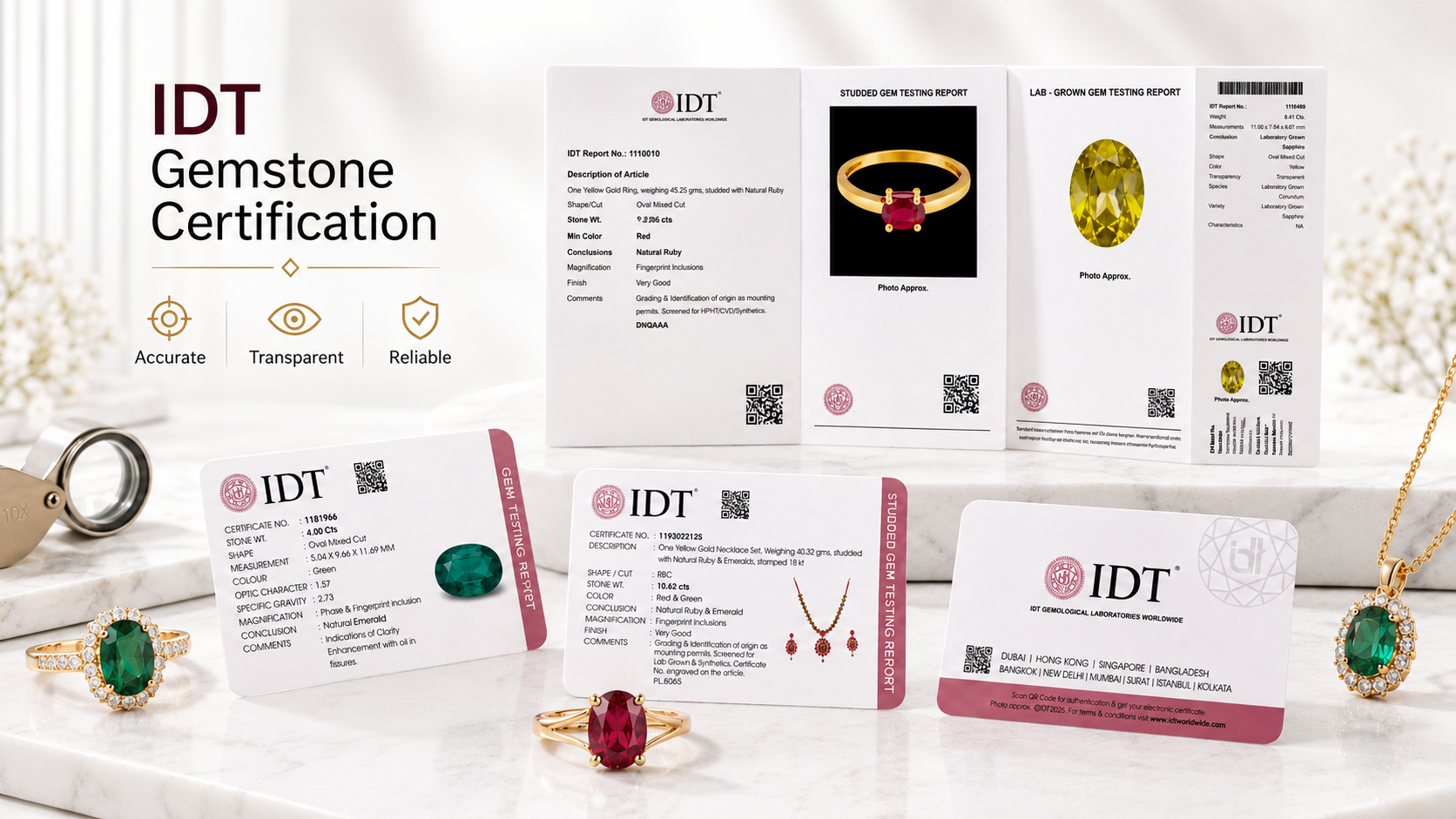
What Is Gemstone Certification?
Gemstone certification is the process of having a gemstone examined by a gemological laboratory using professional testing methods and instruments.
After examination, the laboratory issues a gemstone identification report containing information recorded during testing.
Depending on the gemstone and report type, a gemstone certificate may provide information such as:
- Gemstone identity
- Natural or synthetic status, where applicable
- Detectable treatments
- Weight
- Measurements
- Refractive Index
- Specific Gravity
- Optic Character
- Internal features observed under magnification
Gemstone certification can help buyers understand whether the stone matches the description provided by the seller.
For example, two green gemstones may appear similar to the eye, but professional gemological testing may identify them as completely different materials.
This is why a gemstone certificate should be read carefully rather than relying only on the gemstone’s colour or appearance.
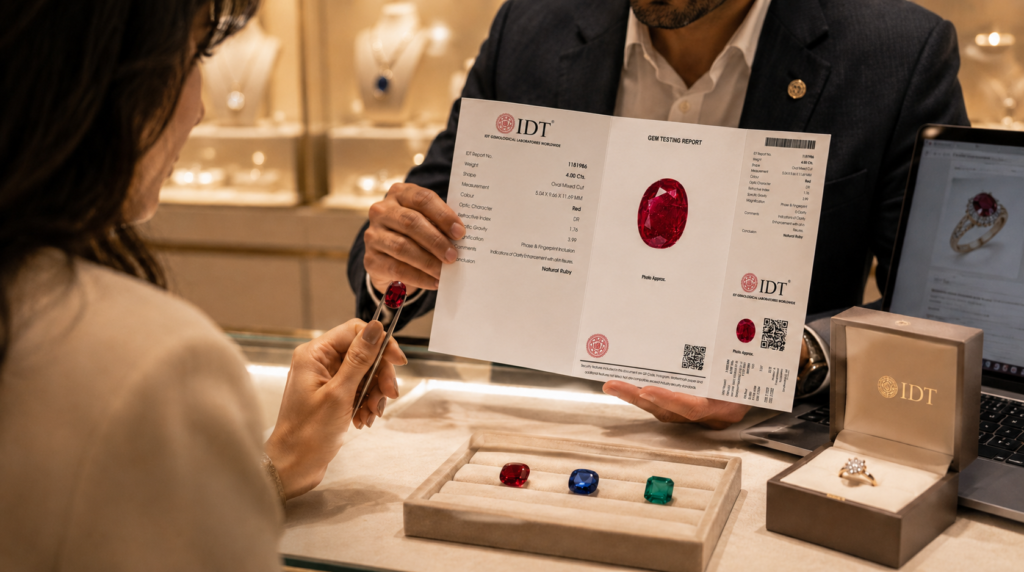
What Is a Certified Gemstone?
A certified gemstone is commonly used to describe a gemstone that has been examined by a gemological laboratory and is accompanied by a gemstone identification report.
The report records the findings of the laboratory at the time of testing.
However, having a certificate does not mean every gemstone is untreated, natural or of a particular quality.
You still need to read the information written on the report.
For example:
- A gemstone may be Natural Emerald with clarity enhancement
- A gemstone may be Synthetic Corundum
- A gemstone may show indications of heating
- A gemstone may have no indications of heating
The certificate tells you what the laboratory observed.
This is why knowing how to read a gemstone certificate is just as important as asking for one.
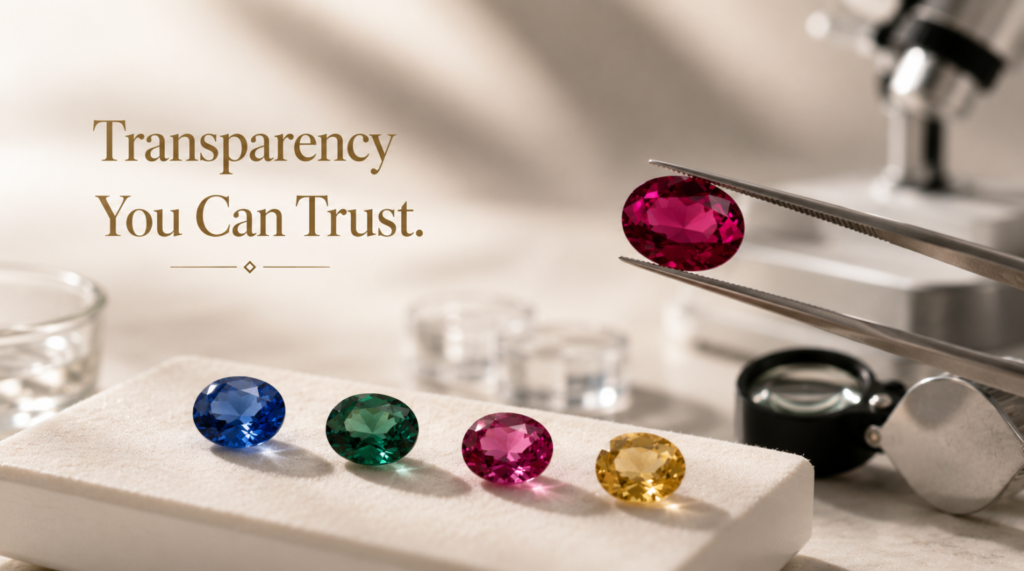
The 2 Most Important Fields on Every IDT Gemstone Certificate
On the standard IDT Gem Testing Report, two of the most important fields for a buyer are:
- Conclusion
- Comments
The Conclusion identifies the gemstone, while Comments may provide important information about detectable treatments or other observations.
In this sample IDT gemstone certificate, the Conclusion reads:
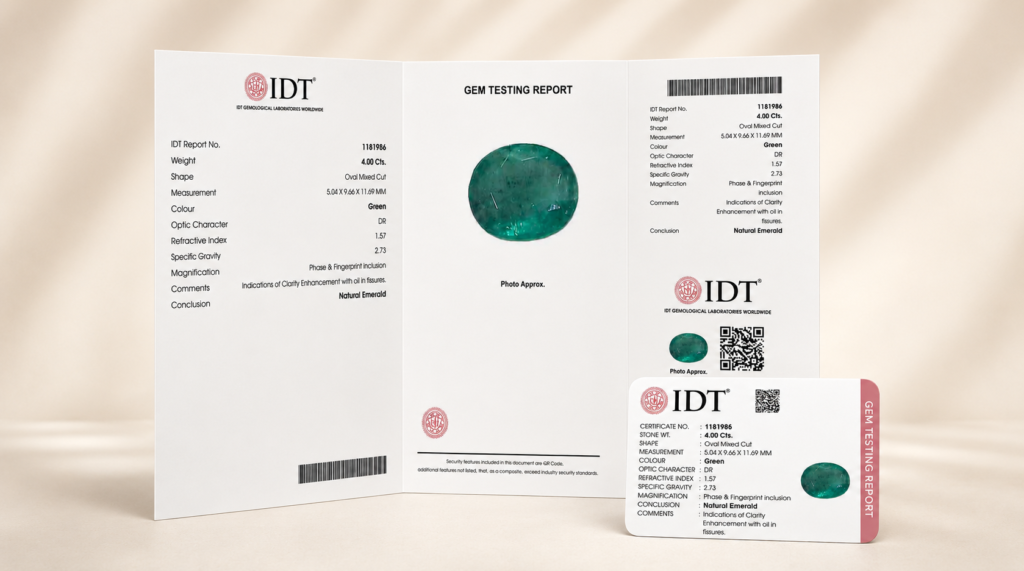
Natural Emerald
Let’s understand what that means.
1. Conclusion
What it says on this report:
Natural Emerald
What it means:
The gemstone was identified as Emerald and determined to be natural rather than synthetic or laboratory grown.
Emerald is the green variety of Beryl.
Why it matters:
This field tells you what the gemstone actually is.
For example, if you purchased an Emerald but the Conclusion stated Natural Quartz – Green, the gemstone would not be Emerald.
Similarly, if the Conclusion stated Synthetic Beryl – Green, the material would be laboratory grown rather than a natural Emerald.
Always compare the Conclusion on the gemstone certificate with what the seller told you or what appears on your invoice.
2. Comments
What it says on this report:
Indications of Clarity Enhancement with oil in fissures.
What it means:
The Emerald shows indications of oil being present in surface-reaching fissures.
Oiling is commonly used in Emeralds to improve their apparent clarity.
Why it matters:
The Comments section can contain important information about treatments.
Depending on the gemstone, you may see observations such as:
- No indications of heating
- Indications of heating
- Indications of clarity enhancement with oil
- Indications of clarity enhancement with glass
- Indications of dye
This information can affect how you evaluate, care for and understand the gemstone.
See Emerald Certification.
Image 2
Alt text: IDT gemstone certificate Conclusion and Comments highlighted on Emerald report
What Information Is Included in a Gemstone Certificate?
A gemstone certificate may contain several identification and technical fields.
While the exact information depends on the report and gemstone being tested, an IDT gemstone report may include:
- Report number
- Date
- Weight
- Measurements
- Shape and cut
- Colour
- Transparency
- Conclusion
- Comments
- Refractive Index
- Specific Gravity
- Optic Character
- Magnification observations
Some of these fields are easy for buyers to understand, while others are technical measurements used by gemologists during identification.
The most important thing is to read the certificate as a whole rather than focusing only on the gemstone name.
What Do Refractive Index, Specific Gravity and Optic Character Mean?
Your gemstone certificate may contain technical fields that help gemologists identify the material.
You do not need to perform these tests yourself, but understanding what they represent can make the report easier to read.
Refractive Index (RI): 1.57 on This Report
What it means:
Refractive Index measures how light behaves when it enters and travels through a gemstone.
Different gemstone species have characteristic RI ranges.
Emerald, which belongs to the Beryl family, typically has an RI around the range recorded on this report.
Why it matters:
Refractive Index is one of the observations gemologists use when identifying a gemstone.
The RI result is considered together with other gemological tests before the laboratory reaches its Conclusion.
Specific Gravity (SG): 2.73 on This Report
What it means:
Specific Gravity relates to the density of a gemstone, or how heavy it is relative to its volume.
Different gem materials can have different SG ranges.
Why it matters:
Specific Gravity can help gemologists distinguish between materials that may look similar.
It is not generally interpreted alone. It forms part of the overall gemstone identification process.
Optic Character: DR on This Report
What it means:
Optic Character describes how light behaves inside the gemstone.
DR means Doubly Refractive.
Emerald is typically doubly refractive.
Why it matters:
Optic behaviour provides another diagnostic observation that helps gemologists narrow down the identity of a gemstone.
Magnification: Phase & Fingerprint Inclusion on This Report
What it means:
This field records internal features observed under magnification.
Gemologists study inclusions because they may provide useful clues about gemstone identity, formation and, in some cases, natural or synthetic origin.
Why it matters:
Magnification observations are considered together with other gemological tests before the final Conclusion is issued.
These technical fields support the gemstone identification process.
You do not need to interpret each result independently, but they help show the observations used during professional gemstone testing.
How to Read a Gemstone Certificate Step by Step
When checking a gemstone certificate, start with the information that matters most to you as a buyer.
Step 1: Check the Conclusion
Look at the exact gemstone identity written on the report.
Ask:
- Is it the gemstone I was told I was buying?
- Does the report say Natural or Synthetic where applicable?
- Does the description match the seller’s claim?
Step 2: Read the Comments
Check whether the report mentions detectable treatments or other important observations.
Look for terms such as:
- No indications of heating
- Indications of heating
- Clarity enhancement
- Oil
- Glass filling
- Dye
Step 3: Check Weight and Measurements
Make sure the weight and measurements correspond with the gemstone or jewellery you received.
Step 4: Review the Technical Fields
Fields such as RI, SG, Optic Character and Magnification record observations made during gemological testing.
Step 5: Verify the Gemstone Certificate
Check the report number or QR code through IDT’s official verification platform.
This helps confirm that the certificate details correspond with the laboratory record.
5 Red Flags When Reading a Gemstone Certificate
Red Flag 1: Conclusion Does Not Match What You Paid For
Example:
The invoice says “Yellow Sapphire”, but the Conclusion states “Natural Quartz – Citrine”.
What to do:
Ask the seller why the gemstone description does not match the laboratory report before making payment.
Red Flag 2: Conclusion Says Synthetic but You Were Sold Natural
Example:
You paid for a Natural Ruby, but the Conclusion says “Synthetic Corundum – Red”.
What to do:
Synthetic gemstones are legitimate products when correctly disclosed.
The problem arises when a synthetic gemstone is represented or priced as natural.
See Lab Grown Gemstone Guide.
Red Flag 3: Treatment Information Does Not Match What You Were Told
Example:
You were told a Sapphire was unheated, but Comments states “Indications of heating”.
What to do:
Ask the seller for clarification before completing the purchase.
If the gemstone is being purchased for astrological use, you may also want to check whether the treatment status matches your requirements.
Red Flag 4: Comments Mention Clarity Enhancement with Glass
Example:
You are purchasing a Ruby and the report states “Indications of clarity enhancement with glass.”
What to do:
Make sure you understand the treatment before purchasing.
Treatments may affect a gemstone’s value, durability and care requirements.
Red Flag 5: Certificate Details Cannot Be Verified
Check the report number and QR code.
If the online gemstone certificate check does not match the physical report, contact IDT before relying on the certificate.
How to Check an IDT Gemstone Certificate Online
IDT gemstone certificate verification allows you to check whether the report details match IDT’s records.
To perform an IDT certificate check:
- Go to idtworldwide.com/verify
- Enter the IDT Report Number
- Compare the online information with the physical gemstone certificate
- Check important fields such as Conclusion, Comments, Weight and Measurements
For this sample Emerald certificate, the IDT Report Number is:
1181986
If the online information does not match your physical report, contact IDT for clarification.
Image 3
Alt text: IDT gemstone certificate verification and online gemstone certificate check
Why Gemstone Certification Matters Before You Buy
A gemstone’s appearance alone does not always tell you exactly what it is.
Two gemstones may have a similar colour while belonging to completely different gemstone species.
A gemstone may also be:
- Natural
- Synthetic
- Treated
- Dyed
- Filled
- Imitation material
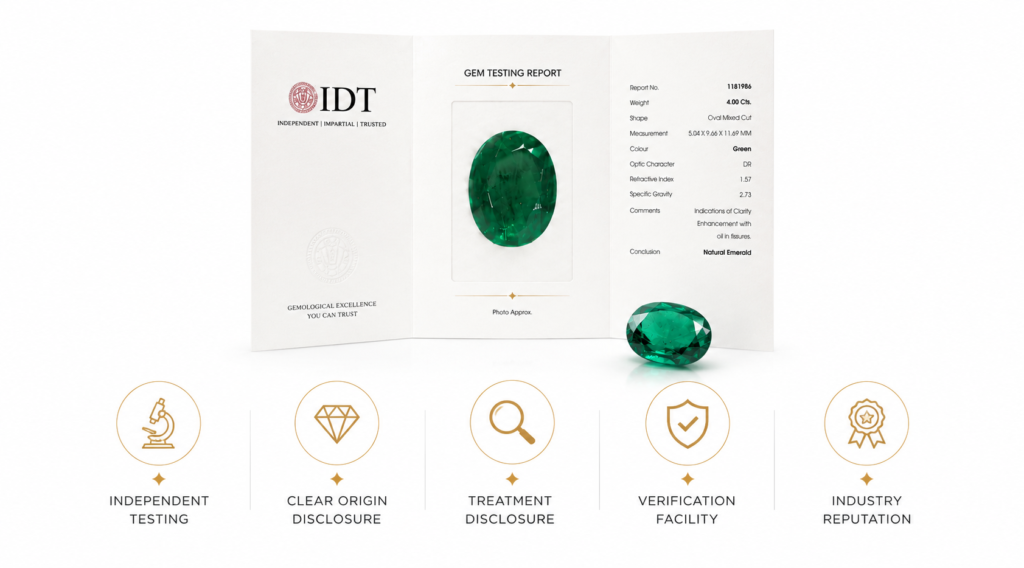
Professional gemstone certification helps provide identification information based on gemological testing.
For buyers, the value of the gemstone certificate is not simply that a report exists.
The important part is understanding what the report actually says.
Always compare the gemstone’s Conclusion, treatment information, weight and measurements with the seller’s description before making an important purchase.
Frequently Asked Questions
What Is Gemstone Certification?
Gemstone certification involves examining a gemstone using gemological testing methods and issuing a report that records the laboratory’s findings.
Depending on the gemstone and report type, the certificate may state its identity, natural or synthetic status where applicable, detectable treatments, weight, measurements and technical observations.
What Is a Certified Gemstone?
The term certified gemstone is commonly used for a gemstone accompanied by a report from a gemological laboratory.
The report should be read carefully because a certified gemstone may still be natural, synthetic or treated depending on what the laboratory identifies.
How Do I Read a Gemstone Certificate?
Start with the Conclusion to understand what gemstone was identified.
Then read Comments for information about detectable treatments or other observations.
Next, check the weight, measurements, technical fields and report verification details.
What Does Conclusion Mean on an IDT Gemstone Certificate?
The Conclusion states the gemstone identity and, where applicable, whether the gemstone is natural or synthetic.
On this Emerald report, Conclusion: Natural Emerald means the gemstone was identified as a natural Emerald.
What Does Comments Mean on a Gemstone Certificate?
The Comments section may record detectable treatments or other relevant gemological observations.
Examples may include:
- No indications of heating
- Indications of heating
- Indications of clarity enhancement with oil
- Indications of clarity enhancement with glass
- Indications of dye
What Is Refractive Index on a Gemstone Certificate?
Refractive Index, or RI, measures how light behaves when it enters a gemstone.
Gemologists use RI together with other tests to help identify gemstone species.
What Is Specific Gravity on a Gemstone Certificate?
Specific Gravity, or SG, is related to the density of the gemstone.
It can help distinguish between gemstone materials that may have a similar appearance.
What Does Optic Character DR Mean?
DR stands for Doubly Refractive.
It describes how light behaves inside a gemstone and is one of the diagnostic observations used during gemological testing.
What Does “No Indications of Heating” Mean?
It means the laboratory did not detect indications of heating based on its examination.
This information is generally recorded in the Comments section of the gemstone report.
What If Comments Says “Indications of Clarity Enhancement with Oil”?
This means oil was detected in fissures within the gemstone.
This type of clarity enhancement is commonly associated with Emeralds.
Is Origin Mentioned on Every Gemstone Certificate?
No.
Origin information may depend on the report type, the gemstone and whether origin determination has been requested and can be supported by the gemological features observed.
How Do I Check Whether an IDT Gemstone Certificate Is Genuine?
Use IDT’s official gemstone certificate verification platform.
Enter the report number or scan the QR code and compare the online information with the physical certificate.
Can a Certified Gemstone Be Synthetic?
Yes.
A gemstone report may identify a gemstone as natural or synthetic depending on the results of testing.
Having a certificate does not automatically mean the gemstone is natural.
The Conclusion tells you what the laboratory identified.