
“Is My Ruby Real?” The Question IDT Gets Daily
You’re buying a ruby for Sun in astrology. Or maybe for a ring. The seller says it is a “natural ruby” and the price looks good.
But is it really natural?
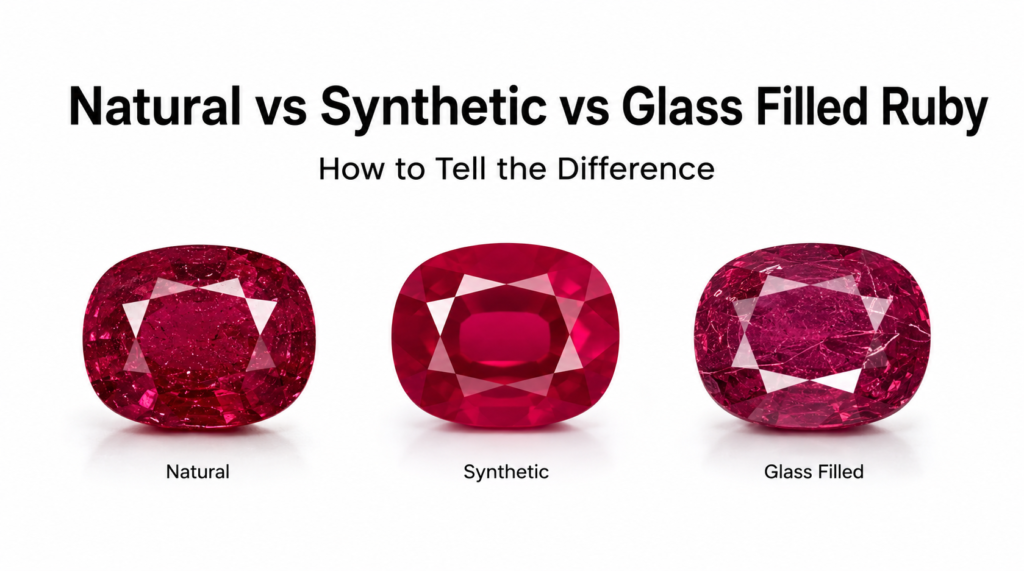
There are three common types of ruby you may come across in the market:
- Natural Ruby: Formed naturally in the earth. Rare and generally more valuable.
- Synthetic Ruby: Grown in a laboratory. Chemically similar to natural ruby but not formed in the earth.
- Glass Filled Ruby: Natural ruby with fractures that have been filled with glass to improve its appearance.
The problem is that all three can look very similar to the eye.
Based on stones submitted to IDT for testing in 2025 to 2026, approximately 41% of rubies represented as “natural” were actually synthetic or glass filled. Most buyers only found out after IDT testing.
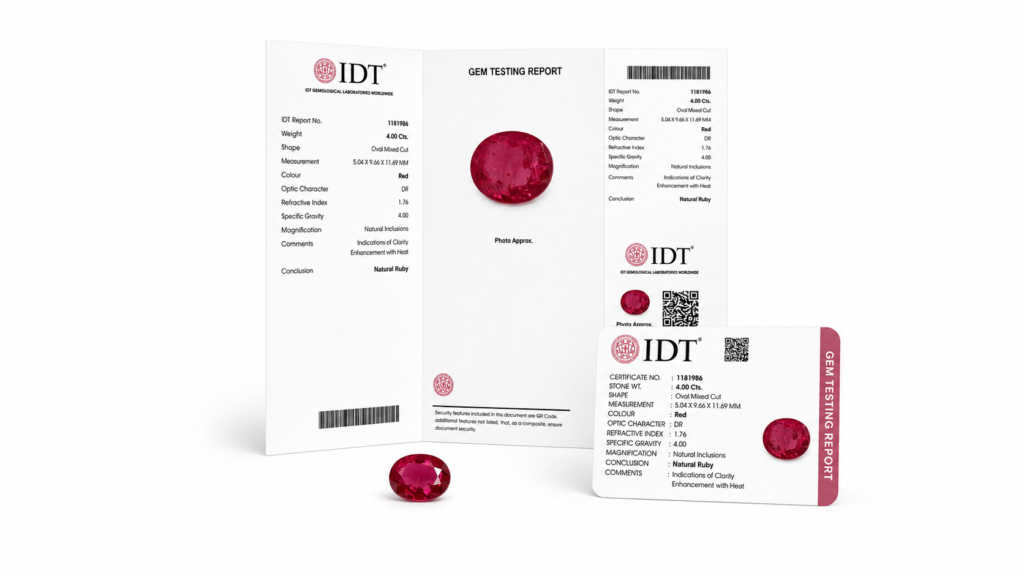
This guide explains the differences between these ruby types, how IDT identifies them, and why the Conclusion and Comments sections of your ruby certification matter before you buy.
Type 1: Natural Ruby
What is a Natural Ruby?
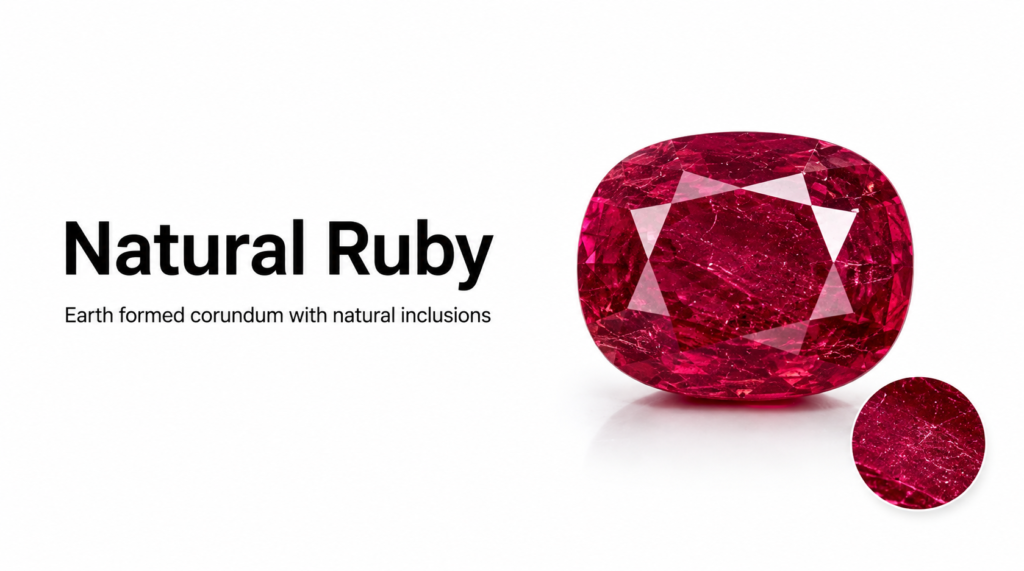
Natural ruby is a variety of corundum that forms naturally in the earth over millions of years. Its red colour comes mainly from chromium.
Rubies are mined in regions including Burma, Mozambique, Thailand, and Madagascar.
Key Features
Inclusions: Natural rubies often contain internal characteristics such as silk, crystals, and fingerprints. Exceptionally clean natural rubies are rare.
Durability: Ruby has a hardness of 9 on the Mohs scale, making it suitable for jewellery.
Astrology: In Vedic astrology, ruby is commonly associated with the Sun. Many astrologers prefer natural and unheated ruby.
What the IDT Certificate May State
Results: Natural Corundum, Red
Conclusion: Natural
Comments: No indications of heating or Indications of heating
Type 2: Synthetic Ruby or Lab Grown Ruby
What is Synthetic Ruby?
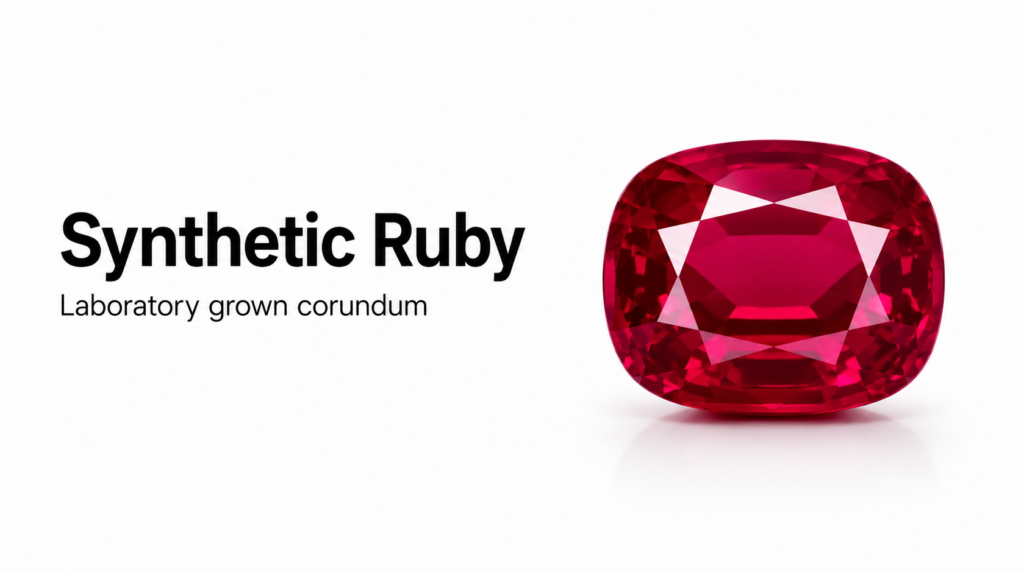
Synthetic ruby is corundum grown in a laboratory.
It has the same basic chemical composition and hardness as natural ruby, but its origin is different. Natural ruby forms in the earth, while synthetic ruby is created under controlled laboratory conditions.
How is Synthetic Ruby Made?
Common production methods include:
- Flame fusion
- Flux growth
- Hydrothermal growth
These processes can produce rubies that appear very clean to the naked eye.
Key Features
Inclusions: Synthetic rubies may appear eye clean or show characteristics such as curved growth lines under magnification.
Durability: Synthetic ruby also has a hardness of 9 on the Mohs scale.
Astrology: Views on synthetic ruby vary among astrologers. Many prefer natural ruby, while others may consider synthetic stones depending on individual beliefs and budget.
What the IDT Certificate May State
Results: Laboratory Grown Corundum, Red or Lab Grown Corundum, Red
Conclusion: Synthetic / Laboratory Grown
Comments: The growth method may also be mentioned when detected.
Synthetic ruby is real corundum, but it is not naturally formed.
The important thing is knowing exactly what you are buying and paying the appropriate price for it.
Learn more in our Lab Grown Gemstone Guide.
Type 3: Glass Filled Ruby or Lead Glass Ruby
What is Glass Filled Ruby?
Some natural rubies contain a large number of fractures.
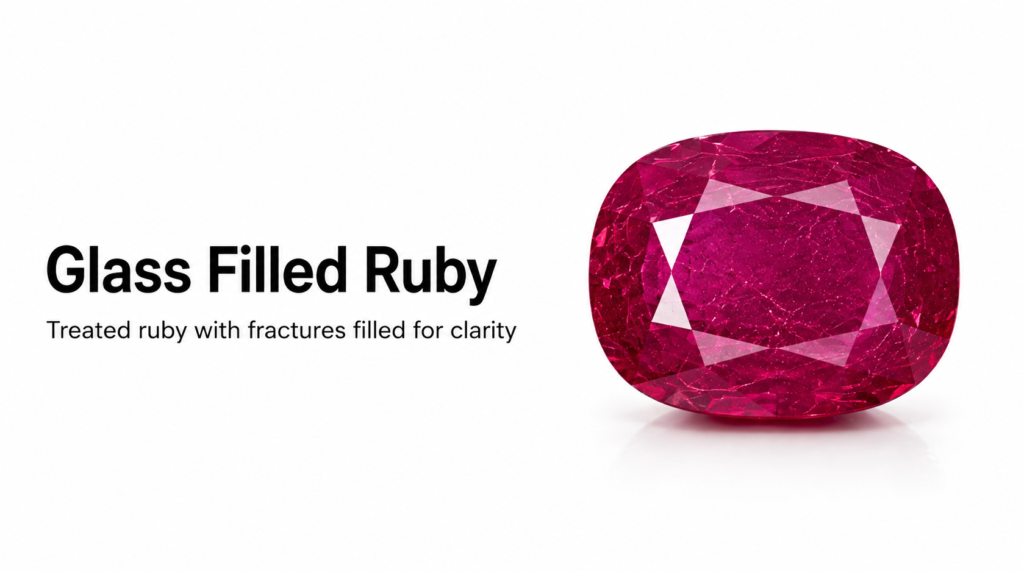
In glass filled ruby, these fractures are filled with glass to improve transparency and overall appearance.
Why is Glass Filling Done?
A heavily fractured ruby may look opaque or unattractive.
Filling the fractures with glass can make the stone appear cleaner and more transparent.
However, this treatment significantly affects its value, durability, and care requirements.
Key Features
Appearance: Glass filled ruby can appear surprisingly clean and bright for its price.
Durability: The ruby itself is hard, but the glass filling is much softer and can be damaged by heat, acids, or certain jewellery cleaning methods.
Value: Glass filled ruby is generally worth considerably less than a comparable untreated natural ruby.
Disclosure: The treatment should always be disclosed to the buyer.
What the IDT Certificate May State
Results: Natural Corundum, Red
Conclusion: Natural
Comments: Indications of clarity enhancement with glass or Lead glass filling detected
Important: Glass filled rubies require special care. Heat used during jewellery repairs can damage the filling, so always check the Comments section of the gemstone report before repair
Natural vs Synthetic vs Glass Filled Ruby: Key Differences
| Feature | Natural Ruby | Synthetic Ruby | Glass Filled Ruby |
| Origin | Formed naturally in earth | Grown in a laboratory | Natural ruby treated with glass |
| Material | Natural corundum | Laboratory grown corundum | Natural corundum with glass filling |
| Appearance | Often shows natural inclusions | Can appear very clean | May appear unusually clean and transparent |
| Hardness | 9 on Mohs scale | 9 on Mohs scale | Ruby is 9, but glass filling is softer |
| Value | Generally higher | Usually lower than comparable natural ruby | Usually much lower than untreated natural ruby |
| IDT Conclusion | Natural | Synthetic / Laboratory Grown | Natural |
| IDT Comments | Heating status | Growth information may be mentioned | Glass filling or clarity enhancement disclosed |
How IDT Detects Each Type
When you submit a ruby to IDT labs in Delhi, Mumbai, Surat, Kolkata, Thrissur, Chennai, or our three Dubai locations, gemologists examine the stone using specialised testing methods.
1. High Powered Microscopy
Gemologists study internal characteristics and inclusions.
Natural silk, synthetic growth features, and characteristics associated with glass filling can help identify the nature of the stone.
2. Spectroscopy
Spectroscopic testing helps gemologists study how the stone interacts with light and can provide important information about its composition and origin.
3. UV Fluorescence
Different rubies may react differently under ultraviolet light. These reactions provide additional information during testing.
4. Refractometer
Refractive index testing helps identify gemstone materials and can also assist in recognising glass present at or near the surface.
5. Advanced Gemological Instruments
Additional instruments and testing techniques may be used to confirm the gemstone species and detect treatments or laboratory growth.
Understanding Your IDT Certificate
Three sections are especially important:
Results: Identifies the gemstone species.
Conclusion: States whether the stone is natural or synthetic / laboratory grown.
Comments: Provides information about treatments such as heating or glass filling.
Quote from Gaurav Issar, Founder, IDT
“Ruby buyers ask us daily: is it natural or synthetic? Is it glass filled? You cannot tell by eye. Synthetic can be flawless. Glass filled can look better than natural. IDT tests every ruby. Conclusion tells you if it’s Natural or Synthetic. Comments tells you if it’s heated or glass filled. Check both before you pay. Verify free at idtworldwide.com/verify.”
3 Ruby Buying Problems IDT Commonly Sees
1. Synthetic Ruby Sold as Natural
A buyer pays the price of a natural ruby but receives a laboratory grown stone.
IDT testing can identify this, and the Conclusion section will state Synthetic / Laboratory Grown where applicable.
The issue is not that synthetic ruby exists. The issue is paying a natural ruby price without knowing that the stone is laboratory grown.
2. Glass Filled Ruby Sold as Untreated Natural Ruby
A ruby may be represented as natural and untreated even though its fractures have been filled with glass.
On an IDT report:
Conclusion: Natural
Comments: Indications of clarity enhancement with glass
This matters because glass filling can significantly affect the stone’s durability, care requirements, and value.
3. Garnet or Spinel Sold as Ruby
Not every red gemstone is a ruby.
A red garnet or red spinel may sometimes be mistaken for or represented as ruby.
Gemological testing identifies the actual gemstone species.
For a ruby, the Results section should identify the stone as corundum.
All three situations can be avoided by getting ruby certification from IDT before making a purchase.
How to Buy Ruby Safely
Before paying for a ruby:
- Understand what you need. If you are buying for astrology, confirm whether your astrologer recommends natural, synthetic, heated, or unheated ruby.
- Ask for gemstone certification. Get the gemstone tested by IDT Gemological Laboratories Worldwide before you pay.
- Check the Results section. For ruby, the gemstone should be identified as Corundum, Red.
- Check the Conclusion section. If you are paying for natural ruby, make sure the report confirms that it is natural.
- Check the Comments section. This is where important information regarding heating and other treatments may appear.
- Verify the certificate online. Scan the QR code or enter the report number at idtworldwide.com/verify.
- Match the price to the stone. Natural, laboratory grown, and glass filled rubies should not be valued in the same way.
Frequently Asked Questions
What is the difference between natural and synthetic ruby?
Natural ruby forms naturally in the earth, while synthetic ruby is grown in a laboratory.
Both are corundum and have similar chemical and physical properties, but their origins are different.
IDT identifies whether the ruby is natural or laboratory grown under the Conclusion section of the certificate.
For information on gemstones used in astrology, see our Astrology Gemstone Guide.
Is synthetic ruby a real ruby?
Synthetic ruby is laboratory grown corundum.
It has similar chemical and physical properties to natural ruby but does not form naturally in the earth.
An IDT certificate will identify a laboratory grown ruby under the Conclusion section.
What is glass filled ruby?
Glass filled ruby is natural ruby in which fractures have been filled with glass to improve appearance and transparency.
This treatment can affect the gemstone’s durability and value.
If detected, the treatment is mentioned in the Comments section of the IDT gemstone report.
How can I identify a real ruby at home?
It is not possible to reliably determine whether a ruby is natural, laboratory grown, or glass filled simply by looking at it.
Different types of ruby can appear very similar to the naked eye.
Gemological testing using microscopy and specialised instruments is required for reliable identification.
You can submit your stone to IDT for gemstone certification.
Can synthetic ruby be used for astrology?
Views differ among astrologers.
Many astrologers prefer natural ruby, while others may consider laboratory grown stones depending on their individual approach.
It is best to confirm this with your astrologer before purchasing.
Does heating reduce the value of ruby?
Heated ruby is still natural ruby.
Heat treatment is commonly used to improve the appearance of gemstones.
Unheated ruby is generally rarer and may command a higher value than a comparable heated ruby, although value also depends on factors such as colour, clarity, size, and overall quality.
The IDT certificate may state No indications of heating or Indications of heating under the Comments section.
How do I know if my ruby is glass filled?
Check the Comments section of your gemstone certificate.
If glass filling is detected, the report may state:
Indications of clarity enhancement with glass
or
Lead glass filling detected
Is glass filled ruby bad?
Glass filled ruby is not automatically a problem when the treatment is properly disclosed and the gemstone is priced accordingly.
The concern arises when it is sold as untreated natural ruby.
Glass filled stones also require additional care because the filling can be more vulnerable to heat and chemicals.
Which gemstone is for Sun?
In Vedic astrology, ruby is commonly associated with the Sun.
Some astrologers may also recommend other red gemstones as substitutes.
If you specifically want ruby, the gemstone report should identify the stone as corundum, red.
Always confirm gemstone recommendations with your astrologer.
Does IDT test for glass filling?
Yes.
IDT gemologists use microscopy and other gemological testing methods to detect glass filling.
When detected, the treatment is mentioned in the Comments section of the IDT report.